
Phoenix Metro
HVAC for Retail Stores in Phoenix.
- (520) 556-8929
- Serving the entire Phoenix metro — we come to you
- Office: Mon–Fri 8:00 AM – 5:00 PM · 24/7 emergency service
- 2-year workmanship warranty · 1-year parts warranty
- Veteran-owned & operated · residential + commercial
- 23 five-star Google reviews
Storefront and office work, documented.
Photos from our own commercial projects — equipment we installed, in buildings we serviced.
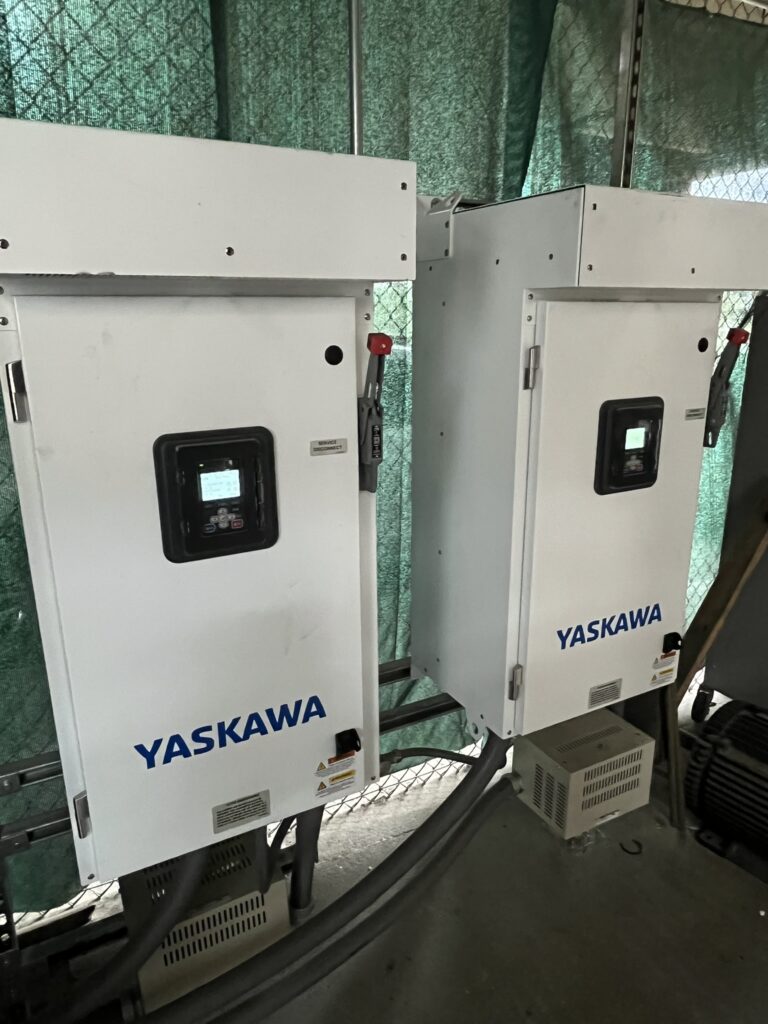
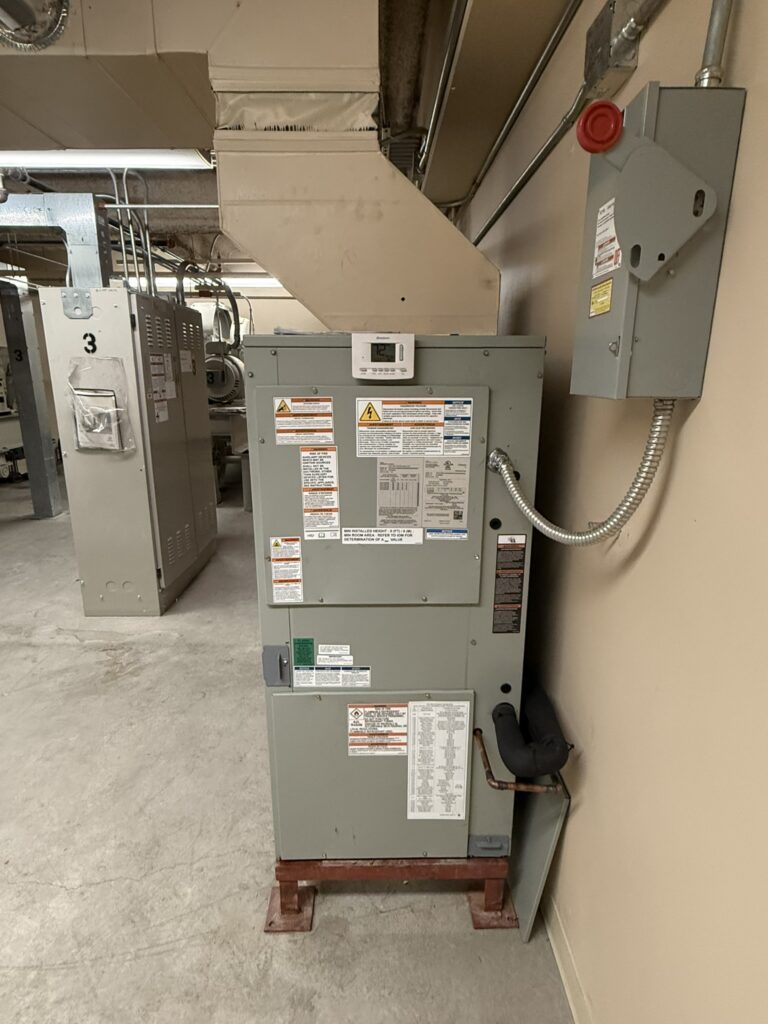
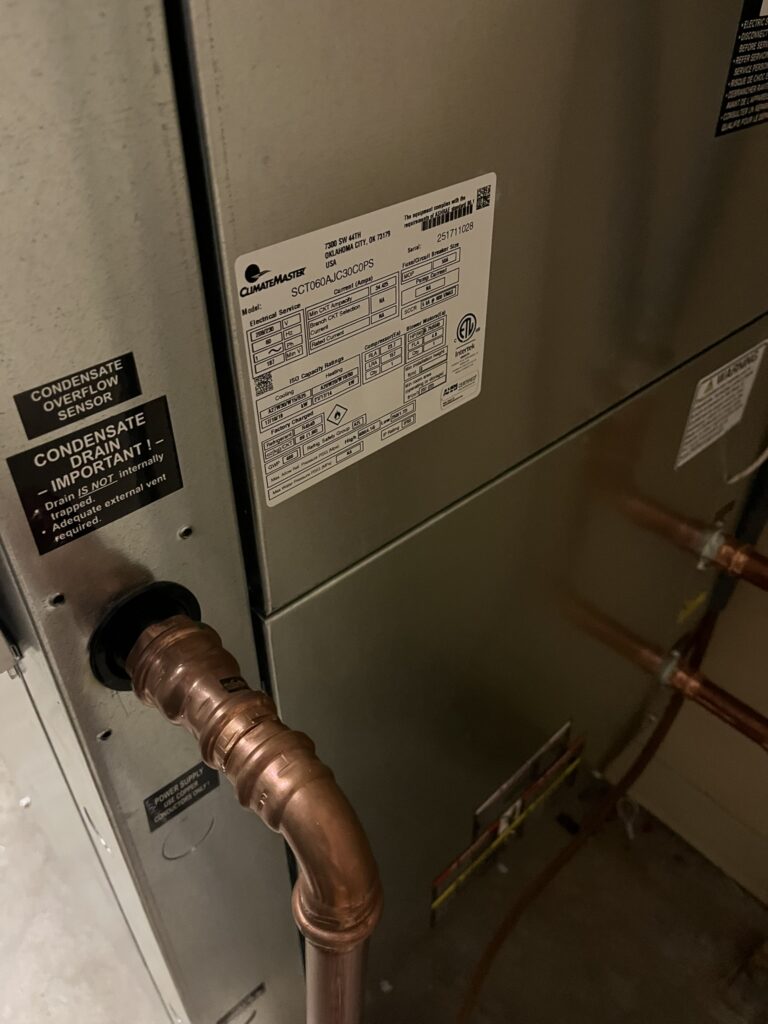
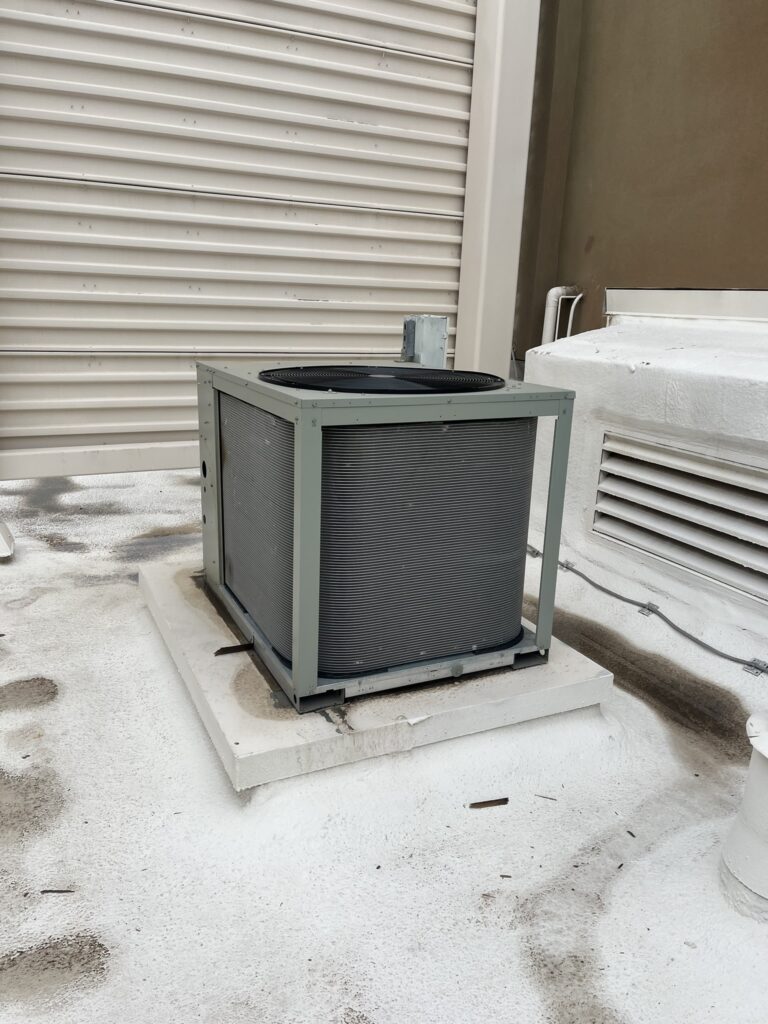
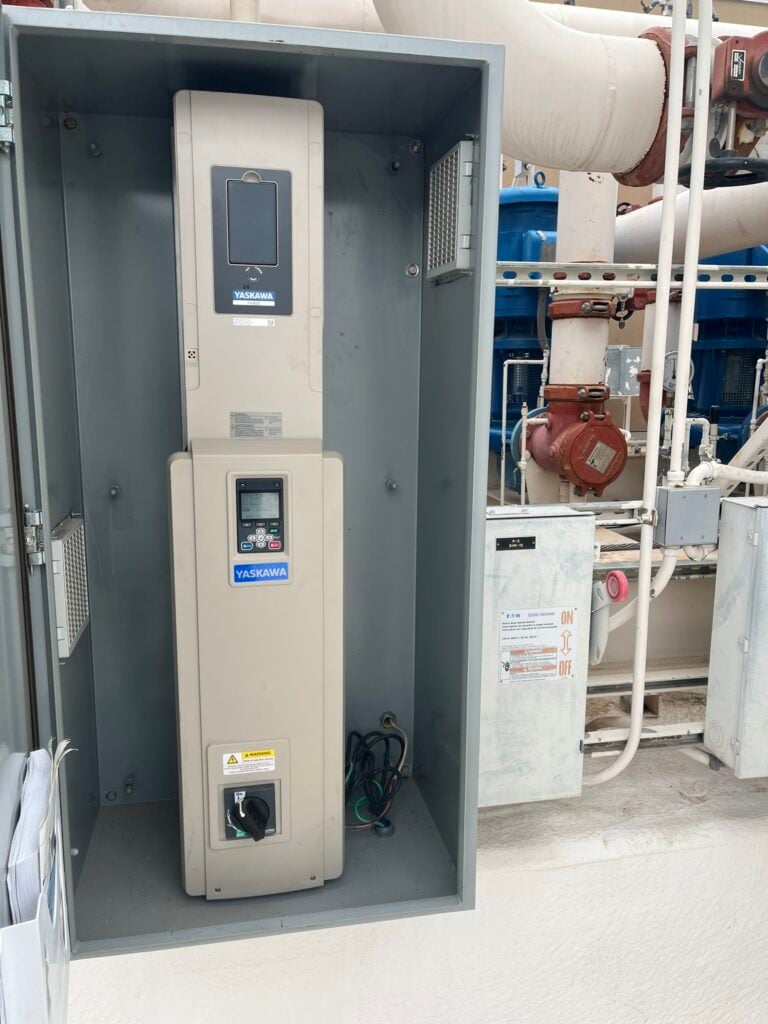
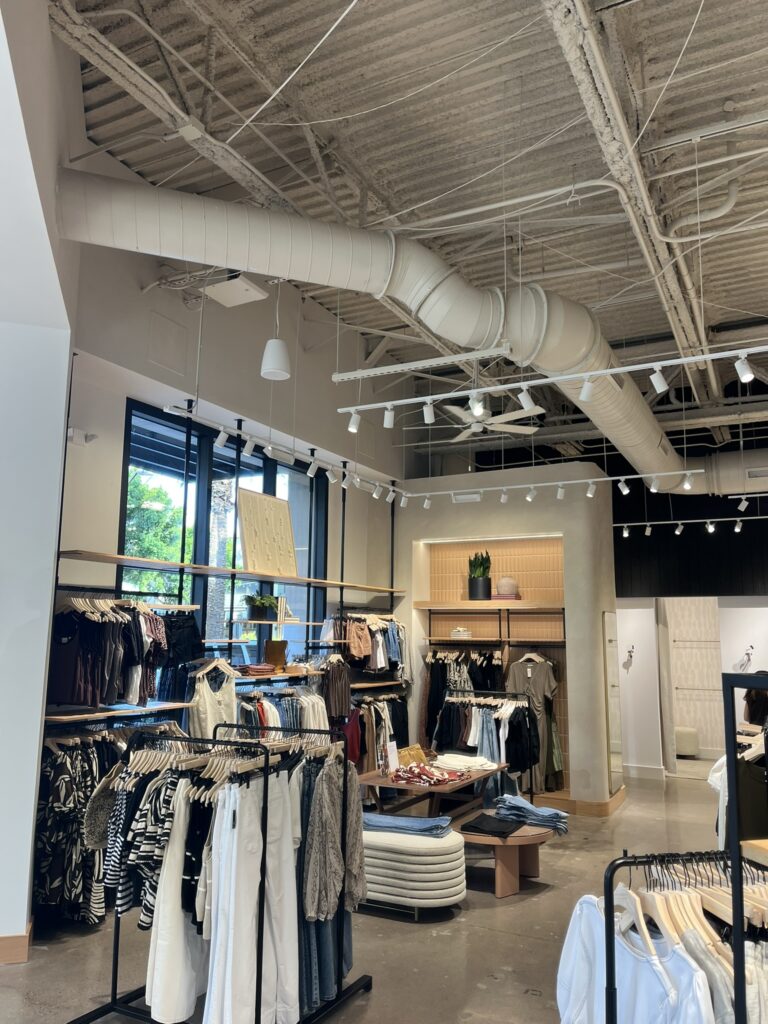
Every customer who walks into your store between May and September drags a slice of 115°F sidewalk in behind them. Retail HVAC in Phoenix is a battle fought at the front door — entrance infiltration, solar load pouring through display glass, heat shed by lighting and signage — all landing on rooftop equipment that has to keep shoppers browsing instead of retreating to their cars.
Yeti Pros: Your Retail HVAC Partner
Yeti Pros keeps Valley retailers cool, from single boutiques to full-department floors, with fast repair, pre-season maintenance, and straight equipment advice.
If the sales floor is heating up right now, (520) 556-8929 reaches a real person at any hour.
Veteran-owned and operated, licensed under ROC #363372 and ROC #363423.
The door-swing tax on a Phoenix storefront
Retail can’t do what offices do and keep the doors mostly shut — foot traffic is the whole point. Each swing of an entrance door exchanges a plug of conditioned air for superheated outside air, and on a busy Saturday that exchange happens hundreds of times before lunch.
Common Entry Point Issues
Hang open for slow-moving groups.
Propped for stroller access.
Cracked during deliveries.
Every one is a hole in the thermal envelope. The load lands unevenly, too. The front third of the store fights the door while the back third sits stable, so a system controlled by one thermostat in the middle satisfies neither zone.
Our Door-Zone Cooling Strategy
Designed for the reality of entrance infiltration.
Ensures both front and back zones are satisfied.
Pushes back against infiltration instead of ignoring it.
Air curtains: the cheapest employee at your entrance
An air curtain is a fan array over the doorway that lays a moving sheet of air across the opening, and in this climate it earns its keep faster than almost any comfort investment a retailer can make.
Benefits of Air Curtains
Sharply cuts the hot-air intrusion of every door swing.
Keeps flying insects out of food-adjacent retail.
Relieves the rooftop equipment during the exact weeks it’s fighting for its life.
The catch is that a badly installed curtain — wrong velocity, wrong angle, mounted too high — does close to nothing while humming convincingly. We size, install, and service air curtains as part of retail scopes, and we’ll tell you honestly when a vestibule tweak would do more good.
Fitting rooms and checkout: comfort where money changes hands
Two spots in a store decide more revenue than the rest of the floor combined.
Fitting Rooms
Small, enclosed, occupied by someone generating heat while trying on clothes — and if they’re stuffy, the customer cuts the session short and buys less.
Checkout Queues
Hold your customers still, in a cluster, under lights, at the very moment they’re deciding whether the trip was pleasant.
Both spaces are routinely starved of supply air because they were framed in after the original design, or fed by a diffuser that a display rack now blocks. A store can average 74°F and still lose sales in an 82°F fitting room. We audit these dwell zones specifically — airflow measurements, duct corrections, dedicated supplies where needed — because dwell time is the retail number comfort actually moves.
Strip-mall roofs: sorting out whose unit is whose
Climb onto the roof of a typical Valley strip center and you’ll find a crowd of rooftop units in various stages of life, often unlabeled, sometimes serving suites that were split or merged two tenants ago.
Common Roof Challenges
Ducts cross demising walls.
A curb sits abandoned where a unit was removed.
Nobody currently in the building knows which cabinet cools which sales floor.
Meanwhile the lease says the tenant maintains “their” unit — hard to do when its identity is a rumor.
Our Mapping Process
Tracing each unit to the space it actually serves.
Tagging it, recording age, tonnage, and refrigerant.
Giving tenant and landlord alike a document that ends the guessing.
From there, RTU repair and responsibility questions get answered by the lease and the map instead of by argument.
Big-box scale and boutique scale fail differently
Big-Box Scale
A big-box floor runs a fleet of large packaged units where a single failure is invisible to shoppers — until the second and third units, loaded harder to compensate, start dropping in a chain reaction during a heat wave. Fleet discipline, staged maintenance, and quick commercial AC repair keep that scenario theoretical.
Boutique Scale
One modest unit is the entire cooling story, so any failure means closing the doors or selling to sweating customers. There’s no redundancy, which makes preventive care and a fast, honest repair-or-replace call — backed by installation when the math says so — the whole strategy.
We run both playbooks daily across the metro.
November and December arrive on equipment that just survived summer
Here’s the retail calendar’s cruel joke: your highest-traffic weeks land in November and December, immediately after your rooftop equipment finishes the hardest five months of its year. Compressors that limped through September get asked to handle packed floors, doubled door swings, and heat-generating crowds — and the heating section, idle since March, is suddenly wanted for cold desert mornings. A store that loses cooling on Black Friday doesn’t reschedule that revenue.
Shoulder-Season Inspection Checklist
Coils cleaned of monsoon dust.
Refrigerant charge verified.
Heat exchangers and ignition checked.
Belts and motors assessed while October still offers calm weather and easy parts availability.
Our commercial maintenance visits exist precisely for this window.
Night setback without cooking the stockroom
Letting the store drift warmer overnight saves real money in this climate, but retail setback has a constraint offices don’t: merchandise.
Merchandise Sensitivity to Temperature
Candles soften, cosmetics separate.
Chocolate blooms, vinyl warps.
Electronics dislike the daily thermal roller coaster if setback is set greedy.
Then there’s recovery — a system that can’t pull the store back down by opening time trades last night’s savings for this morning’s complaints, and burns its hardest energy at expensive morning hours.
Our Overnight Strategy
Stockroom limits where sensitive goods live.
Staged morning recovery that beats the first customer through the door.
Settings revisited seasonally instead of set once and forgotten.
Glass, lighting, and signage: heat you bought on purpose
Retail design imports heat deliberately.
Intentional Heat Sources
Shows the merchandise and admits the afternoon sun.
Flatters product and radiates onto the sales floor.
Illuminated signage and window displays add their own steady wattage.
A west-facing storefront in Goodyear or Surprise takes a brutal late-afternoon solar beating right at peak shopping hours. None of it is going away, so the mechanical system has to be sized and zoned for it, with the window line treated as its own load rather than averaged into the middle of the store. When we assess a retail space, we account for the heat the design intends, not just the square footage on the plan.
How we work with Phoenix retailers
Store operators get the same terms across the metro — Phoenix, Tempe, Chandler, Gilbert, Scottsdale, Peoria, and everywhere between.
Our Service Commitments
We disclose the service-call fee before dispatch and apply it toward the repair once you approve the work.
Quotes are flat-rate and written before a wrench comes out.
Refrigerant handling follows EPA 608 rules, performed by certified technicians with documentation you can file.
Behind our own written warranty sits the state’s legal floor, the ROC Minimum Workmanship Standards.
Stores on maintenance contracts get priority dispatch through our 24/7 emergency line — a person answers, always.
As a veteran-owned shop under our broader commercial HVAC operation, we also extend a 10% military, veteran & first responder discount that store owners and staff who served can use for HVAC work at home.
Retail HVAC questions Phoenix store operators ask
Our lease says we maintain the HVAC. What does that actually require?
Leases vary, but retail leases commonly hand the tenant routine maintenance and sometimes repairs on the unit serving the suite. Step one is identifying which unit that is — we map it, document its condition, and set up the maintenance record that protects you if the landlord or a future dispute ever asks for proof.
Is an air curtain worth it for a small storefront?
Usually, if the door sees steady traffic. The energy relief and comfort improvement near the entrance are immediate in this climate. Sizing matters more than brand — an undersized or badly aimed curtain is decoration. We quote it honestly either way.
Can you get us checked out before the holiday season?
Yes, and October is the smart window. We inspect cooling and heating sides, clean post-monsoon coils, verify charge, and flag anything likely to fail under December traffic — while lead times on parts are short and roof weather is kind.
The front of the store is hot and the back is cold. Why?
Classic door-zone imbalance: infiltration loads the entrance while the thermostat sits in the stable middle. Fixes range from airflow rebalancing to a dedicated door-zone strategy or an air curtain; a site visit tells us which applies.
A unit on our shared roof died and nobody knows whose it is.
We trace it — physically following duct runs to the space served — then tag every unit up there so this never happens again. Once identity is established, your lease determines responsibility, and you’ll have documentation instead of an argument.
How warm can we let the store get overnight?
Depends on your merchandise. General goods tolerate generous setback; candles, cosmetics, and chocolate impose limits, and stockrooms need their own consideration. We’ll set numbers around your inventory and program a recovery that finishes before opening.
What if we lose cooling mid-day on a summer Saturday?
Call immediately — a live dispatcher prioritizes occupied retail in extreme heat. You’ll know the trip fee upfront, get a written flat-rate quote on the roof, and we verify the fix under real load before leaving. Contract customers move to the front of the day.
Keep the doors swinging and the floor cool — call (520) 556-8929 for retail HVAC across the Phoenix metro, veteran-owned, ROC #363372 · ROC #363423.
Permits and inspections
Most repairs are ordinary service work; bigger scopes can involve city permitting. We perform our work to code, pull the permits our scope requires, and put what we did in writing.
What's covered
Workmanship is covered for two full years, in writing, and repair parts carry a 1-year manufacturer parts warranty — we document installs and repairs so those claims stay simple to make
HVAC for Retail Stores in Phoenix, city by city.
Every city below has its own local page for this industry — local FAQs, utility territory, and dispatch reality included.
Why a licensed HVAC contractor matters.
Commercial HVAC, industry by industry.
Every major brand, serviced and installed.




Phoenix metro: Most days a tech is already working somewhere in the Valley, so same-day appointments happen when the schedule allows. After-hours emergencies are dispatched when a licensed tech is available — a real person answers and tells you the ETA on the call.
Call (520) 556-8929Request an estimate.
No pressure, no door knockers. We look at the HVAC system, tell you what it needs (and what it doesn’t), and put the number in writing.