
Fountain Hills
HVAC for Warehouses in Fountain Hills, AZ.
- (520) 556-8929
- Serving the entire Phoenix metro — we come to you
- Office: Mon–Fri 8:00 AM – 5:00 PM · 24/7 emergency service
- 2-year workmanship warranty · 1-year parts warranty
- Veteran-owned & operated · residential + commercial
- 23 five-star Google reviews
Warehouse HVAC in Fountain Hills is usually not a massive distribution-center problem. This is an affluent northeast-Valley town below the McDowell Mountains, with hillside custom homes, larger lots, view properties, and smaller commercial service spaces supporting local contractors, estate services, specialty retail, property maintenance, medical support, and owner-operated businesses. Around the fountain district and commercial pockets serving FireRock, Eagle Mountain, and ZIP 85268, a “warehouse” may be a flex bay, shop, storage backroom, office pod, small fulfillment room, parts area, or conditioned workspace attached to a customer-facing business. Yeti Pros handles warehouse HVAC for those real Fountain Hills conditions. We are veteran-owned & operated, AZ ROC #363372 · ROC #363423, and we come to you. For warehouse hvac fountain hills searches, we give direct guidance on whether full conditioning, spot cooling, evaporative support, office-only comfort, ventilation, or equipment replacement actually fits the building. Quality-over-price buyers still need honest scope control, especially when a small warehouse bay has a hot roof, big doors, an office pod, and different comfort expectations in one shell. The desert details matter here: west-facing walls, roof exposure, dust, mineral-heavy water, long shoulder-season run times, monsoon humidity, and doors opened for vendors or service trucks can all change how the system feels from one hour to the next.
ZIPs served: 85268
What Warehouses covers in Fountain Hills.
Warehouse HVAC diagnostics
We inspect the bay, office pod, rooftop unit, evaporative cooler, ductwork, controls, and airflow separately so the repair scope matches how the Fountain Hills space is actually used.
Office pod cooling
For dispatch desks, manager offices, parts counters, and enclosed workrooms, we repair or replace the dedicated system, correct airflow issues, and address thermostat or return-air problems.
Rooftop package units
We service packaged rooftop equipment for small warehouses and flex bays, including compressors, motors, belts, coils, electrical parts, drains, economizer components, and control failures.
Evaporative cooler service
We service warehouse evap equipment where it makes sense, checking pads, pumps, bearings, belts, water delivery, controls, and relief air so the operator understands its real limits.
Spot cooling planning
When full conditioning is impractical, we help define targeted cooling for workstations, packing benches, equipment rooms, and occupied zones instead of overselling the whole shell.
Commercial replacement quotes
When repair is no longer sensible, we provide written replacement scopes after inspection, including equipment, access, controls, condensate, roof considerations, and any permit-triggering items.
What we see for warehouses in Fountain Hills.
Fountain Hills warehouse calls usually involve small-format buildings rather than deep industrial boxes. We see rooftop package units serving office pods, split systems added to enclosed workrooms, evaporative coolers in shop or storage areas, and duct layouts that were acceptable when the space was only storage but fail once people start working there all day. The first question is not “how big is the unit?” It is what part of the warehouse actually needs conditioning. A storage aisle with occasional access, a parts counter with staff present all day, and a closed office where invoices are written are three different comfort problems.
Full conditioning can be the wrong answer for a big open bay with roll-up doors, solar gain, and intermittent occupancy. Spot conditioning, better ventilation, an office-pod repair, or targeted cooling for a packing bench may solve the operating problem without pretending the entire shell will feel like a home near FireRock. We say that plainly after inspecting the space. If the use has changed, we also look at return air, outside air, duct condition, roof exposure, and whether the existing system was ever designed for the current load. Many small warehouses began as simple storage or light shop space, then gained computers, employees, inventory, cabinetry, refrigeration, charging equipment, or customer pickup activity. Those changes can expose duct leakage, weak returns, poor thermostat placement, and equipment that was never asked to run under that kind of occupied load.
Evaporative equipment appears in some warehouse and shop settings because it can help in dry heat when used correctly, but it has limits during monsoon humidity and does not solve every comfort complaint. Pads, pumps, belts, bearings, water distribution, controls, and relief air all affect performance. In Fountain Hills, dust and mineral buildup can reduce output while occupants still feel airflow. We document whether the cooler needs service, whether relief air is blocked, or whether mechanical cooling is the better fit for the work area. A cooler may move a lot of air and still leave the space uncomfortable if the discharge path is wrong, if the building is too closed up, or if the work area is receiving hot attic or roof-deck heat faster than the cooler can offset it.
Office pods create the sharpest complaints. The warehouse bay may be acceptable, but the office, dispatch desk, parts counter, or manager room gets hot because the unit is short cycling, the return is starved, the thermostat is in the wrong place, or the duct run crosses a hot shell. Small warehouses serving upscale local properties often have owners on site, so comfort issues get noticed quickly. We test the office and bay separately instead of treating the building as one temperature problem. We also look at simple operational causes: an office door left open to the bay, a supply grille blocked by shelving, a return pulling from the wrong side of a partition, or a thermostat sitting near a printer, window, or exterior wall.
- 01 Airflow and static pressure
- 02 Electrical: capacitors, contactors, draws
- 03 Refrigerant-circuit behavior
- 04 Drains, safeties, and float switches
- 05 Thermostat, controls, and cycling
- 06 Ducts, returns, and room-by-room comfort
Commercial jobs we have documented.
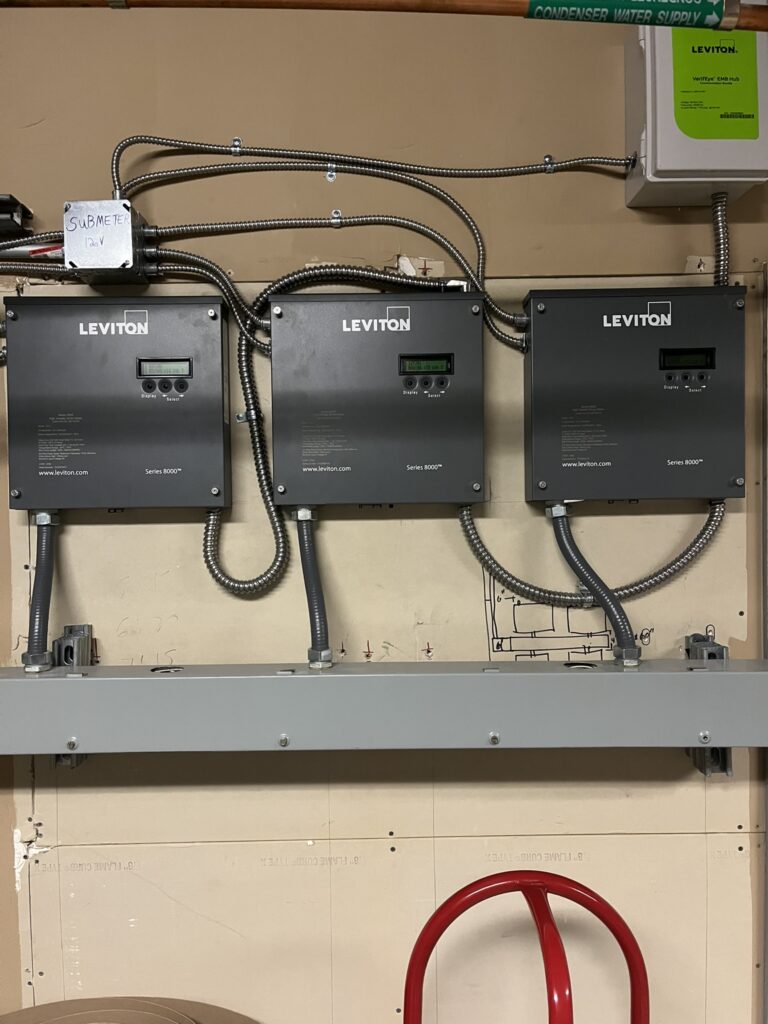
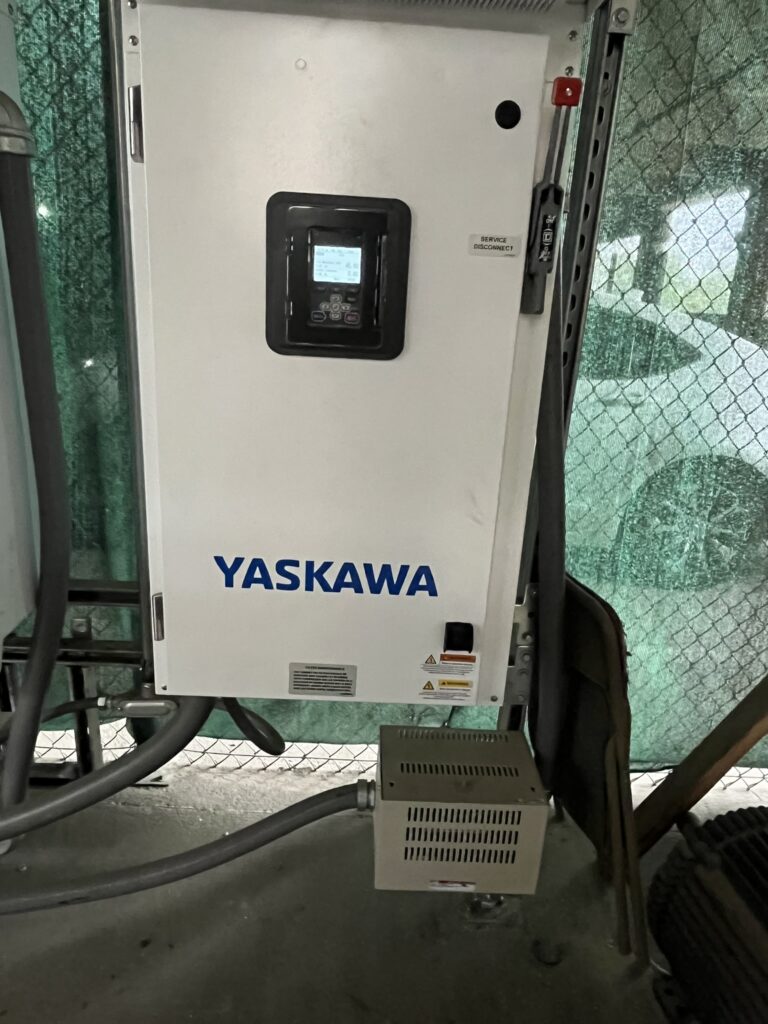
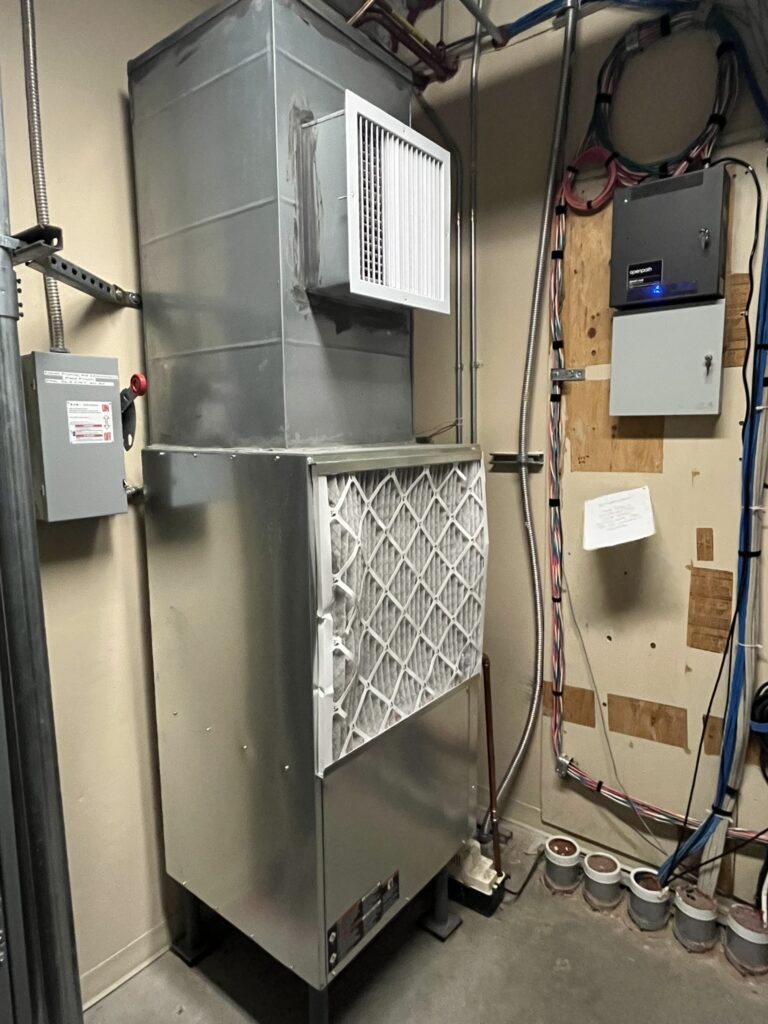
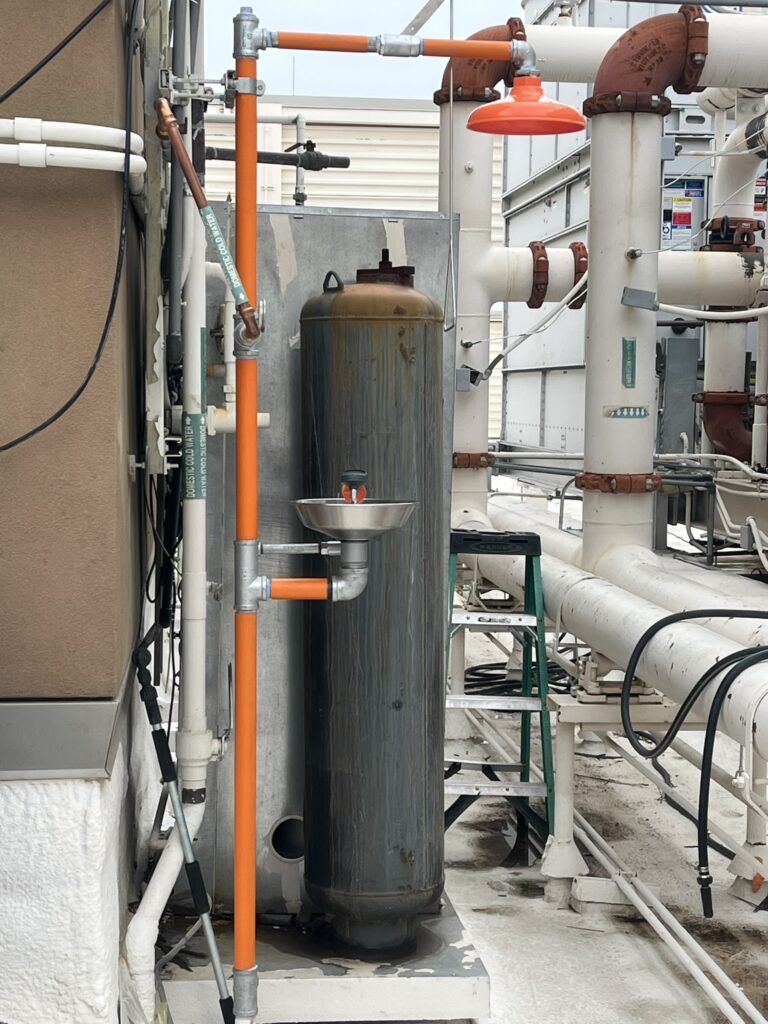
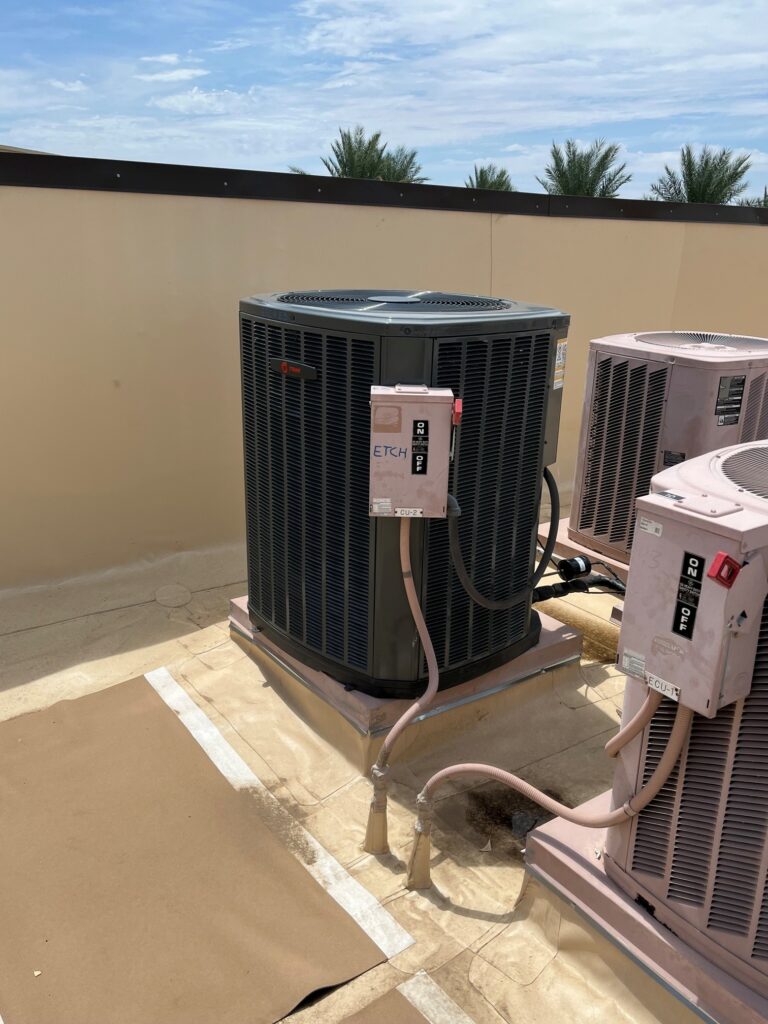
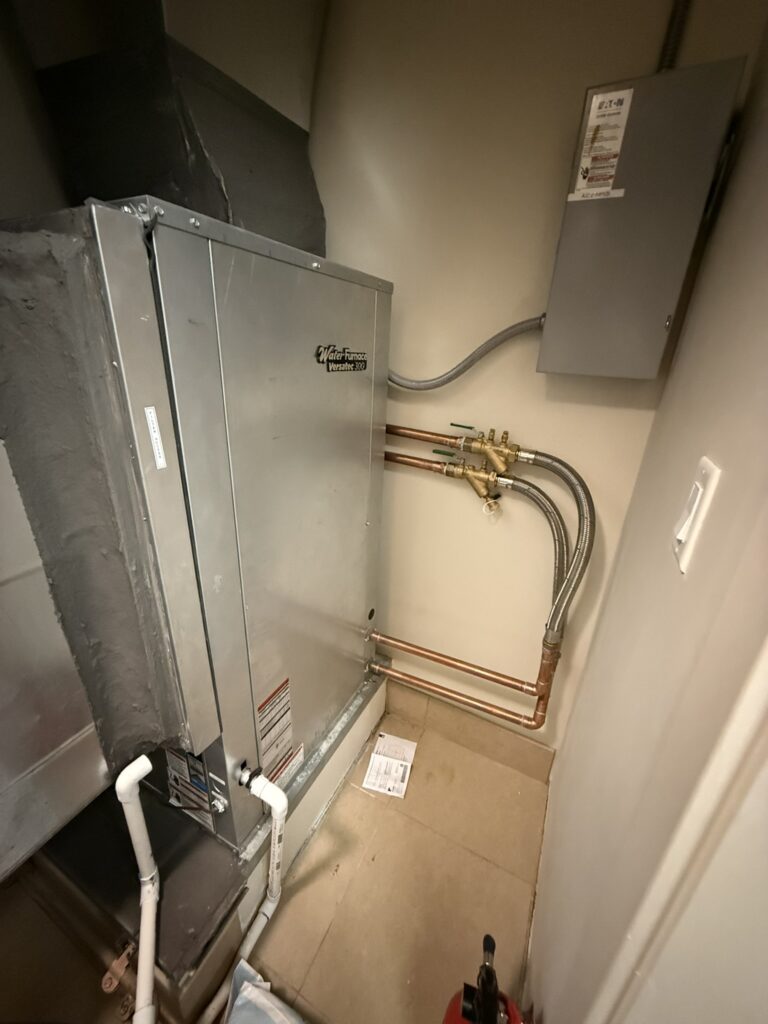
Photos from our own commercial projects across the Phoenix metro — equipment we installed, in buildings we service.
How the job typically runs.
Warehouse service starts with use. We ask what is stored, where people work, which doors stay open, whether vehicles or equipment move through the bay, and which rooms must be comfortable during business hours. Office hours are Mon-Fri 8-5, with 24/7 emergency service for failures that stop operations. We also ask when the complaint is worst, because a Fountain Hills space may behave differently in a still July afternoon, a humid monsoon evening, or a morning when the bay door was open for deliveries.
At booking, the diagnostic/service-call fee is disclosed and credited. After the in-person look, we provide flat-rate written quotes with scopes documented in writing. That matters in small Fountain Hills warehouse spaces because one complaint may involve a rooftop unit, an evaporative cooler, duct distribution, controls, roof heat, and access limits. The written scope keeps the decision practical: repair the failed component, correct airflow, service evap equipment, isolate the office pod, replace equipment, or plan a staged improvement when the building use has outgrown the original system.
We coordinate around deliveries, gate access, staff shifts, customer appointments, and roof access. If the issue is an office pod, we can often isolate that system from the open bay. If the whole warehouse needs review, we map the practical options instead of assuming full cooling is the right target. Call (520) 556-8929. For rooftop work, we verify access and operating conditions before promising a final path. For interior work, we protect the occupied areas, work around inventory, and identify anything that affects airflow, service clearance, condensate routing, or controls.
- 01 Booking, with the diagnostic fee disclosed
- 02 In-person diagnosis with real readings
- 03 Written flat-rate quote before work begins
- 04 The work: repair, install, or maintenance
- 05 Startup, documentation, and warranty handoff
Warehouse HVAC work in Fountain Hills must fit the actual building use, Maricopa County conditions, SRP utility service, and Arizona contractor standards. We service and document HVAC; we do not issue code rulings, legal advice, occupancy approvals, or certifications for a stored product. If replacement, electrical changes, roof curb work, ventilation changes, or condensate routing may require permitting or additional trade coordination, we identify that in the written scope after inspection. Documentation is especially important in flex spaces where office comfort, warehouse airflow, and equipment access overlap. It is also important when a space has been modified over time with new partitions, office pods, storage racks, mezzanine-like platforms, added doors, or equipment that changes heat load and access. For baseline Arizona workmanship standards, see the ROC PDF: minimum workmanship standards. Yeti Pros provides a 2-YEAR written workmanship warranty and a 1-YEAR manufacturer parts warranty on repair parts.
Pricing, financing & the 10% military & first responder discount.
Warehouse HVAC pricing depends on the area being conditioned, roof access, equipment type, refrigerant condition, evaporative cooler condition, ductwork, controls, electrical condition, ventilation needs, and whether the building needs spot cooling or full-zone conditioning. In Fountain Hills, the common cost driver is mismatch: a small office pod, a hot bay, and a roll-up door are being treated like one simple comfort zone. Another driver is access, because rooftop units, tight service yards, hillside properties, gates, tenant schedules, and stocked bays can all affect how the work is performed. We inspect first, then write flat-rate quotes with documented scopes. Financing is available. A 10% military, veteran & first responder discount is available. The diagnostic/service-call fee is disclosed at booking and credited.
- 01 Flat-rate written quote after an in-person look
- 02 Diagnostic fee disclosed at booking, credited to the repair
- 03 Financing available on replacements
- 04 2-year workmanship warranty; 1-year manufacturer parts warranty
- 05 10% military, veteran & first responder discount
Why a licensed HVAC contractor matters.
FAQs: HVAC for Warehouses in Fountain Hills, AZ.
Do you service warehouse HVAC in Fountain Hills?
Yes. Yeti Pros services warehouse, flex-bay, shop, storage, and office-pod HVAC in Fountain Hills ZIP 85268. The local market has fewer large industrial buildings than freeway warehouse corridors, so we usually work on smaller owner-operated spaces, service-business bays, backrooms, parts areas, and mixed office-warehouse layouts. We inspect the actual use before quoting because a Fountain Hills warehouse may need office cooling, spot conditioning, evaporative service, ventilation help, or a rooftop unit repair. We also pay attention to desert operating conditions, including roof heat, dust, door schedules, and whether the building has been changed from storage into a daily occupied workspace.
Should my Fountain Hills warehouse be fully air conditioned?
Not always. Full conditioning can be practical for a tight, occupied, insulated space with controlled doors, but it may be wasteful or ineffective for an open bay with roll-up doors and intermittent use. We look at who works there, what is stored, door schedules, roof heat, equipment load, office needs, and comfort expectations. Sometimes the right answer is full cooling. Sometimes it is office-pod repair, spot cooling, evaporative service, ventilation correction, or a staged plan. The goal is to condition the part of the operation that truly needs it, not to overpromise comfort in a shell that loses cooled air every time the bay opens.
Can you repair evaporative coolers in warehouse spaces?
Yes. We service evaporative coolers used in warehouse, shop, and storage spaces when that equipment is appropriate for the use. We check pads, pumps, bearings, belts, water distribution, controls, cabinet condition, and relief air. We also explain limits. During humid monsoon periods, an evaporative cooler may not deliver the comfort people expect. Mineral scale, dust, weak water flow, poor relief air, and worn moving parts can also make the cooler feel like it is working because air is moving while the actual cooling effect is weak. If the issue is really ventilation, mechanical cooling, or office-pod isolation, we document that instead of treating the cooler as the whole answer.
Why is the warehouse office hot but the bay feels fine?
Office pods often fail differently from the open bay. The office may have a small split system, a duct branch from a rooftop unit, or a thermostat reading the wrong condition. Common causes include dirty coils, low airflow, starved return air, undersized duct, failed capacitors, short cycling, duct heat gain, or a door that keeps pulling hot bay air into the office. In Fountain Hills, exterior-wall heat, roof exposure, windows, and equipment inside the office can make the room run hotter than the warehouse around it. We test the office as its own zone and write the repair around that condition.
Do you provide written quotes for warehouse HVAC replacement?
Yes. Replacement quotes are flat-rate and written after an in-person look. We document the equipment, access conditions, roof or ground placement, controls, condensate, electrical notes, duct assumptions, and any items that may require permitting or other trade coordination. We do not quote a warehouse replacement accurately from a short phone description because the real cost drivers are usually access, ductwork, load, controls, and the difference between occupied zones and storage zones. A replacement serving an office pod is a different project than a replacement intended to support a hot bay, workbench, storage area, or mixed-use flex space.
Do you offer emergency warehouse HVAC service in Fountain Hills?
Yes. Yeti Pros has office hours Mon-Fri 8-5 and 24/7 emergency service for urgent warehouse HVAC failures in Fountain Hills. Call (520) 556-8929. We are a service-area business with no street address for customer visits; we come to you. Emergency work focuses first on restoring the failed system or stabilizing the affected office, work area, or storage zone, then documenting permanent repair or replacement options in writing. If the failure affects only one part of the building, we separate the urgent need from the long-term comfort plan so the business can keep operating while the next step is decided.
Every major brand, serviced and installed.

Phoenix metro: Most days a tech is already working somewhere in the Valley, so same-day appointments happen when the schedule allows. After-hours emergencies are dispatched when a licensed tech is available — a real person answers and tells you the ETA on the call.
Call (520) 556-8929Request an estimate.
No pressure, no door knockers. We look at the HVAC system, tell you what it needs (and what it doesn’t), and put the number in writing.
Need warehouses in Fountain Hills? A real person answers.
Other services we run in Fountain Hills.
Warehouses in nearby cities.
Looking for something else nearby? All HVAC services in Fountain Hills