
Goodyear
HVAC for Warehouses in Goodyear, AZ.
- (520) 556-8929
- Serving the entire Phoenix metro — we come to you
- Office: Mon–Fri 8:00 AM – 5:00 PM · 24/7 emergency service
- 2-year workmanship warranty · 1-year parts warranty
- Veteran-owned & operated · residential + commercial
- 23 five-star Google reviews
Warehouse HVAC in Goodyear has to be honest about the building. The Loop 303 logistics corridor is built around volume, docks, racking, truck movement, and fast West Valley distribution, not office-style comfort across every cubic foot. A full-building cooling promise for a big box can be the wrong conversation. The real work is usually separating what must be conditioned from what can be ventilated, evaporatively cooled, spot-cooled, or left as warehouse ambient: office pods, dispatch rooms, parts cages, break rooms, QA benches, light manufacturing areas, battery charging zones, and shipping desks.
Yeti Pros handles warehouse HVAC for Goodyear operators in 85338 and 85395 who need clear mechanical decisions, not vague comfort talk. Goodyear has master-planned rooftops in Estrella and Palm Valley driving retail and service growth, while the industrial edge along Loop 303 keeps adding distribution and light manufacturing demand. Those two faces meet inside warehouse buildings: office comfort expectations attached to hot dock operations. We are veteran-owned & operated, service-area based, and we come to you. AZ ROC #363372 · ROC #363423. Office hours are Mon-Fri 8-5, with 24/7 emergency service. Call (520) 556-8929.
ZIPs served: 85338, 85395
What Warehouses covers in Goodyear.
Office Pod HVAC Repair
We diagnose and repair systems serving warehouse office pods, dispatch rooms, break rooms, and shipping counters, including airflow, thermostat, refrigerant, condensate, duct, and electrical issues tied to occupied areas inside larger shells.
Rooftop Unit Service
We service packaged rooftop units on Goodyear warehouses, including compressors, condenser fans, coils, belts where present, electrical components, economizers, drains, filters, and cooling performance under heavy summer operation.
Evaporative Cooling Service
For warehouse evap systems, we inspect pads, pumps, belts, floats, drains, valves, fan operation, controls, and airflow paths so operators understand what the system can deliver in dry heat and monsoon conditions.
Ventilation And Exhaust Checks
We inspect accessible fans, controls, belts, louvers, relief paths, and related HVAC components when ventilation problems affect heat buildup, stale air, or comfort in warehouse support areas.
Spot Cooling Planning
We help separate areas that need focused cooling from warehouse volume that does not justify full conditioning, then document practical HVAC options for desks, QA benches, equipment rooms, and occupied work zones.
Replacement Scope Documentation
When equipment is past practical repair, we document the unit, served area, access needs, electrical and curb considerations, controls, and operational constraints so replacement decisions are grounded in the actual warehouse.
What we see for warehouses in Goodyear.
The first split in Goodyear warehouses is full conditioning versus targeted conditioning. Many large facilities along the Loop 303 corridor are not designed to cool the whole warehouse like a medical suite or retail floor. They rely on ventilation, exhaust, evaporative cooling, high-volume air movement, or specific conditioned zones. We see trouble when an office thermostat is expected to represent a dock wall, when a break room unit is overloaded by warehouse heat, or when a tenant improvement added offices inside a shell without enough return air or insulation above the pod.
Evaporative cooling still appears in big-box and industrial applications because it can make sense for large-volume air movement in Arizona, but it has limits. During humid monsoon stretches, performance changes. Pads, pumps, belts, valves, drains, float assemblies, and controls need attention before the first severe heat calls arrive. In APS territory, runtime and electrical load matter. A neglected evap section, failed exhaust fan, or stuck relief path can make a warehouse feel dead even when some equipment is technically running. We document what is mechanical, what is airflow, and what is an expectation mismatch.
Office pods inside warehouses fail differently than the warehouse floor. Dispatch offices, shipping counters, HR rooms, and manager offices may be served by split systems, packaged units, or ducted zones carved into a larger building. Common Goodyear problems include dirty coils from dust, plugged filters from forklift traffic and cardboard, undersized returns, thermostat placement near exterior glass or warehouse doors, damaged flex duct above pod ceilings, and condensate issues from long cooling cycles. When the office staff complains while the warehouse team is focused on dock throughput, we trace the served area instead of assuming one building-wide answer.
Light manufacturing and logistics sites can add process heat, compressed air rooms, battery charging, packaging lines, or equipment rooms that were not part of the original load assumption. We do not certify industrial hygiene, fire code compliance, or legal operating conditions. We service and document HVAC: equipment condition, airflow, ventilation components we are asked to inspect, repair recommendations, and replacement scope. For Goodyear operators, that written record matters because a warehouse may be owner-occupied, leased, or managed remotely, and the decision-maker may not be standing under the failed unit when the problem is found.
- 01 Airflow and static pressure
- 02 Electrical: capacitors, contactors, draws
- 03 Refrigerant-circuit behavior
- 04 Drains, safeties, and float switches
- 05 Thermostat, controls, and cycling
- 06 Ducts, returns, and room-by-room comfort
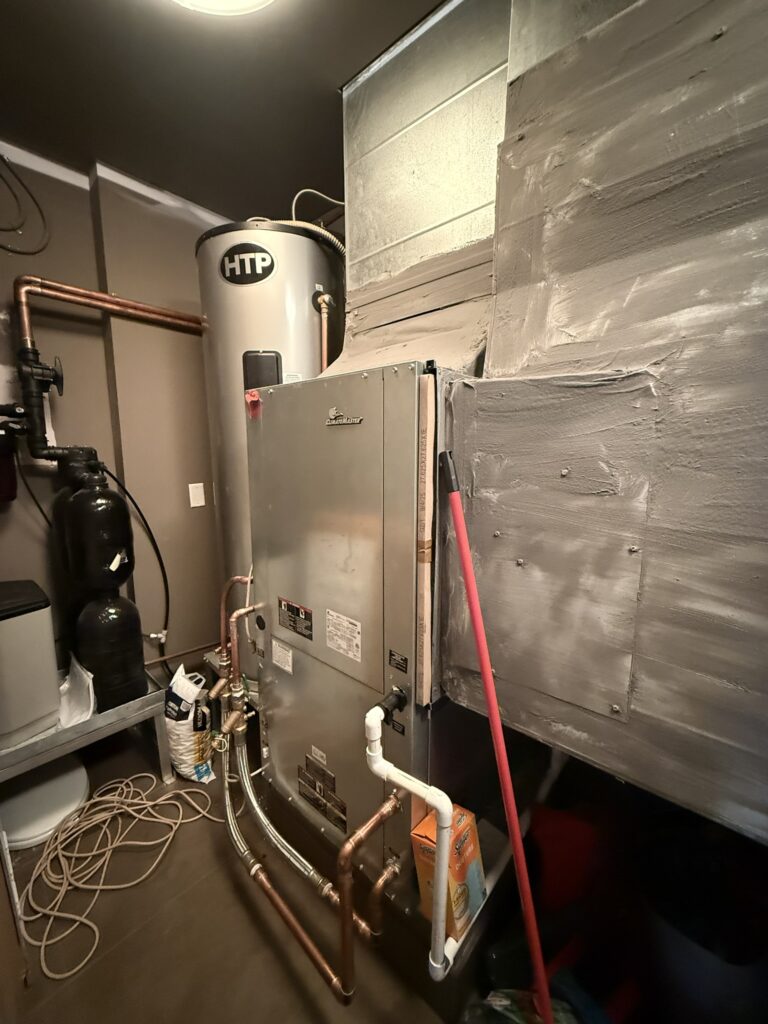
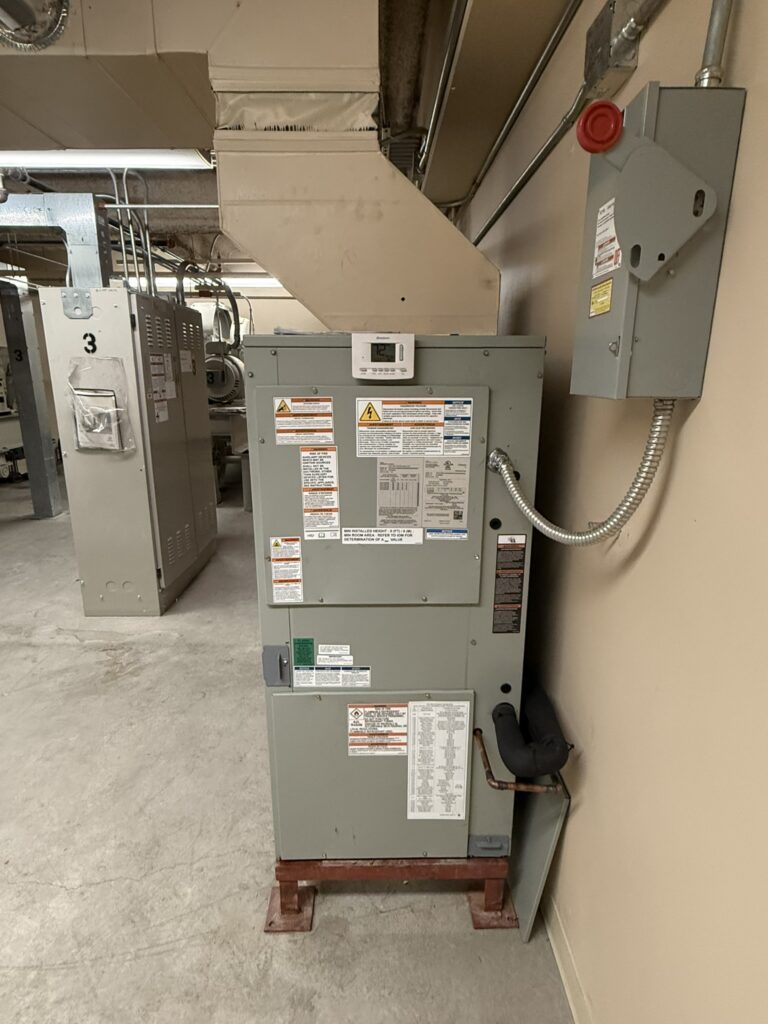
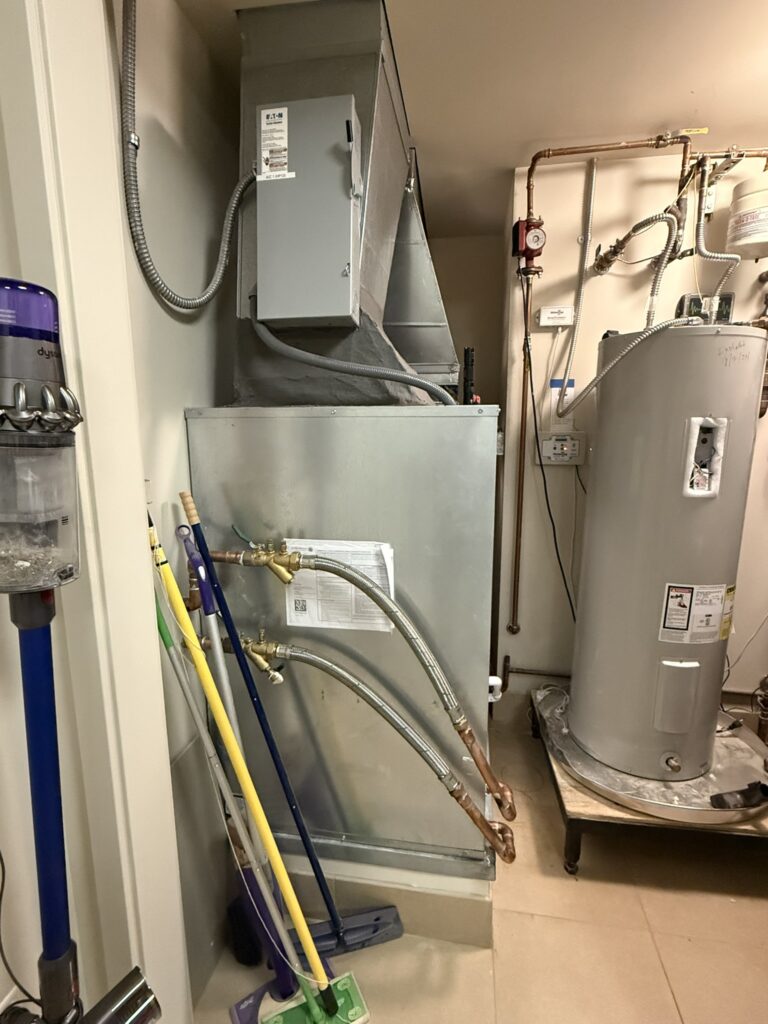
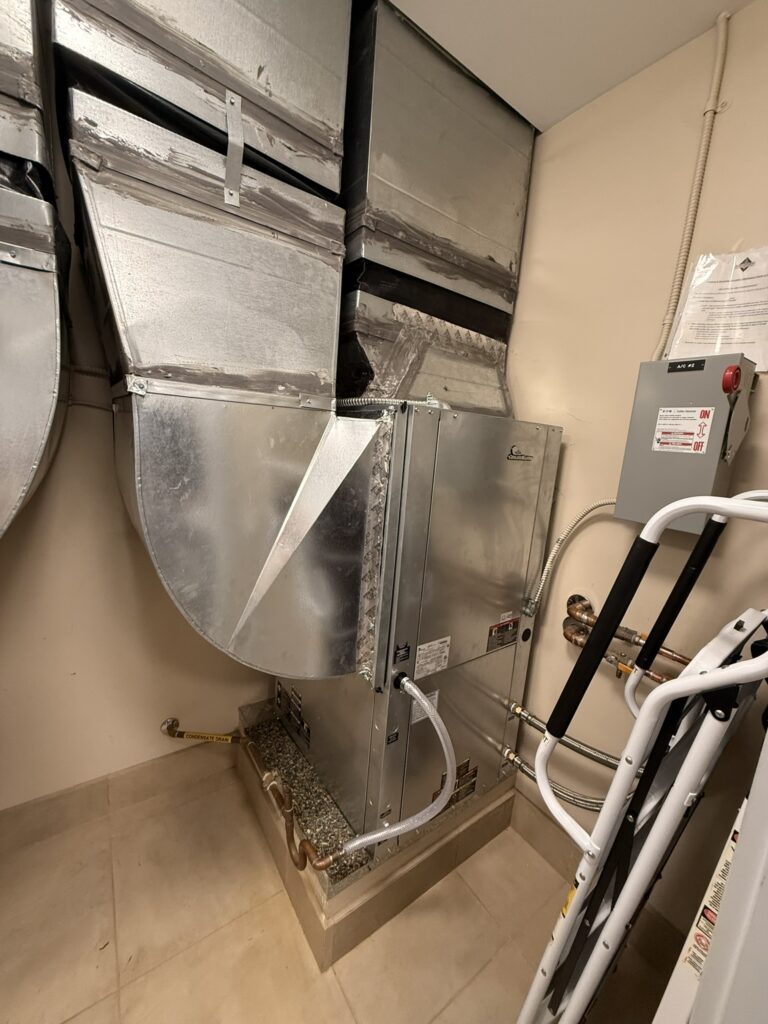
Commercial jobs we have documented.
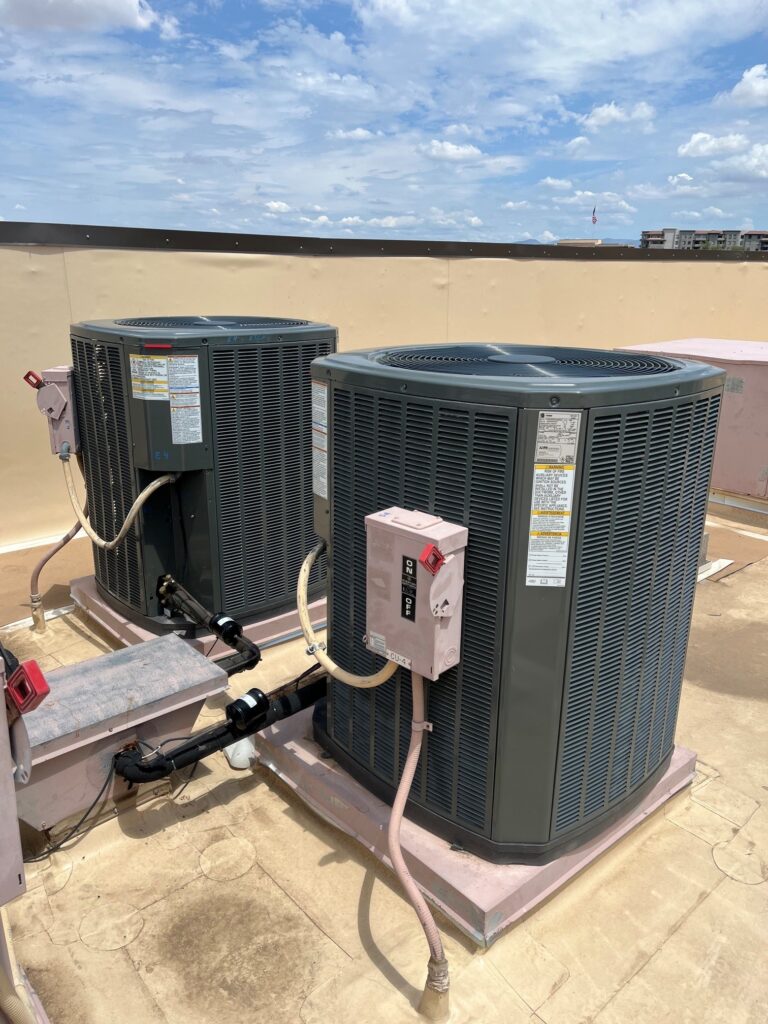
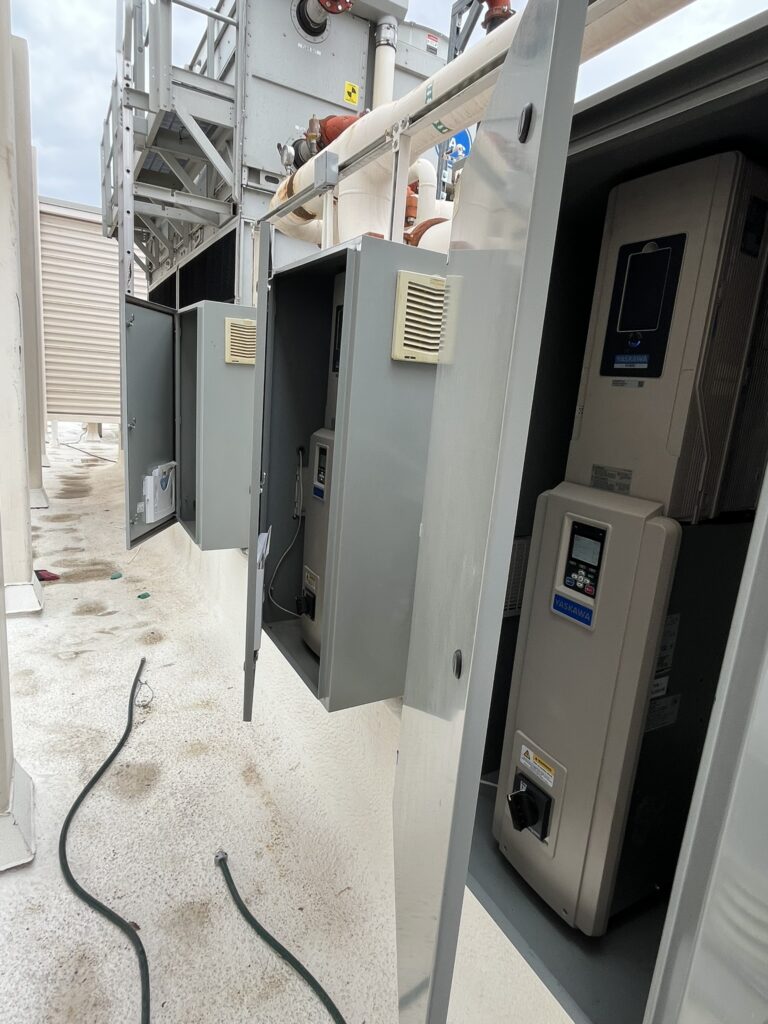
Photos from our own commercial projects across the Phoenix metro — equipment we installed, in buildings we service.
How the job typically runs.
We begin by defining the served area. For a Goodyear warehouse, that might be a 2,000-square-foot office pod inside a much larger building, a dock office, a break room, a server closet, or a specific production zone. We ask what changed: occupancy, racking, dock-door use, schedules, equipment heat, thermostat settings, or recent tenant improvements. Then we inspect the HVAC serving that area instead of treating the whole shell as one comfort zone.
Access planning matters in warehouses. We coordinate roof access, lift requirements if known, dock traffic, security check-in, production windows, and areas where a shutdown would interrupt shipping or receiving. For emergency calls, our 24/7 service is aimed at stabilizing critical occupied or operational areas first, then documenting the repair path. If a part, crane, lift, or replacement unit is needed, the scope is written plainly.
After an in-person look, we provide flat-rate written quotes. Scopes are documented in writing so managers, owners, and tenants can see what equipment is included and what condition was found. The diagnostic/service-call fee is disclosed at booking and credited. Financing is available. Repair workmanship is backed by a 2-YEAR written workmanship warranty, and repair parts carry a 1-YEAR manufacturer parts warranty.
- 01 Booking, with the diagnostic fee disclosed
- 02 In-person diagnosis with real readings
- 03 Written flat-rate quote before work begins
- 04 The work: repair, install, or maintenance
- 05 Startup, documentation, and warranty handoff
Warehouse HVAC work in Goodyear may involve rooftop unit replacement, evaporative cooler work, exhaust or make-up air components, electrical coordination, duct revisions, controls, office-pod conditioning, or tenant improvement support. Permit requirements depend on the exact scope, the building, and the authority involved in Maricopa County or Goodyear. We do not guess from the parking lot. We inspect the system, document the mechanical scope, and identify when the work appears to go beyond routine service.
We service and document HVAC; we do not issue legal advice, code rulings, fire-life-safety approvals, cleanroom certifications, or industrial hygiene certifications. Arizona workmanship standards are published by the Registrar of Contractors here: Arizona ROC minimum workmanship standards. Yeti Pros is veteran-owned & operated. AZ ROC #363372 · ROC #363423.
Pricing, financing & the 10% military & first responder discount.
Warehouse HVAC cost in Goodyear depends on the served area, equipment type, roof access, system size, evaporative versus refrigerated cooling, duct condition, controls, electrical condition, lift or crane needs, replacement logistics, and whether the request is for spot conditioning or broader building conditioning. A dock office with a failed split system is a different job than a rooftop unit serving an office block, and both are different from ventilation or evap work on a large warehouse volume.
We provide flat-rate written quotes after an in-person look. The diagnostic/service-call fee is disclosed at booking and credited. We do not give a warehouse number from square footage alone because dock doors, process heat, roof access, and office-pod construction change the scope. Financing is available, and a 10% military, veteran & first responder discount is available. Call (520) 556-8929 to schedule service.
- 01 Flat-rate written quote after an in-person look
- 02 Diagnostic fee disclosed at booking, credited to the repair
- 03 Financing available on replacements
- 04 2-year workmanship warranty; 1-year manufacturer parts warranty
- 05 10% military, veteran & first responder discount
Why a licensed HVAC contractor matters.
FAQs: HVAC for Warehouses in Goodyear, AZ.
Do you cool entire warehouses in Goodyear?
Sometimes, but we do not assume full-building conditioning is the right answer. Many Goodyear warehouse buildings near the Loop 303 corridor are designed around docks, racking, truck flow, ventilation, evaporative cooling, and targeted conditioned areas. Cooling the entire volume like an office can be impractical or outside the original building design. We inspect the building, identify the areas that actually need conditioning, and explain whether the issue is office HVAC, spot cooling, evap performance, ventilation, or a larger replacement conversation.
Can you service evaporative coolers on a warehouse?
Yes. We service evaporative cooling components commonly used for large-volume warehouse air movement in Arizona. That includes pads, pumps, belts, float assemblies, drains, valves, fans, controls, and airflow checks. We also explain the limits: evap performance changes during humid monsoon periods, and it is not the same as refrigerated air conditioning. For Goodyear warehouses, we look at how the evap system interacts with dock doors, exhaust, relief air, and occupied work areas so expectations match the equipment.
Why is my warehouse office hot when the main unit is running?
The office may not be served by the unit you think it is, or the unit may be running without moving enough air through the pod. Common causes include dirty filters, plugged coils, failed blower components, thermostat placement, damaged duct above the office ceiling, poor return air, heat transfer from the warehouse, or a unit that is undersized for the office buildout. In Goodyear heat, these weaknesses show fast. We trace the served area, test the system, and document what is failing.
Do you work around shipping and receiving schedules?
Yes. Warehouse service has to respect dock traffic, security check-in, production windows, and roof or lift access. We ask about receiving hours, restricted areas, badge requirements, equipment locations, and any shutdown limits before the work starts. Some repairs can be completed with little disruption. Others require planned downtime, parts, lift access, or rooftop coordination. We put the scope in writing so the site manager and decision-maker can align before authorizing the work.
What is the difference between spot cooling and full conditioning?
Spot cooling focuses on specific occupied or heat-sensitive areas: dispatch desks, QA tables, equipment rooms, break rooms, or production stations. Full conditioning tries to control a much larger warehouse volume. In Goodyear logistics buildings, spot cooling is often the more practical conversation because dock doors, high ceilings, racking, and truck movement make whole-building comfort difficult. We inspect the area, equipment, airflow, and heat sources, then document options that match how the warehouse is actually used.
What information should I provide for warehouse HVAC service?
Have the Goodyear ZIP code, building access instructions, affected area, equipment location if known, roof access details, dock or production restrictions, and whether the issue affects an office pod, warehouse floor, evap system, exhaust fan, or specific work zone. Tell us if a lift is required or if security check-in is strict. We disclose the diagnostic/service-call fee at booking and credit it. After the in-person look, we provide a flat-rate written quote. We come to you.
Every major brand, serviced and installed.

Phoenix metro: Most days a tech is already working somewhere in the Valley, so same-day appointments happen when the schedule allows. After-hours emergencies are dispatched when a licensed tech is available — a real person answers and tells you the ETA on the call.
Call (520) 556-8929Request an estimate.
No pressure, no door knockers. We look at the HVAC system, tell you what it needs (and what it doesn’t), and put the number in writing.
Need warehouses in Goodyear? A real person answers.
Other services we run in Goodyear.
Warehouses in nearby cities.
Looking for something else nearby? All HVAC services in Goodyear