
Sun Lakes
HVAC for Warehouses in Sun Lakes, AZ.
- (520) 556-8929
- Serving the entire Phoenix metro — we come to you
- Office: Mon–Fri 8:00 AM – 5:00 PM · 24/7 emergency service
- 2-year workmanship warranty · 1-year parts warranty
- Veteran-owned & operated · residential + commercial
- 23 five-star Google reviews
Warehouse HVAC in Sun Lakes is a narrow, honest category. This is not a heavy industrial district; it is an affluent 55+ Robson retirement community in ZIP 85248, just south of Chandler, shaped by golf-course living, HOA-governed property, small service businesses, maintenance yards, storage rooms, contractor bays, club operations, and satellite support spaces. The real customer is usually a small-format warehouse, back-of-house shop, office pod, records room, inventory room, or owner considering whether Sun Lakes can support a light commercial location.
Yeti Pros handles warehouse HVAC in Sun Lakes by separating what needs full conditioning from what only needs targeted comfort, ventilation, or equipment protection. In Maricopa County heat, that distinction matters. Conditioning an office pod is one job. Trying to cool a high-bay shell with overhead doors and roof load is another. A room used for files, parts, club supplies, or staff work may need steady refrigerated air, while an open bay may need a more limited comfort strategy because doors, dust, roof exposure, and occupancy patterns make full comfort a different problem. We are veteran-owned and operated, AZ ROC #363372 · ROC #363423, and we come to you. For metro-wide context, see our commercial warehouse HVAC work.
ZIPs served: 85248
What Warehouses covers in Sun Lakes.
Office Pod HVAC Repair
We diagnose and repair split systems and packaged units serving warehouse offices, dispatch rooms, reception areas, and small administrative pods where comfort matters more than full-shell conditioning.
Warehouse Cooling Assessment
We identify which areas need refrigerated air, spot conditioning, ventilation, or no mechanical change, then document the practical limits of cooling a high-load space in Sun Lakes heat.
Evaporative Cooler Service
For bays that use evaporative equipment, we service pumps, pads, belts, motors, drains, controls, and airflow while being clear about where evaporative cooling fits and where it does not.
Rooftop Unit Service
We repair and maintain rooftop units serving warehouse offices, storage rooms, and mixed-use commercial spaces, including electrical components, coils, fans, economizer symptoms, filters, and condensate issues.
Controls and Zoning Corrections
We correct thermostat placement, schedules, sensors, and zoning problems that cause offices to overcool, storage rooms to drift, or warehouse-adjacent spaces to fight the wrong load.
Preventive Maintenance
Maintenance visits focus on dust, heat, electrical stress, filters, coils, motors, drains, and written condition notes so small warehouse operators can plan repairs before peak failures.
What we see for warehouses in Sun Lakes.
Sun Lakes warehouse-like spaces are often attached to operations that serve the retirement community: golf maintenance, property support, small contractors, medical supply storage, document storage, pool and landscape support, club facilities, and retail back rooms. The HVAC need is usually mixed. A front office needs dependable comfort. A parts room may need temperature stability. A work bay may only justify spot cooling, exhaust, or evaporative equipment, depending on use.
We see office pods inside larger shells where the small split system is asked to fight heat from the warehouse side all day. Leaky doors, unsealed ceiling lines, return air pulled from dusty spaces, undersized filters, and poor thermostat locations make the office feel uneven. In older southeast Valley building stock, the envelope can be patched together from different build phases, so the mechanical system inherits every gap, attic condition, and electrical limitation. The result is often an office that cools in the morning, drifts in the afternoon, then forces staff to override controls because the occupied zone never matches the thermostat reading.
Evaporative cooling can still appear in larger service bays and storage areas, but it has to be discussed plainly. It may help with perceived comfort in dry conditions, yet it is not the same product as refrigerated air, and it can be a poor fit for inventory that reacts badly to added moisture. We look at what is stored, when people occupy the space, how often doors open, and whether SRP electrical capacity or existing roof conditions limit better options. A bay used briefly by maintenance staff is different from a room holding records, supplies, electronics, or materials that need steadier conditions.
The most common failure pattern is not dramatic. It is a slow slide: filters skipped because the unit is above a shop area, coils loading with dust, condensate lines neglected, economizer or damper issues ignored, motors running hot, and thermostats overridden because the occupied zone never catches up. By the time the call comes in, the system may be cooling, but it is no longer serving the actual operating pattern of the space.
Desert conditions make that slide worse. Roof-mounted equipment sees heat, dust, monsoon debris, and long run time. Interior spaces pick up heat from overhead doors, uninsulated partitions, open ceilings, lighting, and equipment. If the return path pulls from the wrong area, the system can bring dusty or hot air back into the unit and punish filters, coils, and blower components. We diagnose both the machine and the warehouse layout because the complaint is often created by both.
- 01 Airflow and static pressure
- 02 Electrical: capacitors, contactors, draws
- 03 Refrigerant-circuit behavior
- 04 Drains, safeties, and float switches
- 05 Thermostat, controls, and cycling
- 06 Ducts, returns, and room-by-room comfort
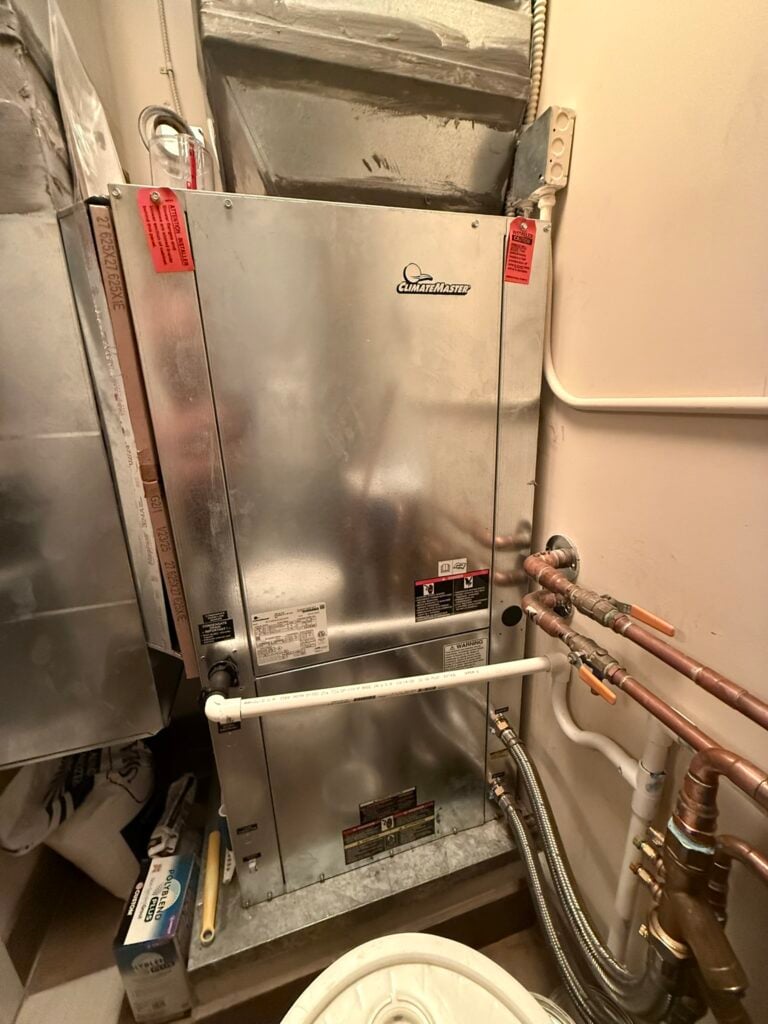
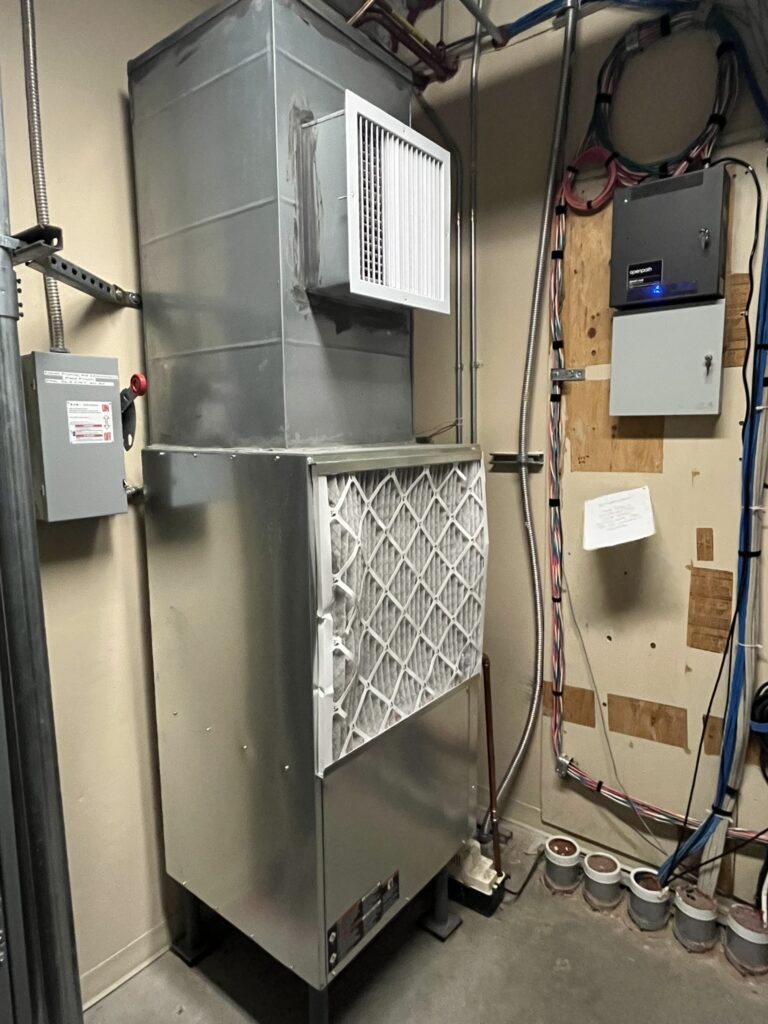
Commercial jobs we have documented.
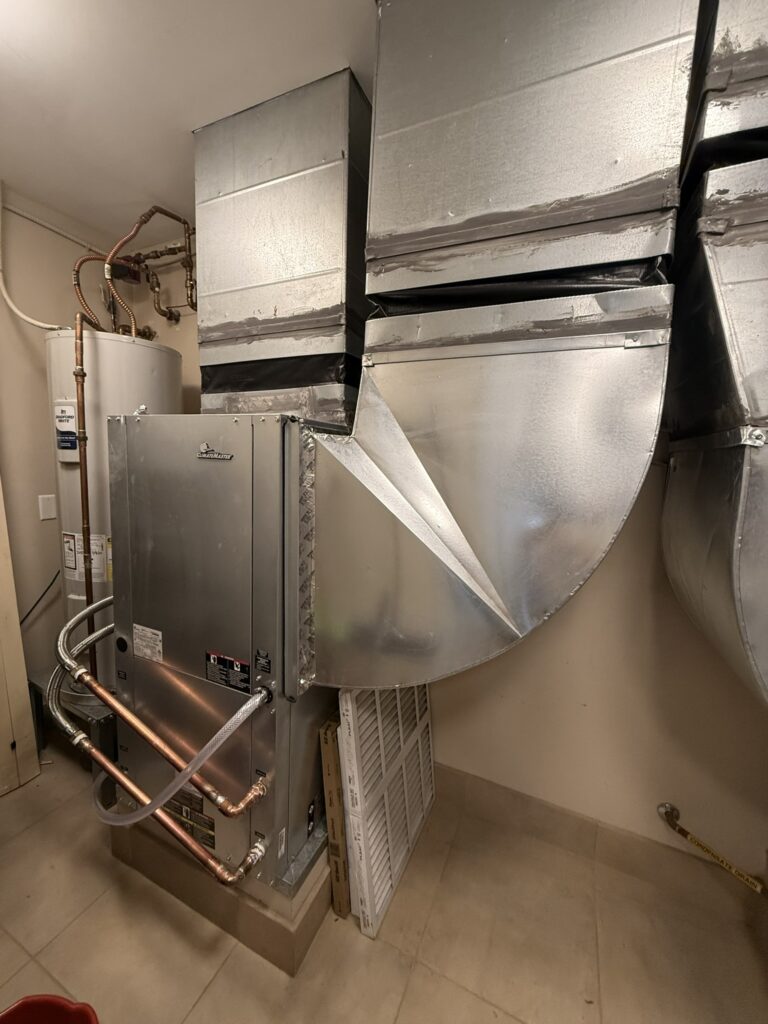
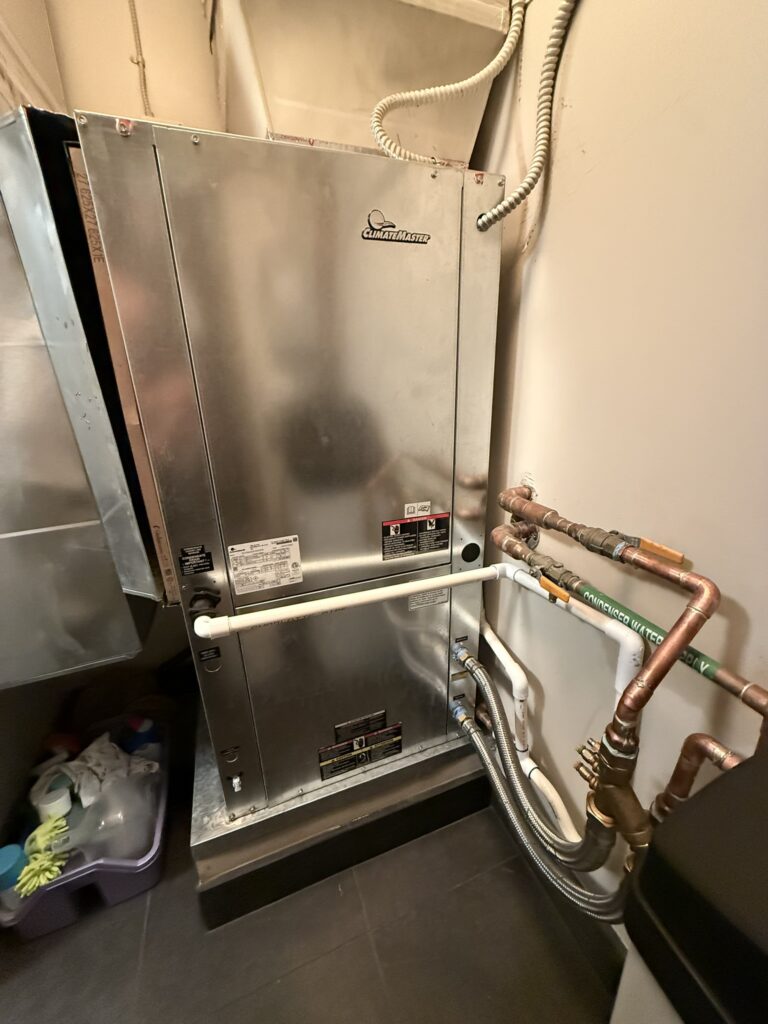
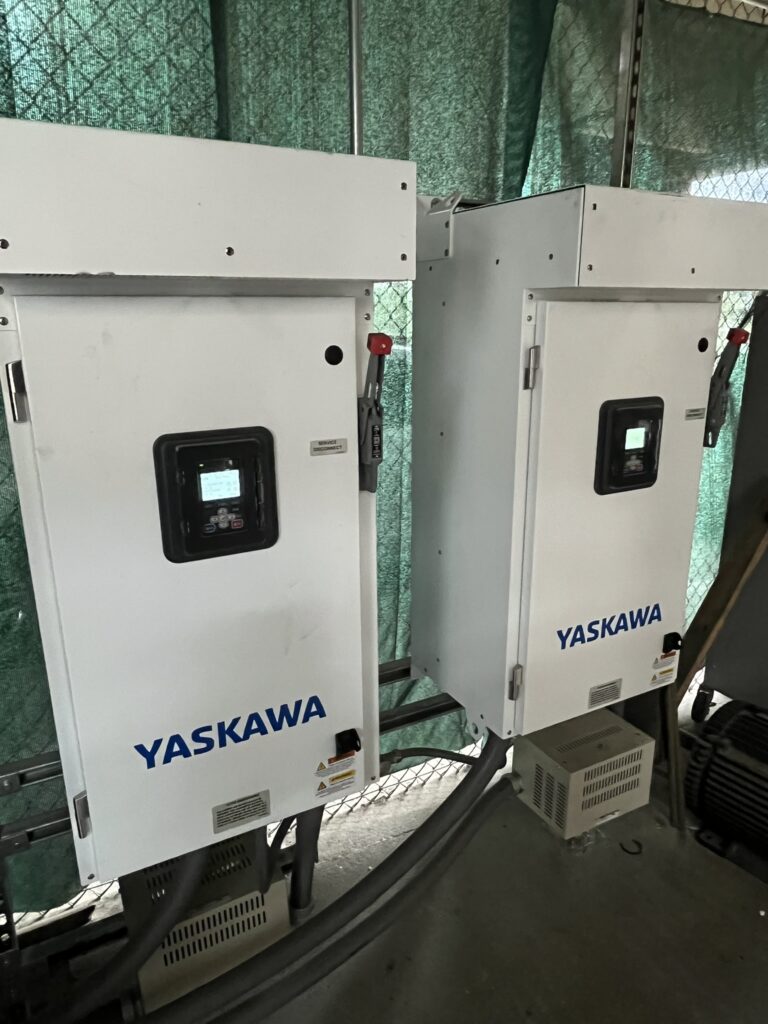
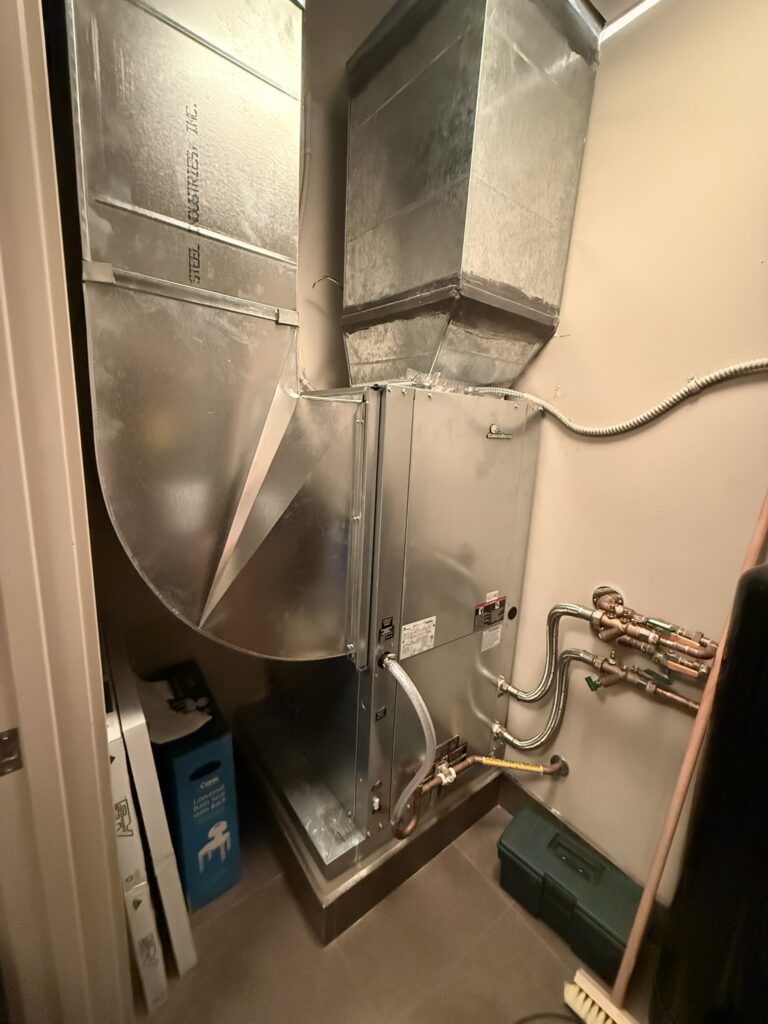
Photos from our own commercial projects across the Phoenix metro — equipment we installed, in buildings we service.
How the job typically runs.
Warehouse service starts with the use case. We ask which zones need people-comfort, which zones protect inventory or equipment, and which areas can tolerate heat. That keeps the scope from drifting into a full-building cooling promise when a targeted repair, office-pod correction, or ventilation adjustment is the better answer. It also helps separate a comfort complaint from a storage-risk complaint, which can point to very different scopes.
Access planning matters in Sun Lakes because many properties are HOA-governed or embedded near residential and golf-course areas. We coordinate roof, ladder, gate, electrical, and tenant access before work begins. We also keep staging practical so a small crew, delivery path, or maintenance bay is not shut down longer than needed. If a unit is above stored materials, near a shop area, or behind a locked gate, that detail affects how the visit should be scheduled.
After an in-person look, we provide flat-rate written quotes with scopes documented in writing. Office hours are Mon–Fri 8–5, and 24/7 emergency service is available when a no-cool condition threatens people, stored goods, or business continuity. Preventive visits can be scheduled around deliveries, club operations, or quiet community windows.
- 01 Booking, with the diagnostic fee disclosed
- 02 In-person diagnosis with real readings
- 03 Written flat-rate quote before work begins
- 04 The work: repair, install, or maintenance
- 05 Startup, documentation, and warranty handoff
Sun Lakes is in Maricopa County and uses SRP, so warehouse HVAC work may touch utility capacity, disconnects, rooftop equipment, curb conditions, condensate routing, gas or electrical connections, and manufacturer installation requirements. We service and document HVAC. We do not certify cleanrooms, issue health-code rulings, approve occupancy classifications, or provide legal advice for a warehouse use.
For small warehouse and support-space operators, the useful habit is written scope control. If equipment replacement, electrical changes, roof work, or other items require permitting or inspection, those steps need to be addressed through the proper authority. We document what equipment was evaluated, what work is proposed, and what operating assumptions apply. That is especially useful when the space is part office, part storage, and part work bay because each area may have a different comfort expectation. Arizona workmanship expectations are published here: ROC minimum workmanship standards.
Pricing, financing & the 10% military & first responder discount.
Warehouse HVAC pricing is driven by whether the target is a small office pod, a storage room, a work bay, or an entire shell. Other drivers include roof access, unit size, duct condition, filtration, dust load, electrical capacity, controls, evaporative versus refrigerated equipment, door openings, insulation, condensate routing, and whether comfort is needed for people or stability is needed for stored materials.
Yeti Pros gives flat-rate written quotes after an in-person look. The diagnostic/service-call fee is disclosed at booking and credited when approved work proceeds. Financing is available, and we offer a 10% military, veteran and first responder discount through our military discount page. Repair workmanship carries a 2-YEAR written workmanship warranty, and repair parts carry a 1-YEAR manufacturer parts warranty. The written quote keeps the scope tied to the actual use case instead of assuming every warehouse-like space needs the same level of conditioning.
- 01 Flat-rate written quote after an in-person look
- 02 Diagnostic fee disclosed at booking, credited to the repair
- 03 Financing available on replacements
- 04 2-year workmanship warranty; 1-year manufacturer parts warranty
- 05 10% military, veteran & first responder discount
Why a licensed HVAC contractor matters.
FAQs: HVAC for Warehouses in Sun Lakes, AZ.
Do you service warehouse HVAC in Sun Lakes if the space is small?
Yes. Most Sun Lakes warehouse HVAC work is small-format: office pods, service bays, storage rooms, maintenance areas, club support spaces, and back-of-house rooms rather than large industrial buildings. That actually makes the diagnostic process more important because the right answer may be targeted office conditioning, evaporative service, ventilation, or a repair to existing rooftop equipment instead of trying to cool the whole shell. We look at the occupied zones, stored materials, access, doors, and equipment before writing the scope.
Can you cool an entire warehouse in Sun Lakes?
Sometimes, but it depends on the building, doors, roof load, insulation, electrical capacity, occupancy, and what is stored inside. A high-bay space with overhead doors is very different from a sealed storage room or office pod. We do not promise full-shell comfort from a quick look at equipment tonnage. We inspect the space, identify the real load drivers, and write a scope that matches the use case. In some buildings, the practical answer is targeted conditioning rather than a whole-shell promise.
Is evaporative cooling a good option for a warehouse near Chandler and Sun Lakes?
Evaporative cooling can help some work bays and service spaces, especially when the goal is relief rather than precise temperature control. It is not the same as refrigerated air, and it may be a poor fit for materials sensitive to added moisture. We service evaporative equipment when it is appropriate and explain when a refrigerated system, ventilation change, or office-only solution is the better direction. The right answer depends on the space, use, stored materials, and expectations.
Why does our warehouse office stay hot when the AC is running?
The office may be gaining heat from the warehouse side through open ceilings, leaky walls, shared return air, poor insulation, or a thermostat placed away from the actual hot spot. The unit may also have airflow restrictions, dirty coils, low blower performance, control problems, or refrigerant-side symptoms. We inspect both the equipment and the separation between the office pod and the larger space before recommending repairs. That helps avoid replacing a part when the office is still fighting heat from the building layout.
Can you work around deliveries or HOA access limits?
Usually, yes. We coordinate with the manager, owner, or site contact before dispatch so roof access, gates, ladders, electrical panels, and work areas are understood. In Sun Lakes, many commercial support spaces sit close to residential or golf-course areas, so staging matters. For non-emergency work, we can plan around delivery windows, club operations, or quieter parts of the day. Clear access planning also helps keep a small warehouse or support room from being tied up longer than necessary.
What should we budget for warehouse HVAC repair or replacement?
The main cost drivers are equipment type, size, roof or mechanical access, electrical condition, ductwork, controls, dust load, condensate routing, and whether you are conditioning an office, storage room, bay, or full shell. We do not quote from a guess. We come to you, inspect the space, disclose the diagnostic/service-call fee at booking, and provide a flat-rate written quote after the in-person look. That quote is tied to the actual zone and operating need, not just the word warehouse.
Every major brand, serviced and installed.
Phoenix metro: Most days a tech is already working somewhere in the Valley, so same-day appointments happen when the schedule allows. After-hours emergencies are dispatched when a licensed tech is available — a real person answers and tells you the ETA on the call.
Call (520) 556-8929Request an estimate.
No pressure, no door knockers. We look at the HVAC system, tell you what it needs (and what it doesn’t), and put the number in writing.
Need warehouses in Sun Lakes? A real person answers.
Other services we run in Sun Lakes.
Warehouses in nearby cities.
Looking for something else nearby? All HVAC services in Sun Lakes