
Phoenix Metro
Whole-Home Dehumidifier Installation in Phoenix.
- (520) 556-8929
- Serving the entire Phoenix metro — we come to you
- Office: Mon–Fri 8:00 AM – 5:00 PM · 24/7 emergency service
- 2-year workmanship warranty · 1-year parts warranty
- Veteran-owned & operated · residential + commercial
- 23 five-star Google reviews
Residential HVAC across the Valley.
Air conditioning, heating, and cooler work at homes across the Phoenix metro.
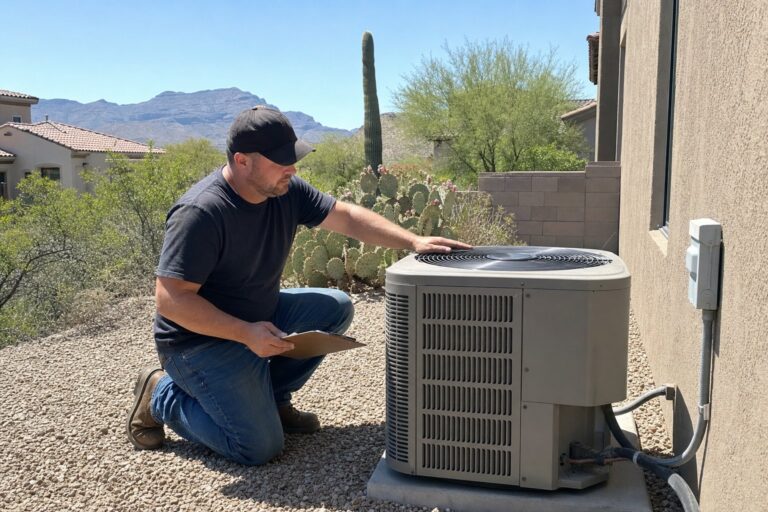
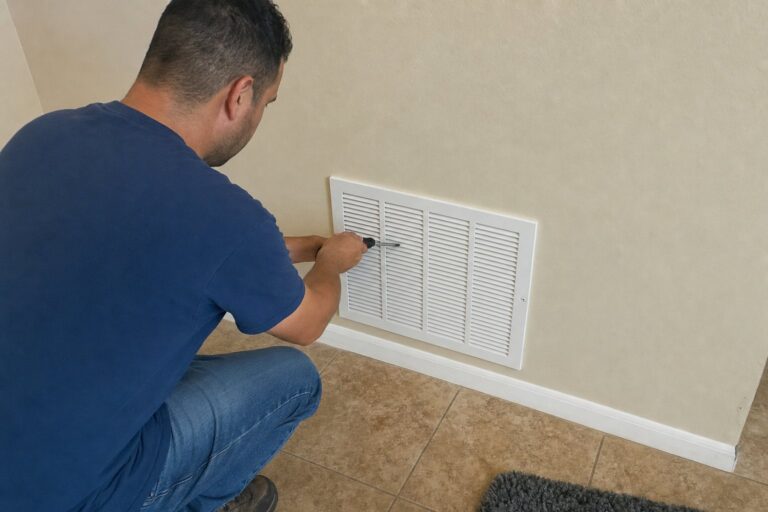
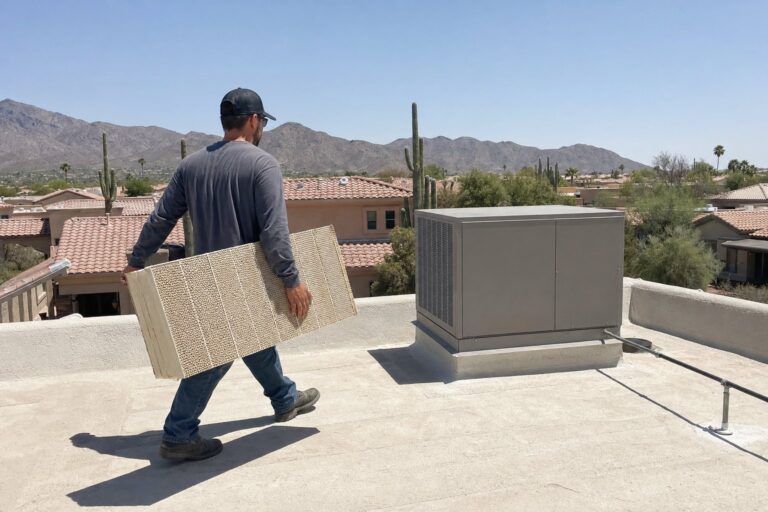
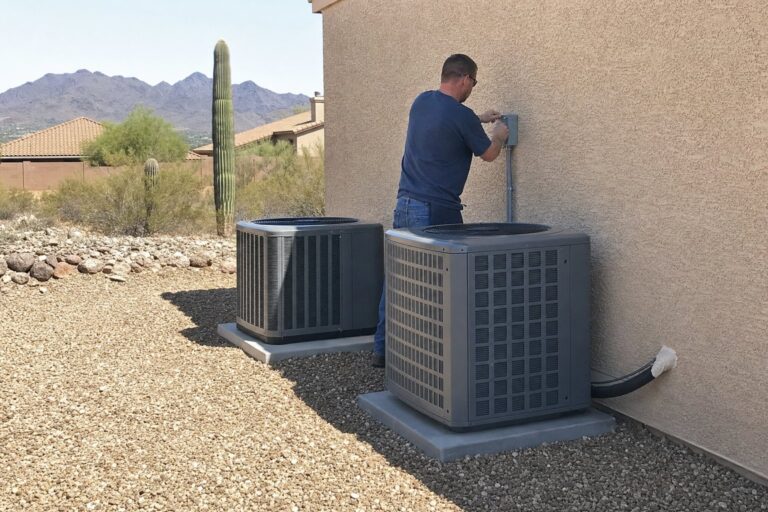
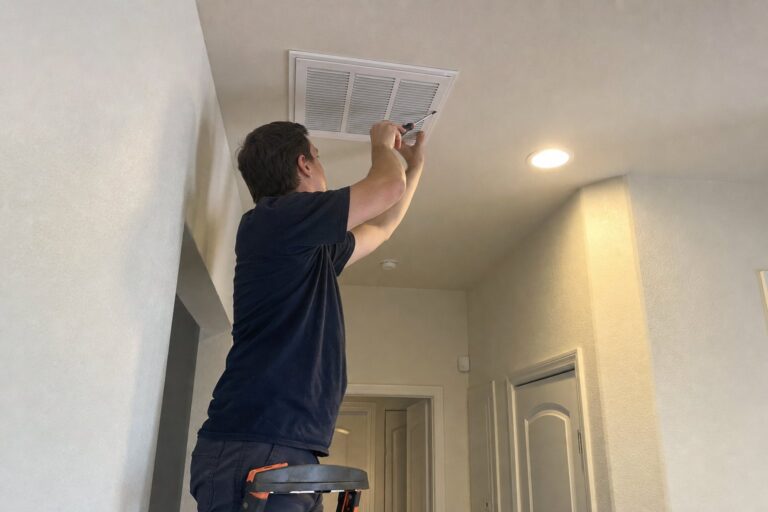
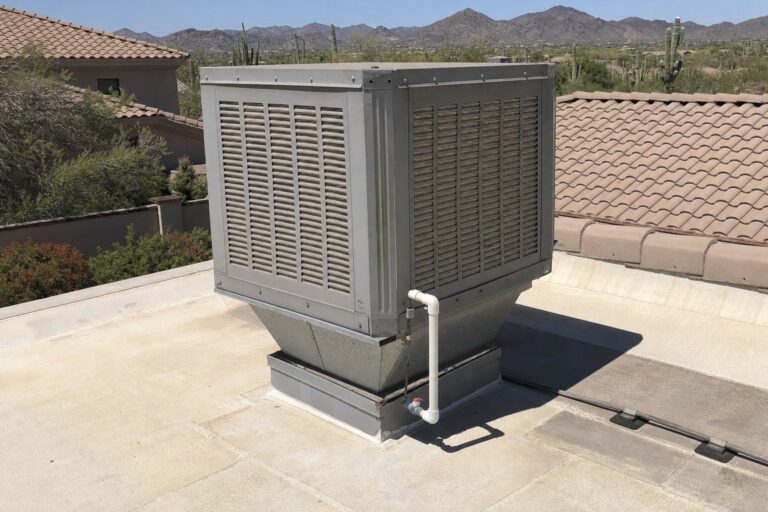
Whole-home dehumidifier installation adds dedicated moisture removal to your HVAC system or ductwork so indoor humidity can be controlled apart from cooling. You need it when the house feels sticky, smells damp, or struggles during monsoon weeks even though the AC is running. We inspect first because Phoenix is dry most of the year, and this equipment is not for every home.
Why dehumidifiers are a niche Phoenix service
Phoenix is not Houston. For much of the year, the outdoor air is dry enough that a whole-home dehumidifier would sit idle. That is why we do not treat this as a default upsell.
The homes that need it usually have a specific pattern: uncomfortable indoor humidity during monsoon season.
A tight or heavily shaded home that does not run the AC long enough to pull moisture.
Oversized cooling equipment.
Indoor sources adding moisture faster than the system removes it.
Air conditioners remove humidity as a side effect of cooling. Warm indoor air passes over the cold evaporator coil, moisture condenses, and water drains away. When the AC runs long enough, that process works. When the system short-cycles, the coil may not stay cold and wet long enough to remove much moisture. The thermostat says the house is cool, but people still feel clammy. In the field, that often shows up as a supply plenum that is cold for only a few minutes at a time, a drain line that barely produces water, and rooms that feel heavy after the blower shuts off.
Benefits of a Whole-Home Dehumidifier
A whole-home dehumidifier handles moisture directly. It pulls air through its own coil, removes water, drains it, and sends drier air back into the home or HVAC system. The benefit is control during the weeks when the desert gets humid enough to make indoor comfort weird.
Potential Downsides
The downside is extra equipment, ducting, drainage, electrical work, maintenance, and heat added back into the air stream depending on the design.
That tradeoff is why the first step is diagnosis. We look at indoor humidity readings, AC runtime, equipment size, thermostat behavior, duct layout, and drainage options. If the real issue is poor airflow, a dirty coil, a bad condensate drain, or a thermostat setting, we say that. This service sits within our residential HVAC work, but it is a targeted fix, not a blanket answer for every Valley home.
How the job actually goes
The visit starts with comfort history and measurements. We ask when the house feels damp, whether the problem is seasonal or constant, what the thermostat is set to, whether the AC short-cycles, and whether certain rooms feel worse. Then we take humidity and temperature readings and inspect the HVAC equipment, duct access, filter condition, coil area, and condensate drainage.
We pay close attention to equipment sizing and runtime. A powerful AC that cools too quickly can leave humidity behind during monsoon season. A weak airflow setup can create coil and drainage problems that feel like humidity trouble. A drain pan that holds water or a line that slopes poorly can add odor and moisture complaints without needing a dehumidifier at all. Dust matters here too. Fine attic dust and return leaks can load filters, mat insulation inside the cabinet, and slow air across the coil, which changes both cooling and moisture removal.
If a whole-home unit makes sense, we identify where it can be installed and how it will move air. Some installations tie into the return and supply ductwork. Some use a dedicated return. Some need a separate drain route and electrical circuit. Attic access, service clearance, platform support, and future filter access all matter because the unit needs maintenance after installation. In a Phoenix attic, that means measuring more than empty space. We look for a safe path from the scuttle or ladder, clearance around trusses, room to remove panels, a place to set the cabinet level, and a route where flex duct will not be crushed against framing or buried under insulation.
After the in-person look, we give a flat-rate written quote before work begins. The quoted number is what you pay unless we find something hidden and stop to re-quote. The diagnostic or service-call fee is disclosed at booking and credited toward the repair or installation.
Installation includes setting and supporting the unit, connecting ductwork, sealing joints, routing the drain, wiring controls, and verifying operation. We confirm the dehumidifier responds to the control setting, drains correctly, and does not create an obvious airflow or pressure problem. The physical work is deliberate: the unit has to sit level, the ducts need smooth bends, the drain has to fall the right direction, and every cut-in has to be sealed so attic air is not pulled into the system. At handoff, we show you the filter, drain, control, and maintenance needs.
Yeti Pros is veteran-owned and operated, AZ ROC #363372 · ROC #363423. We are a service-area business, so we come to you across the Phoenix metro. Office hours are Mon-Fri 8-5, with 24/7 emergency service.
When the humidity complaint points to this service
Humidity complaints can come from weather, AC sizing, drainage, airflow, lifestyle, or building leakage. A whole-home dehumidifier is the right tool only when the home needs moisture removal beyond what the cooling system can reasonably provide.
| What you notice | What it usually means | Dehumidifier or something else? |
|---|---|---|
| House feels sticky during monsoon weeks | Outdoor moisture is up and AC runtime may not be removing enough humidity | Dehumidifier may make sense after readings |
| Thermostat is satisfied but rooms feel clammy | System may be oversized or short-cycling | Diagnosis first; dehumidifier may help |
| Musty smell near the air handler | Drain pan, coil, or drain line may be holding water or residue | Drain and coil inspection before equipment |
| Humidity is high all year | Could be ventilation, plumbing, envelope leakage, or indoor moisture source | Testing and source check before install |
| Windows sweat during normal dry weather | Unusual indoor moisture source or ventilation issue may be present | Do not assume dehumidifier first |
Phoenix-metro realities for humidity control
The Valley is dry for long stretches, then monsoon season changes the feel of the house. That swing is what makes humidity work here different from humid-climate HVAC work. You may only hate the air for part of the year, but during those weeks, a cool house can still feel heavy. The question is whether the discomfort is strong and frequent enough to justify dedicated equipment. During storm cycles, doors open to damp outdoor air, dust gets knocked loose, and the AC may run in shorter bursts between cloud cover and heat spikes. That combination can make the house feel inconsistent from one afternoon to the next.
Arizona homes are slab-on-grade, so there are no basements hiding damp walls or floor duct systems. Moisture problems usually come from indoor activity, outdoor air infiltration, AC runtime, condensate drainage, or ventilation choices. Equipment is often in an attic, closet, garage, or rooftop package unit. Attics can hit 150°F+, which affects where a dehumidifier can be installed and how serviceable it will be later. A unit that looks easy on paper may be poor in real life if a technician cannot reach the filter, remove a side panel, clear a drain, or work around blown insulation without damaging ductwork.
Importance of Drainage
- A dehumidifier removes real water and has to send it somewhere reliably.
- Poor slope, bad trap design, clogged lines, or a sloppy termination can create water damage and odor complaints.
- In a tight attic, the drain route may decide whether the installation is practical.
- The line has to survive heat, dust, vibration, and normal service traffic.
- Low spots can hold water, open ends can pull odors, and long horizontal runs need enough fall to keep water moving after the equipment cycles off.
Duct design matters too. Pulling air from the wrong place or dumping dry air into the wrong side of the system can create pressure problems, noise, or uneven comfort. Rooftop package units and small closet air handlers may limit options. We design around the home we find, not around a diagram from a different climate. We look for return leakage, crushed flex, undersized plenums, and rooms that already struggle for airflow because adding equipment to a weak duct system can make the original complaint harder to understand.
For more context on the seasonal side of this problem, our monsoon indoor humidity guide explains why Phoenix homes can feel damp during part of the summer even in the desert.
What drives the quote
Factors Influencing Your Quote
- Unit capacity
- Duct routing
- Drain routing
- Electrical needs
- Controls
- Attic or closet access
- Service platform requirements
- Whether HVAC corrections are needed first
A dehumidifier tied neatly into accessible ductwork is a different job than one in a hot attic with no good drain path and tight clearances. The quote also reflects how much of the surrounding system has to be protected while the work is done, including insulation, existing drain lines, control wiring, and duct sections that may be brittle from heat.
After the in-person look, we provide a flat-rate written quote. The quoted number is what you pay unless we uncover something that changes the scope and stop to re-quote. The diagnostic or service-call fee is disclosed at booking and credited toward the work. Financing is available when that helps make the project manageable.
Workmanship Warranty
Our installation workmanship is covered by a 2-year written workmanship warranty and held to the AZ ROC Minimum Workmanship Standards.
Parts Warranty
Repair parts carry a 1-year manufacturer parts warranty.
We offer a 10% military, veteran, and first responder discount. To schedule a visit, use contact or call (520) 556-8929.
Straight answers
Do Phoenix homes really need whole-home dehumidifiers?
Some do, most do not. Phoenix is dry much of the year, so the equipment has to solve a real comfort or moisture problem. We look for measured humidity, seasonal pattern, AC runtime, drainage issues, and duct feasibility before recommending one.
Will a dehumidifier make my AC work less?
It can make the house feel more comfortable at the same temperature because drier air feels better. It does not replace the AC. It adds a separate moisture-removal process, and the installation has to be designed so it does not create airflow or heat issues.
Is monsoon humidity enough reason to install one?
Sometimes. If the problem is brief and mild, settings or AC service may be enough. If the house repeatedly feels sticky, smells damp, or has measured high indoor humidity during monsoon weeks, dedicated dehumidification may be worth discussing.
Where does the water go?
It drains through a dedicated condensate route or an approved connection designed for the installation. Drain slope, trap design, access, and overflow protection matter. We show you the drain path at handoff because that part has to keep working after we leave.
Permits and inspections
Most repairs are ordinary service work; bigger scopes can involve city permitting. We perform our work to code, pull the permits our scope requires, and put what we did in writing.
What's covered
Workmanship is covered for two full years, in writing, and repair parts carry a 1-year manufacturer parts warranty — we document installs and repairs so those claims stay simple to make
Why a licensed HVAC contractor matters.
Every major brand, serviced and installed.




Phoenix metro: Most days a tech is already working somewhere in the Valley, so same-day appointments happen when the schedule allows. After-hours emergencies are dispatched when a licensed tech is available — a real person answers and tells you the ETA on the call.
Call (520) 556-8929Request an estimate.
No pressure, no door knockers. We look at the HVAC system, tell you what it needs (and what it doesn’t), and put the number in writing.