
Mesa
HVAC for Warehouses in Mesa, AZ.
- (480) 771-3252
- Serving the entire Phoenix metro — we come to you
- Office: Mon–Fri 8:00 AM – 5:00 PM · 24/7 emergency service
- 2-year workmanship warranty · 1-year parts warranty
- Veteran-owned & operated · residential + commercial
- 66 five-star Google reviews
Warehouse HVAC in Mesa has to start with an honest question: are you trying to condition the whole box, a production zone, or only the people who work in it? Mesa has small industrial buildings near the older core, aerospace and light manufacturing around Falcon Field, service warehouses off US 60 corridors, big-box retail back-of-house space near Superstition Springs, and new distribution-adjacent growth pushing toward Eastmark. Some buildings have evaporative coolers that are still doing useful work. Some have office pods bolted onto hot shells. Some have rooftop units asked to cool square footage they were never sized to handle. Yeti Pros handles commercial warehouse HVAC for facility managers who need plain answers before summer exposes every weak motor, belt, coil, and control. We are Veteran-owned & operated, AZ ROC #363372 · ROC #363423, and we come to you anywhere in Mesa, including 85201, 85203, 85204, 85205, 85210, and 85213. Office hours are Mon–Fri 8–5, with 24/7 emergency service. Call (480) 771-3252; the diagnostic/service-call fee is disclosed at booking and credited.
ZIPs served: 85201, 85203, 85204, 85205, 85210, 85213
What Warehouses covers in Mesa.
Warehouse cooling diagnostics
We identify whether the problem is failed equipment, poor airflow, heat load, bad controls, open dock exposure, or a space-use mismatch. The visit focuses on the zones that matter to operations, from shipping offices and mezzanines to production benches and large shell areas.
Rooftop unit repair
We repair packaged rooftop units serving warehouse offices, production areas, break rooms, and conditioned work zones. Service can include electrical diagnostics, blower components, coils, drains, economizers, refrigerant checks, belts, motors, capacitors, contactors, and written documentation of what failed.
Evaporative cooler service
Many Mesa warehouses still rely on evap cooling for large-volume air movement. We service pads, pumps, floats, belts, bearings, drains, water distribution, controls, and motors, then advise whether the system is still useful for the way the building is actually operated.
Office pod HVAC
Warehouse office pods often have separate comfort problems from the main shell. We service split systems and rooftop units, check return paths, inspect ductwork above ceiling grids, correct thermostat issues, and recommend practical fixes for dispatch desks, managers’ offices, break rooms, and server closets.
Ventilation and airflow checks
We evaluate air movement, exhaust interaction, make-up air, dock-door impact, stratification, and blocked returns. Mesa warehouses with tall ceilings and open doors need airflow decisions that match real operations, not just thermostat readings from one wall near the office.
Replacement scope planning
When equipment is past practical repair, we inspect the site and write a replacement scope. We account for crane or lift access, roof curbs, electrical condition, controls, duct transitions, utility service, scheduling around warehouse traffic, and keeping critical zones running.
What we see for warehouses in Mesa.
Mesa warehouses fail in layers. The main shell may be too large or too leaky for full mechanical cooling, while the offices, shipping desk, parts room, or quality-control corner need reliable comfort every day. In older industrial pockets near Mesa’s core, we see low-clearance buildings with patched ductwork, older packaged units, swamp coolers, and office additions that were never balanced after walls moved. Around Falcon Field, the mix shifts toward light manufacturing, aerospace support, hangars, and specialty rooms where heat from equipment can overwhelm a standard comfort-cooling layout.
Evaporative cooling deserves a straight conversation. In some big Mesa boxes, evap is still the right tool for air movement and sensible heat reduction, especially where doors stay open and full refrigeration would be wasteful. But evap systems need pads, pumps, belts, bearings, drains, controls, and water distribution maintained. They also have limits during humid monsoon periods and in enclosed offices where staff need more stable conditions. We do not sell full conditioning as a cure-all when spot cooling, ventilation, or a repaired evaporative system is the better operational answer.
Office pods are where many warehouse calls begin. A manager says the warehouse is hot, but the actual failure is the mezzanine office, shipping office, server closet, break room, or dispatch desk. Those spaces are often served by small split systems or rooftop units with clogged coils, poor return air, thermostat placement near a door, or ductwork crushed above a ceiling grid. In Mesa’s 80s–90s suburban industrial rings, these pods may have been expanded several times without a clean mechanical reset.
Heat, dust, and runtime drive the failure pattern. SRP serves most of Mesa, with the City of Mesa utility serving a downtown pocket, and electrical access can affect replacement planning. We commonly find weak capacitors, contactors, blower motors, belts, dirty condenser coils, failed economizers, clogged condensate drains, and controls that no longer match how the warehouse is used. We service and document HVAC. We do not certify process environments, cleanrooms, aerospace compliance, product storage conditions, or workplace legal compliance.
- 01 Airflow and static pressure
- 02 Electrical: capacitors, contactors, draws
- 03 Refrigerant-circuit behavior
- 04 Drains, safeties, and float switches
- 05 Thermostat, controls, and cycling
- 06 Ducts, returns, and room-by-room comfort
Commercial jobs we have documented.
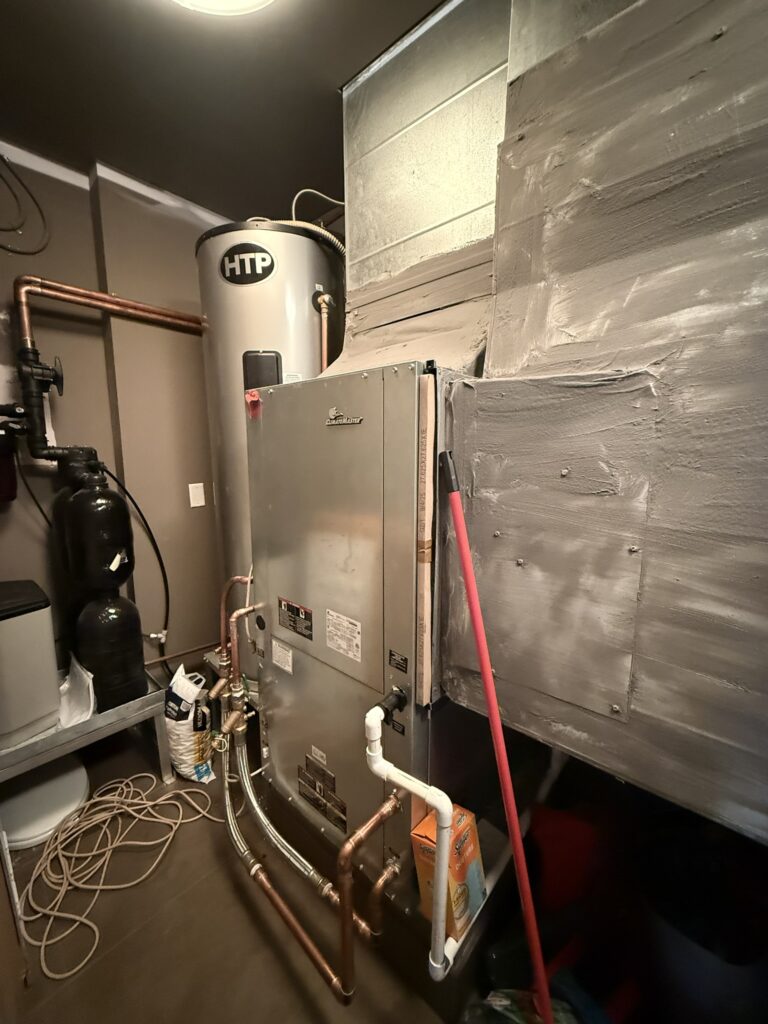
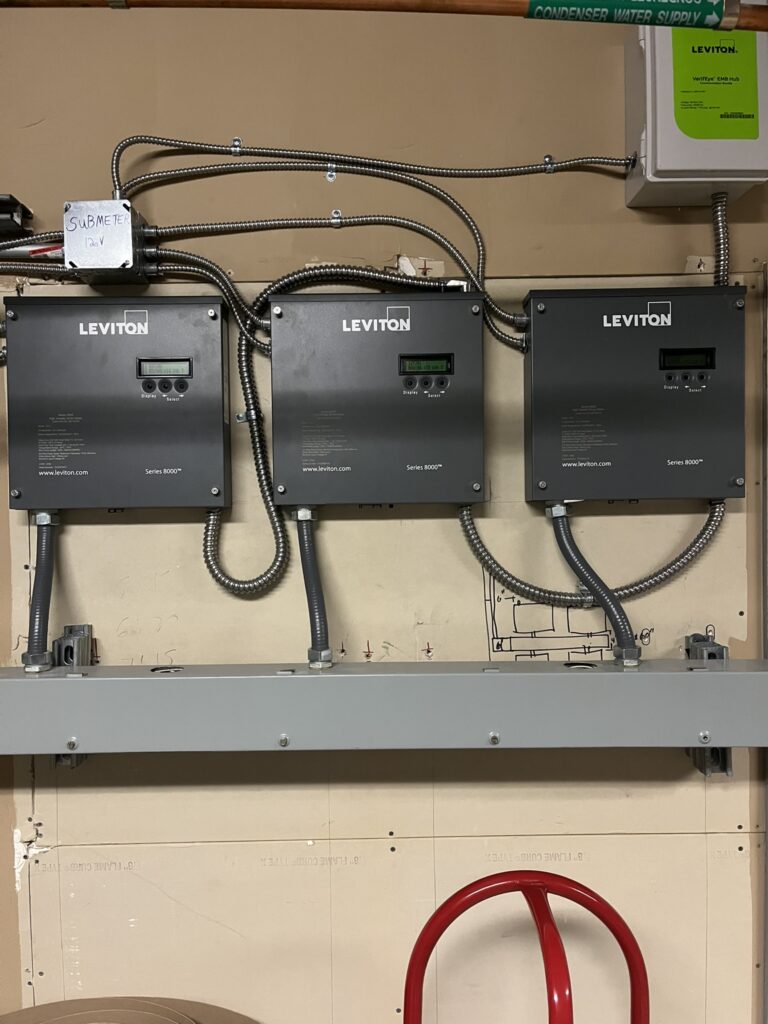
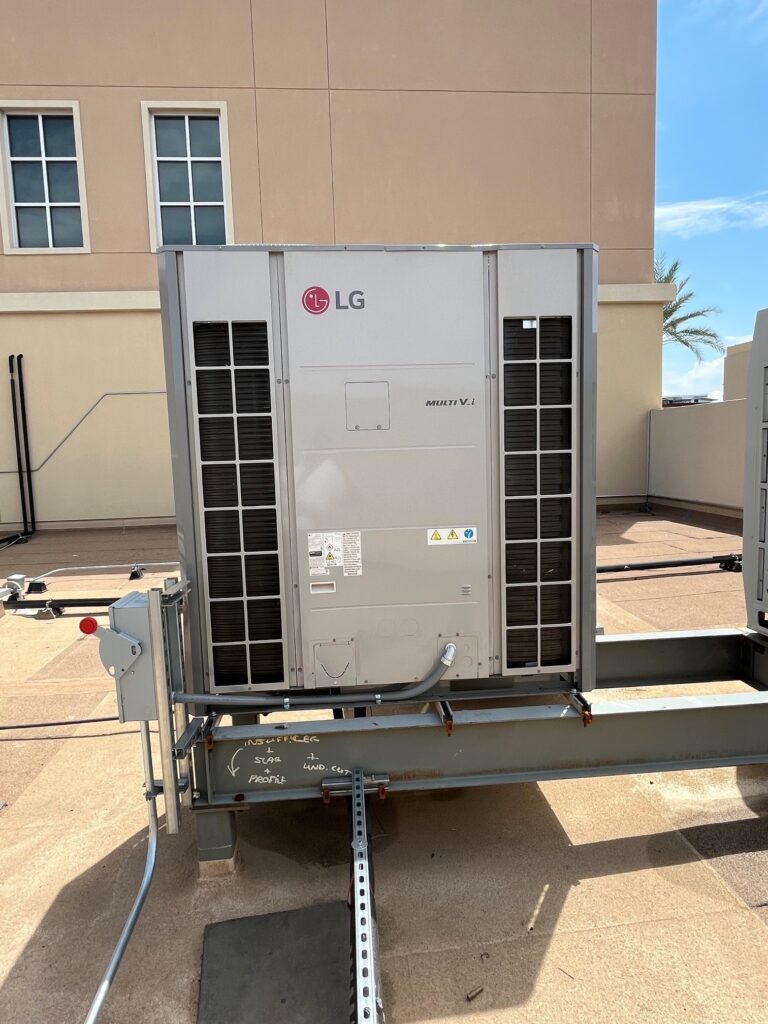
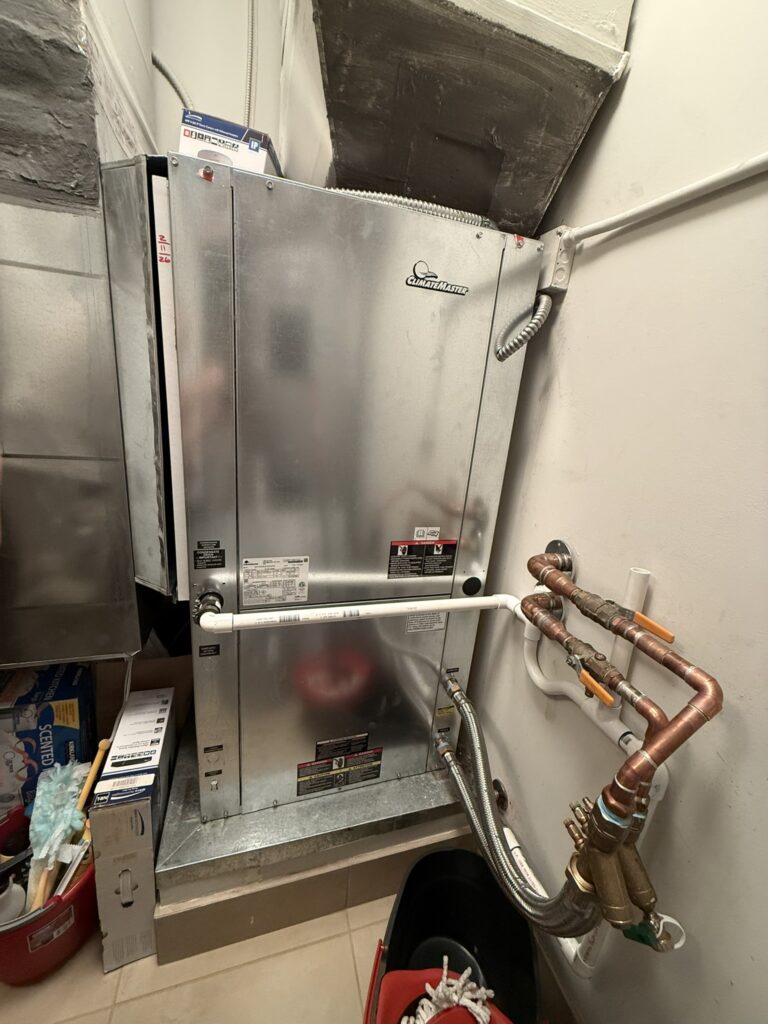
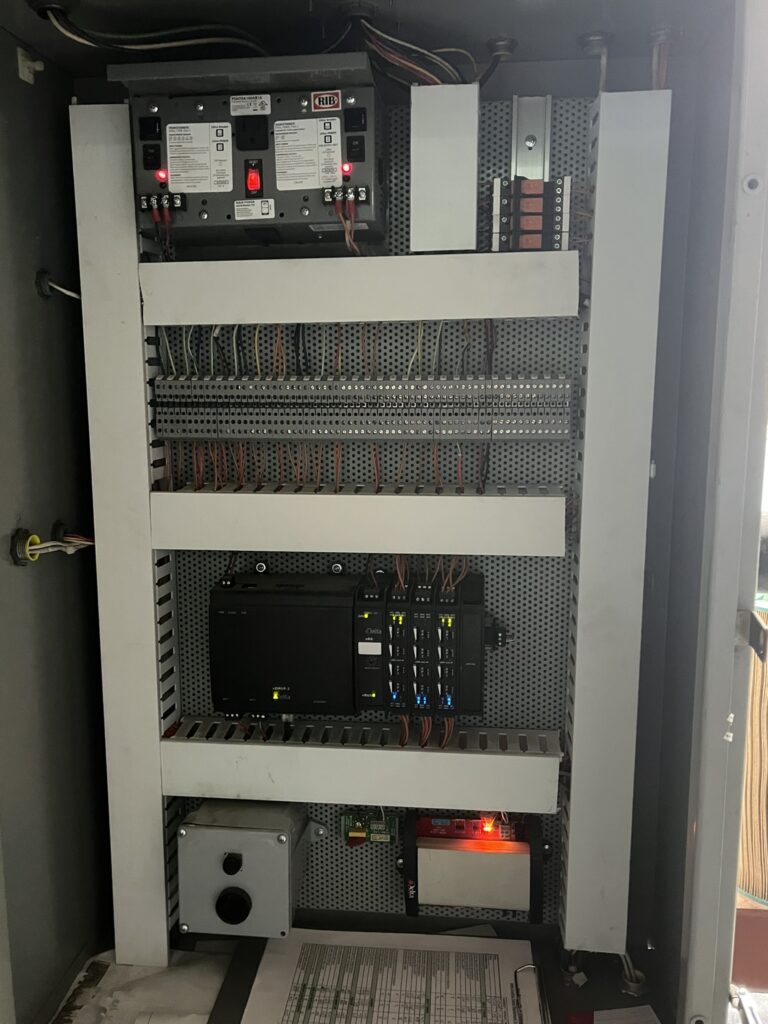
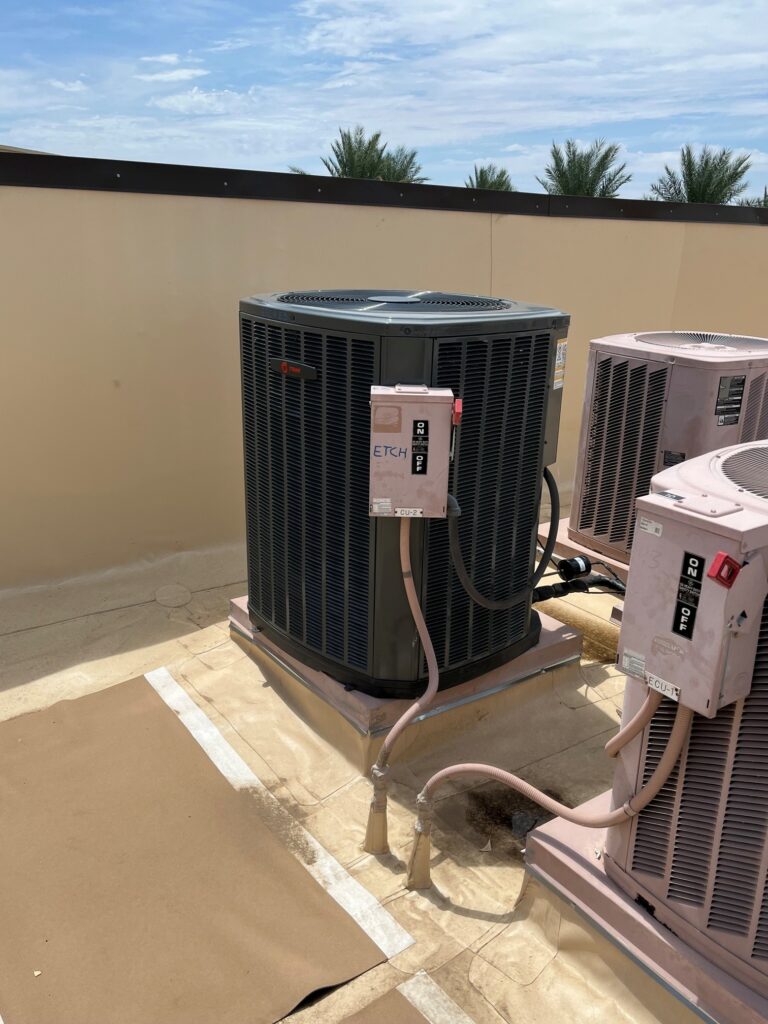
Photos from our own commercial projects across the Phoenix metro — equipment we installed, in buildings we service.
How the job typically runs.
Warehouse service starts with the operating map. We ask which zones matter: shipping, receiving, office pods, production benches, parts storage, server closets, break rooms, or the full shell. A technician needs access to roof equipment, electrical panels, evaporative coolers, air handlers, thermostats, mezzanines, and any locked tenant areas. For active warehouses, we coordinate around forklift lanes, dock traffic, shift changes, and restricted production areas.
For outages, we separate comfort failure from operational risk. A failed office unit, a down production-area spot cooler, and a warehouse-wide evap failure do not get the same response plan. We diagnose the equipment, identify whether temporary operation is possible, and document the repair path. If the system is underserving the space because the building use changed, we say that plainly instead of treating repeated repairs as a strategy.
After an in-person look, Yeti Pros provides flat-rate written quotes with scopes documented in writing. We are a service-area business with no street address for customer visits; we come to you. Office hours are Mon–Fri 8–5, and 24/7 emergency service is available at (480) 771-3252. Repairs include a 2-YEAR written workmanship warranty and a 1-YEAR manufacturer parts warranty on repair parts.
- 01 Booking, with the diagnostic fee disclosed
- 02 In-person diagnosis with real readings
- 03 Written flat-rate quote before work begins
- 04 The work: repair, install, or maintenance
- 05 Startup, documentation, and warranty handoff
Warehouse HVAC scopes in Mesa can range from service work to replacement, new duct runs, controls changes, electrical modifications, gas piping, roof curb changes, or ventilation work. Which pieces require permits or inspections depends on the exact scope, the building, and the jurisdiction. Older buildings near Downtown Mesa and retrofitted industrial spaces often need more field verification because original drawings may not match what is above the ceiling or on the roof.
We document HVAC findings, completed repairs, equipment data, and recommended next steps. We do not issue cleanroom certifications, health-code rulings, aerospace compliance approvals, or legal advice. Yeti Pros is Veteran-owned & operated, AZ ROC #363372 · ROC #363423. For Arizona workmanship reference, see the Arizona Registrar of Contractors minimum workmanship standards.
Pricing, financing & the 10% military & first responder discount.
Warehouse HVAC cost is driven by the size of the conditioned area, access, equipment type, roof conditions, electrical capacity, controls, refrigerant status, evaporative cooler condition, ductwork, and whether the scope is spot comfort or full-area conditioning. A shipping office split repair is a different project than replacing multiple rooftop units or rebuilding evap cooling across a large shell with open dock doors.
The diagnostic/service-call fee is disclosed at booking and credited. After we inspect the building in person, we provide a flat-rate written quote with the scope documented in writing. Financing is available, and Yeti Pros offers a 10% military, veteran & first responder discount at /military-discount/. Call (480) 771-3252 to schedule service in Mesa.
- 01 Flat-rate written quote after an in-person look
- 02 Diagnostic fee disclosed at booking, credited to the repair
- 03 Financing available on replacements
- 04 2-year workmanship warranty; 1-year manufacturer parts warranty
- 05 10% military, veteran & first responder discount
Why a licensed HVAC contractor matters.
FAQs: HVAC for Warehouses in Mesa, AZ.
Can you cool an entire warehouse in Mesa, or should we use spot cooling?
It depends on the building and the work being done inside it. Full conditioning may make sense for a smaller insulated warehouse, a production area with closed doors, or a facility where product or process needs stable conditions. For a large shell with frequent dock-door traffic, spot cooling, office-pod service, ventilation, or evaporative cooling may be the more honest answer. We inspect the actual zones, heat sources, openings, and equipment before recommending a scope.
Do evaporative coolers still make sense for Mesa warehouses?
Often, yes. Mesa’s dry heat can make evaporative cooling useful for large-volume air movement in warehouse shells, especially where doors open often and refrigerated cooling would fight the building. The limits show up during humid periods, in enclosed offices, and where maintenance has been neglected. Pads, pumps, belts, bearings, drains, controls, and water distribution all matter. We service evap systems and tell you when repair is practical versus when the building needs a different cooling plan.
Why is our warehouse office hot while the main space has air movement?
Warehouse office pods usually have their own mechanical problem. The office may be served by a small split system or rooftop unit with a dirty coil, weak blower, clogged drain, bad capacitor, low airflow, or a thermostat in the wrong place. The return air may be pulling from a hot ceiling cavity or the ductwork may have been altered during past remodels. We test the office system separately from the main warehouse so the repair fits the actual failure.
Can you work around forklifts, dock traffic, and production schedules?
Yes, with coordination. We need a site contact, safe access to roof or mechanical areas, panel access, and a clear understanding of restricted areas. For active warehouses, we schedule around dock movement, shift changes, lift use, and production needs when possible. If lift or crane access is needed for replacement, that gets planned in the written scope. Emergency service is available 24/7 at (480) 771-3252.
Do you handle HVAC for Falcon Field aerospace or light manufacturing buildings?
We service and document HVAC for warehouses, light manufacturing spaces, office pods, support buildings, and related commercial equipment around Falcon Field and across Mesa. We do not certify aerospace compliance, cleanrooms, process environments, or product storage standards. Our role is mechanical: diagnose equipment, repair failures, document findings, and provide written scopes for additional work. If a third-party standard applies to your operation, your internal team or specialist sets that requirement.
What should I check before calling for warehouse HVAC service in Mesa?
Identify the affected zone, equipment serving it if known, whether the issue is cooling, airflow, noise, water, controls, or total failure, and when the problem started. Note roof access, electrical panel locations, dock or forklift restrictions, and whether the building is on SRP or the downtown City of Mesa utility pocket. Equipment-tag photos can help, but we still need an in-person look before issuing a flat-rate written quote.
Other services we run in Mesa.
Warehouses in nearby cities.
Looking for something else nearby? All HVAC services in Mesa
Every major brand, serviced and installed.
Phoenix metro: Most days a tech is already working somewhere in the Valley, so same-day appointments happen when the schedule allows. After-hours emergencies are dispatched when a licensed tech is available — a real person answers and tells you the ETA on the call.
Call (480) 771-3252Request an estimate.
No pressure, no door knockers. We look at the HVAC system, tell you what it needs (and what it doesn’t), and put the number in writing.