
Tempe
HVAC for Cannabis Facilities in Tempe, AZ.
- (520) 556-8929
- Serving the entire Phoenix metro — we come to you
- Office: Mon–Fri 8:00 AM – 5:00 PM · 24/7 emergency service
- 2-year workmanship warranty · 1-year parts warranty
- Veteran-owned & operated · residential + commercial
- 23 five-star Google reviews
A cannabis facility in Tempe is usually not a massive rural grow. It is more likely a small-format cultivation room, processing suite, dispensary back room, lab-adjacent tenant space, or owner evaluating a constrained site in a landlocked city where ASU, student housing, restaurant districts, and office corridors compete for every usable building. That changes the HVAC conversation. A cannabis grow HVAC call near the 101/202 corridors, south Tempe, or the ASU campus edge is often about dehumidification, odor pressure, heat rejection, and access limitations inside a tenant-improvement shell that was never designed for plant load. Desert heat makes the margin tighter: condensers sit on hot roofs, sealed rooms add moisture, and small equipment problems can become temperature and humidity swings quickly. Yeti Pros services and documents HVAC; we do not certify grows, issue legal advice, or make compliance rulings. We are veteran-owned & operated, AZ ROC #363372 · ROC #363423, and we come to you across Tempe ZIPs 85281, 85282, 85283, and 85284. Call (520) 556-8929 during Mon–Fri 8–5 office hours or for 24/7 emergency service when cooling or humidity control fails.
ZIPs served: 85281, 85282, 85283, 85284
What Cannabis Facilities covers in Tempe.
Grow room HVAC diagnosis
We evaluate equipment serving cultivation rooms, including airflow, coil condition, refrigerant-side symptoms, controls, electrical components, drains, and the interaction between comfort cooling and dehumidification. Findings are documented for operators, landlords, or facilities leads.
Dehumidification support
Moisture load drives many cannabis HVAC failures. We assess whether existing cooling, standalone dehumidifiers, drains, controls, and airflow paths are fighting each other, then document practical repair or upgrade options without making compliance claims.
Dispensary comfort service
Retail cannabis spaces need steady comfort for customers and staff while secure rooms and storage areas may behave differently. We repair rooftop units, split systems, thermostats, drains, and airflow issues common in Tempe tenant-improvement suites.
Odor-control HVAC coordination
We do not certify odor compliance, but we can inspect HVAC conditions that affect pressure, exhaust interaction, make-up air symptoms, and airflow balance. Written notes help operators coordinate with specialized odor-control or engineering providers when needed.
Emergency cooling response
Cooling or humidity failure can escalate quickly in cultivation and processing areas. We offer 24/7 emergency service, confirm restricted access rules before dispatch, and document the condition, repair options, and any limits found on site.
Maintenance for controlled rooms
Preventive maintenance covers coils, filters, belts, electrical components, drains, blower operation, condenser condition, controls, and service notes. For cannabis facilities, documentation is especially important because room behavior and access rules are not generic.
What we see for cannabis facilities in Tempe.
Tempe cannabis HVAC problems usually start with load mismatch. A room that held office desks, retail inventory, or light storage becomes a cultivation or processing area, then the sensible and latent loads change completely. Lights, irrigation, people, sealed rooms, odor-control equipment, and dehumidification all add heat or moisture that standard comfort cooling was never selected to remove. The result is short cycling, unstable humidity, condensate problems, and equipment that looks oversized for comfort but undersized for the actual process. We often see rooms where the thermostat reaches a number but the plant or process area still behaves unpredictably because the system is not managing moisture, air movement, and heat rejection together.
Because Tempe is fully built out, cannabis operators often work inside lease constraints. Roof access may be shared. Equipment screening may be strict. Electrical capacity may limit what can be added without deeper planning. A small grow near an office corridor can have more in common with a lab tenant improvement than a warehouse. We see improvised ducting, portable dehumidifiers fighting central HVAC, exhaust paths that fight odor-control strategy, and rooms under pressure conditions nobody documented after buildout. In compact suites, secure rooms, storage areas, cultivation areas, and office spaces may be separated by only a few walls, so pressure and airflow changes can move symptoms from one room to another.
The climate adds pressure. In summer, condenser coils, compressors, contactors, capacitors, blower motors, and condensate drains work hard. When outdoor heat is high, a system already struggling with dehumidification can lose both temperature and humidity control. That affects plant health, worker conditions, odor migration, and the ability to keep rooms predictable. We focus on the mechanical facts we can verify: airflow, refrigerant-side symptoms, electrical condition, drain performance, control settings, equipment cleanliness, and actual room behavior. A dirty coil, weak fan, clogged drain, or control setting that seems minor in a normal office can be much more visible in a controlled room with constant internal load.
Dispensary and retail-facing cannabis spaces in Tempe have a separate issue. The sales floor needs clean, steady comfort for customers and staff, while secure rooms, vault-like storage, packaging areas, and IT closets may need different airflow and temperature priorities. Older ranch-era commercial stock and newer infill suites both show zoning problems after remodels. One thermostat may be asked to satisfy public, secure, and process spaces with completely different loads. We also see back rooms that collect heat from equipment, storage areas that were never given enough supply or return air, and retail spaces where door swings and solar load make the front zone fight the rest of the suite.
- 01 Airflow and static pressure
- 02 Electrical: capacitors, contactors, draws
- 03 Refrigerant-circuit behavior
- 04 Drains, safeties, and float switches
- 05 Thermostat, controls, and cycling
- 06 Ducts, returns, and room-by-room comfort
Commercial jobs we have documented.
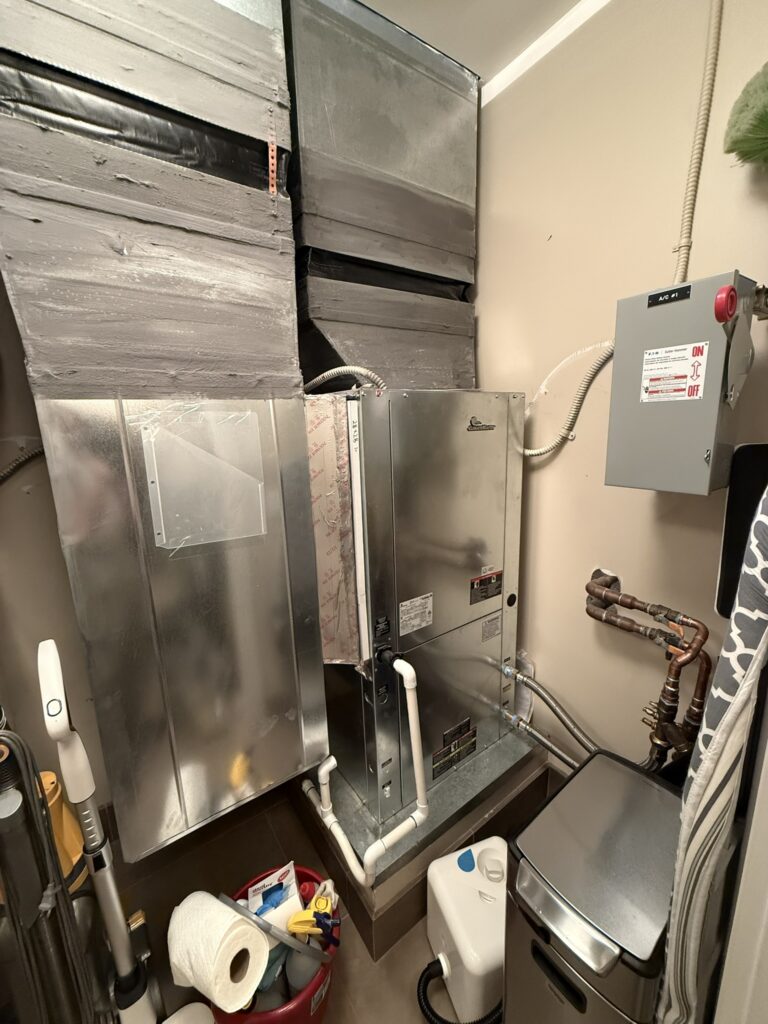
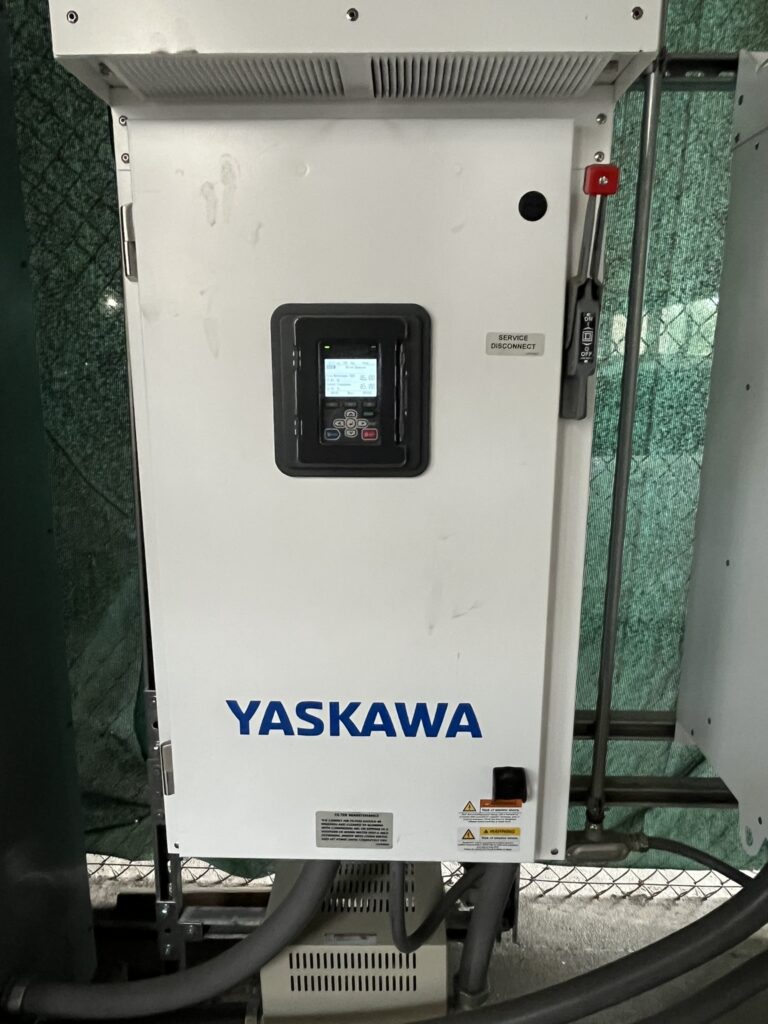
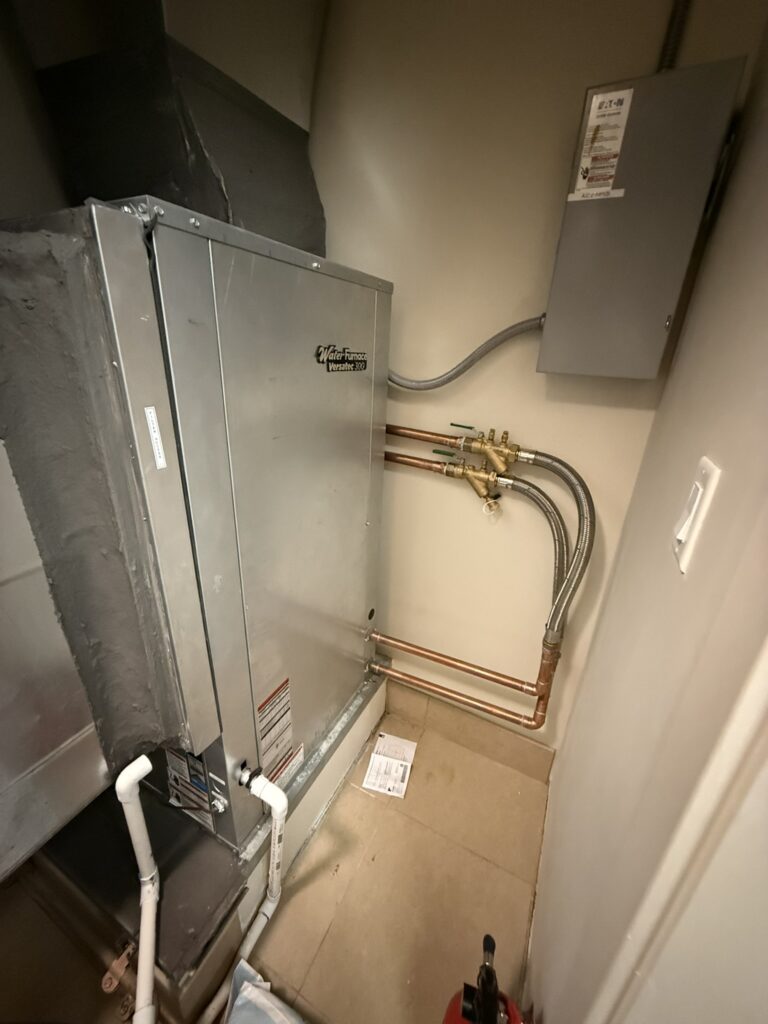
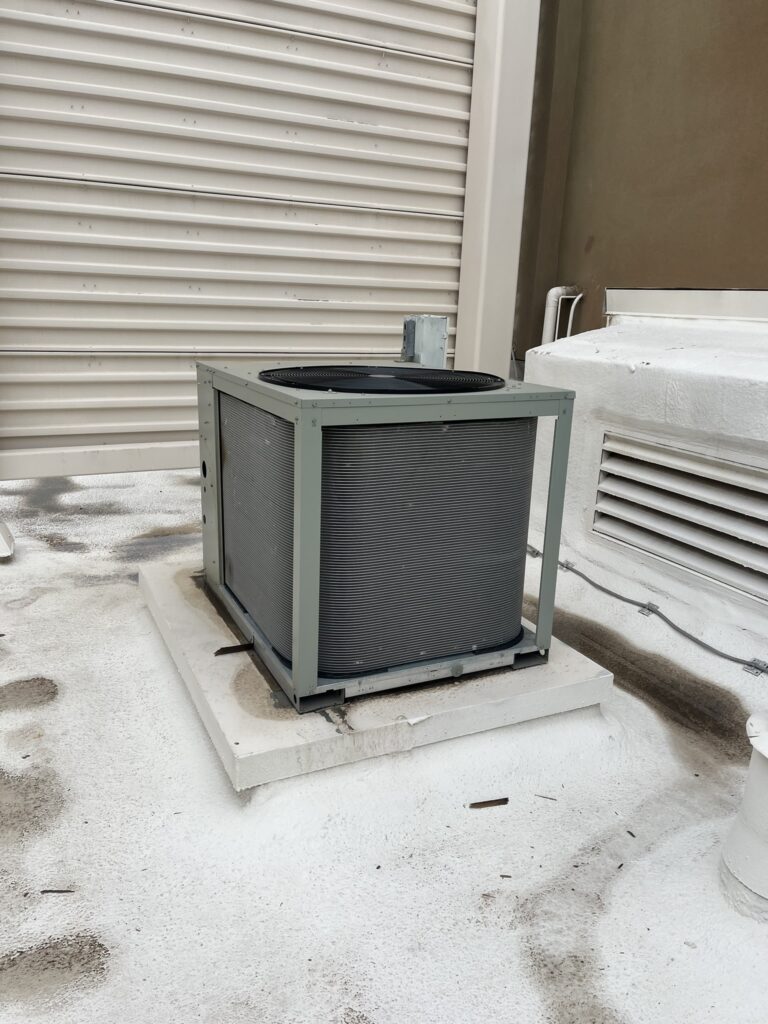
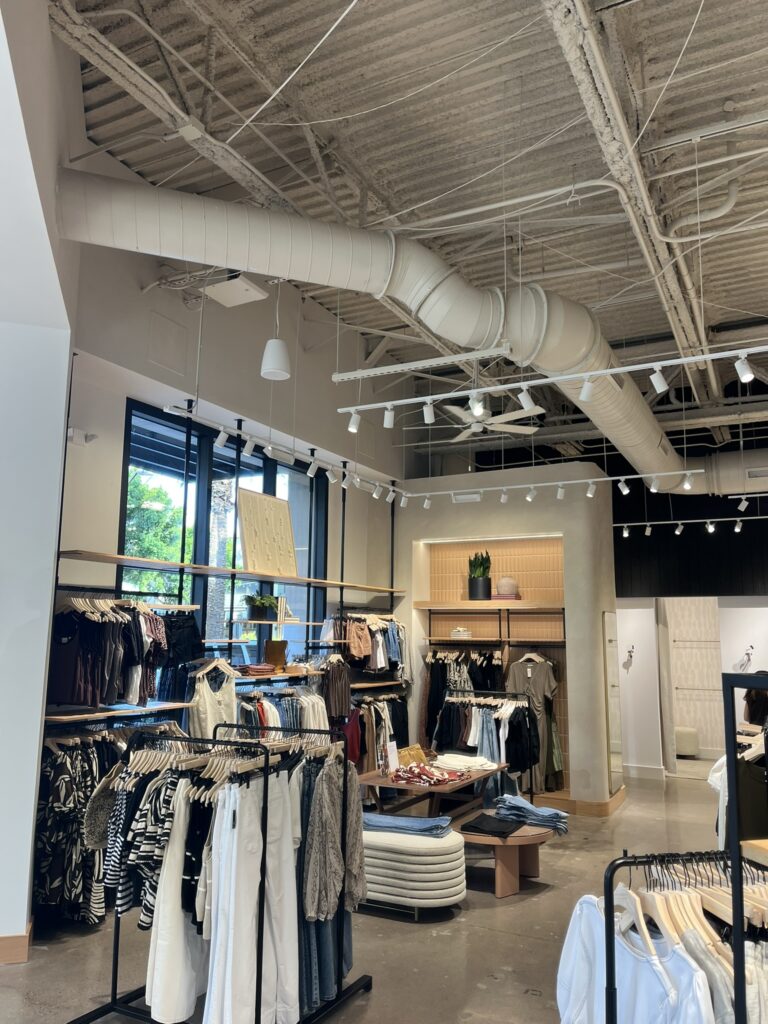
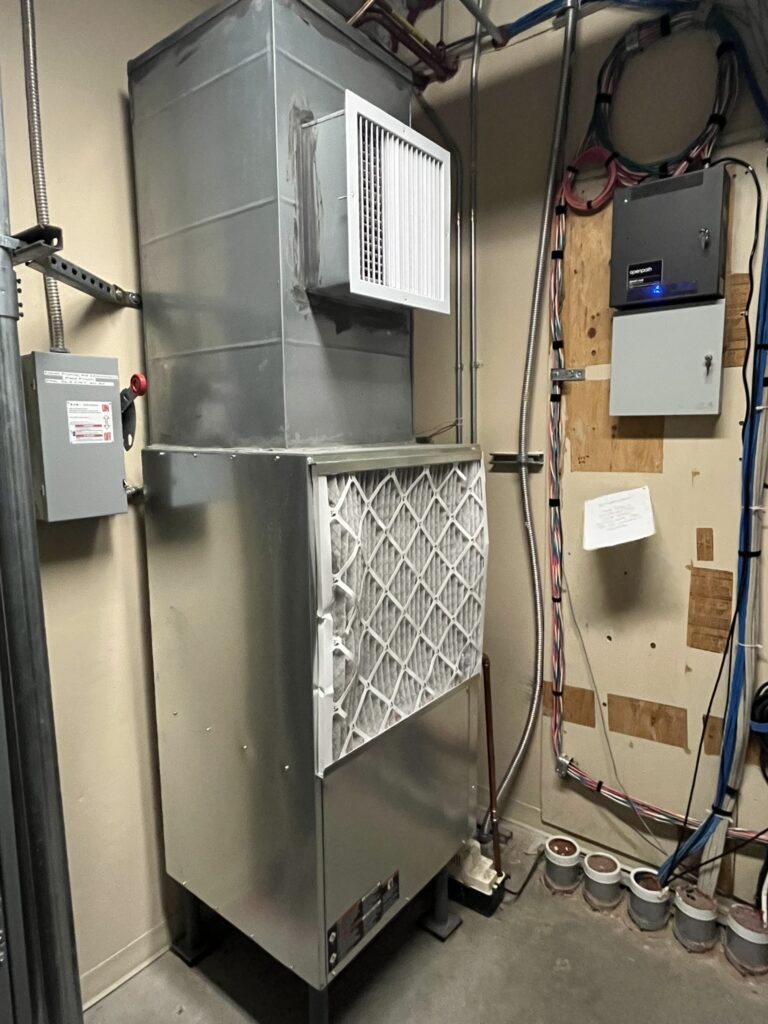
Photos from our own commercial projects across the Phoenix metro — equipment we installed, in buildings we service.
How the job typically runs.
We start by defining the room types before touching the equipment: cultivation, dry/cure, packaging, retail, storage, office, secure room, or IT closet. Access rules matter, so we confirm who can escort, what areas are restricted, whether photos are allowed, how roof access works, and what hours avoid disruption. We also ask whether the complaint is temperature, humidity, odor movement, condensation, short cycling, drain overflow, or a specific room that falls out of range during peak heat.
On site, we inspect the HVAC components and document what they are actually serving. We look at equipment condition, airflow, coils, drains, controls, dehumidification interaction, exhaust and make-up air symptoms, and electrical signs. In cannabis spaces, the equipment list alone is not enough; we need to understand whether a unit serves a public sales floor, a sealed room, a packaging area, or a mixed tenant-improvement zone. The diagnostic/service-call fee is disclosed at booking and credited as applicable. Flat-rate written quotes come after an in-person look.
For repairs or maintenance, we document scopes in writing and coordinate around cultivation schedules, retail hours, security procedures, and landlord access. If a failed part can be repaired immediately but a deeper humidity or airflow issue remains, we separate those items so the operator can act on the urgent failure without losing sight of the larger mechanical concern. We do not certify cannabis compliance, odor compliance, product safety, or legal status. We service HVAC and provide clear records so operators and property managers can make informed decisions.
- 01 Booking, with the diagnostic fee disclosed
- 02 In-person diagnosis with real readings
- 03 Written flat-rate quote before work begins
- 04 The work: repair, install, or maintenance
- 05 Startup, documentation, and warranty handoff
Cannabis facility HVAC work in Tempe can involve ordinary service or work that touches replacement equipment, controls, exhaust, make-up air, condensate routing, roof penetrations, electrical capacity, or tenant-improvement coordination. We do not give legal advice, issue cannabis compliance opinions, certify cleanrooms, or make health-code rulings. We service and document HVAC. When a proposed scope appears to need permit review, landlord approval, engineering input, or utility coordination through SRP service territory, we call that out in writing. Tempe is in Maricopa County, and older commercial shells near the ASU edge, Mill Avenue, south Tempe, and the 101/202 corridors can hide prior modifications. That matters because a cultivation or processing room may depend on duct, drain, electrical, or roof conditions created by a previous tenant.
Yeti Pros is licensed under AZ ROC #363372 · ROC #363423. Arizona’s workmanship reference is available at ROC minimum workmanship standards. Our workmanship warranty is 2 years in writing, with a 1-year manufacturer parts warranty on repair parts.
Pricing, financing & the 10% military & first responder discount.
Cannabis HVAC pricing depends on room use, humidity load, equipment access, controls, dehumidification interaction, odor-control equipment, roof conditions, electrical constraints, and whether the work is a repair, a staged upgrade, or a replacement plan. A dispensary sales floor in a Tempe retail strip is not the same scope as a small sealed grow in an office-flex tenant space. A drain repair, failed blower motor, dirty condenser, or control issue may be a defined service scope, while humidity instability may require a broader look at room load, air movement, dehumidifiers, and heat rejection. Access rules, security procedures, shared roof areas, and landlord requirements can also affect how work is scheduled.
We provide flat-rate written quotes after an in-person look, with scopes documented in writing. Financing is available when larger repairs or replacements make timing difficult. Yeti Pros offers a 10% military, veteran & first responder discount; details are at /military-discount/. The useful conversation is about drivers: moisture removal, heat rejection, redundancy, service access, and how much interruption the operator can tolerate. Call (520) 556-8929 to schedule service or emergency response.
- 01 Flat-rate written quote after an in-person look
- 02 Diagnostic fee disclosed at booking, credited to the repair
- 03 Financing available on replacements
- 04 2-year workmanship warranty; 1-year manufacturer parts warranty
- 05 10% military, veteran & first responder discount
Why a licensed HVAC contractor matters.
FAQs: HVAC for Cannabis Facilities in Tempe, AZ.
Do you work on cannabis grow HVAC in Tempe?
Yes. We service HVAC for small-format cultivation rooms, dispensaries, processing spaces, storage rooms, and tenant-improvement cannabis facilities in Tempe. We focus on mechanical service: cooling, airflow, dehumidification interaction, controls, drains, electrical components, and written documentation. We do not provide legal advice, certify cannabis compliance, certify cleanrooms, or issue health-code rulings. If the job needs engineering, landlord approval, or permit coordination, we identify that in writing. We also confirm access rules and room types before dispatch so the service call fits the facility’s security and operating needs.
Why does my Tempe grow room stay humid even when the AC runs?
Common causes include oversized comfort cooling that short cycles, poor airflow, dirty coils, incorrect fan settings, drain issues, dehumidifiers adding heat faster than the system can reject it, or a room load that changed after lights and irrigation were added. Tempe tenant spaces are often adapted from office or retail use, so the original HVAC may not match cultivation loads. Summer heat can make the mismatch more obvious because the equipment has less margin for heat rejection. We inspect the system and document the actual causes before quoting repairs or upgrades.
Can you help with odor control for a cannabis facility?
We can evaluate HVAC conditions that affect odor movement, including pressure symptoms, exhaust interaction, make-up air issues, duct conditions, and airflow paths. We do not certify odor compliance or make legal determinations. Many odor problems require coordination between HVAC, filtration, building design, and operating procedure. Our role is to service the HVAC side, document what we find, and make clear recommendations within our trade. If the symptoms point beyond ordinary HVAC service, we state that clearly so the operator can involve the right provider.
Do you service dispensary HVAC near ASU or Mill Avenue?
Yes. We service Tempe cannabis retail spaces near the ASU campus edge, Downtown/Mill Avenue, south Tempe, Warner Ranch, and the 101/202 corridors. These spaces often have rooftop units or split systems inherited from a prior tenant. We look for zoning problems, failed components, dirty coils, thermostat placement issues, security-room loads, and IT closet overheating. Scheduling can be coordinated around retail hours and access restrictions. We also look at how the public sales floor, secure storage, back rooms, and office areas interact instead of assuming one thermostat represents the whole suite.
What should a cannabis operator expect during an HVAC service call?
Before dispatch, we confirm access, restricted areas, roof entry, security procedures, and who can authorize work. On site, we inspect the HVAC equipment and the rooms it serves, then document findings. The diagnostic/service-call fee is disclosed at booking and credited as applicable. Any flat-rate quote is written after an in-person look. Scopes are documented in writing so operators, landlords, or facilities teams can review them cleanly. If we find separate issues, such as an urgent cooling failure and a longer-term humidity concern, we keep those recommendations distinct.
Are warranties available on cannabis facility HVAC repairs?
Yes. Yeti Pros provides a 2-year written workmanship warranty and a 1-year manufacturer parts warranty on repair parts. We are veteran-owned & operated and licensed under AZ ROC #363372 · ROC #363423. We serve Tempe as a service-area business and come to you. Office hours are Mon–Fri 8–5, with 24/7 emergency service available by calling (520) 556-8929. Written documentation is provided for HVAC scopes and completed work, while compliance, legal, product-safety, and cleanroom determinations remain outside our role.
Every major brand, serviced and installed.



Phoenix metro: Most days a tech is already working somewhere in the Valley, so same-day appointments happen when the schedule allows. After-hours emergencies are dispatched when a licensed tech is available — a real person answers and tells you the ETA on the call.
Call (520) 556-8929Request an estimate.
No pressure, no door knockers. We look at the HVAC system, tell you what it needs (and what it doesn’t), and put the number in writing.
Need cannabis facilities in Tempe? A real person answers.
Other services we run in Tempe.
Cannabis Facilities in nearby cities.
Looking for something else nearby? All HVAC services in Tempe