
Peoria
HVAC for Food Processing Facilities in Peoria, AZ.
- (520) 556-8929
- Serving the entire Phoenix metro — we come to you
- Office: Mon–Fri 8:00 AM – 5:00 PM · 24/7 emergency service
- 2-year workmanship warranty · 1-year parts warranty
- Veteran-owned & operated · residential + commercial
- 23 five-star Google reviews
Food processing in Peoria is real, but it is usually small-format: commissary kitchens, bakery production rooms, beverage prep, packaged-food work, church or school kitchen support, caterers, restaurant commissaries, and light production tied to retail corridors rather than large industrial plants. That matters. A Peoria operator near Old Town, Bell Road, the sports complex area, Fletcher Heights, or the Lake Pleasant corridor is more likely to be fighting heat from ovens, washdown moisture, makeup-air imbalance, rooftop-unit failures, and comfort complaints in prep or packing rooms than managing a giant chilled production campus. For food processing hvac peoria, the job is to keep HVAC dependable around temperature-sensitive work without pretending an HVAC contractor certifies food safety. The system has to survive long runtime, dusty production, door traffic, cleaning schedules, and desert heat that turns a small imbalance into a daily operating problem. Yeti Pros is veteran-owned & operated, service-area only, and we come to you. AZ ROC #363372 · ROC #363423. Call (520) 556-8929. Office hours are Mon–Fri 8–5, with 24/7 emergency service for failures that cannot wait.
ZIPs served: 85345, 85381, 85382, 85383
What Food Processing Facilities covers in Peoria.
Production-room HVAC repair
We diagnose HVAC serving prep, packing, bakery, commissary, and light production rooms. The inspection covers equipment operation, airflow, controls, coil condition, filters, drains, and electrical components, with attention to how the room is used during real production.
Rooftop unit service
Peoria food-prep and commissary spaces often rely on rooftop package units. We service compressors, blower assemblies, coils, filters, contactors, capacitors, drains, controls, and economizer components where present, then document failures and repairs in writing.
Washdown-area HVAC checks
Moisture from cleaning can expose weak drains, loaded filters, corrosion, electrical concerns, and poor airflow. We inspect HVAC-side conditions around washdown routines and document what needs repair or protection without claiming to certify sanitation compliance.
Ventilation interaction troubleshooting
Kitchen exhaust, makeup air, open doors, and rooftop cooling can fight each other. We evaluate HVAC symptoms caused by imbalance, heavy exhaust, poor return paths, and control issues so operators can understand whether the cooling equipment is failing or being overpowered.
Preventive maintenance
Food-production environments load filters and coils faster than ordinary offices. Maintenance focuses on filters, coils, drains, electrical wear, blower performance, controls, and written findings, scheduled around production and cleaning windows whenever possible.
Emergency HVAC response
When a cooling failure threatens prep, packing, staff work areas, or product-adjacent rooms, 24/7 emergency service is available. We focus on restoring operation or stabilizing the affected area, then provide a written quote after the diagnostic.
What we see for food processing facilities in Peoria.
In Old Town Peoria and older 85345 commercial spaces, food production often occupies buildings that were not originally designed for today's equipment load. A bakery adds ovens, a caterer adds refrigeration and prep tables, or a commissary grows into adjacent rooms. The HVAC system may still be a standard rooftop package unit or split system serving a space that now has more heat, moisture, cleaning activity, and door traffic than the original layout expected. Comfort calls turn into production calls when staff cannot work safely or product handling areas drift outside internal limits. The equipment may be doing all it can, but dirty coils, weak airflow, or poor return paths make the margin disappear.
Along Bell Road, near retail corridors, and around the spring-training traffic zone, we see food-adjacent operators in inline suites, back-of-house rooms, and shared commercial spaces. The failure pattern is often imbalance: kitchen hoods and exhaust pull against the air conditioning, makeup air is weak or poorly tempered, doors open frequently, and rooftop units run hard. Dirty coils, loaded filters, worn electrical parts, condensate issues, and blower problems show up faster where flour dust, packaging dust, grease-laden surroundings, or high humidity are present. A normal office maintenance rhythm is usually not enough for a prep room that creates heat and particulate every day.
Farther north toward Fletcher Heights, Westwing, Vistancia, and the Lake Pleasant corridor, newer buildings may have cleaner shells but tight layouts. Small production rooms, walk-in-adjacent prep areas, office counters, and packing stations can be sensitive to airflow. A supply register blowing directly across product staging may create complaints, while a room with poor return air may trap heat and humidity. Newer suites can also have strong exterior exposure, roof heat, and long duct runs serving rooms that were not used this way when the space was built. We look at how the room is actually used, not just what the thermostat says in the hallway.
Washdown and cleaning routines create another set of HVAC problems. Moisture can affect filters, drains, electrical components, diffusers, and ceiling conditions if the system is not maintained or if airflow is poorly balanced. A drain that is marginal in a dry office can become a shutdown risk in a humid prep area. A filter rack that leaks around the edges can let production dust load the coil faster. We service and document HVAC. We do not certify food-processing compliance, issue health-code rulings, or provide legal advice. Our lane is equipment condition, airflow, condensate safety, controls, repairs, maintenance, and written documentation of HVAC work.
- 01 Airflow and static pressure
- 02 Electrical: capacitors, contactors, draws
- 03 Refrigerant-circuit behavior
- 04 Drains, safeties, and float switches
- 05 Thermostat, controls, and cycling
- 06 Ducts, returns, and room-by-room comfort
Commercial jobs we have documented.
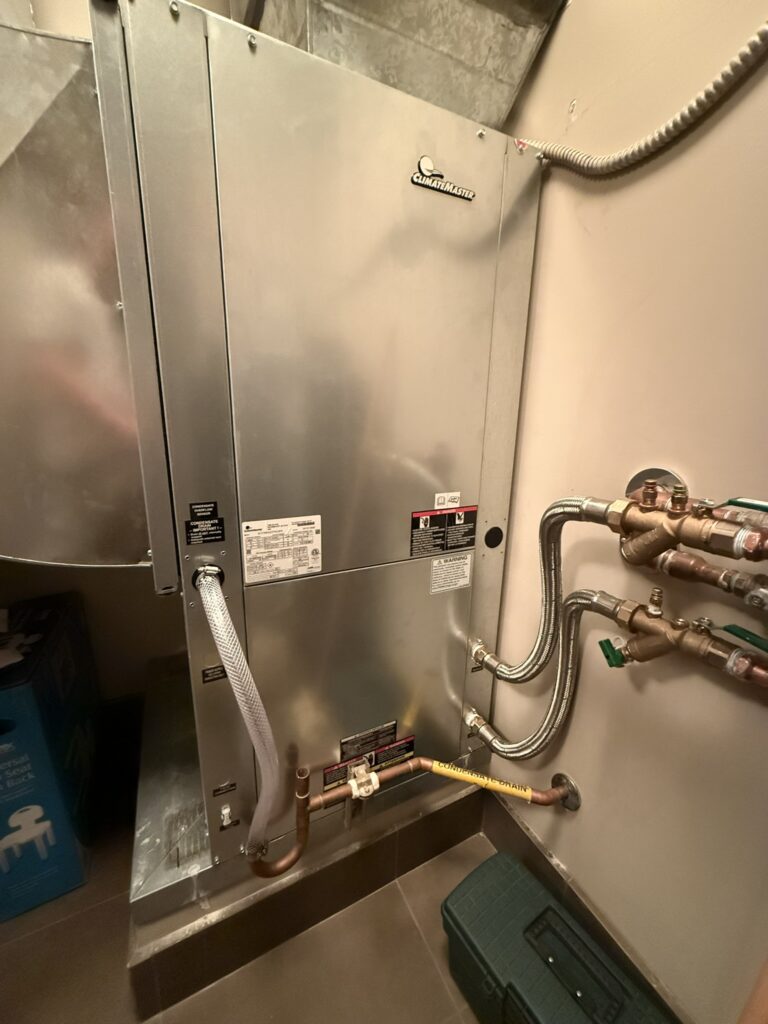
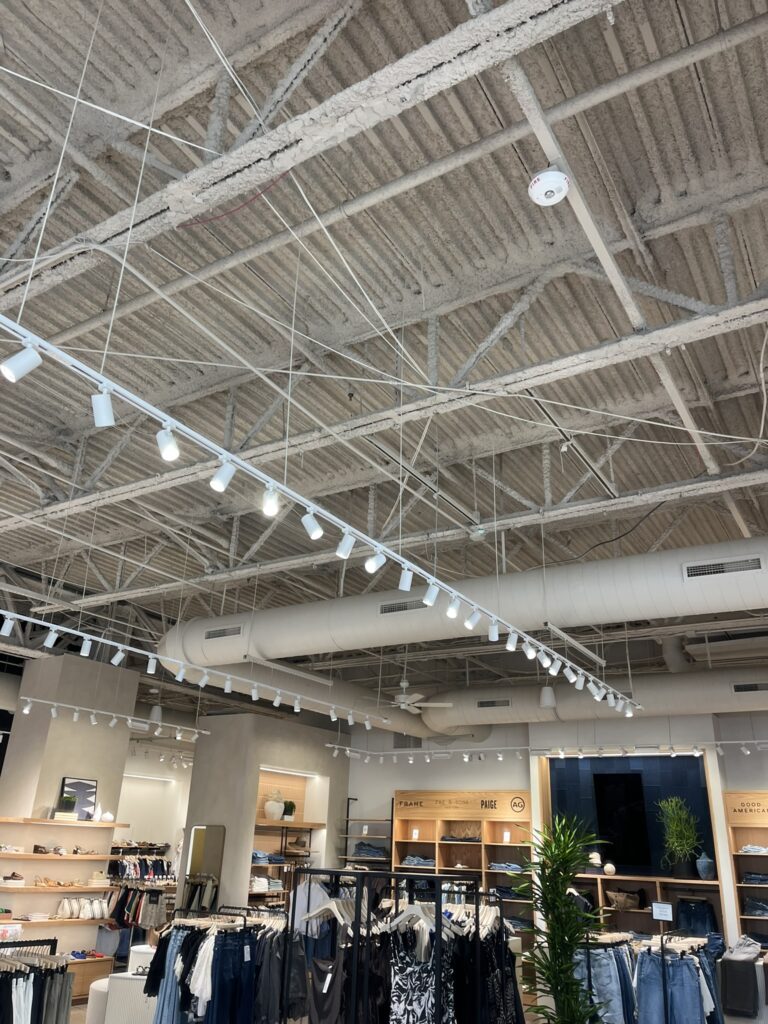
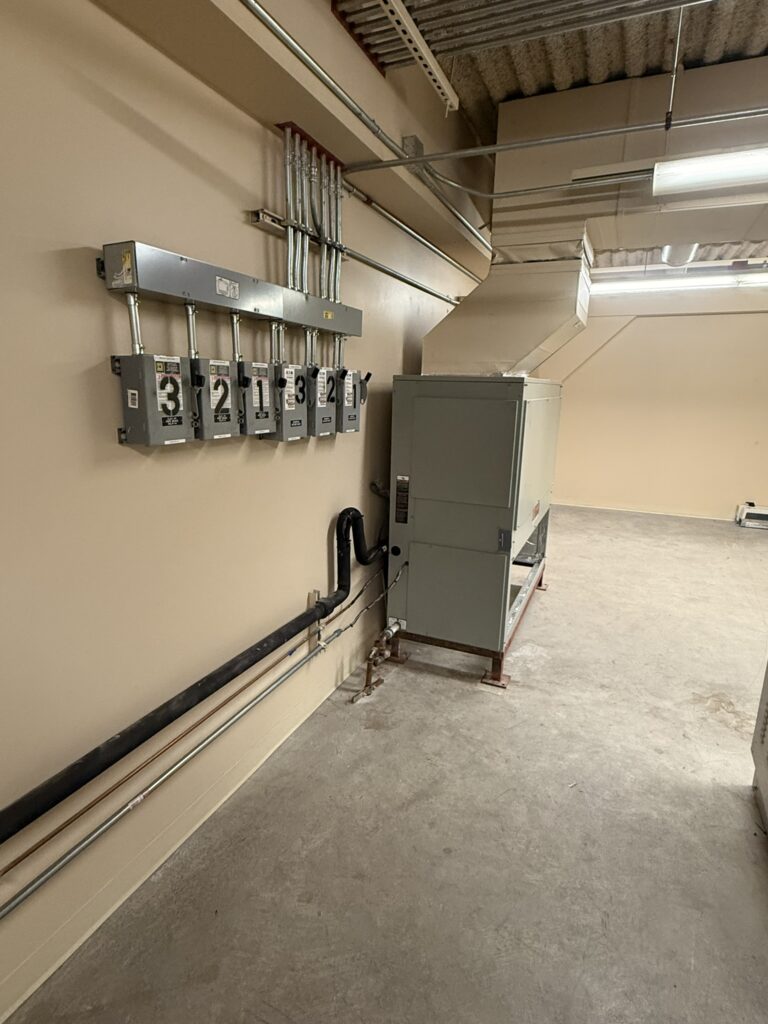
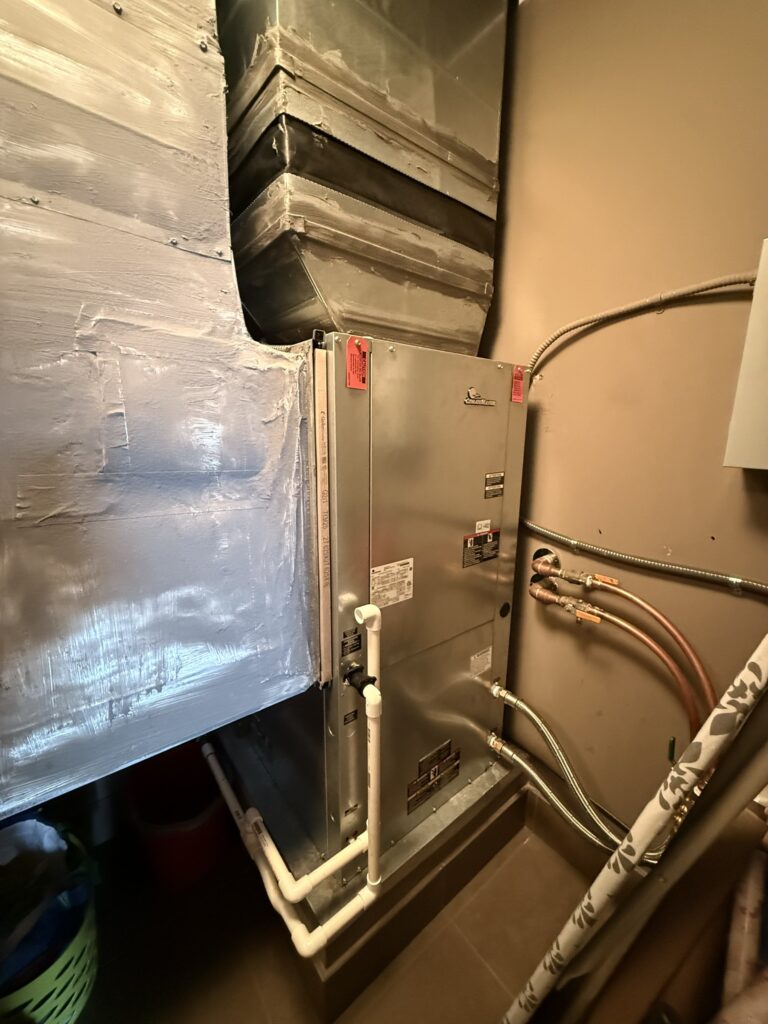
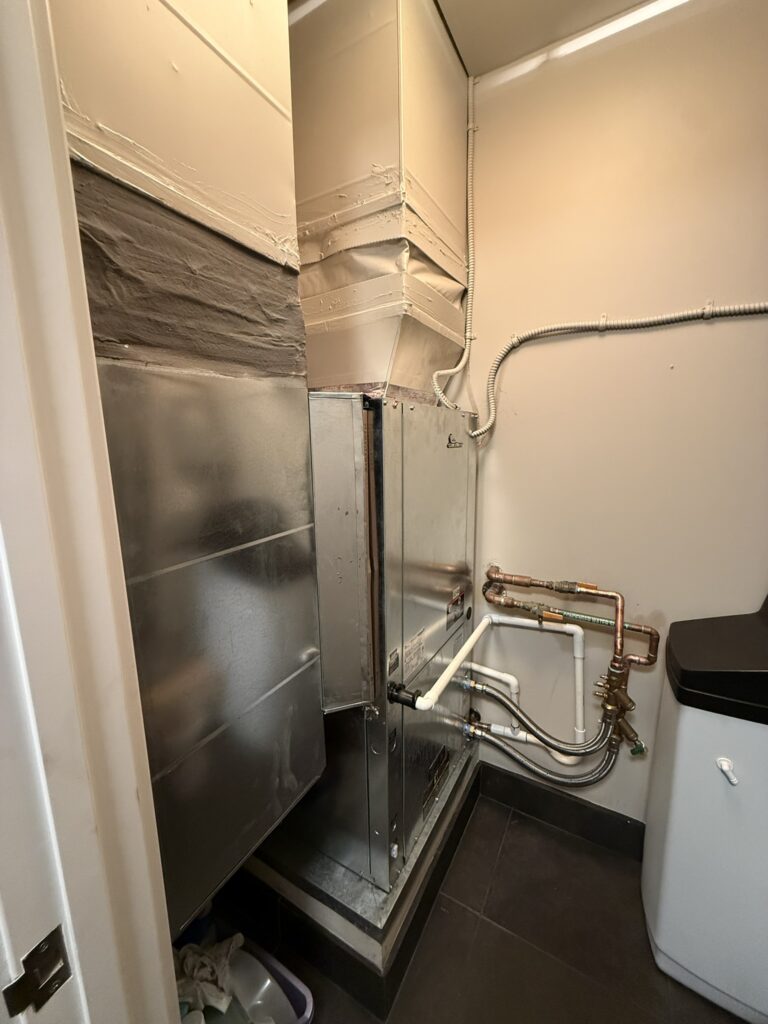
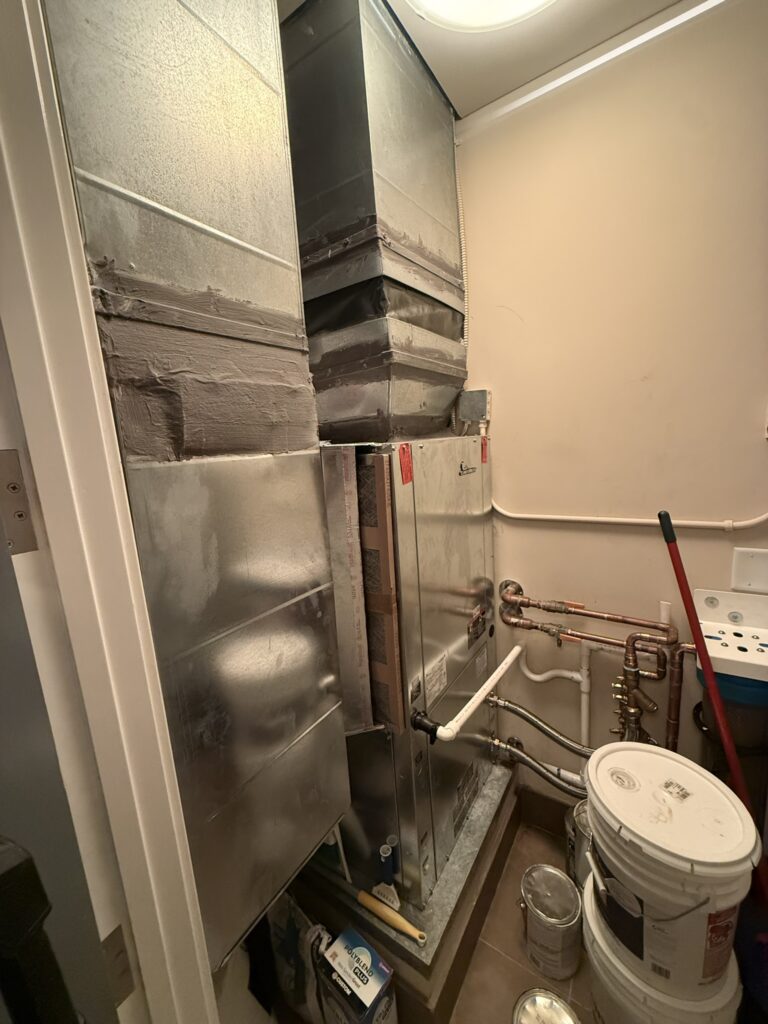
Photos from our own commercial projects across the Phoenix metro — equipment we installed, in buildings we service.
How the job typically runs.
Food production sites have access rules tied to prep schedules, cleaning, deliveries, and product handling. At booking, we ask about production windows, washdown times, roof access, locked storage, sensitive rooms, and whether work has to happen before prep, between batches, after close, or during a sanitation window. The diagnostic/service-call fee is disclosed at booking and credited as stated when the repair proceeds. We also ask whether the issue affects staff comfort, product-adjacent rooms, packing, prep, dish or washdown areas, or office space, because those complaints point to different checks.
During the in-person diagnosis, we inspect the serving equipment, coils, filters, blower operation, electrical components, refrigerant-side symptoms, drains, controls, and airflow. We also ask which rooms are temperature-sensitive for your operation. That helps separate a dining-area comfort problem from a production, packing, or prep-room HVAC problem. When exhaust or makeup air is involved, we look at the HVAC symptoms created by that interaction without claiming to redesign or certify the entire food operation. The important step is to identify whether cooling equipment is failing, being restricted, being overpowered by exhaust, or being asked to serve a room that has changed use.
Quotes are flat-rate and written after we see the site, with scopes documented in writing. For urgent failures, 24/7 emergency service is available. When a repair requires parts or a larger scope, we document interim findings so owners, managers, and landlords can make decisions without guessing what was observed. If work must occur after production, during cleaning, or around delivery schedules, that timing belongs in the plan. The written scope keeps the mechanical issue, access needs, and operational constraints tied together.
- 01 Booking, with the diagnostic fee disclosed
- 02 In-person diagnosis with real readings
- 03 Written flat-rate quote before work begins
- 04 The work: repair, install, or maintenance
- 05 Startup, documentation, and warranty handoff
Food-processing-adjacent HVAC work in Peoria can touch rooftop equipment, electrical components, condensate routing, ductwork, controls, ventilation interactions, and equipment replacement. We document HVAC observations and completed work, but we do not certify cleanrooms, issue health-code rulings, approve food-safety programs, or provide legal advice. If a scope requires permitting, engineered design, or coordination with other trades, that belongs in the written scope before work proceeds. In older spaces, that may involve confirming roof access, electrical condition, drainage, or duct fit. In leased retail or commissary spaces, property approval can matter before rooftop or duct changes happen.
Yeti Pros is AZ ROC #363372 · ROC #363423. Arizona ROC minimum workmanship standards are available here: ROC minimum workmanship standards. Our documentation stays focused on the HVAC work: what equipment was inspected, what condition was found, what repair or maintenance was quoted, and what work was completed. That keeps the record useful for owners, operators, and landlords without turning an HVAC service ticket into a regulatory statement.
Pricing, financing & the 10% military & first responder discount.
Food-processing HVAC pricing is driven by equipment type, roof access, production scheduling, coil and blower condition, filter loading, electrical repairs, condensate issues, controls, ventilation interactions, moisture exposure, and whether work must happen after hours or around cleaning. A small Old Town Peoria commissary is not the same scope as a newer north Peoria bakery production room or a Bell Road food-prep suite with heavy exhaust. A hot prep room could mean a failed capacitor, dirty coil, weak blower, drain safety interruption, makeup-air imbalance, or a room load that has grown beyond the original layout. The in-person look matters because the operating conditions are part of the diagnosis.
We provide flat-rate written quotes after an in-person look, and scopes are documented in writing. Financing is available. Workmanship carries a 2-year written warranty, and repair parts carry a 1-year manufacturer parts warranty. A 10% military, veteran & first responder discount is available at our military discount. We do not add dollar figures before seeing the equipment, access, production constraints, and affected rooms because small-format food sites vary widely even when the complaint sounds similar.
- 01 Flat-rate written quote after an in-person look
- 02 Diagnostic fee disclosed at booking, credited to the repair
- 03 Financing available on replacements
- 04 2-year workmanship warranty; 1-year manufacturer parts warranty
- 05 10% military, veteran & first responder discount
Why a licensed HVAC contractor matters.
FAQs: HVAC for Food Processing Facilities in Peoria, AZ.
Is Peoria food processing HVAC mostly for large plants?
No. In Peoria, the more common calls are small-format food production spaces: commissary kitchens, caterers, bakeries, beverage prep, packaged-food rooms, school or church kitchen support, and restaurant back-of-house production. These sites still have serious HVAC needs because ovens, refrigeration, exhaust, washdown, packaging, and long prep hours create heavier loads than a normal office. A single rooftop unit serving a compact suite can be under real stress if filters load quickly, the hood pulls hard, or doors open during peak heat. We size the conversation to the actual facility instead of assuming a large industrial plant.
Can you certify our food processing room for health-code compliance?
No. We service and document HVAC systems. We do not issue health-code rulings, certify food-processing compliance, certify cleanrooms, or provide legal advice. What we can do is inspect the HVAC equipment, repair failures, address airflow and condensate problems, document completed HVAC work, and identify mechanical conditions that need attention. Operators can use that documentation as part of their facility records, but it is not a regulatory certification. The written record stays limited to HVAC observations, quoted scope, and completed service.
Why does our prep room get hot when the kitchen hood runs?
The hood may be pulling more air than the HVAC and makeup-air arrangement can support. That can drag hot outside air through doors or gaps, reduce cooling effectiveness, and make the rooftop unit run continuously. Other causes include dirty coils, weak blower performance, poor return air, failed controls, or a unit that is serving too many loads. In Peoria heat, even a modest imbalance can become obvious during lunch prep, bakery production, or cleaning. We inspect the HVAC system and the room behavior before quoting repair or correction.
Do you work around production and cleaning schedules?
Yes. At booking, tell us your prep windows, delivery times, washdown schedule, sensitive rooms, roof access, and who can authorize work. Some repairs can happen during production if access is separate; others need a sanitation window, after-hours visit, or temporary shutdown of the serving unit. We also need to know if ladders, ceiling panels, or roof access would interfere with staff movement or product handling. Office hours are Mon–Fri 8–5, and 24/7 emergency service is available for urgent failures.
What maintenance matters most for Peoria food-prep HVAC?
Filters, coils, drains, blower performance, controls, and electrical components need close attention because food-prep environments create dust, moisture, heat, and long runtime. If the site has heavy exhaust or frequent door opening, airflow and room pressure symptoms should also be reviewed. Rooftop units should be checked before peak heat, and drain safety should not be ignored where washdown or humidity is part of the routine. We document maintenance findings in writing so owners and managers know what was serviced and what needs follow-up before peak heat.
What warranties apply to food processing HVAC repairs?
Yeti Pros provides a 2-year written workmanship warranty. Repair parts carry a 1-year manufacturer parts warranty. We are veteran-owned & operated, AZ ROC #363372 · ROC #363423, and we come to you as a service-area business. We serve Peoria ZIPs 85345, 85381, 85382, and 85383, including Old Town Peoria, Bell Road, Vistancia, Westwing, Fletcher Heights, and the Lake Pleasant corridor. Service documentation is written so owners, managers, and landlords can see what was found and what was repaired. Call (520) 556-8929.
Every major brand, serviced and installed.

Phoenix metro: Most days a tech is already working somewhere in the Valley, so same-day appointments happen when the schedule allows. After-hours emergencies are dispatched when a licensed tech is available — a real person answers and tells you the ETA on the call.
Call (520) 556-8929Request an estimate.
No pressure, no door knockers. We look at the HVAC system, tell you what it needs (and what it doesn’t), and put the number in writing.
Need food processing facilities in Peoria? A real person answers.
Other services we run in Peoria.
Food Processing Facilities in nearby cities.
Looking for something else nearby? All HVAC services in Peoria