
Buckeye
HVAC for Restaurants in Buckeye, AZ.
- (520) 556-8929
- Serving the entire Phoenix metro — we come to you
- Office: Mon–Fri 8:00 AM – 5:00 PM · 24/7 emergency service
- 2-year workmanship warranty · 1-year parts warranty
- Veteran-owned & operated · residential + commercial
- 23 five-star Google reviews
Restaurant HVAC in Buckeye has a different shape than it does in central Phoenix. Many kitchens here sit in newer pads along the I-10 corridor, Verrado, Sundance, and the fast-filling retail strips that followed production housing west into open desert. Some are first-generation buildouts. Others are second-generation suites where the rooftop unit, duct layout, hood makeup air, and dining room zoning were never fully matched to the new menu. APS service, Maricopa County heat, long west-Valley dispatch distances, and Buckeye's 85326 and 85396 growth pattern all matter when the dining room is full and the line is already fighting fryers, ovens, dish machines, and west-facing glass.
The result is that restaurant HVAC is rarely just a thermostat complaint. A manager may notice hot booths, a sticky dining room, restroom odor, a prep area that never recovers, or a cook line that feels worse whenever the hood is running. In Buckeye, those problems are amplified by roof heat, dusty coils, long compressor run times, and storefronts that take on heat every time the door opens. The system has to serve guests, staff, food prep rhythms, and the building envelope at the same time.
Yeti Pros is a veteran-owned and operated service-area HVAC contractor. We come to you for restaurant HVAC repair, replacement, maintenance, and documentation in Buckeye. For broader restaurant-specific service context, see commercial restaurant HVAC. Office hours are Mon-Fri 8-5, with 24/7 emergency service at (520) 556-8929.
ZIPs served: 85326, 85396
What Restaurants covers in Buckeye.
Kitchen and dining HVAC repair
We troubleshoot rooftop units, split systems, controls, blower assemblies, refrigerant circuits, drains, and airflow problems affecting cook lines, dining rooms, restrooms, and prep areas. The goal is practical: restore capacity, identify why the space failed under load, and document the repair in writing.
Rooftop unit maintenance
Restaurant rooftop units in Buckeye take heat, dust, grease exposure, and long run hours. Maintenance includes filters, coils, belts where applicable, electrical checks, condensate checks, operating temperatures, and notes on parts trending toward failure before a dinner rush exposes them.
Replacement planning
When a unit is aging out, we look at the actual restaurant load, roof conditions, curb fit, electrical needs, dining-room zoning, and kitchen heat. Replacement planning is written so owners, managers, and landlords can see the scope before approving work.
Thermostat and zoning fixes
Restaurants often suffer from bad sensor locations, locked settings, poor staging, or uneven zones. We correct control problems that make one section cold, another hot, or the kitchen influence the dining room reading during rush periods.
Airflow and comfort diagnostics
We check supply, return, filtration, coils, duct restrictions, registers, and obvious makeup-air effects when the complaint is uneven comfort rather than a dead unit. This is especially useful in second-generation Buckeye suites with changed kitchen layouts.
Emergency restaurant HVAC service
When a unit fails before service, during the dinner push, or after close, call (520) 556-8929. We offer 24/7 emergency service and focus first on stabilizing the affected zone, then documenting the repair path for management.
What we see for restaurants in Buckeye.
In Buckeye restaurants, the weak point is often the fight between kitchen exhaust and conditioned air. A hood system pulls hard, the makeup air is too warm or poorly balanced, and the dining room rooftop unit tries to make up the difference. On a July dinner rush near Verrado or Sundance, that can leave the front of house clammy while the cook line stays punishingly hot. The unit may be running, but the building is losing conditioned air faster than the space can recover.
Newer strip-center suites along I-10 can still have rough HVAC execution. We see undersized returns, thermostats placed where kitchen heat or sunset glass distorts the reading, economizers stuck or ignored, and package units that were selected for a generic retail shell rather than a restaurant load. Buckeye's young commercial base does not mean every system is new, clean, or correctly set up. A shell space may have been adequate for a light retail tenant, then later asked to support cooking equipment, longer hours, heavier occupancy, and more door traffic.
Older first-owner systems in 2000s-era pads are now reaching the stage where motors, contactors, coils, belts, drains, and compressors start showing their age. Dust from nearby open lots and construction adds coil load. Grease migration and poor filtration add another layer. A restaurant unit that looks acceptable from the ground can be running hot, short-cycling, or losing capacity because routine access has been skipped. Once outdoor temperatures rise, small maintenance problems become operational problems because there is no reserve capacity left.
The dining room is where HVAC becomes revenue. Guests do not care whether the issue is low charge, dirty condenser coils, poor makeup air, or a failed blower relay. They feel a hot table, a humid booth, restroom odor, or cold air dumping on one section while the rest of the room drifts upward. We diagnose the mechanical cause and document the scope in writing. That documentation matters when the owner, landlord, manager, and maintenance contact all need the same explanation.
We also see zoning problems that are easy to miss during a quick visit. One thermostat may be influenced by the kitchen, while another zone overcools a small seating area. A supply register may dump cold air on guests near the counter while the back booths remain warm. Restroom exhaust, ceiling layout, locked thermostat settings, and changed dining-room furniture can all affect comfort. The useful answer is not just whether the unit turns on; it is whether the system is moving air where the restaurant actually needs it during service.
- 01 Airflow and static pressure
- 02 Electrical: capacitors, contactors, draws
- 03 Refrigerant-circuit behavior
- 04 Drains, safeties, and float switches
- 05 Thermostat, controls, and cycling
- 06 Ducts, returns, and room-by-room comfort
Commercial jobs we have documented.
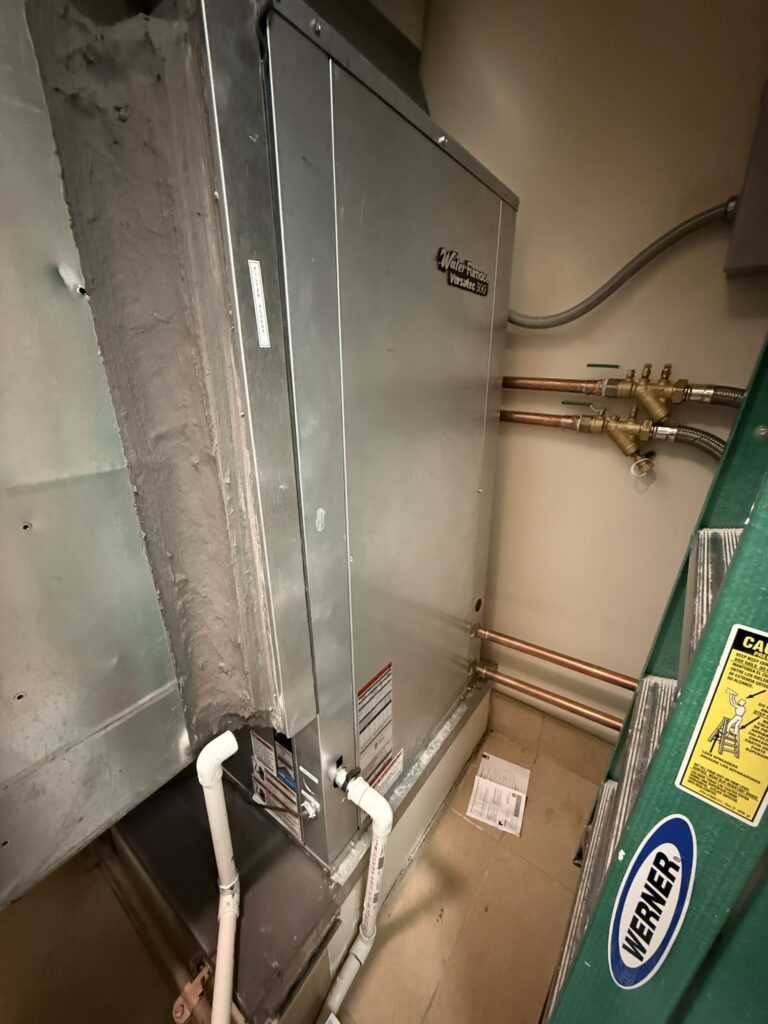
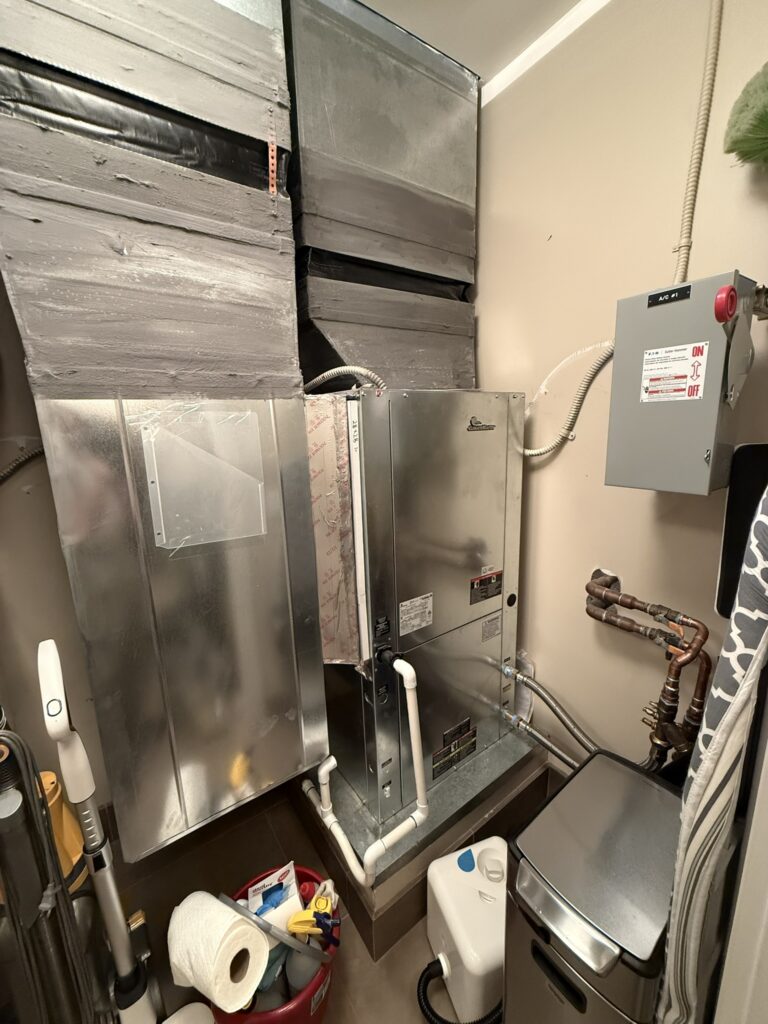
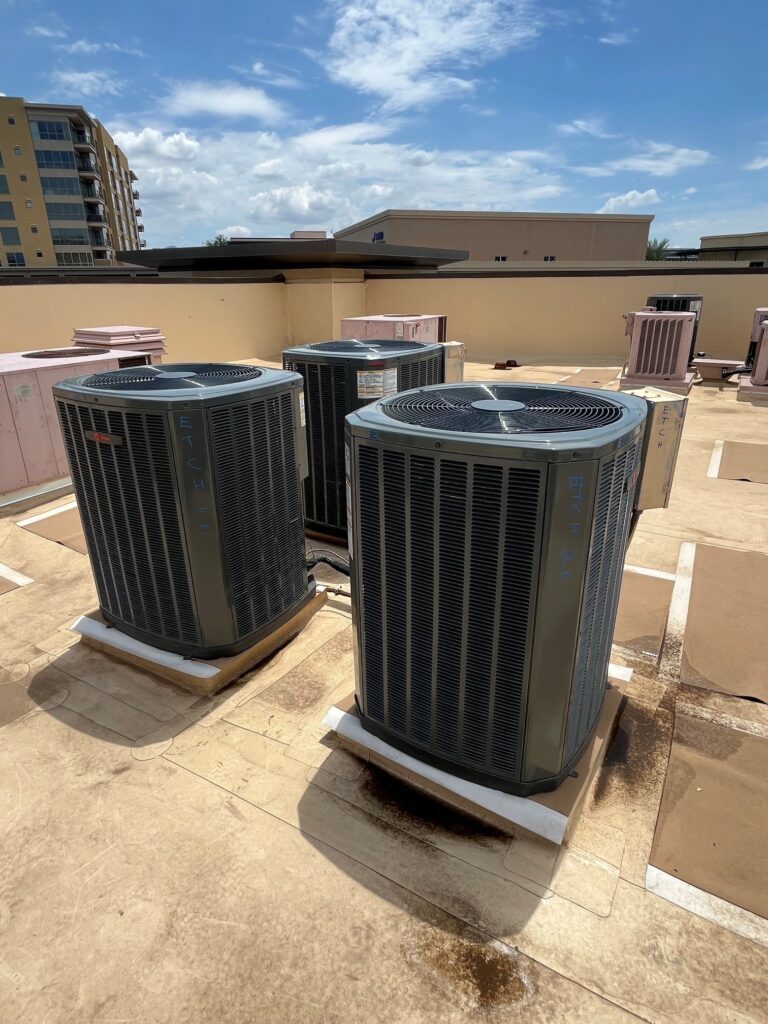
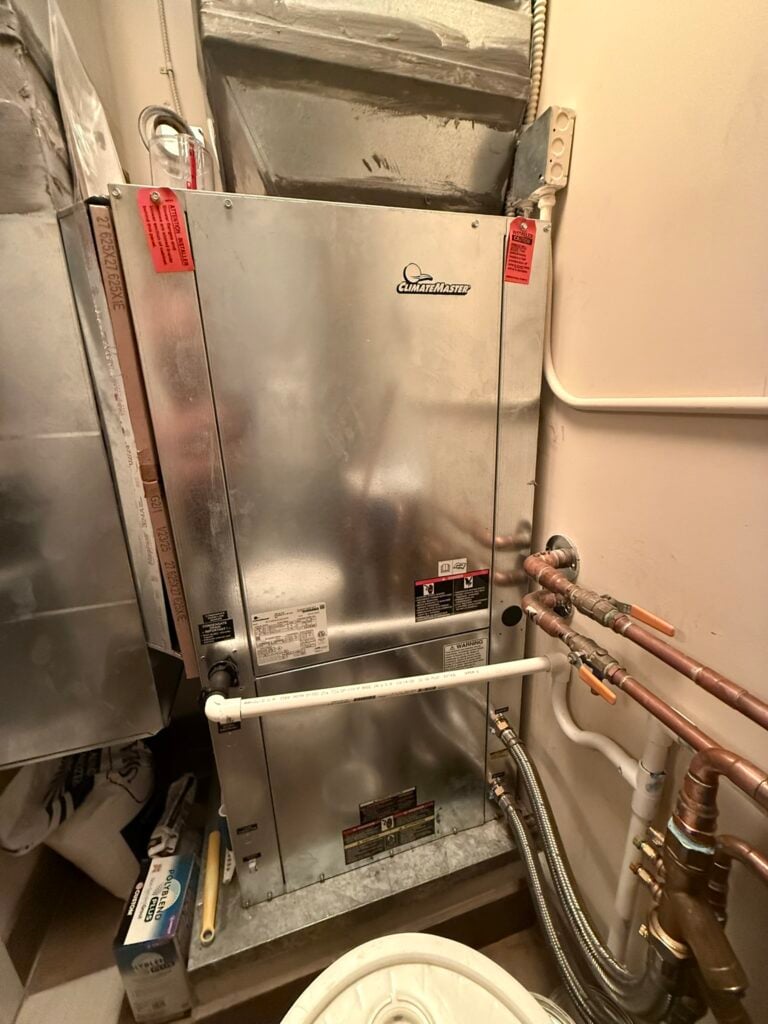
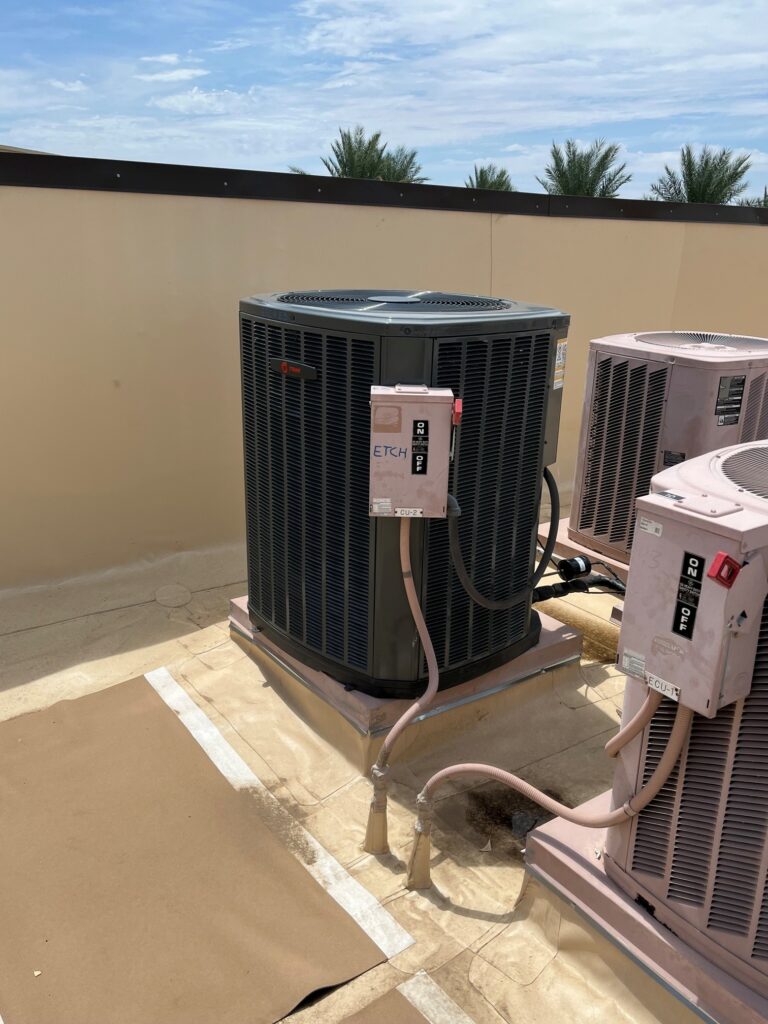
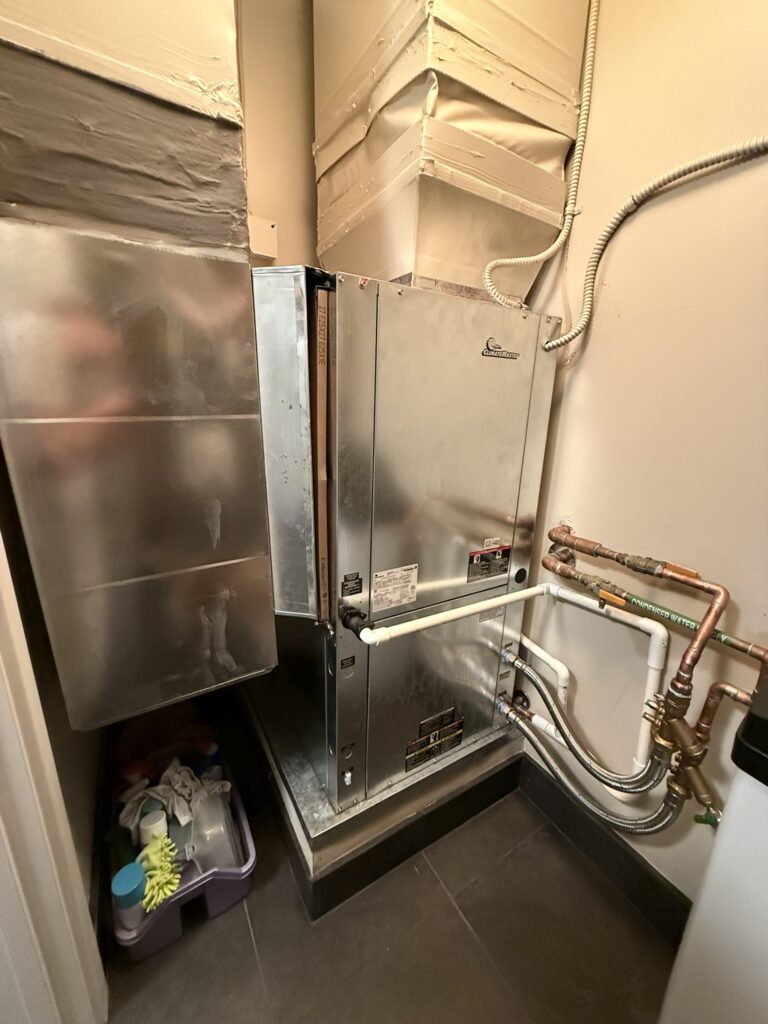
Photos from our own commercial projects across the Phoenix metro — equipment we installed, in buildings we service.
How the job typically runs.
Restaurant service has to respect prep, rush, cleaning, and after-close windows. We ask about the kitchen schedule, roof access, hood operation, thermostat complaints, and which zones affect guest seating before we dispatch. If the call is urgent, we focus first on stabilizing the affected dining or kitchen area so management can decide how to run the shift. A lunch rush, dinner push, or morning prep window changes what can be accessed and how disruptive a repair can be.
On site, we inspect the equipment, controls, filters, drains, electrical components, airflow, and obvious hood or makeup-air interactions. We do not issue health-code rulings or certify a kitchen. We service HVAC, describe what we found, and provide a flat-rate written quote after an in-person look. Scopes are documented in writing. When the issue appears tied to balance, access, landlord equipment, or trade coordination, we identify that in the HVAC scope instead of leaving the operator with an unclear verbal note.
The diagnostic or service-call fee is disclosed at booking and credited. For planned work, we coordinate with managers, landlords, or property contacts when roof access, locked panels, or after-hours timing is involved. For repairs, maintenance, or replacement planning, call (520) 556-8929. The process is built around clear information because restaurants do not have much tolerance for missed access, vague approvals, or repeated visits that do not explain what changed.
- 01 Booking, with the diagnostic fee disclosed
- 02 In-person diagnosis with real readings
- 03 Written flat-rate quote before work begins
- 04 The work: repair, install, or maintenance
- 05 Startup, documentation, and warranty handoff
Buckeye restaurants sit in Maricopa County and are commonly served by APS. HVAC work may involve equipment replacement, electrical coordination, roof curbs, condensate routing, outside air, and landlord requirements. Yeti Pros carries AZ ROC #363372 and ROC #363423. We document HVAC findings and repair scopes, but we do not certify kitchens, issue health-code rulings, or give legal advice. Restaurant spaces often have layered responsibilities between the operator, property manager, landlord, and prior tenant-improvement history, so written HVAC documentation keeps the mechanical scope clear.
Where a permit, utility coordination, or licensed trade coordination is needed, we identify that during the written scope instead of treating it as an afterthought. Restaurant operators can also review the Arizona Registrar of Contractors workmanship standards here: ROC minimum workmanship standards PDF. For replacements or larger repairs, we look at access, roof conditions, existing equipment fit, electrical condition, condensate management, and whether the restaurant can remain operational during the work window.
Pricing, financing & the 10% military & first responder discount.
Restaurant HVAC cost is driven by roof access, unit size and condition, compressor or blower failure, refrigerant circuit condition, controls, duct restrictions, coil cleaning needs, after-hours access, and whether the issue is tied to kitchen exhaust or makeup air. A dining-room comfort complaint may be a simple failed part, or it may expose a load and balance problem. Buckeye conditions add practical cost drivers too: long dispatch distances, roof heat, construction dust, grease exposure, difficult access during open hours, and the need to coordinate around prep or service.
We provide flat-rate written quotes after an in-person look. Financing is available. Yeti Pros offers a 10% military, veteran and first responder discount through our military discount program. Repairs include a 2-YEAR written workmanship warranty and a 1-YEAR manufacturer parts warranty on repair parts. The written quote is meant to separate the immediate repair from any larger planning issue, so an operator is not guessing whether a failing part, dirty equipment, airflow restriction, or replacement concern is driving the recommendation.
- 01 Flat-rate written quote after an in-person look
- 02 Diagnostic fee disclosed at booking, credited to the repair
- 03 Financing available on replacements
- 04 2-year workmanship warranty; 1-year manufacturer parts warranty
- 05 10% military, veteran & first responder discount
Why a licensed HVAC contractor matters.
FAQs: HVAC for Restaurants in Buckeye, AZ.
Do you handle restaurant HVAC in Buckeye after close?
Yes. Many restaurant repairs are easier after close because roof access, dining-room ceiling access, and thermostat testing are less disruptive. We ask about your operating hours, cleaning crew timing, alarm or gate access, and whether the kitchen hood will be running. Office hours are Mon-Fri 8-5, and 24/7 emergency service is available at (520) 556-8929. After-close work also helps when ladders, ceiling panels, or repeated temperature checks would interfere with guests or staff during service.
Why is my Buckeye restaurant dining room hot when the rooftop unit is running?
Common causes include dirty condenser coils, low airflow, weak blower operation, failed economizer components, refrigerant issues, poor thermostat placement, and kitchen exhaust pulling conditioned air out faster than the system can replace it. In Buckeye, high outdoor temperatures and dusty construction corridors can make a marginal unit fail only during lunch or dinner load. The unit may seem normal in the morning, then lose ground when the hood, cooking equipment, doors, guests, and west-facing glass are all adding heat at once.
Can you fix kitchen heat caused by hood makeup air?
We can diagnose HVAC performance and obvious interactions with hood makeup air, then document what the HVAC system is doing. We do not certify hood systems or issue health-code rulings. If the makeup-air unit, rooftop unit, controls, or airflow setup is part of the problem, we identify the HVAC scope and explain what trade coordination may be needed. Sometimes the HVAC unit is failing; other times it is fighting a balance problem, warm makeup air, or a changed kitchen layout that needs a broader look.
Do you service small restaurants near Verrado, Sundance, and the I-10 corridor?
Yes. Yeti Pros is a service-area business, so we come to you across Buckeye, including Verrado, Sundance, Festival Ranch, Tartesso, the I-10 corridor, and ZIPs 85326 and 85396. Many calls are for small-format restaurants, quick-service spaces, and newer retail pads where one failed unit can affect the whole customer area. We plan around roof access, business hours, landlord contacts, and whether the affected zone is the dining room, prep area, restroom area, or cook line.
What warranties apply to restaurant HVAC repair parts?
Yeti Pros provides a 2-YEAR written workmanship warranty and a 1-YEAR manufacturer parts warranty on repair parts. The written scope identifies the equipment, repair, and parts involved. If replacement is the better path, we explain that after an in-person look instead of guessing from a phone description. For restaurants, the written record is useful because managers and owners need to know exactly what was repaired, what condition the unit is in, and whether future planning should be expected.
Can you maintain HVAC for a restaurant opening in a new Buckeye retail pad?
Yes. For a new or newly occupied restaurant suite, we can establish maintenance, check filters and coils, verify basic operation, review thermostat setup, and flag early comfort or access issues. Buckeye's commercial base is young and moving fast, so startup maintenance helps catch shell-space assumptions before they become peak-season failures. It is especially useful for second-generation suites, changed menus, new seating layouts, or spaces where the rooftop unit was inherited without clear service history.
Every major brand, serviced and installed.

Phoenix metro: Most days a tech is already working somewhere in the Valley, so same-day appointments happen when the schedule allows. After-hours emergencies are dispatched when a licensed tech is available — a real person answers and tells you the ETA on the call.
Call (520) 556-8929Request an estimate.
No pressure, no door knockers. We look at the HVAC system, tell you what it needs (and what it doesn’t), and put the number in writing.
Need restaurants in Buckeye? A real person answers.
Other services we run in Buckeye.
Restaurants in nearby cities.
Looking for something else nearby? All HVAC services in Buckeye