
Tempe
Heat Pump Installation in Tempe, AZ.
- (520) 556-8929
- Serving the entire Phoenix metro — we come to you
- Office: Mon–Fri 8:00 AM – 5:00 PM · 24/7 emergency service
- 2-year workmanship warranty · 1-year parts warranty
- Veteran-owned & operated · residential + commercial
- 23 five-star Google reviews
Tempe is the metro's landlocked city — hemmed in on every side, fully built out decades ago, and shaped by Arizona State University's gravitational pull. That combination produces an installation landscape unlike its neighbors: a rental economy where approvals route through landlords and property managers, mid-century neighborhoods like Maple-Ash and Holdeman where flat roofs carry package units, and lots small enough that where the outdoor unit goes is a real design question. Yeti Pros works all of it — veteran-owned and operated, ROC #363372 and ROC #363423, EPA 608-certified, and staffed by actual humans at (520) 556-8929 around the clock. In zip codes 85281 through 85284, where SRP supplies the electricity, heat pump installation also has to account for August lease turnover and compressed HVAC decisions. The housing itself spans eras: mid-century homes that predate central refrigeration entirely, 1970s and 1980s stock with duct systems showing their age, and south Tempe family neighborhoods that read more like Chandler. Gas furnaces persist in the older core, which makes Tempe genuine conversion territory — with the caveat that mid-century electrical panels need checking before anyone promises an all-electric future, and the federal 25C credit factored with current-year rules rather than folklore. Whether it is a Tempe heat pump installation for an out-of-state owner who needs remote documentation or a Holdeman homeowner retiring a roof-mounted relic, the process starts with the property: roof, ducts, panel, occupants, and lease calendar when there is one.
ZIPs served: 85281, 85282, 85283, 85284
What Heat Pump Installation covers in Tempe.
Manual J Load Calculation
Tempe houses accumulate history — enclosed porches, converted garages, additions with improvised ducting — and the load calculation has to see all of it. We compute room by room on the structure as it stands, which in Maple-Ash or Holdeman can differ wildly from the county record. The result: equipment sized for the building that exists, not the one on file.
Gas-to-Heat-Pump Conversion Consults
The older core of Tempe still runs gas furnaces, and conversion often pencils — but mid-century electrical panels decide the question first, so we evaluate capacity before quoting rather than discovering it mid-project. The consult covers panel findings, federal 25C eligibility under current rules, safe gas-line capping, and a straight comparison against replacing in kind. Honest answer, in writing, either way.
System Tier Consultation
Staging decisions look different across Tempe's split personality: a rental near ASU may favor robust single-stage simplicity, while an owner-occupied south Tempe two-story justifies variable-speed comfort and SRP time-of-use savings. We quote the tiers side by side with the reasoning attached, tuned to who occupies the home and how long you intend to hold it.
Installation & Commissioning
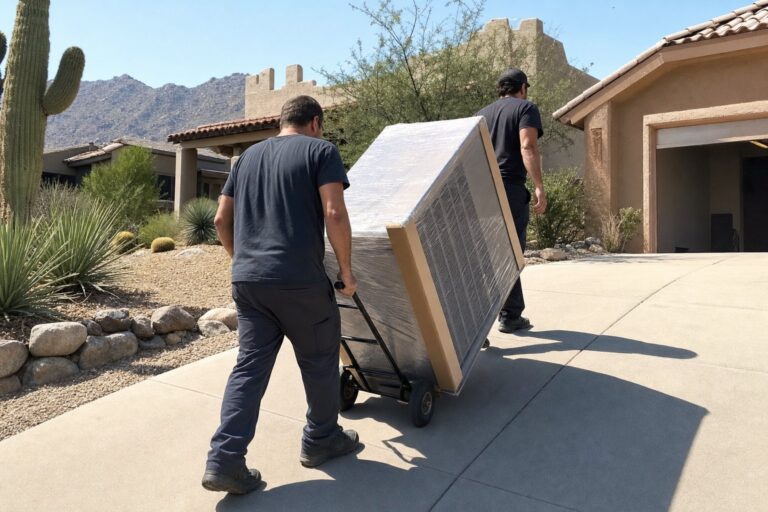
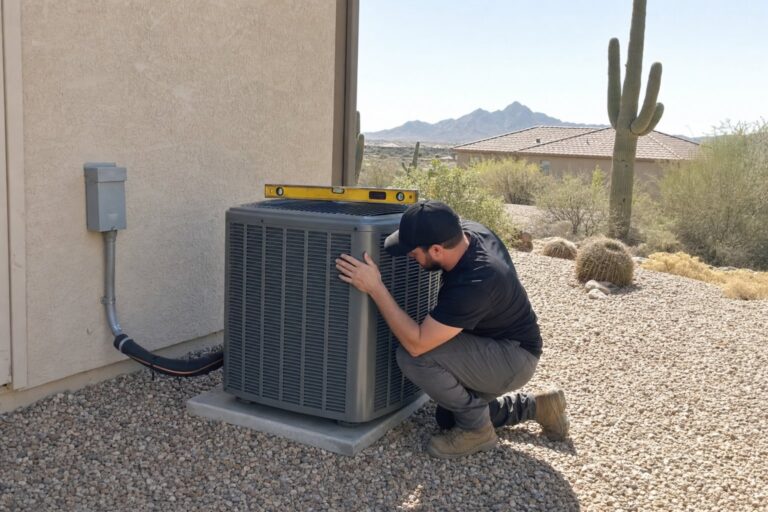
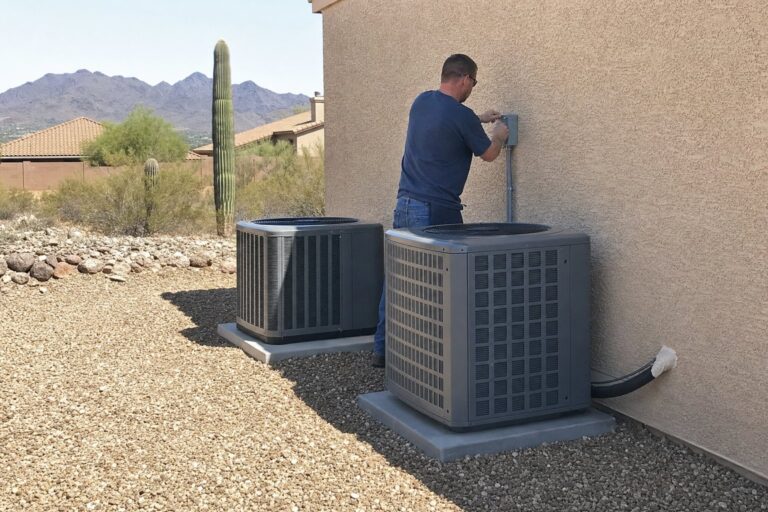
Ground-mount splits and flat-roof package units alike, with crane coordination for the mid-century rooftops and clearance solutions for Tempe's narrow side yards. Brazed under nitrogen, evacuated and proven tight, charged by weight, then commissioned with recorded readings — airflow, splits, staging, defrost. Occupied rentals get tenant-respectful scheduling; absentee owners get the photographic record delivered unprompted.
Permits & City Inspection
The City of Tempe mechanical permit, any electrical permit conversion work requires, the inspection appointment, and the inspector meeting all run under our licenses and our management. Rooftop package swaps get permitted properly despite being invisible from the street. Owners receive the closed permit record for their files — documentation that earns its keep at refinance, sale, or dispute.
Rebate & Federal 25C Paperwork
Where qualifying equipment intersects SRP incentive programs and the federal 25C credit, we verify eligibility against the rules in force when we quote — not last year's brochure — then prepare and submit the paperwork ourselves. Owners get clean documentation for tax time, and where a rental property's eligibility differs from an owner-occupant's, we say so plainly instead of assuming.
What we see for heat pump installation in Tempe.
Ownership structure drives Tempe work as much as the housing itself, so that is how we sort the patterns.
The rental portfolio job. A large fraction of Tempe housing is investor-owned, and those installations run on a different operating system: the decision-maker is a landlord or property manager — often out of state — while a tenant lives with the outcome. We built our process for that split. Scope, evidence, and the flat-rate figure travel by email for remote approval; tenants get scheduled with proper notice and respect; and completion documentation, photos included, goes back to the owner without being asked. Around ASU, where a dead system means a habitability clock is ticking, that machinery matters.
The mid-century flat roof. Maple-Ash, Holdeman, and Tempe's other older neighborhoods carry homes from the forties through the sixties, many topped with package units on flat or low-slope roofs. Replacing one involves crane logistics on tight streets, curb adapters where new footprints differ from old, and roof penetrations sealed correctly — this is monsoon country and flat roofs forgive nothing. These same houses are the city's conversion candidates, since gas furnaces linger here; the threshold question is always the electrical panel, because mid-century services were never planned for modern loads, and we assess that before quoting rather than after committing.
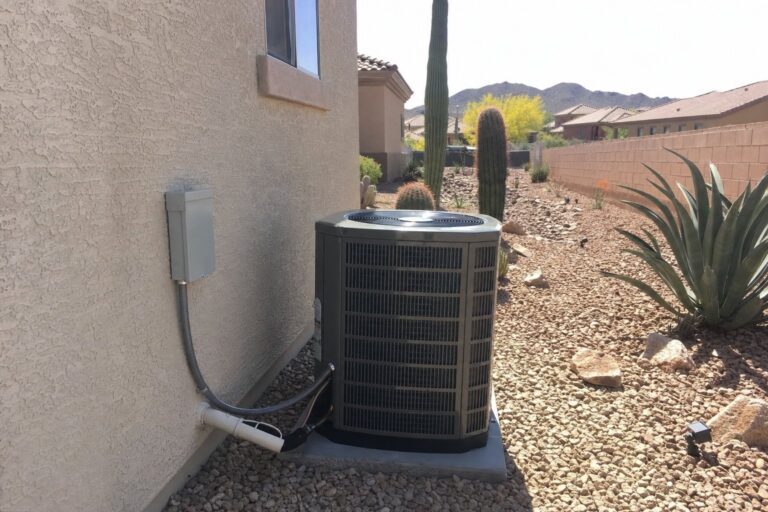
The constrained lot. Tempe parcels run small, and side yards of a few feet complicate condenser placement: manufacturer clearances, city setback rules, and the neighbor's bedroom window all get a vote. Sometimes the answer is a different pad location, sometimes a slim-profile unit, occasionally a return to the roof.
The tired duct system. Much of the stock between the mid-century core and the newer south carries ductwork from the seventies and eighties — leaky, undersized for modern airflow, occasionally routed through additions in improvised ways. We measure static pressure on every assessment, because bolting new equipment to failing ducts wastes the efficiency you just bought. August compresses all of the above into one month, so the wise schedule ahead of it.
- 01 Airflow and static pressure
- 02 Electrical: capacitors, contactors, draws
- 03 Refrigerant-circuit behavior
- 04 Drains, safeties, and float switches
- 05 Thermostat, controls, and cycling
- 06 Ducts, returns, and room-by-room comfort
Residential HVAC across the Valley.
Air conditioning, heating, and cooler work at homes across the Phoenix metro.
How the job typically runs.
Every engagement opens the same way regardless of who owns the property: the visit fee is quoted during booking, and it converts into a credit on the installation if you proceed. From there the path branches by situation. Owner-occupants get findings walked through in person. Landlords and managers get the same findings packaged for remote decision-making — photographed evidence, duct and panel readings, the load calculation, and a flat-rate written scope that can be approved from any time zone. Tenants are never left guessing; access windows are arranged with real notice, and crews treat the occupied home with the care of the person who actually lives there.
Assessment is instrumented, not impressionistic: static pressure on the existing ducts, panel capacity confirmed, the load run on the structure as built — including whatever the decades added to it. Flat-roof package work adds crane scheduling and, where needed, coordination on street access for older, narrower blocks.
The installation closes with verification. Refrigerant charge checked against the manufacturer's numbers, airflow and temperature splits measured, heating and defrost staging exercised, thermostat set up for how the home is actually occupied. The commissioning record, permit sign-off, and warranty registration land with the owner — wherever the owner happens to be. When something needs attention afterward, (520) 556-8929 reaches a live person at any hour, which out-of-state owners come to value quickly.
- 01 Booking, with the diagnostic fee disclosed
- 02 In-person diagnosis with real readings
- 03 Written flat-rate quote before work begins
- 04 The work: repair, install, or maintenance
- 05 Startup, documentation, and warranty handoff
Tempe requires a mechanical permit for heat pump replacements and new installations, including like-for-like package unit swaps on flat roofs — out of sight does not mean out of scope. Gas-to-electric conversions typically carry an electrical permit for new circuits or panel upgrades, which in Tempe's mid-century stock is a live consideration rather than a formality. Exempt from permitting: repairs, refrigerant service, and thermostat replacements. We file the permits under our own licenses, schedule the inspection, and meet the inspector at the property; for rentals, the closed permit record goes into the owner's documentation package, where it quietly protects against habitability disputes and complications at sale. The statewide baseline beneath all of this is Arizona's Minimum Workmanship Standards — the minimum quality a licensed contractor legally owes you — and our written labor warranty intentionally commits past that floor, on rentals no less than owner-occupied homes. An unpermitted install on an investment property is a liability with a compressor attached; we will not create one, and neither should anyone you hire.
Pricing, financing & the 10% military & first responder discount.
Flat-rate, written, and fixed before work begins — that is the quoting policy on every Tempe project, and it is precisely what portfolio owners need when comparing costs across properties and what a first-time homeowner needs when comparing bids. The assessment fee stated at booking is credited into the installation price when you move forward, so due diligence never becomes sunk cost. Landlords appreciate a corollary we honor deliberately: the scope document is specific enough to approve from another state without a phone tag marathon, and the invoice matches it. Financing exists for owners who prefer to spread the outlay, presented without pressure either way. Veterans and active-duty military keep 10 percent through our military discount — permanent policy, veteran-owned company, no asterisks. Incentive-wise, qualifying high-efficiency equipment can intersect SRP programs and the federal 25C credit; the rules move year to year, so we verify at quote time and handle the filings ourselves. No dollar figures appear on this page by design — programs age faster than web copy, and we would rather be accurate at your kitchen table than optimistic on your screen.
- 01 Flat-rate written quote after an in-person look
- 02 Diagnostic fee disclosed at booking, credited to the repair
- 03 Financing available on replacements
- 04 2-year workmanship warranty; 1-year manufacturer parts warranty
- 05 10% military, veteran & first responder discount
Why a licensed HVAC contractor matters.
FAQs: Heat Pump Installation in Tempe, AZ.
I own a Tempe rental from out of state — how does the approval process work?
Entirely remotely, and in writing at every step. After the on-site assessment we send you the evidence package — photos of the equipment, duct and panel readings, the load calculation — alongside a flat-rate scope you can approve by email. We coordinate access with your tenant or property manager directly, run the installation, and return commissioning data, permit sign-off, and completion photos without being chased for them. You make an informed decision from wherever you are, and your tenant deals with professionals who show up when promised.
What does replacing a package unit on a flat mid-century roof involve?
Four things done carefully. A crane lift, scheduled for a specific window and coordinated with the narrower streets in neighborhoods like Maple-Ash. A curb adapter, whenever the new unit's base does not match the old curb, so the equipment sits correctly. Electrical and duct connections remade properly at the roof, not merely reattached. And sealing — the penetration and flashing work has to survive monsoon season on a roof with no slope to help it. Then the same commissioning verification every system gets, because rooftop equipment is still equipment.
Can you install around an August lease turnover?
Yes, and the honest advice is to book the work before August arrives. Lease turnover compresses enormous demand into a few weeks — every property manager in the city is chasing the same trades while temperatures peak. Systems already showing weakness in spring are far cheaper to replace calmly in the shoulder season than during a turnover emergency with a move-in date bearing down. When August timing is unavoidable, we sequence tightly between occupants; when you have flexibility, use it, and the whole project gets easier and often cheaper.
Can the installation happen with tenants living in the home?
Routinely. Most of our rental work happens around occupants, and the process respects that: proper notice through you or your manager, confirmed arrival windows, contained work areas, and a crew that treats the tenant as a client even though the owner pays the bill. For heat pump installation, Tempe AZ occupancy rules and habitability expectations make responsive cooling replacement part of a landlord's obligations in practice, and a professional, well-communicated install day keeps tenants cooperative and lease relationships intact. The system is typically down for only part of the day.
Our Holdeman house has an old electrical panel — can we still convert from gas?
Possibly, but the panel is question one and we answer it before quoting. Mid-century Tempe homes often carry services sized for a different era of appliances, and a heat pump with backup strip heat adds real load. Sometimes existing capacity suffices; sometimes a modest circuit change covers it; sometimes a panel upgrade joins the project scope — which changes the math and belongs in the conversation early, alongside what the federal 25C credit contributes. What we will not do is sell the conversion first and discover the panel later.
Our side yard is barely three feet wide — where does the outdoor unit go?
That is a genuine design question on Tempe's compact lots, and there are several good answers. Manufacturer clearance requirements, city setback rules, and noise near your neighbor's windows all constrain placement, but slim-profile condensers need less breathing room than older equipment, relocating the pad a few feet often resolves everything, and inverter units run quietly enough to soften the neighbor question considerably. On some mid-century homes the roof remains the sensible location, as it always was. We evaluate the options during assessment and price the one that actually fits your lot.
Every major brand, serviced and installed.





Phoenix metro: Most days a tech is already working somewhere in the Valley, so same-day appointments happen when the schedule allows. After-hours emergencies are dispatched when a licensed tech is available — a real person answers and tells you the ETA on the call.
Call (520) 556-8929Request an estimate.
No pressure, no door knockers. We look at the HVAC system, tell you what it needs (and what it doesn’t), and put the number in writing.
Need heat pump installation in Tempe? A real person answers.
Other services we run in Tempe.
Heat Pump Installation in nearby cities.
Looking for something else nearby? All HVAC services in Tempe