
Paradise Valley
HVAC for Manufacturing in Paradise Valley, AZ.
- (520) 556-8929
- Serving the entire Phoenix metro — we come to you
- Office: Mon–Fri 8:00 AM – 5:00 PM · 24/7 emergency service
- 2-year workmanship warranty · 1-year parts warranty
- Veteran-owned & operated · residential + commercial
- 23 five-star Google reviews
Manufacturing HVAC in Paradise Valley means being honest about the market. ZIP 85253 is an ultra-luxury residential and resort enclave, not a heavy manufacturing district. The real audience is smaller: estate workshops, specialty fabrication rooms, resort support spaces, product prep areas, commissary-style back rooms, and owners evaluating a quiet satellite operation between Phoenix and Scottsdale. Those spaces still create process heat, dust, exhaust, and comfort complaints. A room with packaging equipment, ovens, compressors, woodworking tools, electronics, polishing stations, or refrigeration support can overload a comfort system that was originally built for people and finishes, not production. Desert heat makes that mismatch show up quickly. Roof equipment runs longer, attic spaces get hotter, doors open to service areas, and one small room can become the limiting point for the whole operation. Yeti Pros is veteran-owned & operated, service-area based, and we come to you across Paradise Valley and Maricopa County. For metro-scale facilities, see commercial manufacturing HVAC. Office hours are Mon-Fri 8-5 with 24/7 emergency service at (520) 556-8929. AZ ROC #363372 · ROC #363423.
ZIPs served: 85253
What Manufacturing covers in Paradise Valley.
Process Heat Diagnostics
We trace overheating complaints to equipment load, airflow, failed components, zoning problems, or exhaust imbalance in small Paradise Valley production and support spaces. The diagnostic compares the HVAC system to the way the room is actually used, including when tools, ovens, compressors, electronics, or prep equipment add heat.
RTU Repair
Repair for rooftop package units serving workshops, prep rooms, back-of-house areas, and commercial support zones, including electrical, refrigerant, blower, drain, and control faults. We confirm roof access, service path, operating complaint, and whether the unit serves one room or several areas before quoting the repair.
Dust-Heavy Maintenance
Maintenance plans focused on coils, filters, blower assemblies, belts where applicable, drains, and electrical components exposed to sanding, packaging, tool use, or prep-area debris. Dust-heavy spaces need attention before airflow loss, coil fouling, and nuisance shutdowns turn into downtime during the hottest part of the operating day.
Exhaust Balance Support
HVAC-side troubleshooting when exhaust fans pull conditioned air out faster than the system can replace it, creating hot rooms, odors, negative pressure, or door pull. We evaluate the mechanical behavior and coordinate with the appropriate professional when engineered ventilation or specialty exhaust design is required.
Replacement Planning
Written replacement scopes for aging RTUs, splits, mini-splits, and controls, planned around access, privacy, roof logistics, and operating schedules. Replacement planning considers the room load, dust exposure, exhaust interaction, noise expectations, and whether the current system was ever suited to the production or support use.
Emergency Cooling
24/7 emergency response for failed cooling in production, prep, maintenance, or equipment rooms where heat stops the work or risks equipment shutdown. We stabilize what we can, document the failure, and provide a written path for immediate repair, follow-up parts, or replacement evaluation after inspection.
What we see for manufacturing in Paradise Valley.
Paradise Valley does not have rows of warehouse plants. We usually see compact production support: custom estate workshops, luxury property maintenance bays, resort service areas, design studios, maker spaces, small prep rooms, and specialty equipment rooms hidden behind high-end architecture. The mechanical equipment may be a rooftop unit, split system, mini-split, exhaust fan, make-up air arrangement, or a comfort system stretched into a room that now has a more demanding job.
The load is uneven. A room may have ovens, compressors, packaging equipment, electronics, woodworking tools, or polishing stations feeding heat and particulates into a comfort system that was designed for people, not process. One zone overheats while adjacent offices or guest-facing areas stay comfortable. That can confuse the diagnosis if the only question is whether the thermostat reaches setpoint somewhere else in the building.
RTUs, split systems, mini-splits, exhaust fans, make-up air, and filtration all matter. Failures show up as coil fouling, nuisance shutdowns, weak capacitors, clogged drains, poor economizer behavior, thermostat drift, dirty blower wheels, and duct restrictions from dust-heavy work. In small production support rooms, dust and heat often arrive together. A system can lose airflow from filter loading and coil fouling at the same time the equipment load is rising.
Exhaust is another common issue. A fan may be added to remove odor, heat, or dust, but if the replacement air is not considered, the room can go negative, pull conditioned air out of nearby spaces, or bring unconditioned air in through doors and gaps. That can create hot rooms, door pull, odor migration, and comfort complaints that look like an air conditioner failure even when the HVAC unit is running.
Controls and zoning matter because many Paradise Valley properties were not designed around production schedules. A prep room may run hard for a few hours while the rest of the property is quiet. A workshop may sit idle most of the day and then see a heavy heat load when tools, compressors, or finishing equipment start. If the control sensor is in an adjacent office or hallway, the production room can drift hot without the system responding correctly.
Scheduling matters because many Paradise Valley operations avoid visible disruption during guest arrivals, owner visits, resort service windows, or estate events. We separate urgent cooling failures from planned repairs and replacement work so production, prep, or maintenance activity can keep moving. The service plan has to respect both the mechanical problem and the property setting.
- 01 Airflow and static pressure
- 02 Electrical: capacitors, contactors, draws
- 03 Refrigerant-circuit behavior
- 04 Drains, safeties, and float switches
- 05 Thermostat, controls, and cycling
- 06 Ducts, returns, and room-by-room comfort
Commercial jobs we have documented.
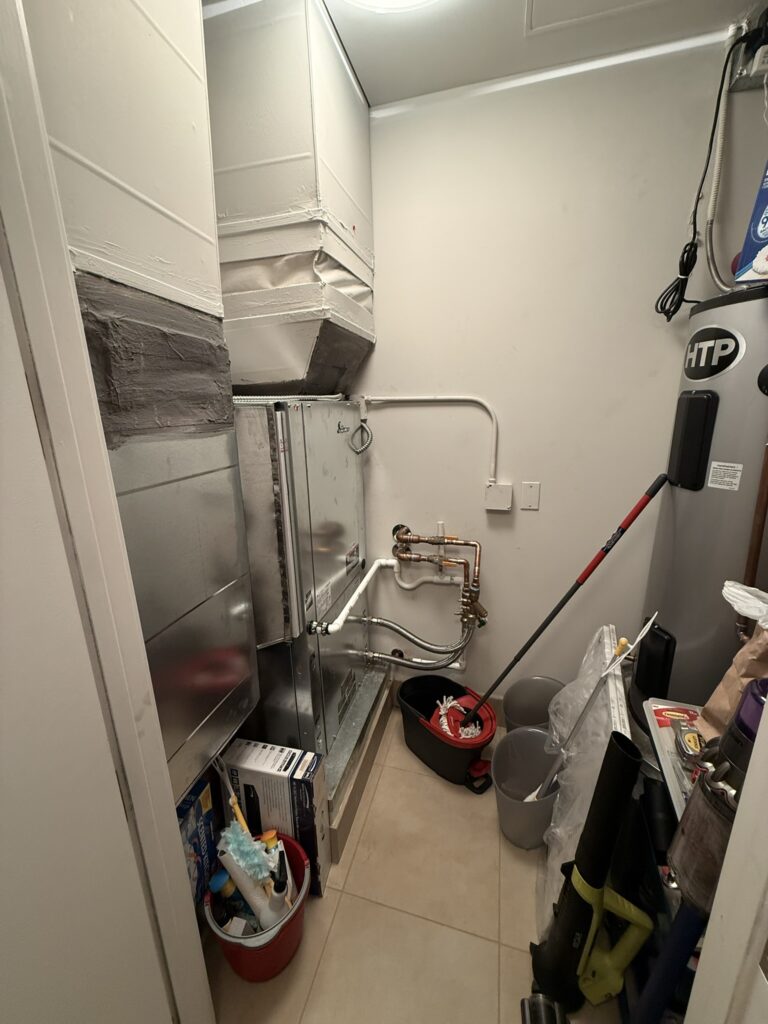
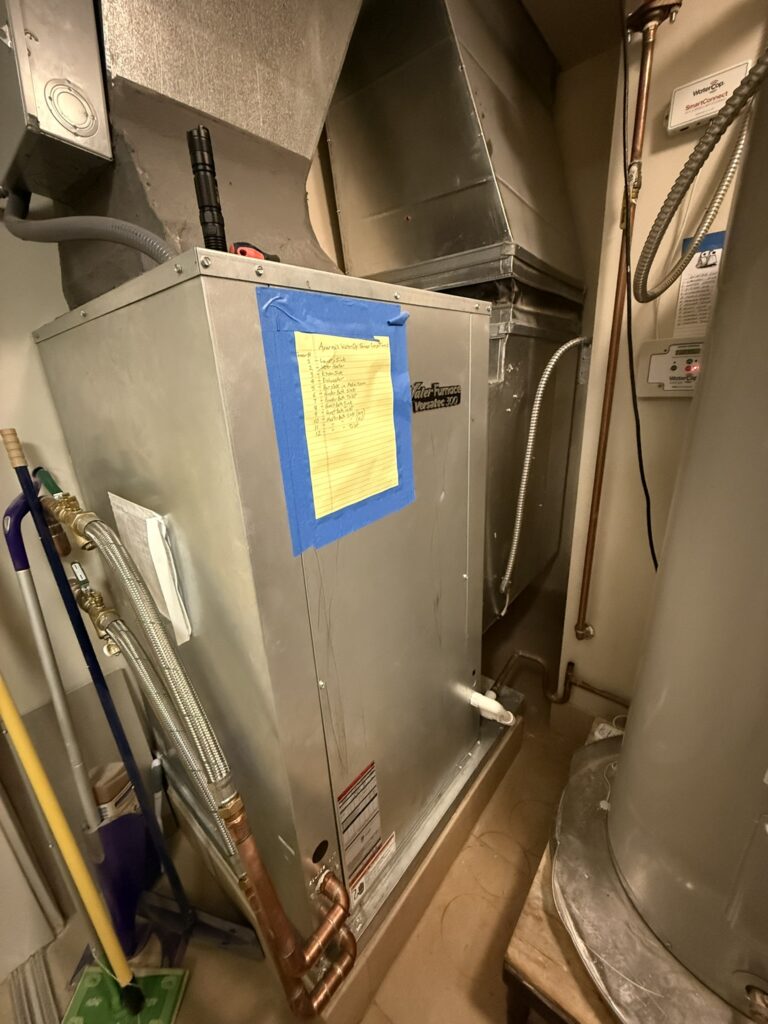
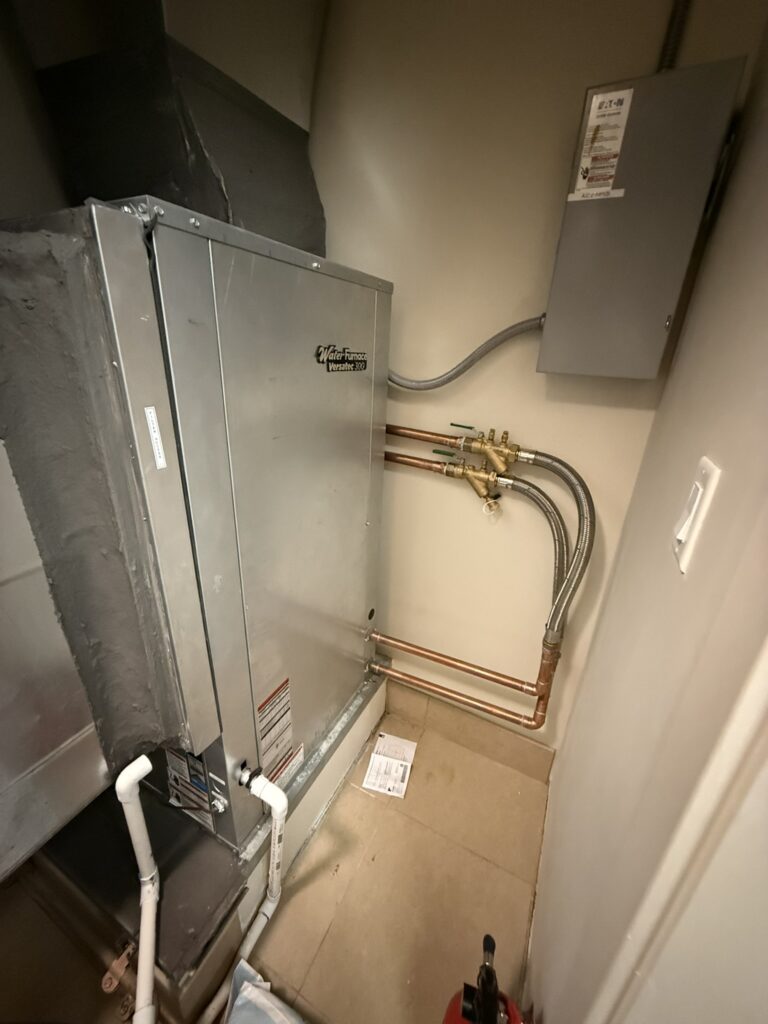
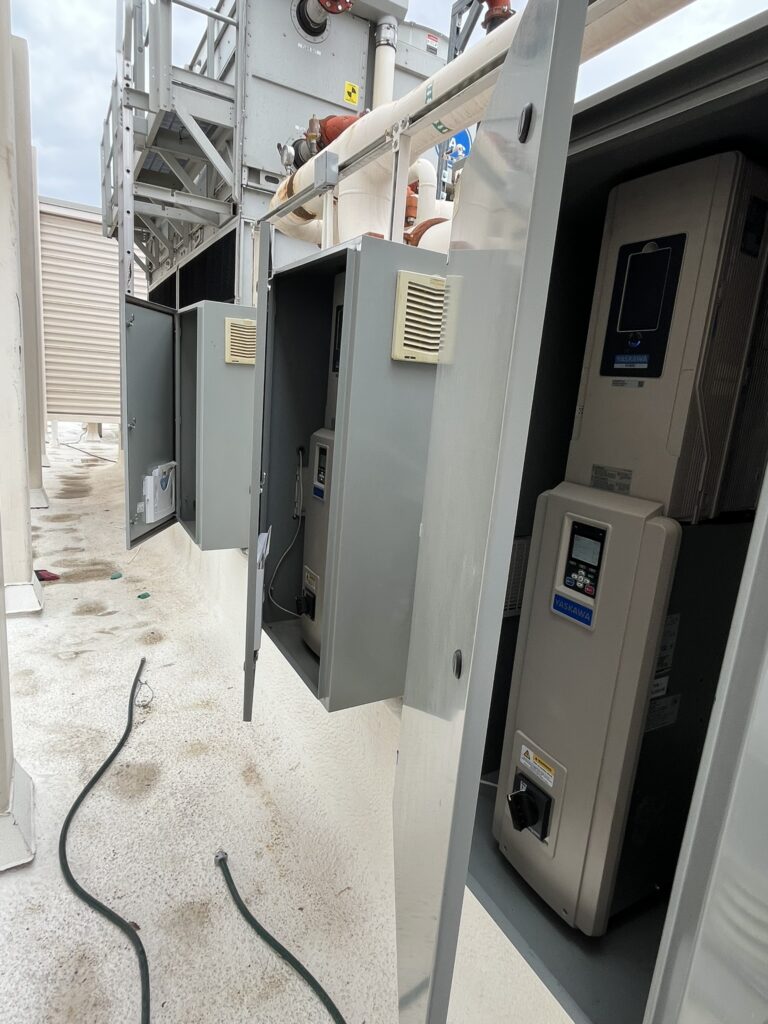
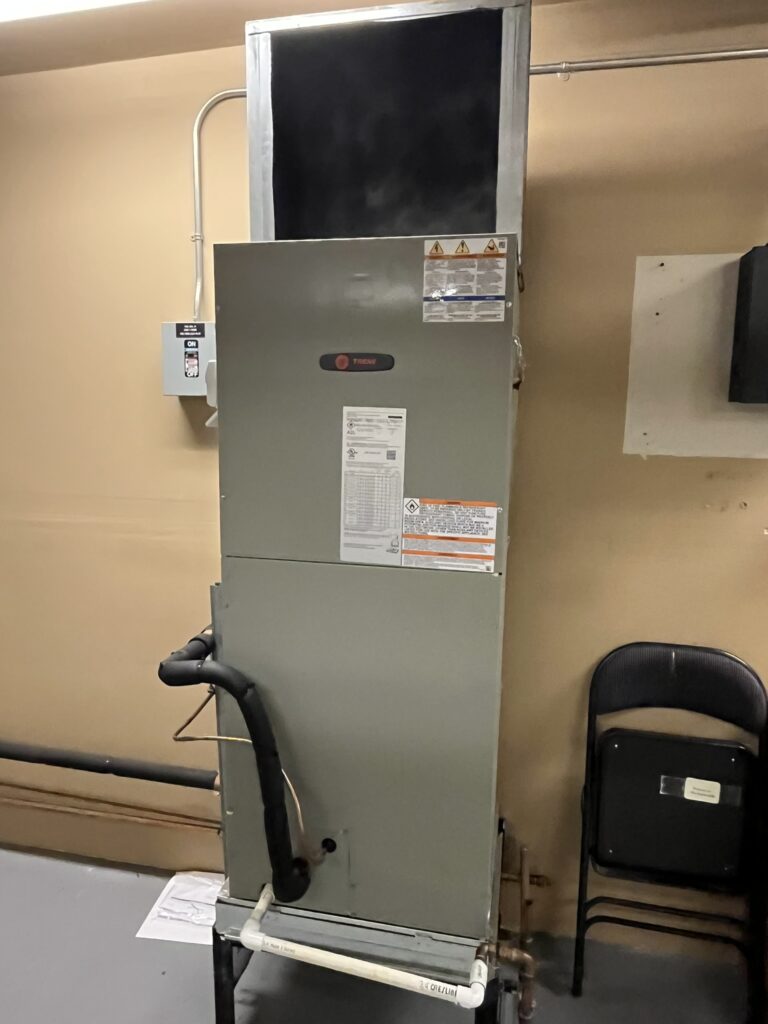
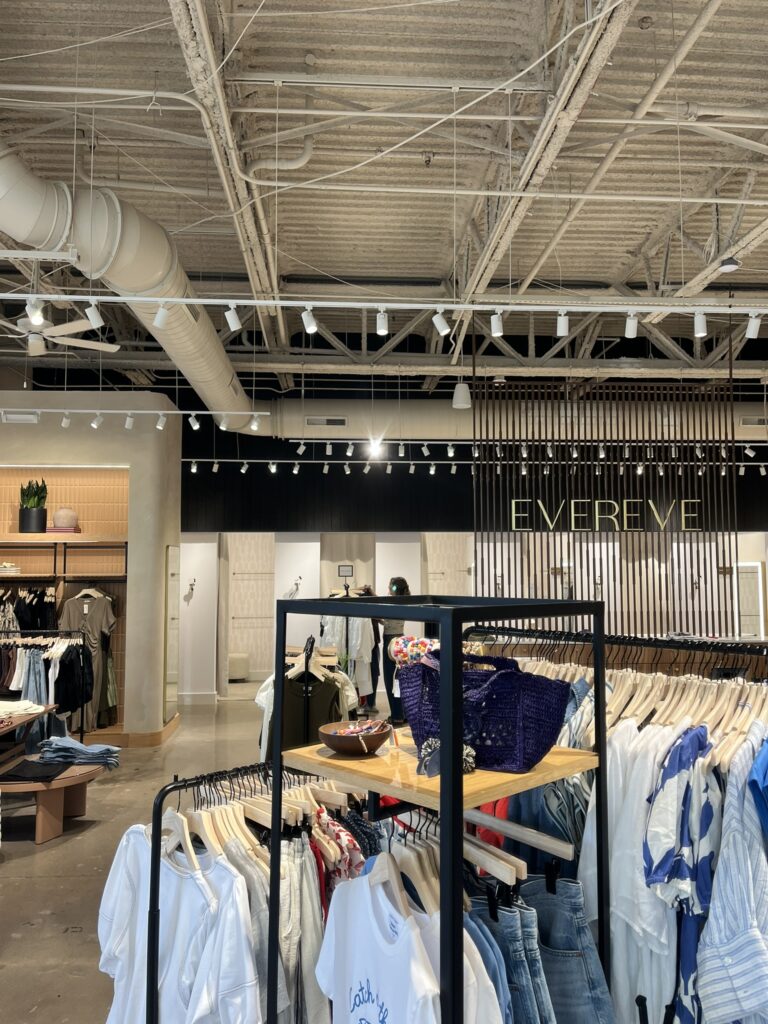
Photos from our own commercial projects across the Phoenix metro — equipment we installed, in buildings we service.
How the job typically runs.
We start by identifying the actual process load: what equipment runs, when it runs, what heat it adds, and what air the room loses through exhaust. That tells us whether the complaint is equipment failure, design mismatch, or both. A room that overheats only during active work is diagnosed differently than a room that never cools, and a dusty room with weak airflow is diagnosed differently than a clean office with a failed capacitor.
For occupied properties, we coordinate with managers before arrival. Gate access, roof access, parking, noise limits, and service paths are confirmed so the visit does not interrupt guest-facing or owner-facing areas. If equipment is above finished areas, behind service doors, on a roof, or near active work, we confirm who can provide access and approve the scope.
On site, we inspect the HVAC system and the room behavior together. That can include filters, coils, blower assemblies, drains, electrical components, refrigerant performance, thermostat placement, exhaust operation, make-up air conditions, and duct restrictions. We also ask when the complaint happens, because the operating schedule often explains why a system seems acceptable during a quiet inspection but fails during real production.
After inspection, we give a flat-rate written quote with the scope documented in writing. The diagnostic/service-call fee is disclosed at booking and credited. Repairs can be scheduled around shifts, prep windows, and lower-occupancy periods. If the problem points to engineered ventilation, specialty exhaust, fire review, or a use issue outside HVAC service, we identify that boundary and keep our work scope clear.
- 01 Booking, with the diagnostic fee disclosed
- 02 In-person diagnosis with real readings
- 03 Written flat-rate quote before work begins
- 04 The work: repair, install, or maintenance
- 05 Startup, documentation, and warranty handoff
Small-format manufacturing and support spaces in Paradise Valley still need HVAC work handled under Arizona licensing expectations, with APS electrical realities and Maricopa County conditions in mind. We service, repair, replace, and document HVAC equipment; we do not certify industrial hygiene conditions, issue legal opinions, or approve a use for zoning. Routine repair is different from equipment replacement, duct changes, electrical modifications, roof curb changes, added exhaust, or a change in how the space is operated.
When a project needs permitting, engineered ventilation, fire review, or specialty exhaust design, we identify that boundary and coordinate with the proper professional. That keeps the work realistic for the property type and the mechanical risk. A compact workshop, resort support room, or prep area may still need documentation, access planning, and careful sequencing even when it is not a large industrial facility. Arizona workmanship standards are published here: ROC minimum workmanship standards.
Pricing, financing & the 10% military & first responder discount.
Manufacturing HVAC cost in Paradise Valley depends on equipment access, RTU or split-system condition, process heat, dust load, filtration needs, exhaust and make-up air balance, controls, replacement crane or roof logistics, and whether work must happen after hours. A dirty blower wheel serving a small prep room is a different scope than an overheated workshop with exhaust imbalance, roof access limits, and a control sensor in the wrong zone.
Operating constraints also matter. Work may need to fit around resort schedules, estate access rules, owner-facing activity, active production windows, or quieter service periods. We provide flat-rate written quotes after an in-person look, with scopes documented in writing. Financing is available. Yeti Pros offers a 10% military, veteran & first responder discount. Repairs include a 2-YEAR written workmanship warranty and a 1-YEAR manufacturer parts warranty on repair parts.
- 01 Flat-rate written quote after an in-person look
- 02 Diagnostic fee disclosed at booking, credited to the repair
- 03 Financing available on replacements
- 04 2-year workmanship warranty; 1-year manufacturer parts warranty
- 05 10% military, veteran & first responder discount
Why a licensed HVAC contractor matters.
FAQs: HVAC for Manufacturing in Paradise Valley, AZ.
Is there really manufacturing hvac paradise valley demand?
Not in the heavy-industrial sense. Paradise Valley is mostly luxury residential, resort, and estate property. The real demand is for small production support spaces, resort back rooms, estate workshops, specialty prep rooms, and satellite operations that still need commercial HVAC discipline. These spaces can have process heat, dust, exhaust, filtration needs, and operating schedules that are very different from the surrounding offices, guest areas, or residential-style rooms. That is where HVAC problems show up even without a traditional manufacturing district.
Can you service HVAC around process equipment?
Yes. We inspect the HVAC system and account for process heat, exhaust, dust, operating hours, and control behavior. We look at how the room performs when the equipment is actually running, not only when the space is quiet. If the issue requires engineered industrial ventilation or specialty certification, we document our HVAC findings and coordinate with the appropriate professional. We service and document the mechanical scope without pretending a repair visit is a certification or use approval.
Why does our shop overheat only during active production?
That usually points to process heat, exhaust imbalance, restricted airflow, dirty coils, undersized cooling for the load, or zoning that was never designed for equipment operation. The room may be fine until ovens, compressors, tools, packaging equipment, or electronics start adding heat. Exhaust can also remove conditioned air and pull in warmer replacement air. We compare the room condition during actual use against equipment performance before recommending repair or replacement.
Can you schedule repairs around shifts or guest-facing hours?
Yes. We schedule around production windows, resort operations, estate access rules, and owner-facing activity where possible. Emergency service is available 24/7, and planned work is scoped in writing after the in-person diagnostic. For Paradise Valley properties, that can include gate instructions, roof access, parking limits, quieter work windows, and coordination with the person who controls access to service areas or finished spaces.
Do you work on rooftop units in Paradise Valley estates and resorts?
Yes. We service RTUs and related controls where access is available and safe. We confirm roof access, parking, ladder or hatch conditions, and approval contacts before dispatch so the visit fits the property’s access rules. Rooftop units serving workshops, prep rooms, back-of-house areas, and support zones can have electrical, refrigerant, blower, drain, coil, and control issues that are made worse by long summer run times and roof exposure.
What should we expect before approving the work?
The diagnostic/service-call fee is disclosed at booking and credited as stated. After the in-person look, we provide a flat-rate written quote with the scope documented in writing. The scope explains what we observed, what equipment is affected, what repair or replacement path is being quoted, and any boundary that involves engineered ventilation, specialty exhaust, permitting, or another professional. AZ ROC #363372 · ROC #363423.
Every major brand, serviced and installed.

Phoenix metro: Most days a tech is already working somewhere in the Valley, so same-day appointments happen when the schedule allows. After-hours emergencies are dispatched when a licensed tech is available — a real person answers and tells you the ETA on the call.
Call (520) 556-8929Request an estimate.
No pressure, no door knockers. We look at the HVAC system, tell you what it needs (and what it doesn’t), and put the number in writing.
Need manufacturing in Paradise Valley? A real person answers.
Other services we run in Paradise Valley.
Manufacturing in nearby cities.
Looking for something else nearby? All HVAC services in Paradise Valley