
San Tan Valley
HVAC for Self-Storage Facilities in San Tan Valley, AZ.
- (520) 556-8929
- Serving the entire Phoenix metro — we come to you
- Office: Mon–Fri 8:00 AM – 5:00 PM · 24/7 emergency service
- 2-year workmanship warranty · 1-year parts warranty
- Veteran-owned & operated · residential + commercial
- 23 five-star Google reviews
Climate-controlled storage in San Tan Valley is not a side amenity. For a self-storage operator near Johnson Ranch, Pecan Creek, Circle Cross Ranch, Skyline Ranch, or the commercial edges serving Encanterra, conditioned units are the product customers pay extra for. The market is shaped by fast exurban growth, young families moving between homes, household goods sitting through long desert summers, and small business inventory stored far from the older contractor base in the central Valley. That makes uptime, corridor temperature control, and clean access documentation more important than a generic comfort call.
Those buildings also operate differently from offices or retail suites. Customers open roll-up doors, leave corridor doors standing open during moves, bring in carts during the hottest part of the day, and expect the same feel from the first unit near the office to the last row near an exterior wall. A system that can satisfy a thermostat in one hallway may still leave dead zones, dusty returns, sweating drains, or uneven recovery after weekend traffic. In San Tan Valley, long cooling seasons, monsoon dust, and wide afternoon temperature swings make small weaknesses show up quickly.
Yeti Pros handles self storage hvac san tan valley work for small-format sites, newer facilities, and owners planning upgrades in ZIPs 85140 and 85143. We are veteran-owned and operated, service-area based, and we come to you. AZ ROC #363372 · ROC #363423. Call (520) 556-8929. Office hours are Mon-Fri 8-5 with 24/7 emergency service. For broader metro context, see our self-storage HVAC work.
ZIPs served: 85140, 85143
What Self-Storage Facilities covers in San Tan Valley.
Climate-Controlled Unit Diagnostics
We trace warm corridors, humidity complaints, weak airflow, failed thermostats, short cycling, and uneven rows back to the mechanical cause. The visit covers equipment, filters, coils, drains, controls, supply and return layout, and obvious leakage points so management gets a written repair path instead of a vague comfort note.
Rooftop Unit and Heat Pump Repair
Many San Tan Valley storage sites use packaged units, split systems, or heat pumps that are now entering first-failure age. We repair contactors, capacitors, motors, belts, boards, refrigerant-side issues, drains, and controls, then document the equipment served and the parts used for ownership records.
Preventive Maintenance
Storage HVAC maintenance has to account for dust, long run hours, customer door traffic, and limited manager bandwidth. We clean and inspect key components, check electrical readings, verify drains, review filters, and flag weak parts before a climate-controlled building turns into an emergency call.
Airflow and Corridor Balancing
When one hallway holds temperature and another does not, the issue may be air distribution rather than tonnage. We inspect supply coverage, returns, dampers, doors, sensor locations, and leakage patterns, then recommend targeted corrections that fit the actual storage layout.
Equipment Replacement Planning
For aging builder-grade units, we evaluate repair history, equipment condition, access, electrical fit, capacity, and operational impact. Replacement scopes are written clearly so owners can plan work around occupancy, office hours, gate access, and tenant movement through the property.
Office HVAC Service
The leasing office needs separate attention from the unit corridors. We service office systems, thermostats, drains, and airflow so staff can work through summer move-ins while the storage-building equipment is evaluated on its own load and performance requirements.
What we see for self-storage facilities in San Tan Valley.
San Tan Valley storage facilities tend to be newer than legacy Phoenix sites, but newer does not mean trouble-free. Many buildings from the 2005-2020s boom use builder-grade split systems, packaged heat pumps, or light commercial rooftop units that are now hitting first-failure age. Compressors, fan motors, contactors, capacitors, and economizer parts start showing stress after long summer run cycles. A climate-controlled hallway that looked fine on a spring walkthrough can become uneven once doors are rolling open, customers are moving carts, and west-facing walls take afternoon load.
The biggest storage-specific problem is not only equipment capacity. It is leakage and air movement. Door seals, roll-up doors, corridor doors, unit partition gaps, attic pathways, and poorly balanced supply runs can turn conditioned storage into a constant recovery fight. In San Tan Valley, dust from active development, horse-property roads on the edges, and monsoon debris can load filters and coils quickly. When airflow drops, tenants notice warm corridors, musty smells, and units that feel different from one row to the next.
We also see buildings where the office thermostat looks satisfied while the storage corridors are still behind. That can happen when the sensor is in a protected spot, when return air is pulled from the wrong area, or when a long hallway has supply air at one end and heat gain at the other. Upper wall heat, metal doors, attic heat above corridors, and afternoon sun on exposed elevations can make the last few units in a row feel different even when the equipment is running. The answer may be a failed part, but it may also be a balancing, leakage, drain, or control issue.
For climate-controlled units, we look at the whole path: equipment condition, return placement, supply coverage, thermostats, drains, condensate safety, door sweeps, mechanical-room access, and whether the corridor is being asked to condition too much unsealed space. A small storage office may be comfortable while the unit corridors lag behind. That usually points to zoning, duct layout, sensor location, or infiltration, not just a bad thermostat. We document what we find so ownership can decide whether the right move is repair, targeted airflow correction, or equipment replacement.
We also see sites where management inherited uneven records from construction, ownership change, or a remote property manager. That matters when emergency calls happen after office hours. We build equipment lists, label units where useful, photograph failed parts, and document scopes in writing. We service and document HVAC; we do not certify stored goods, issue insurance determinations, or make legal claims about tenant property. The goal is practical: keep the climate-controlled product operating, reduce repeat calls, and make decisions clear for the person responsible for the property.
- 01 Airflow and static pressure
- 02 Electrical: capacitors, contactors, draws
- 03 Refrigerant-circuit behavior
- 04 Drains, safeties, and float switches
- 05 Thermostat, controls, and cycling
- 06 Ducts, returns, and room-by-room comfort
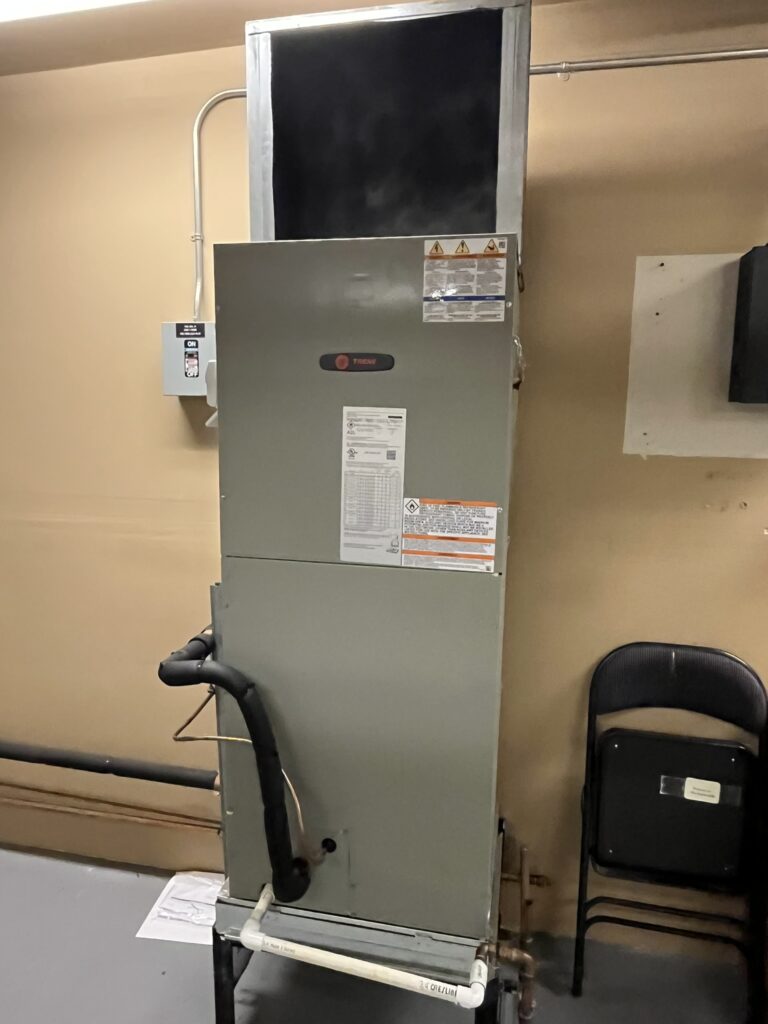
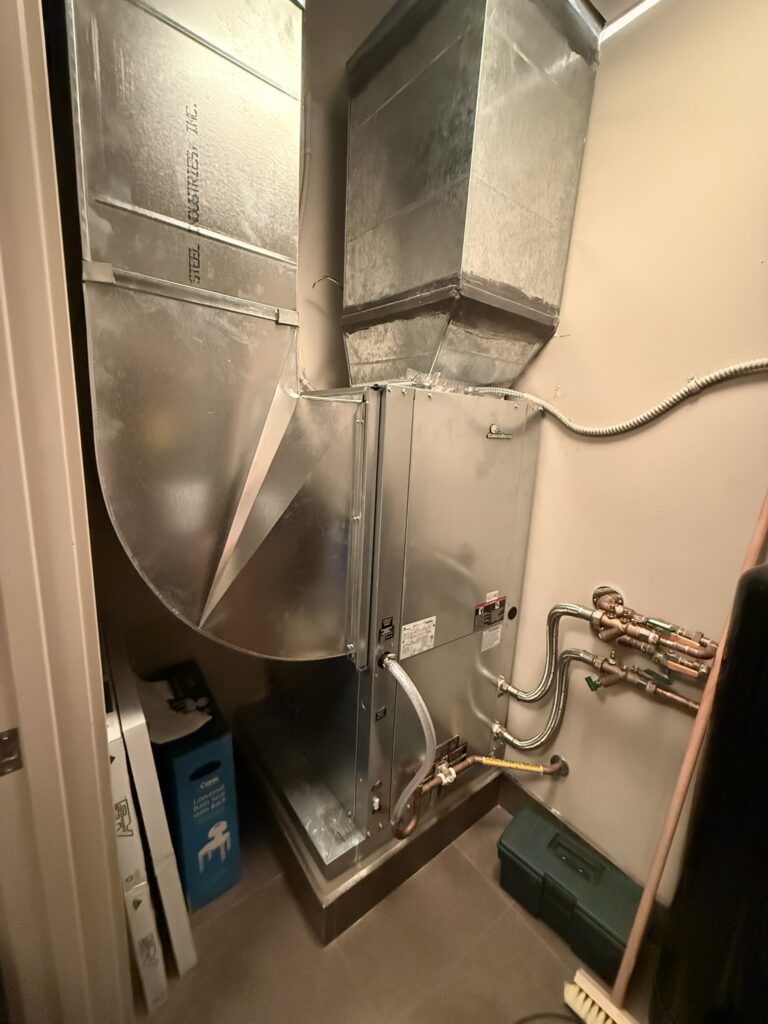
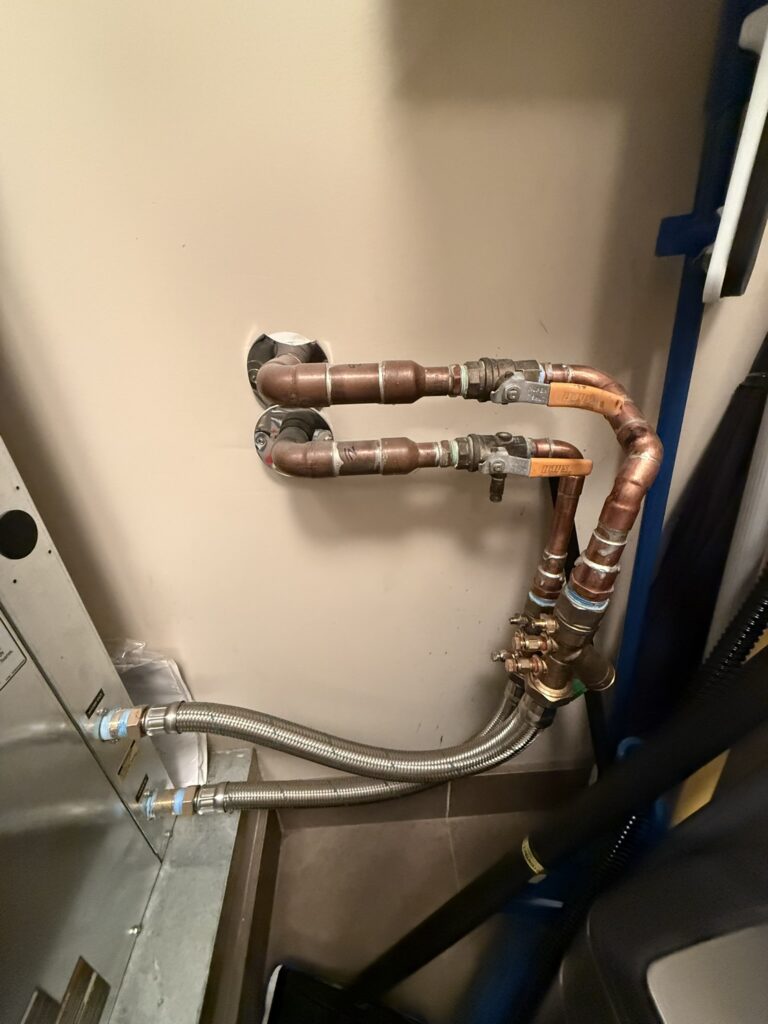
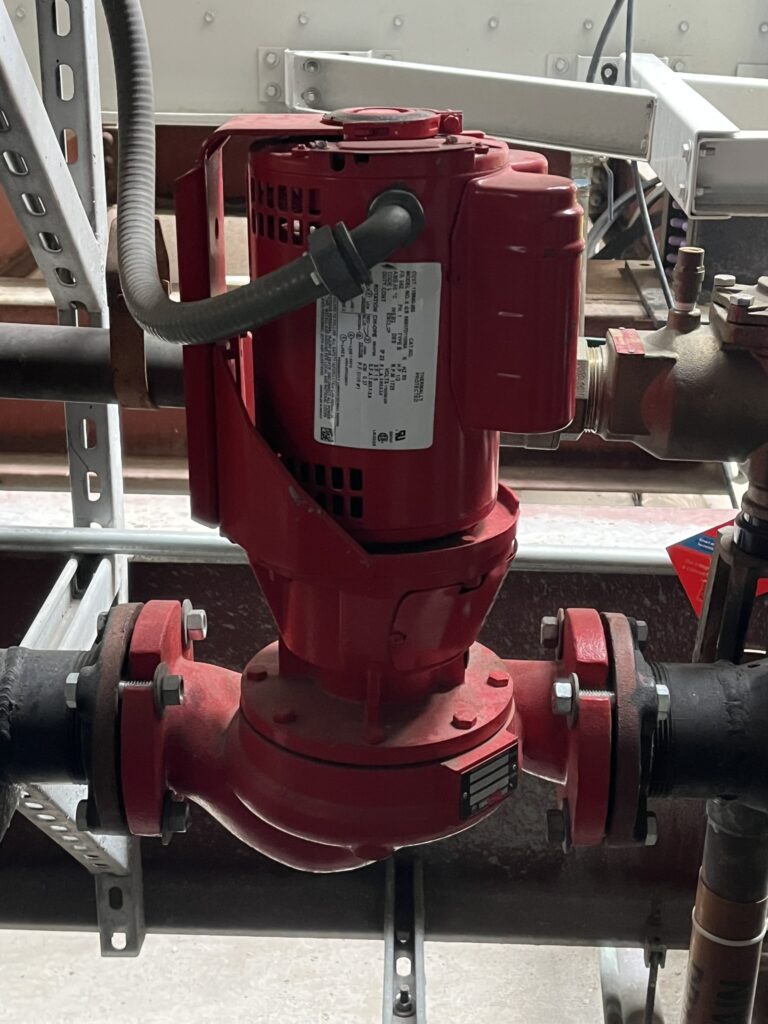
Commercial jobs we have documented.
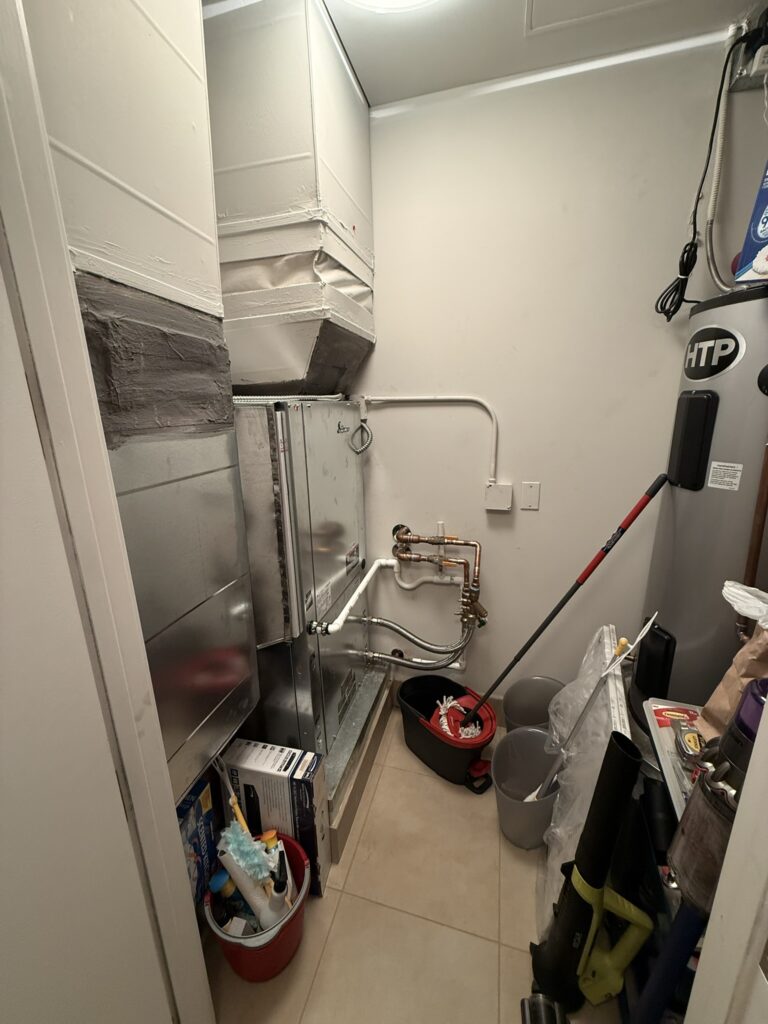
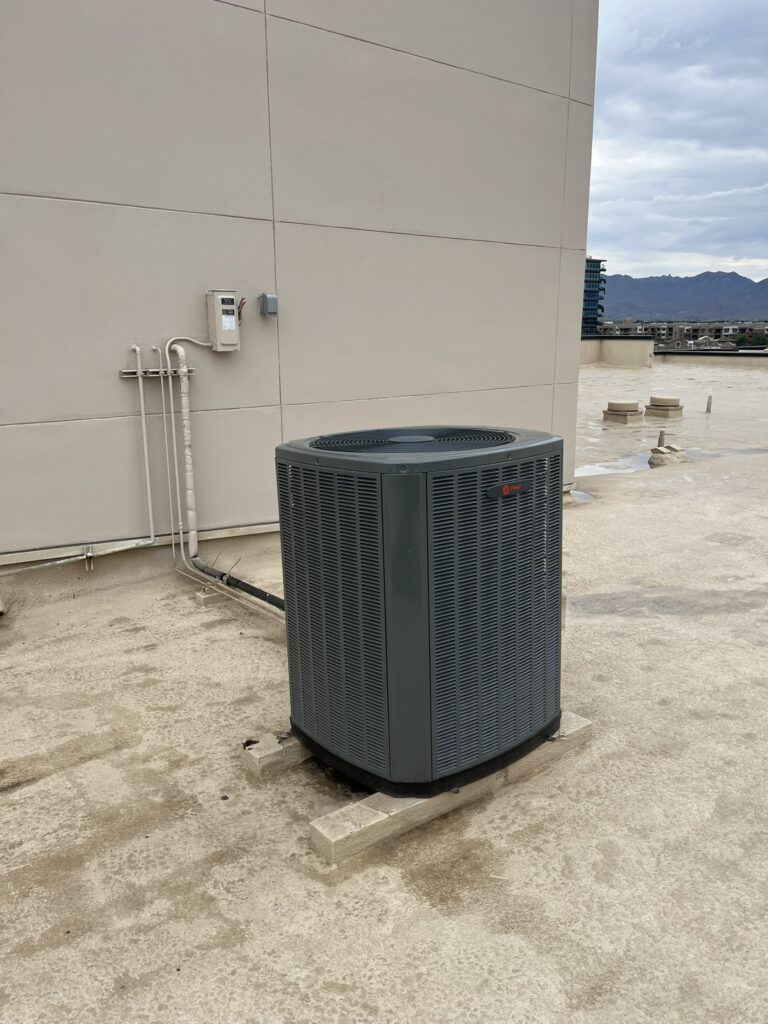
Photos from our own commercial projects across the Phoenix metro — equipment we installed, in buildings we service.
How the job typically runs.
Storage properties need work that respects gates, keypad access, occupied units, cameras, office hours, and customer traffic. We schedule with the manager or owner, confirm access rules before dispatch, and identify which mechanical areas can be reached without disrupting tenants. For active facilities, we stage tools and ladders carefully so hallways stay passable and office staff are not left explaining an open panel or blocked cart path.
Emergency service is available 24/7 when a climate-controlled building loses cooling during heat, when a drain issue threatens finished areas, or when an office system goes down during move-in traffic. During normal Mon-Fri 8-5 hours, we can handle diagnostics, maintenance, filter and belt service, controls checks, and repair quoting. Diagnostic and service-call fees are disclosed at booking and credited according to the quoted work.
On a diagnostic visit, we start with the complaint area and then trace the system that serves it. That means checking the equipment, verifying airflow symptoms, looking at filters and coils, testing electrical components, checking condensate behavior, and comparing the thermostat reading to the actual space complaint. If the problem is isolated to one corridor, we do not treat the whole property as one vague comfort issue. If the same pattern appears across multiple buildings, we flag the broader operational risk in writing.
Flat-rate written quotes come after an in-person look. Scopes are documented in writing, including equipment served, failure found, parts or labor proposed, and access assumptions. Financing is available. Repair parts carry a 1-year manufacturer parts warranty, and our workmanship is covered by a 2-year written workmanship warranty.
- 01 Booking, with the diagnostic fee disclosed
- 02 In-person diagnosis with real readings
- 03 Written flat-rate quote before work begins
- 04 The work: repair, install, or maintenance
- 05 Startup, documentation, and warranty handoff
San Tan Valley is in Pinal County, and much of it is unincorporated. For HVAC replacements or work that requires permitting, the path is typically through Pinal County, not a city counter. Utility coordination depends on the specific location and service territory; in San Tan Valley, the relevant electric utilities are SRP, not APS. That matters for equipment changeouts, electrical questions, disconnects, and scheduling around site operations.
Storage properties also need practical coordination because equipment may serve occupied corridors, leasing offices, or buildings that must remain accessible to tenants. Replacement planning can involve roof access, crane or lift timing, disconnect condition, condensate routing, thermostat placement, and how long a climate-controlled section can be offline. We identify the HVAC scope clearly so the owner can separate mechanical work from gate operations, tenant notices, and any other property-management decisions.
Yeti Pros documents HVAC scopes, model and serial information where available, and the work performed. We do not issue code rulings or act as a permitting authority. We can help owners understand what the HVAC scope includes and coordinate the mechanical work needed for the project. Arizona workmanship standards are published by the Registrar of Contractors here: ROC minimum workmanship standards.
Pricing, financing & the 10% military & first responder discount.
Self-storage HVAC pricing in San Tan Valley is driven by access, equipment type, number of systems, rooftop or ground placement, corridor zoning, refrigerant status, electrical condition, duct condition, controls, drain routing, and whether the issue is a single failed part or a building performance problem. Climate-controlled storage can also involve door seals, airflow balancing, and thermostat placement, so the cheapest part swap may not solve the complaint.
Urgency also changes the work. A planned maintenance visit with clean access, known equipment, and manager support is different from a summer emergency where one building is warm, tenants are arriving, and the failed system is behind a locked mechanical area. Older builder-grade equipment may need repair today and replacement planning next, while a newer unit with a dirty coil or failed capacitor may only need a focused repair. We separate those paths in the written scope instead of blending everything into one unclear recommendation.
We provide flat-rate written quotes after an in-person look, with the diagnostic and service-call fee disclosed at booking and credited. Financing is available. Military, veterans, and first responders receive a 10% discount; — full terms under military discount details. Call (520) 556-8929 to schedule service.
- 01 Flat-rate written quote after an in-person look
- 02 Diagnostic fee disclosed at booking, credited to the repair
- 03 Financing available on replacements
- 04 2-year workmanship warranty; 1-year manufacturer parts warranty
- 05 10% military, veteran & first responder discount
Why a licensed HVAC contractor matters.
FAQs: HVAC for Self-Storage Facilities in San Tan Valley, AZ.
Do you service climate-controlled self-storage units in San Tan Valley?
Yes. Yeti Pros services climate-controlled storage buildings and leasing offices in San Tan Valley, including areas around Johnson Ranch, Circle Cross Ranch, Pecan Creek, Skyline Ranch, Encanterra, and ZIPs 85140 and 85143. We are a service-area business and come to the site. Call (520) 556-8929 to book diagnostics, maintenance, repair, or replacement evaluation. We can look at a single failed system, a corridor that never feels right, or a group of units that need documentation for ownership planning.
Why are some storage corridors warmer than others?
Uneven storage corridors usually come from a combination of airflow, leakage, door traffic, sensor location, dirty filters or coils, weak fans, or undersized equipment for the actual load. In San Tan Valley, dust and high summer run time make weak airflow show up fast. We inspect the equipment and the building path before recommending a repair. That includes looking at supply coverage, return location, roll-up and corridor doors, thermostat placement, drains, and whether the complaint follows one zone or the whole building.
Can you help with door seal and infiltration problems?
We evaluate how door seals, roll-up doors, corridor doors, partition gaps, and return paths affect HVAC performance. We do not certify stored goods or make legal determinations about tenant property, but we can document HVAC-related findings and identify leakage conditions that make climate control harder to maintain. In practical terms, that means showing where conditioned air is being lost, where hot air is being pulled in, and whether the equipment is fighting a building condition instead of only a mechanical failure.
Do San Tan Valley storage HVAC replacements need permits?
Some HVAC replacements or mechanical changes may require permitting. San Tan Valley is in Pinal County, and much of it is unincorporated, so permitting is generally handled through Pinal County rather than a city. We document the HVAC scope and equipment details and help coordinate the mechanical side of the work. Utility service territory, disconnect condition, roof or ground access, and tenant operations can all affect how the replacement is planned.
Can you work after the storage office closes?
Yes. Office hours are Mon-Fri 8-5, and 24/7 emergency service is available. For storage properties, we confirm gate access, keypad procedures, manager contact, camera or lock requirements, and which areas can be entered. That keeps the service call controlled when cooling fails after normal office hours. We also confirm how tools, ladders, panels, and any temporarily open mechanical areas should be handled so the property remains orderly during the visit.
How do you quote self-storage HVAC repairs?
We provide flat-rate written quotes after an in-person look. The scope documents what equipment was checked, what failed, what work is proposed, and any access assumptions. The diagnostic and service-call fee is disclosed at booking and credited. Financing is available, with a 2-year written workmanship warranty on our work. If the visit shows both an immediate repair and a larger building-performance issue, we separate those findings so ownership can decide what to handle now and what to plan next.
Every major brand, serviced and installed.




Phoenix metro: Most days a tech is already working somewhere in the Valley, so same-day appointments happen when the schedule allows. After-hours emergencies are dispatched when a licensed tech is available — a real person answers and tells you the ETA on the call.
Call (520) 556-8929Request an estimate.
No pressure, no door knockers. We look at the HVAC system, tell you what it needs (and what it doesn’t), and put the number in writing.
Need self-storage facilities in San Tan Valley? A real person answers.
Other services we run in San Tan Valley.
Self-Storage Facilities in nearby cities.
Looking for something else nearby? All HVAC services in San Tan Valley