
Tempe
Duct Sealing in Tempe, AZ.
- (520) 556-8929
- Serving the entire Phoenix metro — we come to you
- Office: Mon–Fri 8:00 AM – 5:00 PM · 24/7 emergency service
- 2-year workmanship warranty · 1-year parts warranty
- Veteran-owned & operated · residential + commercial
- 23 five-star Google reviews
Tempe is landlocked, built out, and shaped by ASU, which makes it the metro's rental capital as much as a homeowner's town, and that changes what duct sealing has to account for here. A large share of the housing is leased, so decisions run through landlords and property managers, approvals take a coordination step, and the calendar bends around the August lease turnover when much of the city changes hands at once. The building stock is old for the Valley: mid-century Maple-Ash and Holdeman neighborhoods with flat roofs, package units perched on top, small lots, and ductwork baking through Tempe summers for decades. Those older, tighter systems tend to leak, and on a flat roof the duct connections cook in direct sun rather than in an attic, so a leaking curb spills conditioned air straight outdoors, and on a small ASU-area lot that lost cooling simply vanishes straight into the open sky. Duct sealing in Tempe, AZ means working around ownership structures and lease timing as much as diagnosing the ducts themselves. A leaky rental system does not announce itself to the owner the way it does to the tenant sweating through August, which is why so much Tempe ductwork goes untested for years. Yeti Pros tests first, seals what leaks, and re-tests to prove it, whether the decision-maker is an owner-occupant or a property manager approving on a tenant's behalf. Veteran-owned and operated, licensed under Arizona ROC #363372 and ROC #363423, we put flat-rate quotes in writing and track SRP time-of-use rates. A real person answers (520) 556-8929 anytime, military and veteran households take 10 percent off, and the service-call fee is disclosed at booking and credited toward the repair.
ZIPs served: 85281, 85282, 85283, 85284
What Duct Sealing covers in Tempe.
Static Pressure & Leakage Testing
We pressurize the duct system with a calibrated fan and read static pressure at the package unit or air handler, turning leakage into a measured figure. On Tempe's older flat-roof homes it exposes how much air the roof-curb transition and aging interior ducts are losing, giving a rental owner a hard number to approve work against.
Hand-Sealing With Mastic
Reachable leaks, plenum seams, takeoff collars, the roof-curb transition, and return platforms, get brushed with mesh-reinforced mastic, the durable answer to decades-old sealant baked apart on a Tempe rooftop. In Maple-Ash and Holdeman homes this is the core of the job, resealing curb connections and the original interior joints a string of owners left leaking.
Aerosolized Interior Sealing
For leaks scattered along old runs no hand can reach, we mist an aerosolized sealant through the pressurized ductwork; escaping air carries particles to each gap and seals it while the leakage number drops on screen. On Tempe's mid-century homes with their piecemeal-reworked duct, it closes the diffuse interior leakage hand-sealing physically cannot get to.
Roof & Duct Insulation Upgrades
Airtight ducts still gain heat through a thin jacket, and on a flat roof the exposed package-unit duct bakes in direct sun rather than an attic. We assess insulation on the rooftop transition and interior runs, then upgrade compressed insulation where the math supports it, so a Tempe system stops losing that air to the roof.
Return-Air Corrections
Return leaks drag hot roof-cavity air and dust into the system, and Tempe's older homes frequently return through open framing cavities that were never sealed. We seal those returns, rebuild platforms properly, and correct undersized returns choking the blower. On long-deferred rental systems, the return side often does the most for comfort and the dust tenants complain about.
Post-Seal Verification Readings
We re-test after sealing rather than ask anyone to take it on trust. We pull the registers, pressurize the ducts again, and log the new leakage figure next to the original. For a landlord or property manager approving the work remotely, those documented before-and-after numbers prove the repair actually landed, no site visit required to confirm it.
What we see for duct sealing in Tempe.
The Maple-Ash and Holdeman neighborhoods define Tempe's older core, and their construction sets the leakage pattern. These mid-century homes commonly wear flat or low-slope roofs with a package unit mounted up top, and the supply and return ducts drop through a roof curb into the ceiling below. That curb connection is the signature Tempe leak point: it sits in full, unshaded sun all day, the sealant around it degrades, and it bleeds conditioned air straight out of the building. Inside, the ducts themselves are old, often original, sometimes reworked piecemeal by a string of owners over fifty years, and the returns are frequently built from open framing cavities that pull dust and hot roof-cavity air into the system.
The rental factor layers on top of the construction. A meaningful portion of Tempe housing is leased to students and young renters, and rental HVAC tends to be deferred, because the person feeling the discomfort is not the person who pays for the fix. So we see systems that have limped along through several tenancies with leakage nobody addressed, running up bills that either a tenant or a landlord has quietly absorbed. When a property manager finally calls, it is often because a unit could not keep up during a lease turnover or a tenant complaint escalated. By then the system has usually been overworking for two or three summers straight.
Small lots and dense blocks add practical wrinkles. Rooftop access on a flat-roof home, tight side yards, and shared walls on some multi-unit properties all shape how the work gets staged. The August turnover concentrates demand: leases flip, units sit briefly empty, and owners want any HVAC issue handled in the short window between two tenants. We meter every one of these systems the same way, seal the roof-curb transition and the accessible interior ducts, correct the returns, and document the result, so whoever owns the building has proof the fix landed rather than a verbal assurance passed down a chain.
- 01 Airflow and static pressure
- 02 Electrical: capacitors, contactors, draws
- 03 Refrigerant-circuit behavior
- 04 Drains, safeties, and float switches
- 05 Thermostat, controls, and cycling
- 06 Ducts, returns, and room-by-room comfort
Residential HVAC across the Valley.
Air conditioning, heating, and cooler work at homes across the Phoenix metro.
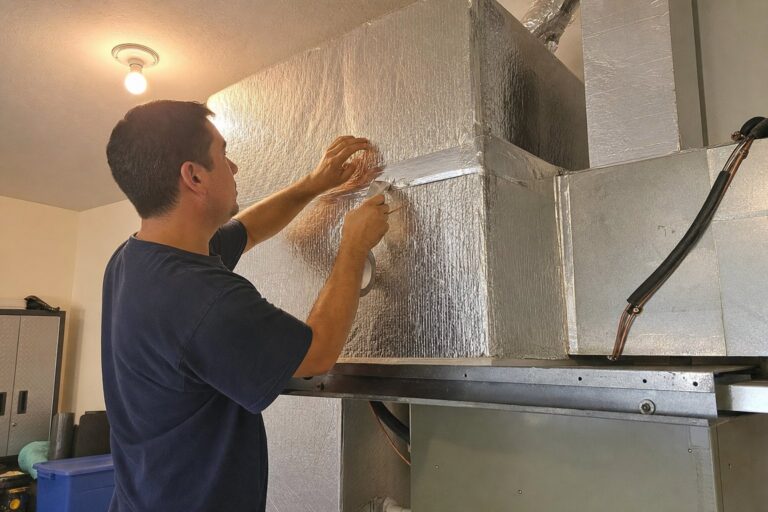
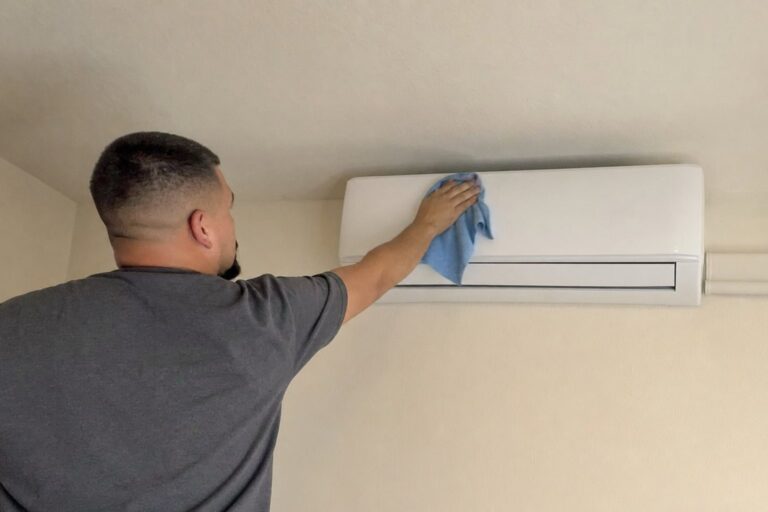
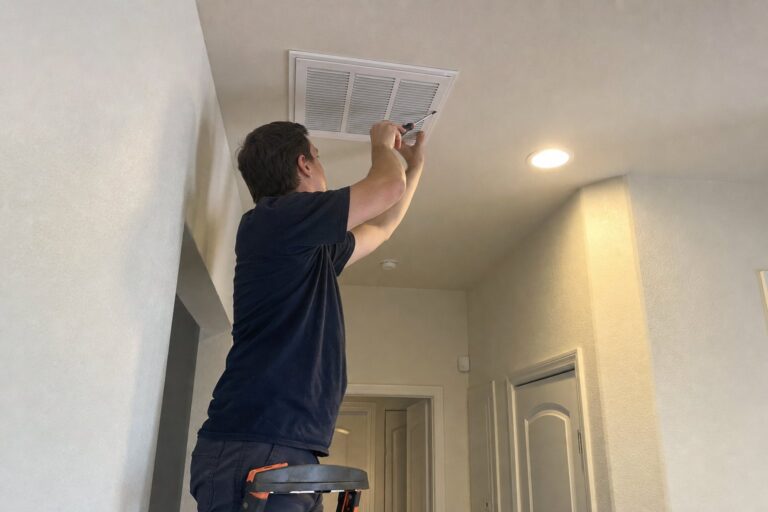
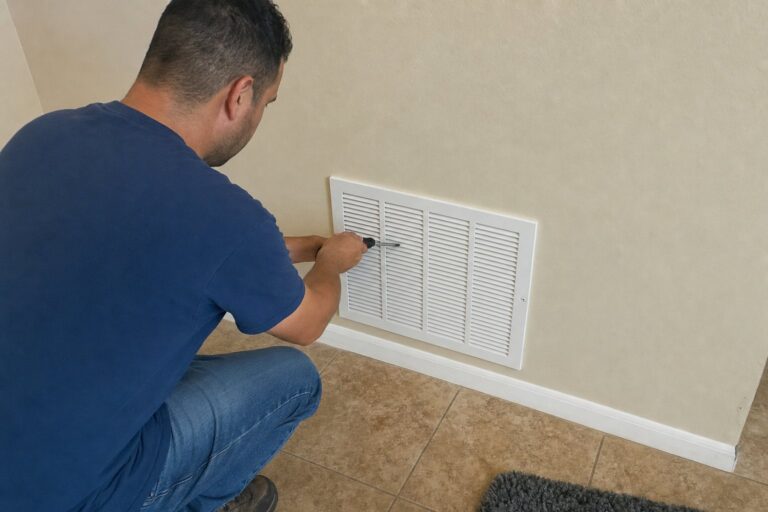
How the job typically runs.
The fee is stated before anything is booked, and if sealing follows, it is credited toward the work. Tempe's rental reality gets handled up front: when a property manager or landlord is the decision-maker, we coordinate approval and scheduling with them while arranging tenant access, so nobody is stuck waiting on a sign-off mid-visit. For lease-turnover work, we aim at the empty window between tenants when we can, since an empty unit is the fastest to test and seal.
On site, we diagnose before any quote. We read static pressure at the package unit or air handler, walk the accessible ducts, and run a pressurization test that puts a real figure on the leakage. On a flat-roof home we pay close attention to the roof-curb transition where Tempe systems leak worst. You, or the manager approving the work, see the readings and the failures we found, then get a flat-rate written quote, a firm number that will not creep. Nothing proceeds without approval, and if the old ducts are past sealing, we say so instead of billing to seal them.
After approved work we re-test, and the leakage number has to fall before we call it done. You receive documented before-and-after readings. For a rental owner approving remotely, that paperwork is the proof the money did something real, which matters more when the person paying was not standing in the house.
- 01 Booking, with the diagnostic fee disclosed
- 02 In-person diagnosis with real readings
- 03 Written flat-rate quote before work begins
- 04 The work: repair, install, or maintenance
- 05 Startup, documentation, and warranty handoff
Sealing existing ductwork in Tempe does not require a city permit. Mastic on seams, aerosol sealant, a return correction, or resealing a roof-curb transition is repair of an existing system, not new construction, so there is no plan review and no inspection. Permits apply when the scope changes the system: swapping a rooftop package unit, running new duct that alters the design, or new electrical all require a City of Tempe mechanical permit, which we pull and see through inspection.
Tempe's rental stock adds a practical note. On leased property the owner, not the tenant, authorizes work, and we confirm approval from whoever holds that authority before anything begins. On the flat-roof homes, resealing an existing curb is repair, but replacing the unit above it is permitted, and we say which side your job lands on.
Everything follows Arizona's Minimum Workmanship Standards, the ROC's legal baseline for licensed contractors. We treat that baseline as a floor, not a target: our written warranty on parts and workmanship exceeds what the state requires, and refrigerant work is done only by EPA 608-certified technicians.
Pricing, financing & the 10% military & first responder discount.
Tempe pricing has to make sense to whoever is signing, an owner-occupant or a property manager weighing a repair against a rental's budget, so we keep it flat and plain. There is no blind duct-sealing figure, because the honest number depends on what the test finds and which methods the leakage calls for. After diagnosis you get a flat-rate written quote, a firm figure that holds from quote to invoice, and the service-call fee already paid is credited toward the work. We do not run teaser inspections designed to manufacture alarming findings; the diagnosis is priced honestly because it is not a sales funnel. You get the whole picture in writing before a register comes off, with testing, sealing, and any insulation upgrade itemized. For owners handling multiple units or a larger job, financing options are available, and a written flat-rate quote is exactly what a landlord needs to approve a repair without a site visit. Active-duty military and veterans take 10 percent off via our military discount, a lasting thank-you from a veteran-owned crew, applied to the flat rate.
- 01 Flat-rate written quote after an in-person look
- 02 Diagnostic fee disclosed at booking, credited to the repair
- 03 Financing available on replacements
- 04 2-year workmanship warranty; 1-year manufacturer parts warranty
- 05 10% military, veteran & first responder discount
Why a licensed HVAC contractor matters.
FAQs: Duct Sealing in Tempe, AZ.
Can you coordinate the whole job with me as the landlord?
Yes, that is routine for us in Tempe. We take approval and scheduling direction from you as the owner while arranging access with your tenant, so the work moves without you needing to be on site. You get the leakage readings, a flat-rate written quote, and documented before-and-after numbers, everything you need to authorize and verify the job remotely. Because so much of Tempe is leased, we work through property managers and owners routinely, and we keep the tenant informed without asking them to make decisions.
My house has a package unit on a flat roof. Where does it leak?
The classic Tempe leak is the roof-curb transition, where the supply and return ducts drop through the roof into the ceiling. On the flat-roof Maple-Ash and Holdeman homes, that connection sits in full sun all day, so the original sealant degrades and the curb starts bleeding conditioned air outdoors. The interior ducts below, often old and reworked over the years, add their own leaks. We test the whole system, seal the curb and accessible interior joints, correct the returns, and re-measure so you see the improvement in numbers.
What does duct sealing in Tempe, AZ cost?
It depends on what the test finds and which methods your leakage calls for, so we never quote blind. After diagnosis you receive a flat-rate written number, disclosed before any work begins, and the service-call fee already paid is credited toward it. That written quote is exactly what a landlord or property manager needs to approve a repair without a site visit. Financing is available on larger or multi-unit jobs, and military and veteran households take 10 percent off. The figure you approve is the figure billed.
Can you get it done during the August lease turnover?
That is often the best window, and we plan for it. When a Tempe rental sits empty between tenants in the August turnover, we test and seal without working around an occupant, and the incoming tenant inherits a system that holds its air. Demand spikes citywide then, so booking early matters. Tell us the turnover date when you call and we will target the vacant window; if the unit stays occupied, we coordinate access with the tenant instead. Either way the job gets documented before and after.
Is sealing worth it on a rental the tenant pays to cool?
It usually is, for reasons beyond the monthly bill. Leaky ducts make a unit hard to keep comfortable, which drives tenant complaints, service calls, and turnover, all of which cost an owner more than the sealing. A system losing a fifth to a third of its air also runs longer and wears faster, shortening the equipment's life on your dime. And a comfortable, efficient unit is easier to lease. We document the leakage so the decision rests on a measured number rather than a hopeful guess.
Are decades-old ducts worth sealing, or should they be replaced?
The test answers that honestly. Many older Tempe systems seal well: the metal and the roof-curb transition are sound, and mesh-reinforced mastic on the seams plus a return correction returns most of the lost air. But some ducts are genuinely too degraded, dry-rotted duct board or crushed, corroded runs, and sealing those is money down the drain. We measure first and tell you which situation you have. If replacement is the honest answer, we say so rather than take payment to seal ductwork that cannot hold air.
Every major brand, serviced and installed.





Phoenix metro: Most days a tech is already working somewhere in the Valley, so same-day appointments happen when the schedule allows. After-hours emergencies are dispatched when a licensed tech is available — a real person answers and tells you the ETA on the call.
Call (520) 556-8929Request an estimate.
No pressure, no door knockers. We look at the HVAC system, tell you what it needs (and what it doesn’t), and put the number in writing.
Need duct sealing in Tempe? A real person answers.
Other services we run in Tempe.
Duct Sealing in nearby cities.
Looking for something else nearby? All HVAC services in Tempe