
Peoria
Commercial HVAC Maintenance in Peoria, AZ.
- (520) 556-8929
- Serving the entire Phoenix metro — we come to you
- Office: Mon–Fri 8:00 AM – 5:00 PM · 24/7 emergency service
- 2-year workmanship warranty · 1-year parts warranty
- Veteran-owned & operated · residential + commercial
- 23 five-star Google reviews
Peoria's commercial spine runs on hospitality and dust. The P83 dining and entertainment district, the spring-training crowds that swell restaurants and hotels every February and March, the medical and retail growth pushing north, and the Lake Pleasant hospitality trade all lean on rooftop cooling that fights one of the harshest dust environments in the metro. Yeti Pros delivers commercial HVAC maintenance in Peoria as a technical preventive-maintenance visit, instrumented work on the equipment itself, not a courtesy glance, because the northwest Valley's dust corridor loads condenser coils faster than almost anywhere in the region, and monsoon season turns that slow fouling into sudden failure. We are veteran-owned and operated, EPA 608-certified for refrigerant work, and licensed under ROC #363372 and ROC #363423. From the P83 restaurants to the medical suites off the 101, we service package rooftop units, split systems, and the refrigeration that keeps kitchens and stores compliant and cold. The purpose of our visit is measurement: catching a coil buried in dust or a compressor drifting toward failure with a meter, on a scheduled morning, rather than during a packed spring-training weekend when a dining room is full. Each stop produces written per-asset readings you can trend, so a facility manager's decisions run on data, not guesswork. A live person answers our phone around the clock, every quote is flat-rate and in writing, and the company maintaining your rooftops is the one that shows up if something fails. Across a portfolio, maintenance should create a consistent record of equipment condition, priorities, and budget needs from property to property. The north-side medical corridor and the retail centers filling in around it lean on that same discipline, because a warm suite is a complaint by noon. Reliable cooling here is not luck; it is a measured schedule that stays ahead of the dust.
ZIPs served: 85345, 85381, 85382, 85383
What HVAC Maintenance covers in Peoria.
Scheduled RTU and Split-System PM
The backbone visit for Peoria's rooftop-heavy hospitality and retail: each package unit and split inspected in sequence, electricals tested against nameplate, refrigerant performance measured, and mechanical wear flagged before a spring-training crowd loads it. P83 restaurants, hotels, and medical suites get a task list matched to runtime, so a unit that strains only under a full weekend house is measured at that load.
Coil Cleaning as Capacity Insurance
In the northwest dust corridor, condenser coils foul faster than almost anywhere in the metro, and a dust-blanketed coil is lost tonnage. We clean condenser coils before summer and rinse them after every major haboob, because a fouled coil drives head pressure and amps up while capacity falls. A Peoria rooftop tripping during a packed monsoon afternoon is the failure this prevents.
Belt, Bearing and Motor Service
Rooftop heat and airborne grit are hard on rotating parts. We check belt tension, alignment, and glazing, inspect pulleys, lubricate and listen to bearings before they seize a blower, and read motor amps against nameplate to catch a fan or compressor motor drifting toward failure. For a P83 kitchen, a bearing caught in spring beats a dark dining room on a Saturday.
Economizer and Controls Verification
Dust seizes dampers and drifts sensors, and a broken economizer bleeds money invisibly. We stroke dampers, verify actuators, sensors, and linkages, and confirm controls match real occupancy, vital for venues whose load swings between a quiet weekday and a spring-training rush. A stuck-open economizer hauls scorching air in; a stuck-closed one wastes every cool northwest-Valley night.
Filter Program Management
Nowhere in the metro does filtration matter more than the Peoria dust corridor, where the wrong filter or schedule lets grit reach coils and controls. We match MERV rating to each space, warehouse back-of-house to medical-suite fine capture, within the blower's static-pressure limits, add filter-only stops at high-dust sites, and log every change by size and rating.
Written Per-Asset Condition Reports
Each visit closes with hard numbers per asset, capacitance, amp draws, pressures, and temperature splits, trended against the previous visit so drift shows early. Every rooftop gets a condition grade and remaining-life estimate, letting a manager overseeing a growing Peoria medical or retail portfolio see which unit is sliding first. That trend turns a monsoon-week emergency into a calm repair.
What we see for HVAC maintenance in Peoria.
The northwest Valley's dust corridor is the defining variable on Peoria commercial equipment, and it lands hardest on rooftop condensers. Fine desert particulate rides the prevailing wind across open land north and west of the city and packs into condenser coils between visits, and when a monsoon haboob rolls through, a single hour can deposit what a month of ordinary air would. We routinely open Peoria rooftops to find condenser coils so fouled that head pressure runs high, amp draw is elevated, and the unit is quietly losing the capacity it needs most in July. That fouling is the number-one preventable failure we correct here.
Hospitality compounds it. P83 restaurants and Lake Pleasant-area venues run kitchens and dining rooms that spike hard on weekends and during spring training, when February and March crowds fill every seat and the cooling load jumps overnight. Equipment that felt fine on a quiet Tuesday trips under a packed Saturday house, and marginal units hide behind sheer tonnage until several fail at once. Kitchen refrigeration adds risk on top: a walk-in condenser choked with the same corridor dust is a spoiled-inventory claim waiting for a hot afternoon. A P83 kitchen that ran fine in April is suddenly down at Friday dinner.
Peoria's growing medical and retail footprint brings a different pattern: tighter comfort and air-quality expectations, finer filtration, and controls that must hold precise conditions, all degraded silently by dust bypassing a neglected filter program. Light-industrial sites off the arterials pull grit straight through their systems day after day, and a distribution tenant rarely notices until a zone warms and product is at stake. The thread is that Peoria's dust does not fail equipment the day it lands; it accumulates invisibly, raises operating cost every hour in between, and then surfaces as a rooftop that will not hold temperature during the exact monsoon week the whole northwest Valley is calling for help. On a fleet spread across a P83 property, the dust never lands evenly, so no two rooftops are on the same clock.
- 01 Airflow and static pressure
- 02 Electrical: capacitors, contactors, draws
- 03 Refrigerant-circuit behavior
- 04 Drains, safeties, and float switches
- 05 Thermostat, controls, and cycling
- 06 Ducts, returns, and room-by-room comfort
Commercial jobs we have documented.
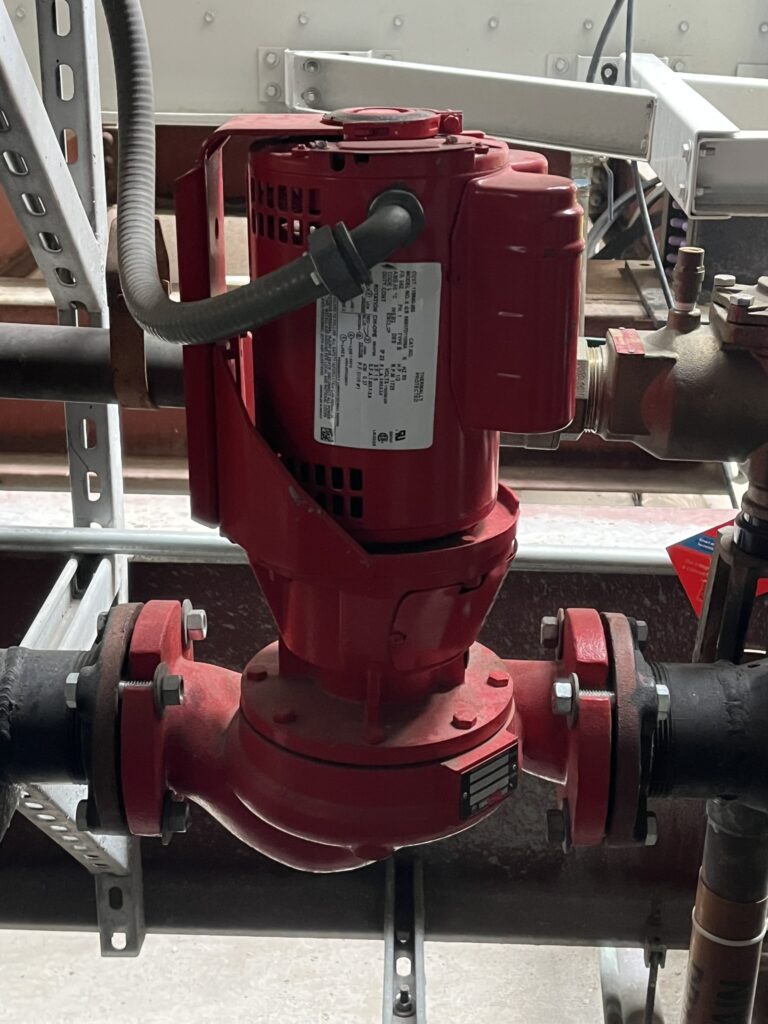
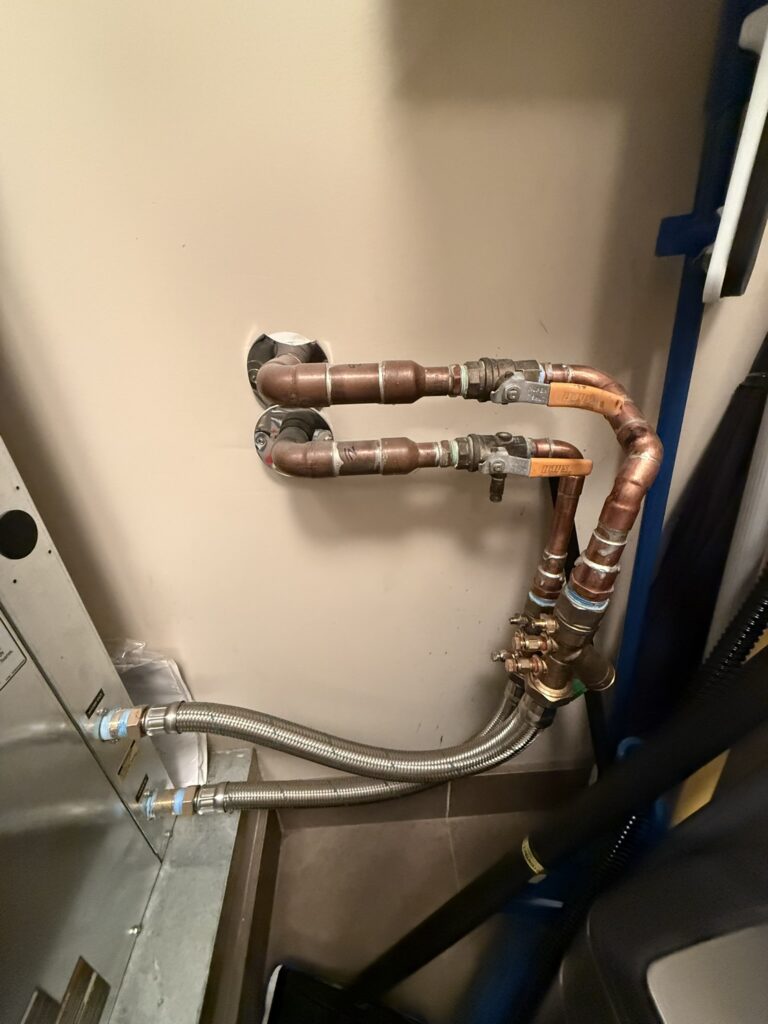
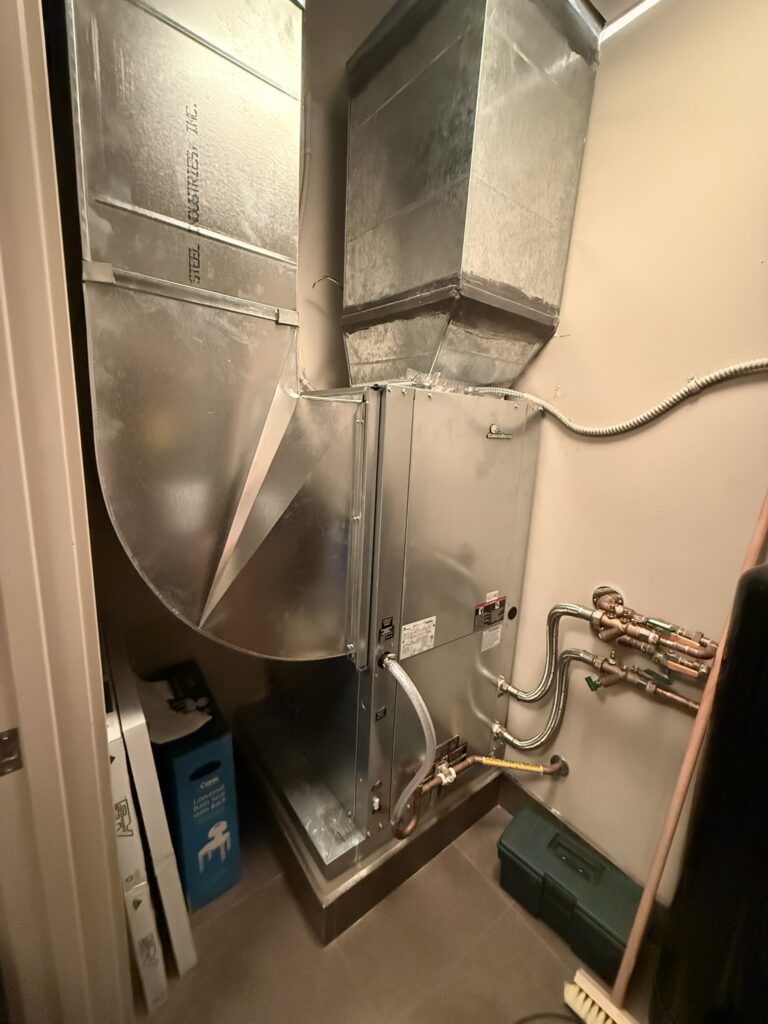
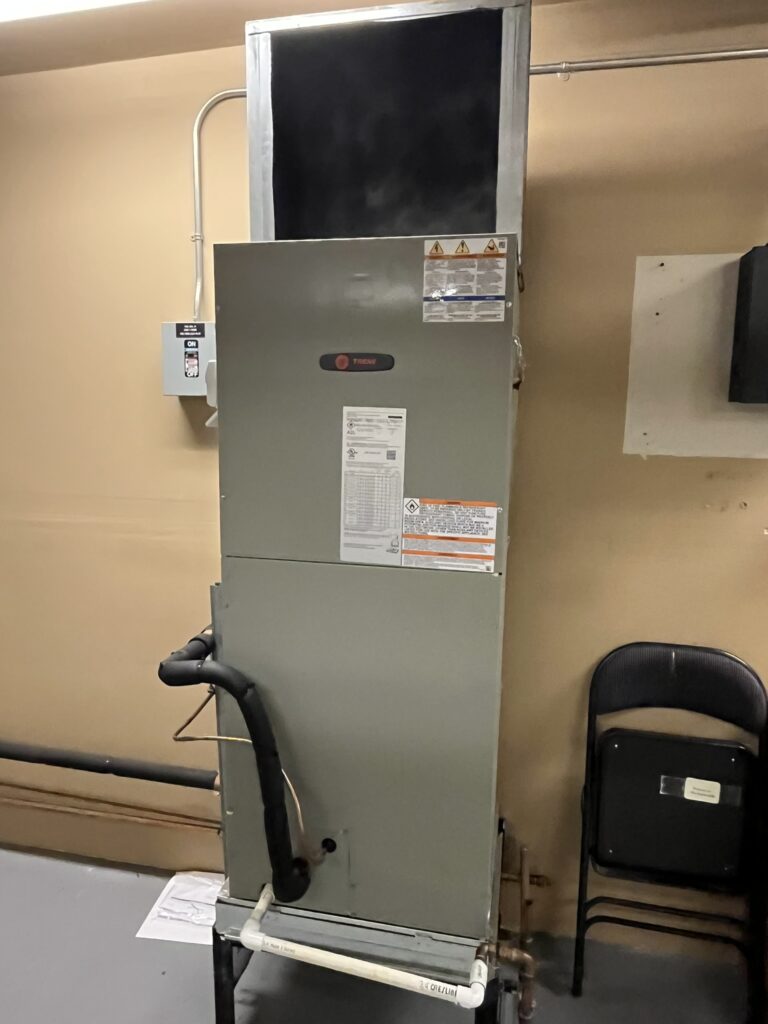
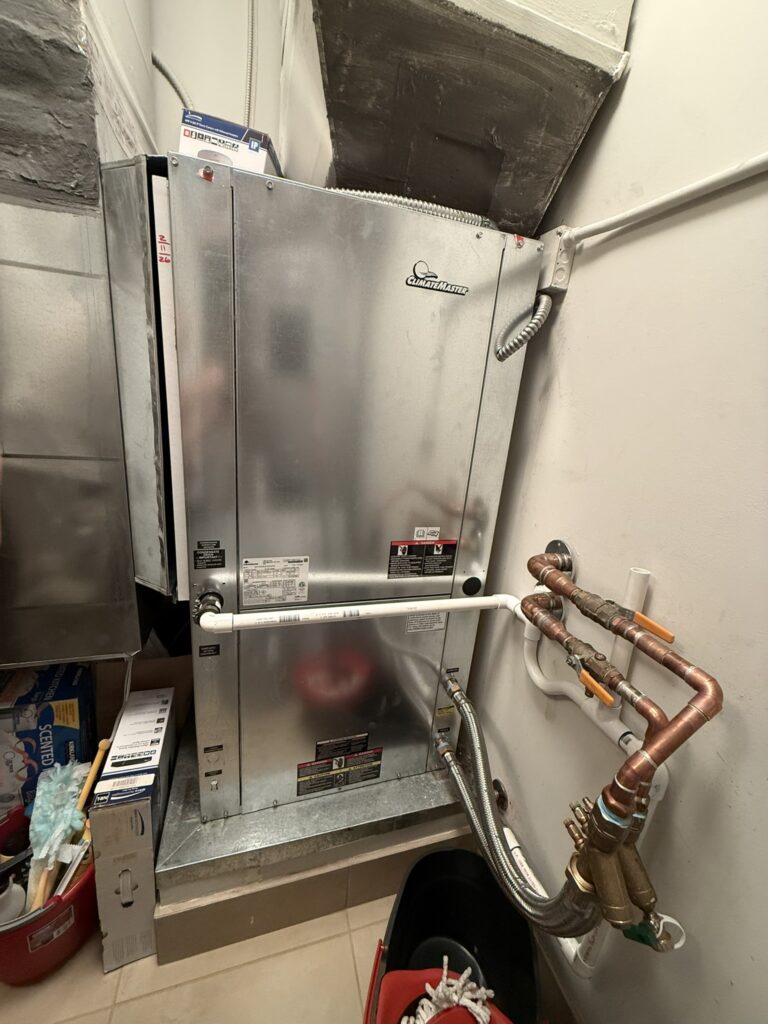
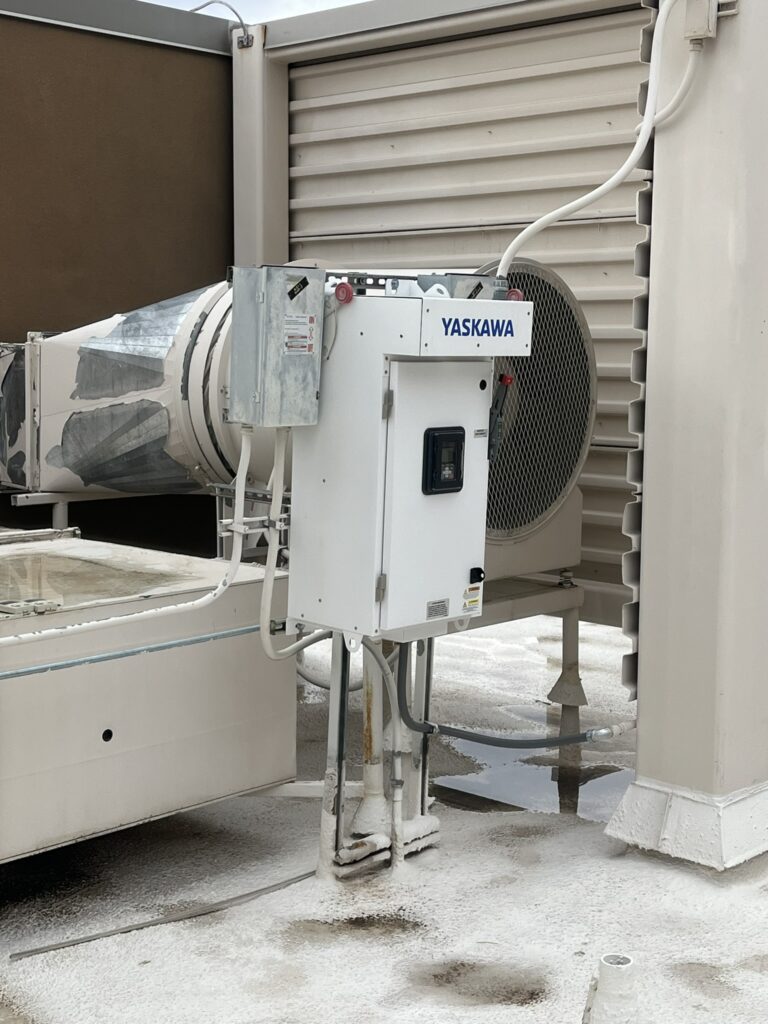
Photos from our own commercial projects across the Phoenix metro — equipment we installed, in buildings we service.
How the job typically runs.
A Peoria PM visit is built around your business hours, not against them. For a P83 restaurant mid-service or a hotel full of spring-training guests, we schedule roof work for early mornings or slow off-hours so patrons never notice it. The service-call fee is disclosed the moment you book, never sprung on the invoice, and it is credited toward any repair the visit produces. On the roof we work by meter, not by adjective: when a reading crosses a threshold, we show you the number and explain what it means for that specific unit. Any repair beyond routine service comes back as a flat-rate written quote with the measurement behind it, so you can approve it, hold it, or send it up to ownership with the evidence attached. Whatever you approve is verified before we leave, the recovered charge or rinsed coil confirmed on the gauge rather than assumed. Then you get a per-asset condition report to file, forward, or budget from. Locked dates, fixed-cadence visits, and priority dispatch are part of a maintenance agreement; the visit is the technical work. Because a live person answers around the clock, a dust-storm failure between visits reaches a dispatcher. For a Lake Pleasant venue mid-rush, that off-hours timing is not a courtesy but a condition of the work we do. Nothing on the task list is skipped to save a few minutes on the roof.
- 01 Booking, with the diagnostic fee disclosed
- 02 In-person diagnosis with real readings
- 03 Written flat-rate quote before work begins
- 04 The work: repair, install, or maintenance
- 05 Startup, documentation, and warranty handoff
Preventive maintenance on its own seldom needs a permit, but the repairs it surfaces frequently do, and commercial code is less forgiving than residential. In Peoria, straightforward like-for-like part replacement usually proceeds without paperwork, while a rooftop change-out, curb or gas-line work, or an electrical alteration pulls a mechanical permit and inspection. The P83 district's many commercial kitchens bring NFPA 96 into play, since cooking exhaust and its makeup air are their own regulated system, and we keep our maintenance clear of anything that would compromise that compliance. All refrigerant recovery and charging is done by EPA 608-certified technicians with the documentation the federal rules require, mandatory on every commercial circuit, not a nicety. Our work is measured against the Arizona ROC's Minimum Workmanship Standards and clears them, while the written warranty we stand behind is pitched well above that baseline. When a permitted repair is needed, it is filed and inspected correctly, which matters for insurers, landlords, and the fast tenant turnover common in Peoria's newer retail and medical centers. Filed cleanly, the paperwork keeps a fast-turning lease from stalling on an inspection later.
Pricing, financing & the 10% military & first responder discount.
Yeti Pros prices commercial maintenance flat-rate and in writing, because no Peoria facility manager can budget against an open-ended hourly meter. The service-call fee is quoted when you book and credited toward any repair that comes out of the visit, so a diagnostic is never money spent for nothing. When the PM finds work, you receive a written flat-rate quote tied directly to the reading that prompted it; approve, defer, or escalate, but never guess. For a larger repair or a planned rooftop replacement on a dust-worn unit, financing keeps a capital fix from stalling until the next budget window, and recurring service can run under an agreement with predictable scheduled pricing and preferred labor rates. A note for the owners and employees who have served: our 10% military, veteran & first responder discount is a residential offer, applying to work on their own homes rather than commercial invoices, so the people keeping a Peoria business cold can take that military discount home to their own thermostats. The commercial side stays flat-rate and transparent. A predictable number is what lets a Peoria operator plan the season instead of bracing for it.
- 01 Flat-rate written quote after an in-person look
- 02 Diagnostic fee disclosed at booking, credited to the repair
- 03 Financing available on replacements
- 04 2-year workmanship warranty; 1-year manufacturer parts warranty
- 05 10% military, veteran & first responder discount
Why a licensed HVAC contractor matters.
FAQs: Commercial HVAC Maintenance in Peoria, AZ.
Why does Peoria's dust matter so much for rooftop maintenance?
Because the northwest Valley sits in a dust corridor that loads condenser coils faster than most of the metro. Fine particulate rides the prevailing wind across open land and packs into coils between visits, and a single monsoon haboob can deposit what a normal month would. A fouled coil runs high head pressure and elevated amps while losing the capacity a Peoria rooftop needs most in July. That is why our program leans on scheduled coil cleaning and, at the dustiest P83 and Lake Pleasant sites, filter-only stops between the full visits.
Can you schedule around spring training and busy P83 weekends?
Yes. Spring training packs Peoria restaurants and hotels through February and March, and P83 weekends run hot year-round, so we schedule roof work for early mornings and slow off-hours when the dining rooms are empty. Facility managers hand us the calendar and we build maintenance around the crowds, not into them. If a unit fails during a packed weekend anyway, a real person answers our line 24 hours a day and dispatches immediately. Your guests should only feel cool air, never see the work behind it.
How often should Peoria businesses schedule commercial HVAC maintenance?
For most operators, commercial HVAC maintenance in Peoria runs on a quarterly baseline for comfort cooling, driven by long runtime and the heavy dust corridor. But the dust and monsoon exposure here push many properties tighter: high-dust sites and hospitality venues with hard occupancy swings often need coil attention or filter-only stops between full visits. Kitchen refrigeration and precise medical environments lean the same direction. The reliable interval is not a fixed national number; it comes from a site walk that reads your equipment, runtime, and dust exposure.
Do you maintain walk-in coolers for P83 restaurants?
Yes. For Peoria restaurants and any site with cold storage, we fold refrigeration into the same maintenance visit: walk-in door gaskets and sweeps, evaporator and condenser coil condition, defrost operation, and drain lines, plus reach-in and prep-table checks. In the dust corridor, a walk-in condenser fouls just like a rooftop, and one running high on a hot afternoon is a spoiled-inventory loss with a date attached. On a busy P83 or spring-training weekend that inventory is significant, so catching it early protects real money. In the dust corridor, that early catch is the cheapest insurance a kitchen can buy.
How do the reports help across a multi-building portfolio?
The written per-asset condition report is what makes a multi-building Peoria portfolio manageable. Every rooftop's readings, capacitance, amps, pressures, and temperature splits, are recorded and trended against the last visit, and each unit carries a condition grade and remaining-life estimate. That lets you see across a growing medical or retail footprint which specific asset is drifting, prioritize repair budget where the data points, and plan change-outs before a unit strands a full building. Instead of reacting to whichever rooftop screams loudest, you manage the fleet from evidence.
What is monsoon prep for commercial equipment, specifically?
Concretely, before the season we secure rooftop panels and rain shields, clear and test condensate paths, clean condenser coils, and verify electrical connections against surge exposure. After a major storm we rinse the dust load a haboob packs onto coils, check controls for surge damage, and confirm economizers and fans survived the wind. In Peoria's dust corridor that post-storm rinse matters more than almost anywhere, because a single haboob can foul a coil enough to cost real capacity overnight. Monsoon prep moves a predictable July failure off the calendar.
Every major brand, serviced and installed.

Phoenix metro: Most days a tech is already working somewhere in the Valley, so same-day appointments happen when the schedule allows. After-hours emergencies are dispatched when a licensed tech is available — a real person answers and tells you the ETA on the call.
Call (520) 556-8929Request an estimate.
No pressure, no door knockers. We look at the HVAC system, tell you what it needs (and what it doesn’t), and put the number in writing.
Need HVAC maintenance in Peoria? A real person answers.
Other services we run in Peoria.
HVAC Maintenance in nearby cities.
Looking for something else nearby? All HVAC services in Peoria