
Buckeye
HVAC Maintenance Contracts in Buckeye, AZ.
- (520) 556-8929
- Serving the entire Phoenix metro — we come to you
- Office: Mon–Fri 8:00 AM – 5:00 PM · 24/7 emergency service
- 2-year workmanship warranty · 1-year parts warranty
- Veteran-owned & operated · residential + commercial
- 23 five-star Google reviews
As Buckeye keeps adding commercial space, HVAC maintenance agreements give owners a way to turn rooftop risk into planned service and clearer budgets. In Buckeye, that matters because the city’s commercial growth is adding roofs full of equipment faster than many teams can build service history. New retail pads, warehouses, restaurants, offices, clinics, schools, churches, and multi-tenant properties often look fresh from the parking lot while the RTUs above them are already dealing with dust, heat, monsoon debris, and long run hours. Add refrigeration, walk-ins, ice machines, exhaust systems, and the occasional hot-water system, and a manager can spend the summer reacting instead of deciding. A good agreement maps the assets, defines the visit rhythm, records findings, and separates true urgent repairs from work that can be scheduled before it becomes downtime. Yeti Pros provides HVAC preventive maintenance contracts Buckeye businesses can use for priority context, cleaner records, and repair planning that off-site approvers can actually understand. Maintenance cannot promise no failures, but it can keep small known issues from hiding until the most expensive day of the year. Yeti Pros is veteran-owned, licensed under AZ ROC #363372 · ROC #363423. To turn your Buckeye equipment into a documented plan, call (520) 556-8929.
ZIPs served: 85326, 85396
What HVAC Maintenance Contracts covers in Buckeye.
RTU maintenance plans
Buckeye’s new commercial roofs are dominated by RTUs, and those units face dust, heat, and heavy summer runtime immediately. We document filters, coils, electrical components, drains, belts, controls, economizers, and visible wear so property managers can fix weak points before tenant comfort or business continuity is threatened.
Warehouse and industrial coverage
Distribution, logistics, cold-storage, and manufacturing facilities need maintenance that accounts for worker safety, product risk, and access logistics. We plan visits around site rules and operating schedules, document asset condition, and flag repairs early so Buckeye facility managers are not forced into emergency decisions during peak heat.
Retail and restaurant programs
Restaurants, c-stores, grocery tenants, and retail centers need maintenance that protects comfort, refrigeration, ice, and kitchen exhaust schedules. We build written agreements around service windows, product-risk equipment, and landlord or corporate documentation needs so one failed system does not disrupt a busy Buckeye location.
Multi-site documentation
Regional operators and property managers need consistent records across Buckeye and the West Valley. We provide written findings, recommendations, and repair scopes tied to the site and equipment. That helps off-site approvers compare assets, budget work, and avoid losing mechanical history when managers or tenants change.
Priority emergency context
A maintenance agreement gives Buckeye businesses an established service relationship before the emergency happens. When a July RTU failure, walk-in alarm, or refrigeration issue hits, we already understand the site, equipment, and approval workflow. That saves time when every minute affects tenant comfort, product, or operations.
Budget and efficiency planning
Maintenance reports turn scattered repairs into a plan. We identify dirty coils, worn parts, airflow issues, control problems, and equipment nearing replacement so owners can schedule work before peak demand. For APS commercial customers, efficient operation and smart timing can matter directly to the operating budget.
What we see for HVAC maintenance contracts in Buckeye.
Buckeye’s commercial maintenance problem is different from older central Phoenix or mature East Valley corridors. Much of the equipment is newer because the buildings are newer, but that can create a false sense of security. RTUs over retail pads, offices, restaurants, warehouses, and medical suites are exposed to open land, construction dust, monsoon debris, and long cooling seasons from their first year of operation. A property manager may inherit a roof full of units that look clean from the parking lot but already have fouled condenser coils, loose panels, clogged drains, stressed capacitors, belt wear, economizer problems, or filters that do not match the real dust load. New equipment still fails when nobody is watching it.
The industrial side raises the stakes. Logistics, distribution, warehouse, cold-storage, and manufacturing buildings near Buckeye’s growth corridors need stable worker conditions, product protection, and equipment that can survive extended runtime. A cooling failure in a warehouse is not only a comfort complaint. It can affect productivity, employee safety, inventory, loading schedules, and tenant confidence. Preventive maintenance gives the facility manager a way to identify weak units before the first major heat wave turns every marginal capacitor, motor, coil, and control board into an emergency.
Retail and restaurant properties bring a different maintenance rhythm. A down RTU over a July dining room can close a kitchen or empty a dining area. A walk-in cooler that is ignored until it alarms can create product loss. An ice machine that has not been cleaned or checked may fail during peak beverage demand. Kitchen exhaust systems need documented cleaning schedules for fire-risk and insurance reasons. A maintenance contract ties those systems to a calendar, a report, and a priority relationship instead of leaving each failure to be handled as a one-off crisis.
Documentation is the other major need. Buckeye has owner-operators, but it also has national chains, regional property managers, franchised restaurants, medical groups, schools, churches, and industrial tenants with off-site approvers. They need asset lists, service notes, photos when useful, repair recommendations, and written scopes that can be approved before a small issue becomes capital damage. A preventive maintenance agreement gives those teams a shared record, which is especially important in a fast-growing city where buildings, tenants, and managers change quickly.
- 01 Airflow and static pressure
- 02 Electrical: capacitors, contactors, draws
- 03 Refrigerant-circuit behavior
- 04 Drains, safeties, and float switches
- 05 Thermostat, controls, and cycling
- 06 Ducts, returns, and room-by-room comfort
Commercial jobs we have documented.
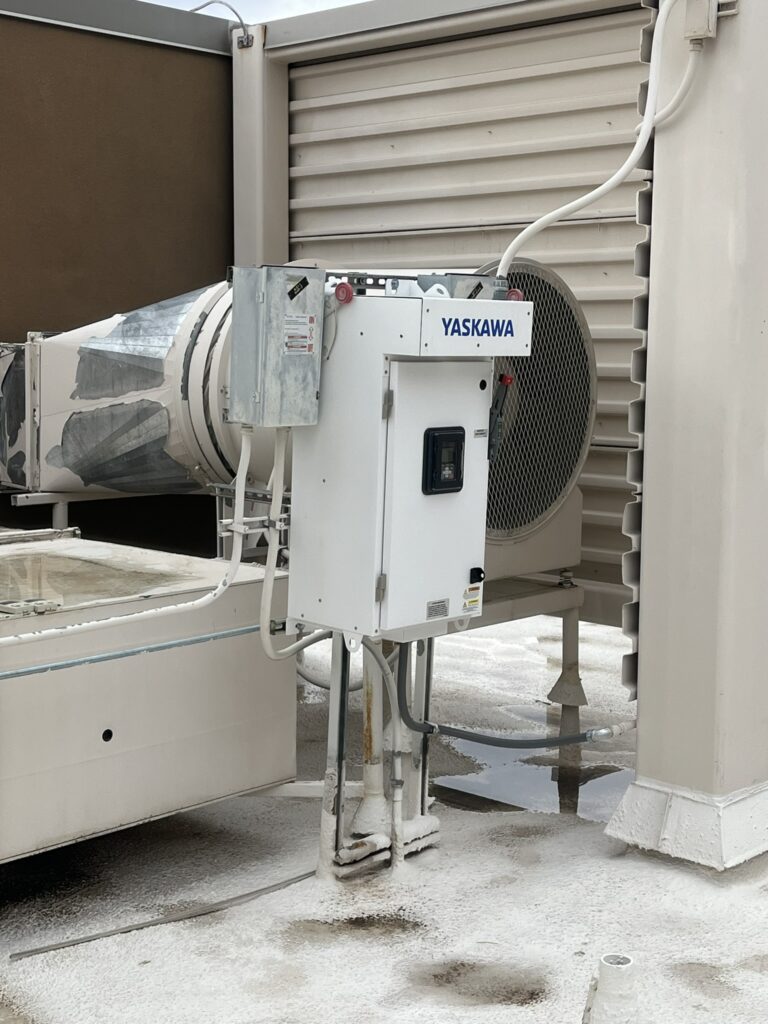
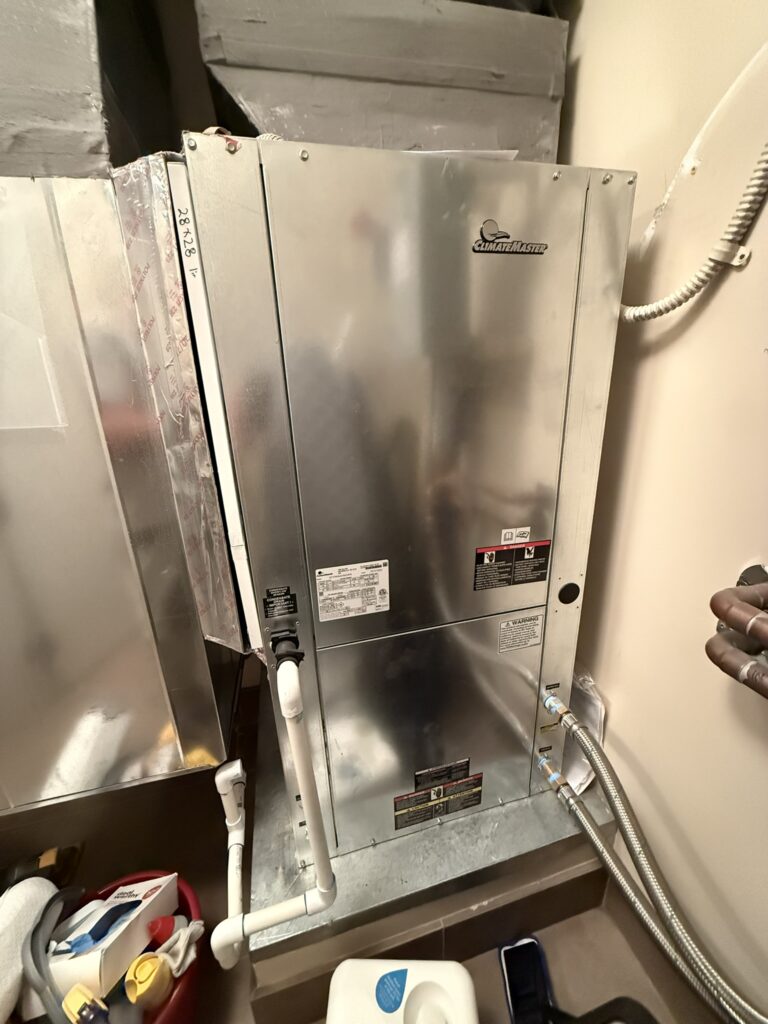
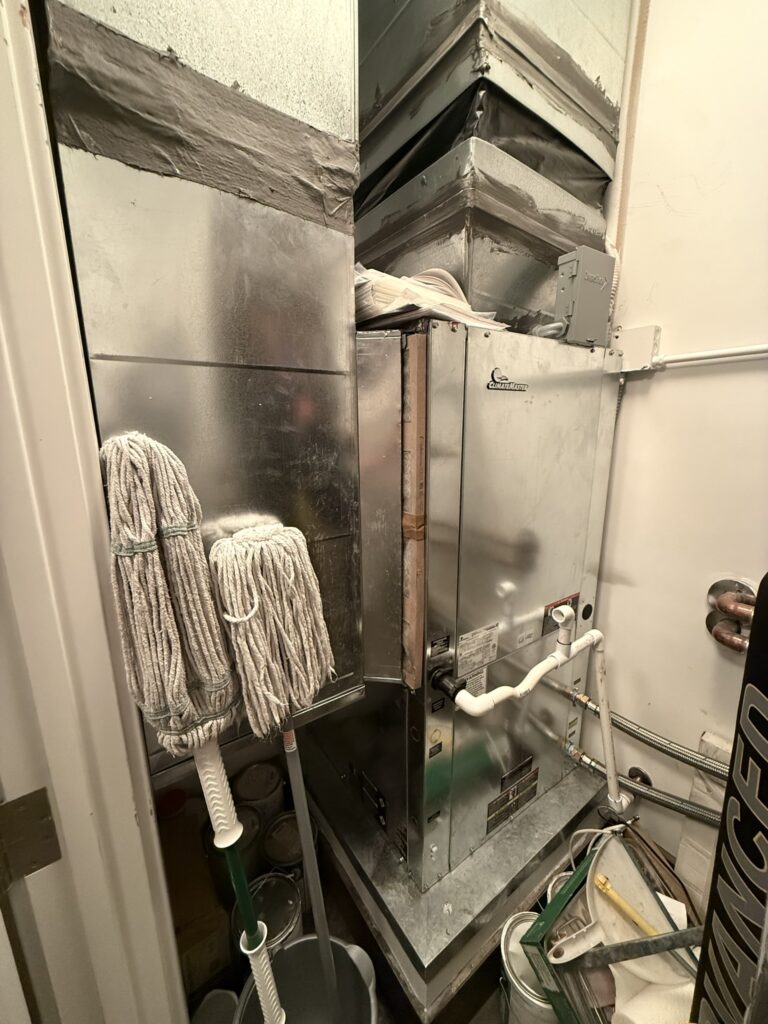
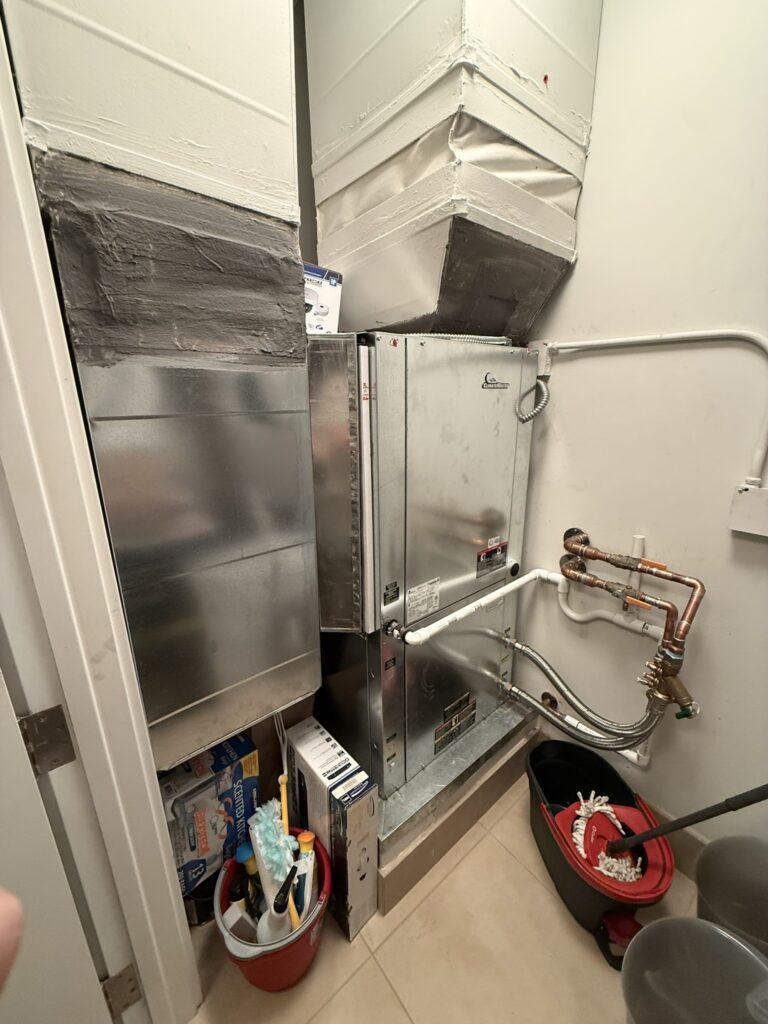
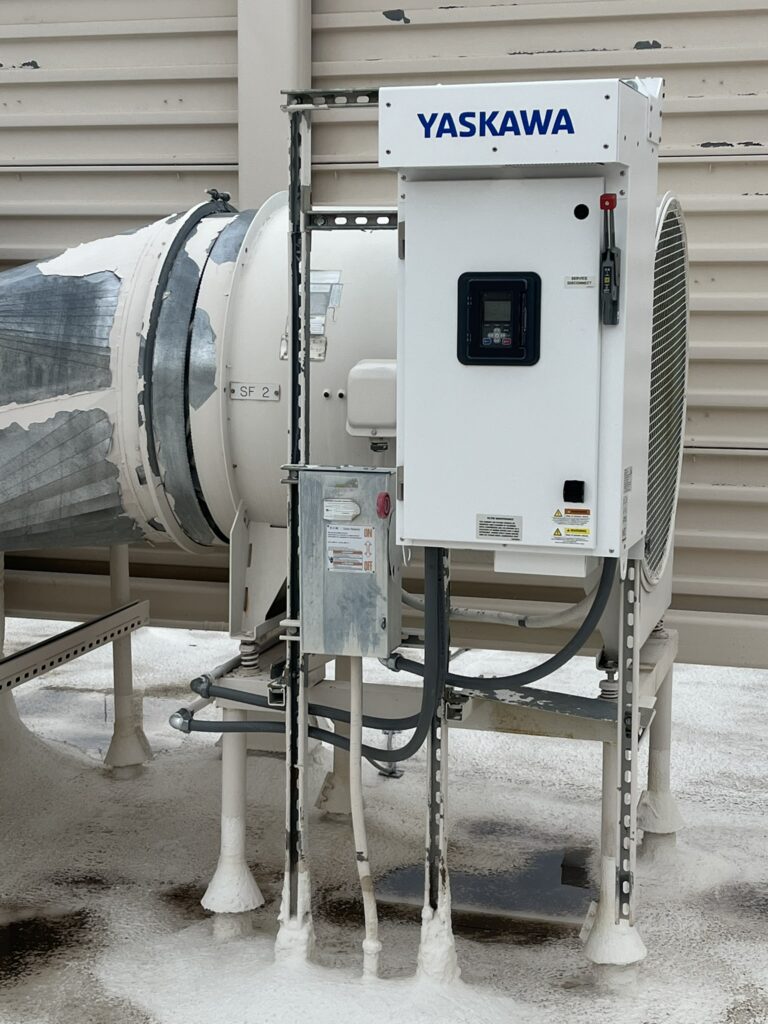
Photos from our own commercial projects across the Phoenix metro — equipment we installed, in buildings we service.
How the job typically runs.
A Buckeye preventive maintenance agreement starts with the site, not a generic checklist. We identify the equipment you want covered, the operating priorities, the approval process, and the best service windows. A restaurant may need rooftop work between meal periods and hood cleaning after close. A warehouse may need coordination with security, lifts, dock schedules, or safety staff. A medical office may need quiet visits outside patient peaks. We write the agreement so the service schedule fits the business, not the other way around.
During each maintenance visit, we inspect and document the agreed equipment. For RTUs, that can include filters, coils, belts where present, electrical components, drains, economizers, thermostats or controls, access panels, visible wear, and operating behavior. For refrigeration, walk-ins, and ice machines, the focus shifts to temperature performance, coils, doors, gaskets, drains, water and airflow conditions, and components that commonly create product-loss emergencies. If kitchen exhaust cleaning is part of the plan, the schedule is tied to cooking volume and documentation needs. Findings are written so a manager can make decisions from the report.
When we find a problem, it is separated into urgency levels. A failed component causing downtime is handled as a repair. A weak capacitor, dirty coil, worn belt, leaking gasket, or suspect control issue becomes a written recommendation with a flat-rate quote after the required in-person evaluation. That gives Buckeye managers control over timing and budget. The contract also establishes priority context for emergency response, which matters when far West Valley demand spikes during heat waves and every business is trying to get a contractor to the roof at once.
- 01 Booking, with the diagnostic fee disclosed
- 02 In-person diagnosis with real readings
- 03 Written flat-rate quote before work begins
- 04 The work: repair, install, or maintenance
- 05 Startup, documentation, and warranty handoff
Preventive maintenance usually does not require a permit because it is inspection, cleaning, adjustment, and like-for-like service. The line changes when a recommendation becomes replacement, electrical modification, gas piping, structural work, rooftop equipment changeout, kitchen exhaust alteration, or another regulated scope. In Buckeye and Maricopa County, those larger scopes may require permits, inspections, landlord approval, or coordination with the authority that governs the property. A good maintenance program identifies those boundaries early instead of discovering them during an emergency.
Yeti Pros is licensed under AZ ROC #363372 and ROC #363423, and our written warranty is framed to exceed Arizona’s baseline workmanship expectations. The ROC’s Minimum Workmanship Standards are a useful reference for commercial owners because they clarify that licensed work has enforceable expectations. For Buckeye facility managers, the maintenance record also supports insurance files, tenant communications, capital planning, and accountability when equipment decisions are reviewed later.
Pricing, financing & the 10% military & first responder discount.
Preventive maintenance contract pricing depends on equipment count, asset types, access, frequency, operating hours, documentation requirements, and whether the plan includes HVAC only or also refrigeration, walk-ins, ice machines, kitchen exhaust, or boiler-related checks. Yeti Pros provides written maintenance agreements so Buckeye businesses know what is included, when visits occur, and how repair quotes are handled. Diagnostic or service-call fees for repair visits are disclosed at booking and credited toward approved repairs, while planned maintenance is priced according to the written agreement. The value is predictability: fewer surprise failures, clearer budgets, priority context, and better records for off-site approvers. Our 10% military, veteran & first responder discount is available, and we explain applicability clearly. For APS commercial customers, maintenance can also support lower wasted runtime by keeping coils clean, airflow correct, controls accurate, and equipment from running harder than necessary during demand-sensitive periods.
- 01 Flat-rate written quote after an in-person look
- 02 Diagnostic fee disclosed at booking, credited to the repair
- 03 Financing available on replacements
- 04 2-year workmanship warranty; 1-year manufacturer parts warranty
- 05 10% military, veteran & first responder discount
Why a licensed HVAC contractor matters.
FAQs: HVAC Maintenance Contracts in Buckeye, AZ.
What does an HVAC preventive maintenance contract in Buckeye include?
It depends on the written agreement, but a Buckeye plan commonly covers scheduled inspections and maintenance for RTUs, filters, coils, electrical components, drains, belts where present, controls, economizers, and operating condition. Plans can also include refrigeration, walk-ins, ice machines, kitchen exhaust scheduling, or boiler-related checks when those systems are part of the property. The agreement defines the equipment, visit frequency, documentation, and repair-quote process so there is no confusion.
Why do newer Buckeye buildings need maintenance so soon?
New buildings still operate in harsh conditions. Buckeye’s growth corridors bring construction dust, open-land debris, severe heat, long RTU runtimes, and heavy tenant use from the first season. Newer equipment can fail early if coils load up, filters are wrong for the site, drains clog, panels loosen, or electrical components are stressed. Maintenance protects the investment while the equipment is still worth protecting.
Can one agreement cover multiple Buckeye locations or tenants?
Yes. We can structure written maintenance agreements for single buildings, multi-tenant centers, multi-site operators, and regional facility teams. Each site needs a clear asset list and access plan, but the reporting can be consistent across locations. That is useful for Buckeye property managers, franchised restaurants, medical groups, churches, schools, and industrial operators that need comparable documentation and predictable budgeting across several buildings.
Does a maintenance contract improve emergency response?
It gives us site familiarity and priority context before the emergency. We already know the equipment, roof access, tenant impact, and approval workflow, which saves time during a July RTU failure or refrigeration alarm. Yeti Pros still gives realistic arrival windows, especially in the far West Valley, but a maintenance customer is not starting from zero when business continuity is on the line.
How does maintenance help with APS demand charges?
Maintenance cannot change the utility rate plan, but it can reduce wasteful operation. Dirty coils, poor airflow, failed economizers, leaking walk-in doors, weak motors, and bad controls make equipment run longer and harder. On APS commercial plans with demand charges, that extra runtime can matter. Scheduled maintenance helps keep systems closer to intended operation and gives managers a chance to schedule repairs before the most expensive operating periods.
Will we receive written reports after maintenance visits?
Yes. Written documentation is one of the main reasons Buckeye businesses choose a maintenance agreement. Reports can include equipment condition, findings, completed maintenance, photos when useful, and recommended repairs. That gives owner-operators, property managers, and regional facilities teams a record they can use for budgeting, tenant communication, insurance files, and capital planning. It also prevents mechanical history from disappearing when a manager changes roles.
Every major brand, serviced and installed.
Phoenix metro: Most days a tech is already working somewhere in the Valley, so same-day appointments happen when the schedule allows. After-hours emergencies are dispatched when a licensed tech is available — a real person answers and tells you the ETA on the call.
Call (520) 556-8929Request an estimate.
No pressure, no door knockers. We look at the HVAC system, tell you what it needs (and what it doesn’t), and put the number in writing.
Need HVAC maintenance contracts in Buckeye? A real person answers.
Other services we run in Buckeye.
HVAC Maintenance Contracts in nearby cities.
Looking for something else nearby? All HVAC services in Buckeye