
Glendale
HVAC for Manufacturing in Glendale, AZ.
- (520) 556-8929
- Serving the entire Phoenix metro — we come to you
- Office: Mon–Fri 8:00 AM – 5:00 PM · 24/7 emergency service
- 2-year workmanship warranty · 1-year parts warranty
- Veteran-owned & operated · residential + commercial
- 23 five-star Google reviews
Manufacturing hvac glendale work is shaped by a city split between older industrial-service buildings in the core and newer commercial stock near Arrowhead, Westgate, and the Loop 101 side of town. Glendale is not a heavy factory city in the old Midwest sense, but it has real production pressure: small manufacturers, fabrication shops, food-related production, print and packaging spaces, repair operations, warehouse-production hybrids, and back-of-house build rooms supporting the sports-and-entertainment district. In 85301 and 85302, many buildings were built before modern comfort expectations and now run with patched rooftop units, swamp-cooler leftovers, undersized exhaust, and budget-sensitive ownership. In 85305 and 85308, newer tilt-up and retail-converted spaces may have RTU fleets from the 1990s and 2000s that are aging together. Yeti Pros is veteran-owned and operated, AZ ROC #363372 · ROC #363423, and we come to you. We work around shifts, process heat, roof access, and production downtime. For metro-wide context, see our commercial manufacturing HVAC service.
ZIPs served: 85301, 85302, 85304, 85305, 85308
What Manufacturing covers in Glendale.
RTU fleet service
We service multiple rooftop units across offices, production floors, mezzanines, and support rooms. Each unit is inspected by condition and priority, so a Glendale manufacturer can separate urgent failures from maintenance issues and plan repairs without shutting down more space than necessary.
Process-heat troubleshooting
Production equipment changes the cooling load. We evaluate whether comfort complaints are caused by failed HVAC components, dirty coils, airflow limits, thermostat placement, exhaust imbalance, open doors, or added equipment heat. The result is a repair path based on the actual operating condition.
Shift-aware repairs
We schedule diagnostics, repairs, and replacements around production windows whenever practical. That can mean early roof access, after-hours work, staged unit shutdowns, or coordinating with supervisors so one zone is repaired while another remains in operation.
Preventive maintenance
Manufacturing units need coil cleaning, filter checks, belt and blower inspection, electrical testing, drain clearing, economizer checks, and written condition notes before peak heat. Maintenance reduces surprise failures during Glendale’s hardest summer run times and helps prioritize aging RTU fleets.
Commercial replacement planning
When repair no longer makes sense, we plan replacement around roof access, curb fit, unit capacity, controls, duct transitions, utility area, production schedule, and lift logistics. Written quotes are based on an in-person look and a documented scope.
Emergency production cooling
We provide 24/7 emergency service for manufacturing cooling failures in Glendale. We identify whether the problem is mechanical, electrical, refrigerant, condensate, controls, or airflow-related and focus first on practical stabilization for the affected production or support area.
What we see for manufacturing in Glendale.
Manufacturing spaces in Glendale often have two loads running at once: people heat and process heat. A comfort unit sized for an office tenant may now be serving a production floor with welders, ovens, compressors, printers, curing equipment, packaging lines, or constant door traffic. In older core buildings, the unit may be a patched rooftop package unit with dirty coils, tired blower bearings, weak contactors, and ductwork that was modified every time the tenant changed. The result is uneven cooling, high run time, hot break rooms, and operators using portable fans that move dust and process air into places it should not go.
RTU fleets are common in Glendale’s light industrial and commercial production spaces. One unit serves offices, another serves the floor, another serves a mezzanine, and a fourth has not worked correctly in years. When one unit fails, staff often compensate by opening doors or changing thermostats on adjacent zones, which makes the whole building harder to control. Around Westgate and the sports district, we also see production and prep areas tied to event demand. Those spaces cannot always shut down during normal business hours, so the repair plan has to match the production calendar.
Older 85301 and 85302 facilities tend to show airflow and maintenance history problems. Filters are changed late because access is difficult. Roof panels are sun-damaged. Condensate drains are pitched poorly or clogged with roof debris. Economizers are disabled or stuck. Electrical compartments show heat stress. In Glendale’s summer, small weaknesses become hard failures. A compressor that survived spring may trip during July production, especially if coils are packed and the unit is breathing hot roof air all day.
Newer Arrowhead and 85308 commercial-production sites have a different profile. The equipment is often more standardized, but the first generation of rooftop units is reaching replacement age. Controls may be split between old thermostats, tenant automation, and landlord equipment. A production room added after lease-up may need more cooling than the original design assumed. We document each unit, zone, and failure pattern so owners can choose between repair, phased replacement, maintenance, and targeted ventilation coordination without guessing.
- 01 Airflow and static pressure
- 02 Electrical: capacitors, contactors, draws
- 03 Refrigerant-circuit behavior
- 04 Drains, safeties, and float switches
- 05 Thermostat, controls, and cycling
- 06 Ducts, returns, and room-by-room comfort
Commercial jobs we have documented.
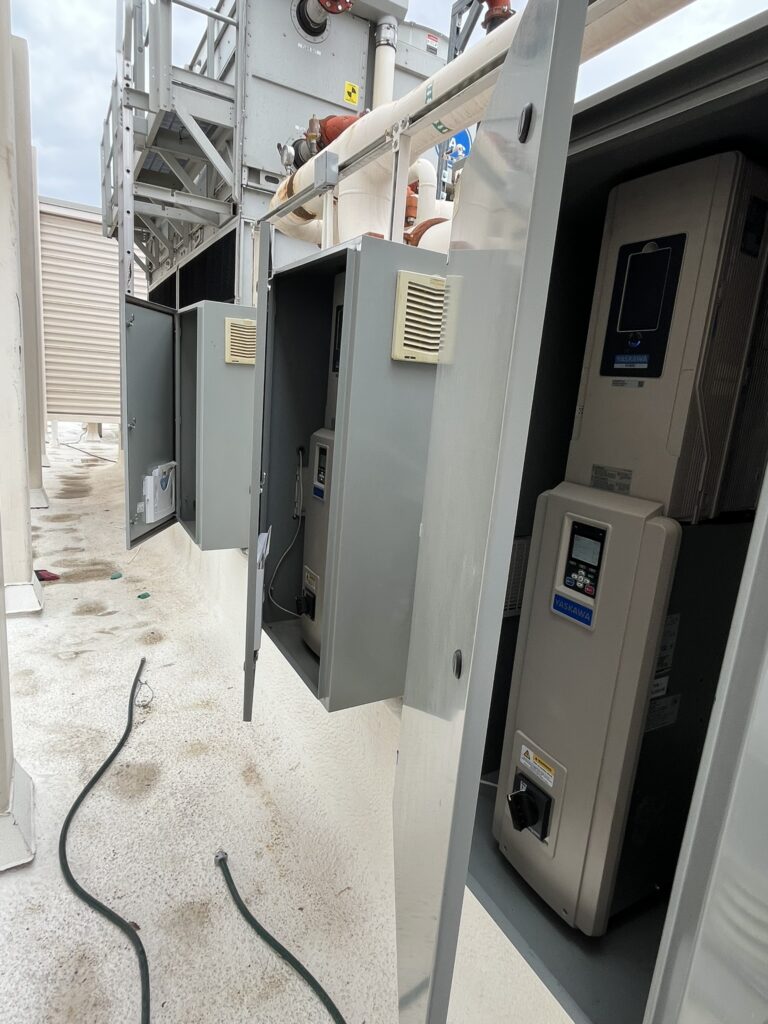
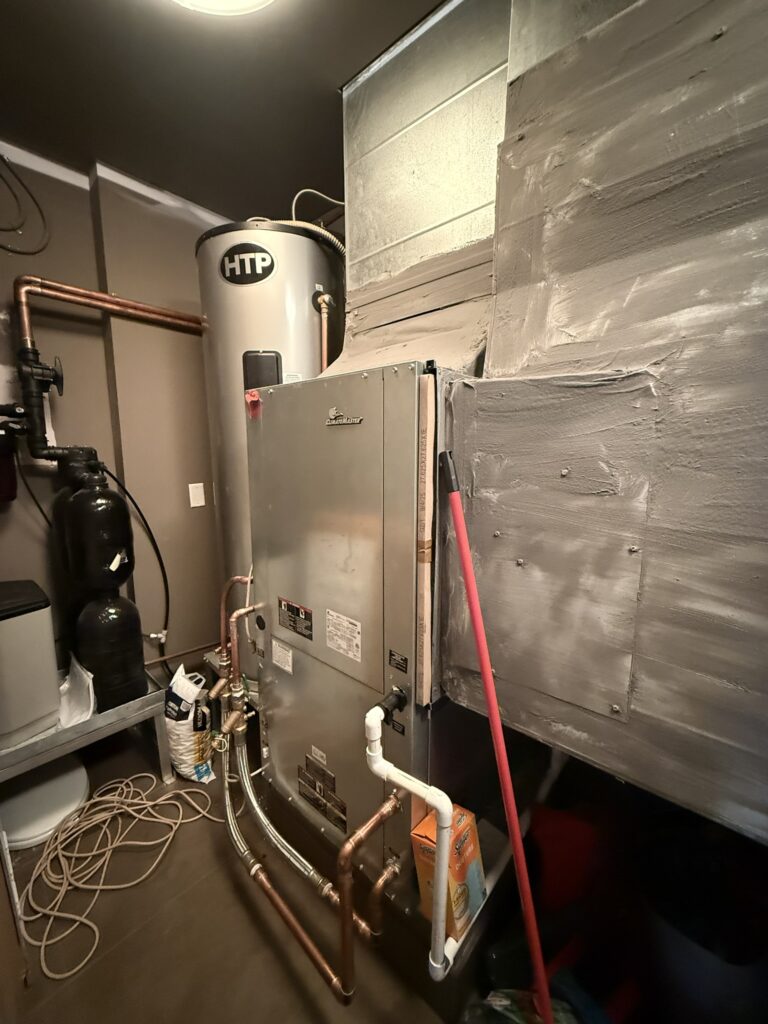
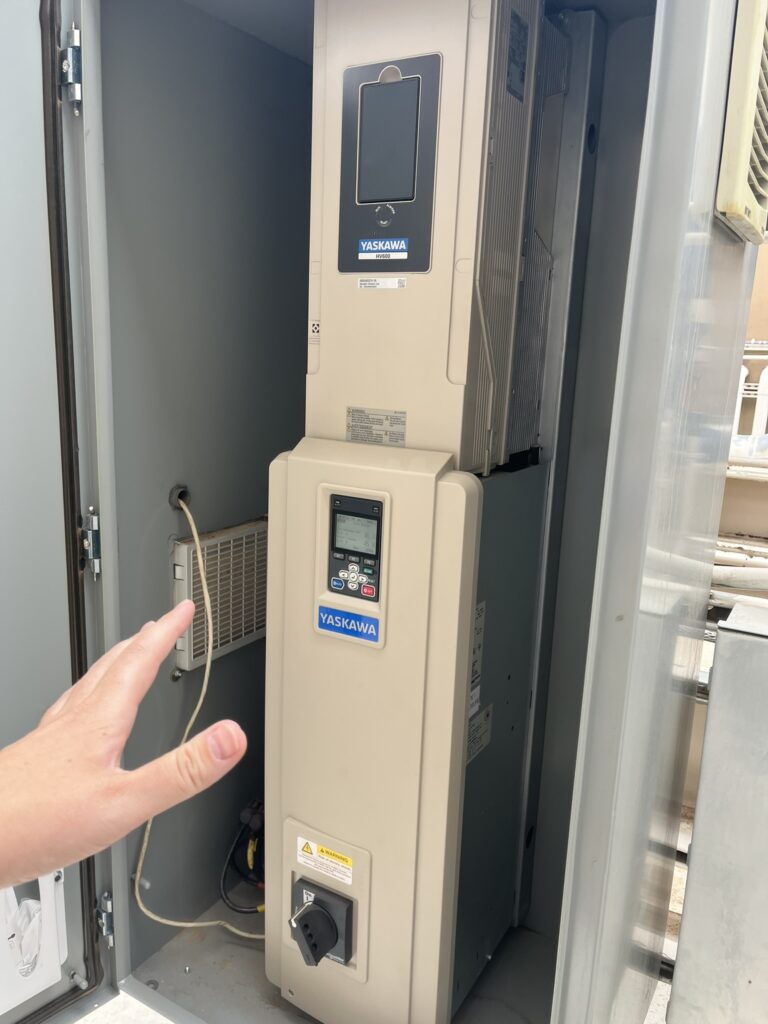
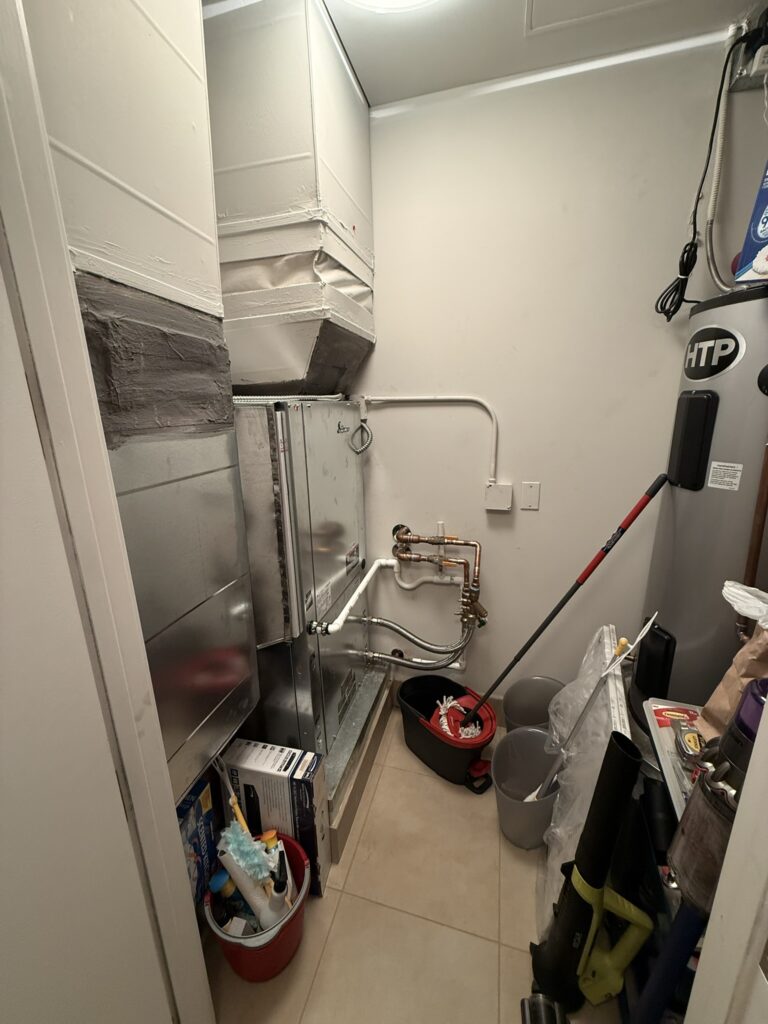
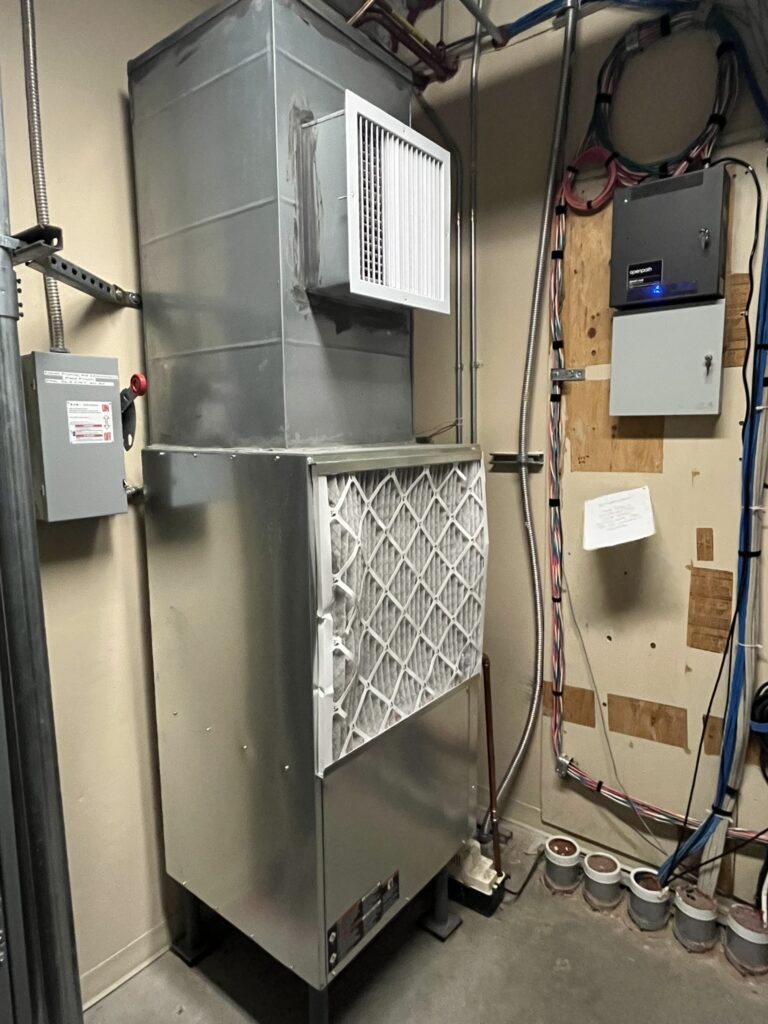
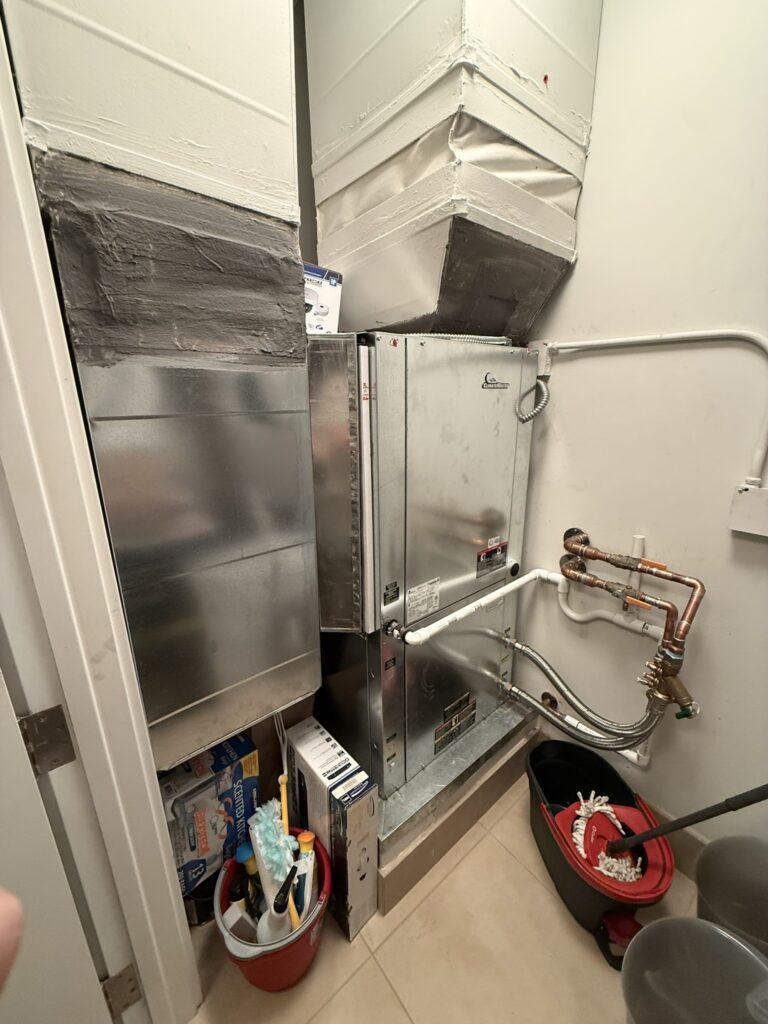
Photos from our own commercial projects across the Phoenix metro — equipment we installed, in buildings we service.
How the job typically runs.
Manufacturing calls start with production reality. We ask what the space makes, which rooms drive revenue, when shifts run, what equipment adds heat, what doors stay open, where roof access is, and which units can be shut down without stopping the line. The diagnostic/service-call fee is disclosed at booking and credited. After an in-person look, we provide flat-rate written quotes with documented scopes.
Scheduling is built around downtime. Some Glendale shops need service before the first shift. Some can give us a midday roof window. Others need after-hours work because process heat and staff load make daytime shutdown impossible. We provide Mon–Fri 8–5 service and 24/7 emergency service when a cooling failure threatens production, staff safety, inventory, or a scheduled job.
We keep communication direct. If a unit is repairable, we quote the repair. If a fleet is aging together, we identify the priority order instead of pretending every unit has the same urgency. If process ventilation, makeup air, electrical work, or engineering input is part of the answer, we call that out in writing so the facility manager can plan the next step.
- 01 Booking, with the diagnostic fee disclosed
- 02 In-person diagnosis with real readings
- 03 Written flat-rate quote before work begins
- 04 The work: repair, install, or maintenance
- 05 Startup, documentation, and warranty handoff
Manufacturing HVAC work in Glendale can involve City of Glendale requirements, Maricopa County considerations, landlord approval, roof structural limits, electrical changes, and utility details because APS and SRP service varies by neighborhood. Repairing a contactor is not the same as replacing a rooftop unit, adding exhaust, modifying gas piping, or changing ductwork serving a production room. Yeti Pros is AZ ROC #363372 · ROC #363423. We document the HVAC scope before work starts and identify when a permit, crane plan, engineer, electrician, or specialty ventilation contractor may need to be involved. The Arizona Registrar of Contractors publishes workmanship standards here: Arizona minimum workmanship standards. We service and document HVAC systems; we do not certify industrial processes, issue environmental rulings, or provide legal advice.
Pricing, financing & the 10% military & first responder discount.
Manufacturing HVAC pricing in Glendale depends on unit size, roof access, number of RTUs, controls condition, refrigerant status, coil condition, electrical repairs, after-hours scheduling, lift or crane requirements, and whether the work can be isolated without stopping production. Older core buildings often require more discovery because ductwork, returns, and exhaust may have been changed by prior tenants. Newer Westgate and Arrowhead-area spaces may need landlord coordination or staged replacement for multiple units. We come to you, inspect the system, disclose the diagnostic/service-call fee at booking, then provide a flat-rate written quote with the scope documented. Our workmanship carries a 2-year written workmanship warranty, and repair parts carry a 1-year manufacturer parts warranty. Financing is available. Military, veterans, and first responders can use our 10% discount.
- 01 Flat-rate written quote after an in-person look
- 02 Diagnostic fee disclosed at booking, credited to the repair
- 03 Financing available on replacements
- 04 2-year workmanship warranty; 1-year manufacturer parts warranty
- 05 10% military, veteran & first responder discount
Why a licensed HVAC contractor matters.
FAQs: HVAC for Manufacturing in Glendale, AZ.
Can you repair manufacturing HVAC without shutting down our Glendale shop?
Often, yes, but it depends on the unit, the failure, and how your production floor is zoned. During the in-person look, we identify which RTU serves which area, what equipment can stay running, whether roof work affects staff below, and what shutdown window is realistic. Some repairs can be handled while production continues. Others require a planned outage for safety or access. We document the scope in writing so supervisors know what area is affected and when.
Why is our production floor hotter than the office?
That usually means the production load is different from the original HVAC design or the floor unit is underperforming. Glendale shops often add compressors, welding stations, ovens, print equipment, packaging lines, or open dock-door routines after the building was built. We check the RTU, coil condition, blower operation, filters, duct delivery, thermostat location, return path, exhaust, and door traffic. If the unit is failed, we quote the repair. If the load has outgrown the system, we document that clearly.
Do you service older rooftop units in Glendale industrial buildings?
Yes. Older 85301 and 85302 buildings often have rooftop units with mixed service histories, sun-damaged wiring, worn blower parts, clogged drains, and prior field modifications. We troubleshoot what is there before recommending a replacement. If a repair is practical, we quote it. If the unit is at the point where repeated repairs are consuming production time, we document the condition and replacement considerations. That includes roof access, curb condition, electrical condition, controls, and scheduling around your operation.
Can you maintain several RTUs on one manufacturing building?
Yes. RTU fleets are common in Glendale manufacturing and warehouse-production buildings. We inspect each unit, note condition, service immediate maintenance items, and identify priority repairs. The goal is to keep the fleet understandable: which unit serves the office, which serves the floor, which serves storage, and which one is most likely to fail in peak heat. That helps owners and facility managers plan repairs and replacement timing instead of reacting unit by unit.
What affects the cost of manufacturing HVAC repair?
The main drivers are unit size, parts availability, refrigerant condition, electrical damage, roof access, coil condition, controls, number of units involved, and whether work has to happen outside normal hours. In Glendale’s older core, previous tenant changes can add diagnostic time because ducts, returns, and exhaust may not match the original layout. We disclose the diagnostic/service-call fee at booking, credit it, inspect in person, and provide a flat-rate written quote before work proceeds.
Do you handle emergency HVAC calls for Glendale manufacturers?
Yes. Call (520) 556-8929 for 24/7 emergency service. Tell us what area is down, whether production is running, what equipment is adding heat, whether staff are affected, and whether there are water leaks, electrical smells, or alarms. We focus first on diagnosis and practical stabilization. If a full repair requires parts or a planned shutdown, we document that and give you the clearest available path for keeping the facility operating.
Every major brand, serviced and installed.
Phoenix metro: Most days a tech is already working somewhere in the Valley, so same-day appointments happen when the schedule allows. After-hours emergencies are dispatched when a licensed tech is available — a real person answers and tells you the ETA on the call.
Call (520) 556-8929Request an estimate.
No pressure, no door knockers. We look at the HVAC system, tell you what it needs (and what it doesn’t), and put the number in writing.
Need manufacturing in Glendale? A real person answers.
Other services we run in Glendale.
Manufacturing in nearby cities.
Looking for something else nearby? All HVAC services in Glendale