
Surprise
HVAC for Warehouses in Surprise, AZ.
- (520) 556-8929
- Serving the entire Phoenix metro — we come to you
- Office: Mon–Fri 8:00 AM – 5:00 PM · 24/7 emergency service
- 2-year workmanship warranty · 1-year parts warranty
- Veteran-owned & operated · residential + commercial
- 23 five-star Google reviews
A Surprise warehouse does not automatically need full building cooling, and pretending otherwise wastes time. The real question is what you are trying to protect: people, product, process, office staff, dispatch flow, or a small conditioned room inside a larger shell. Around the Prasada corridor, Bell Road service pockets, Original Town Site industrial edges, and the long West Valley roads feeding new subdivisions, warehouse HVAC is usually a mix of office pods, dock-adjacent work zones, storage areas, and high-volume space that may be ventilated, evaporatively cooled, spot cooled, or partly conditioned. Surprise has grown fast around 2000s–2020s production housing and retail demand, not old heavy industry, so many warehouse users are small-format distributors, trades, parts storage, e-commerce support, and satellite operations. Yeti Pros handles warehouse hvac surprise work with that reality in mind. We are veteran-owned and operated, service-area based, and we come to you. AZ ROC #363372 · ROC #363423. Call (520) 556-8929. Office hours are Mon–Fri 8–5, with 24/7 emergency service available.
ZIPs served: 85374, 85378, 85379, 85388
What Warehouses covers in Surprise.
Office Pod HVAC Repair
We repair rooftop units and split systems serving warehouse offices, dispatch counters, break rooms, and administrative areas. These zones usually need reliable comfort even when the open warehouse is ventilated or evaporatively cooled.
Evaporative Cooler Service
Where evaporative cooling makes sense, we service pumps, belts, pads, valves, motors, floats, controls, and airflow issues. We also set expectations for what evap can and cannot do in a Surprise warehouse.
Spot Conditioning Planning
For workstations, packing benches, parts counters, and small conditioned areas, we evaluate spot cooling options against the building layout. The goal is targeted relief without pretending the whole shell will behave like office space.
Ventilation and Airflow Checks
We inspect fans, louvers, returns, filters, belts, controls, and obvious airflow restrictions. In high-bay warehouses, moving heat out and preventing dead zones can matter as much as mechanical cooling.
Preventive Maintenance
Surprise dust, roof heat, and long runtimes wear down warehouse equipment. Maintenance covers coils, electrical checks, drains, filters, belts, operating tests, and written notes on components approaching failure.
Replacement Scoping
When equipment is at the end of its useful repair path, we scope replacement after seeing the building. We account for service area, roof access, APS service, duct condition, operating hours, and realistic comfort goals.
What we see for warehouses in Surprise.
Most Surprise warehouse calls start with a mismatch between expectation and building design. A manager wants the whole box comfortable in July, but the existing system only serves an office pod, a break room, or a small pick-pack area. Some buildings have evaporative cooling in the open warehouse, packaged rooftop units over offices, and exhaust fans or louvers handling the rest. That can be appropriate if the operation is storage-heavy, but it fails when headcount grows, workstations move into the warehouse, or heat-sensitive inventory gets placed under a roof deck that was never meant to hold office-like temperatures.
Office pods are where we see the clearest serviceable failures: split systems short cycling, packaged units with dirty coils, weak capacitors, failed condenser fan motors, clogged filters, blocked returns, and condensate drains routed in ways that show problems only during long summer runtime. In Surprise, many commercial shells and tenant improvements are newer, but first-generation equipment is now aging into major repairs. That pattern mirrors the city’s residential growth: first-owner buildings and early commercial pads are reaching the point where compressors, motors, controls, and ductwork need real attention.
In warehouse bays, airflow is often the bigger issue. High ceilings, roll-up doors, dock openings, west-facing walls, and heat stored in concrete make one thermostat reading almost meaningless. Evaporative units can help certain work zones, but they require water, airflow, maintenance, and honest expectations during humid periods. Spot conditioning can protect a workstation or parts counter, but it will not convert an entire open warehouse into a showroom. We evaluate the use pattern before recommending repair, replacement, additional ventilation, or a limited conditioned zone.
Surprise also changes the logistics of service. A site off Prasada may be surrounded by retail and new roads, while a small contractor warehouse closer to Original Town Site may have older access, tight roof approaches, and mixed equipment history. Long dispatch distances across the West Valley make truck-stock planning matter. We ask what equipment serves what area, what operations run during the hottest hours, and whether the failure affects employees, inventory, computers, or customer-facing office space. Then we document HVAC conditions without claiming to certify storage conditions, safety programs, or legal compliance.
- 01 Airflow and static pressure
- 02 Electrical: capacitors, contactors, draws
- 03 Refrigerant-circuit behavior
- 04 Drains, safeties, and float switches
- 05 Thermostat, controls, and cycling
- 06 Ducts, returns, and room-by-room comfort
Commercial jobs we have documented.
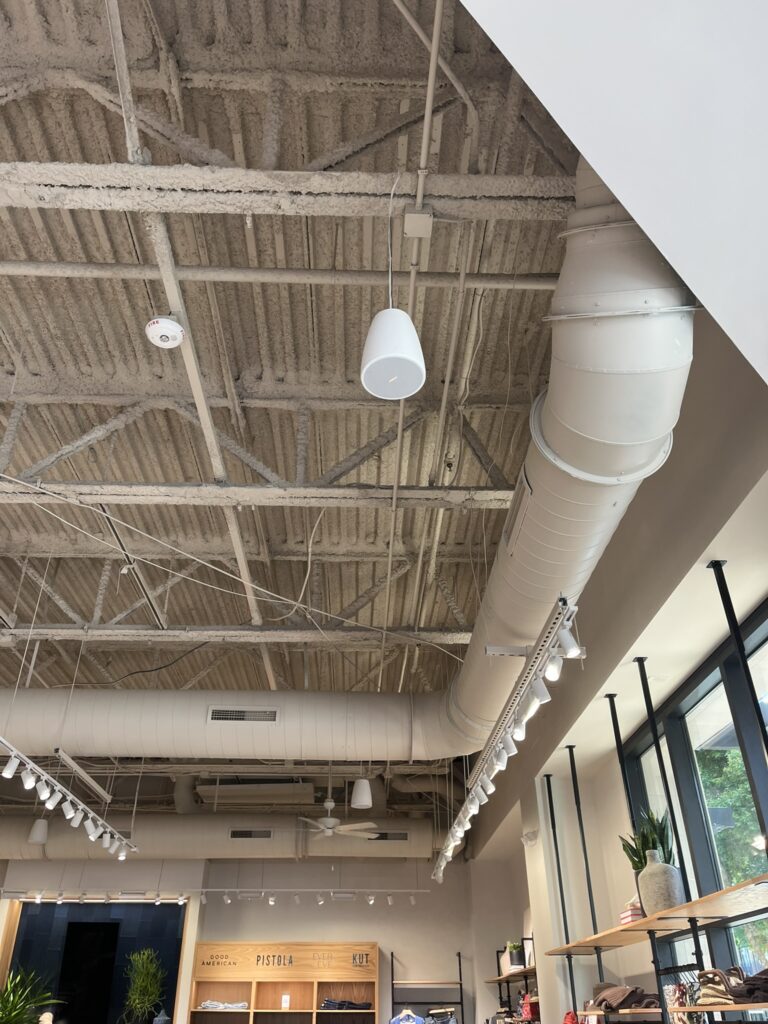
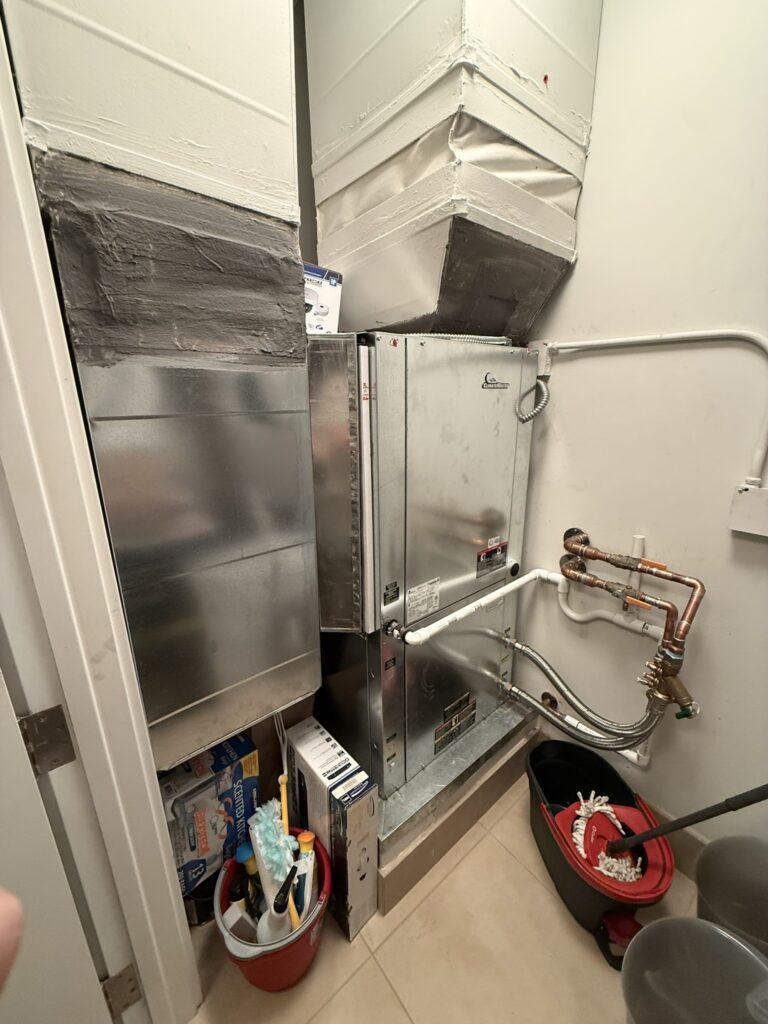
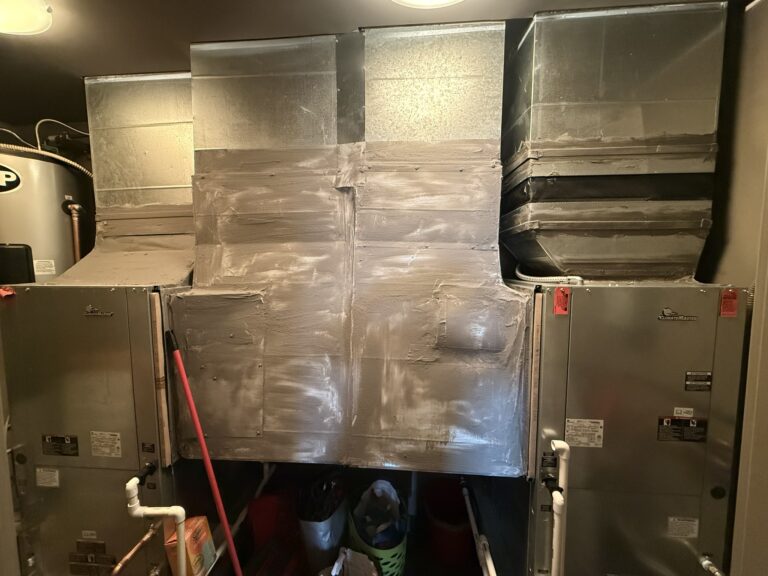
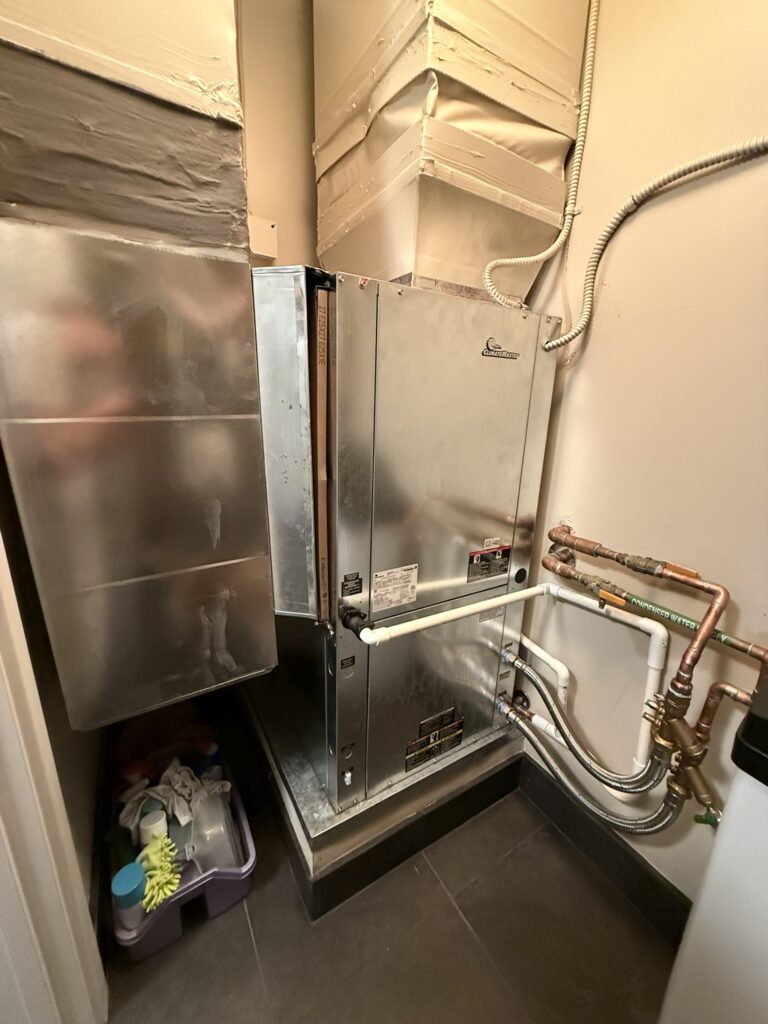
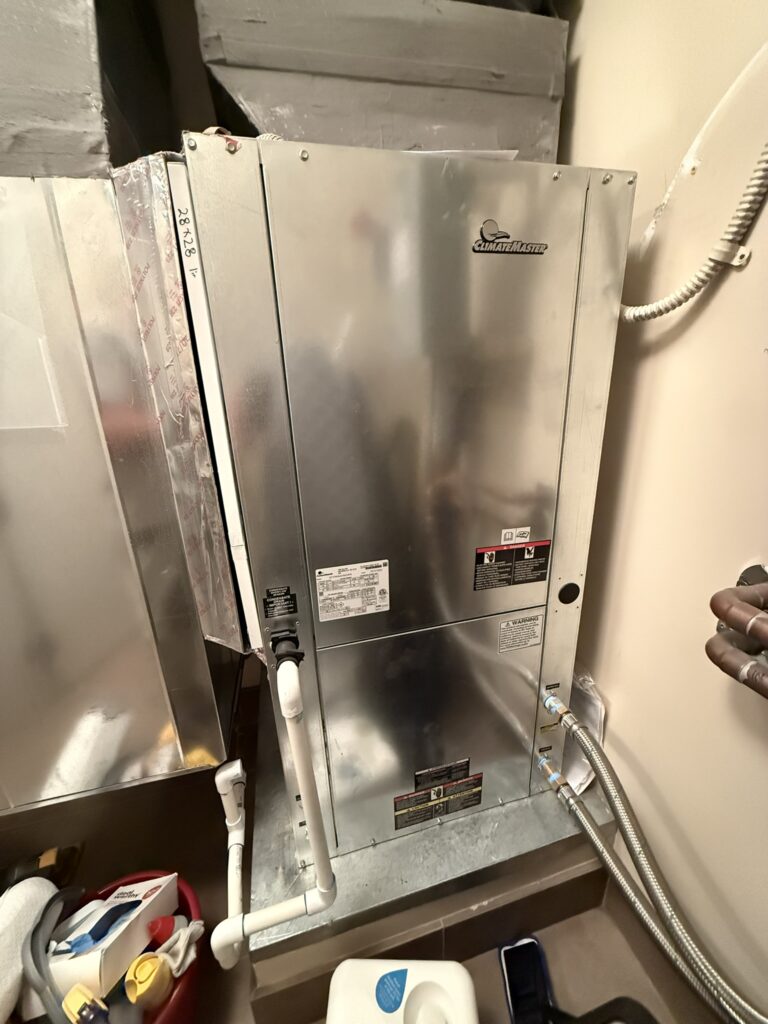
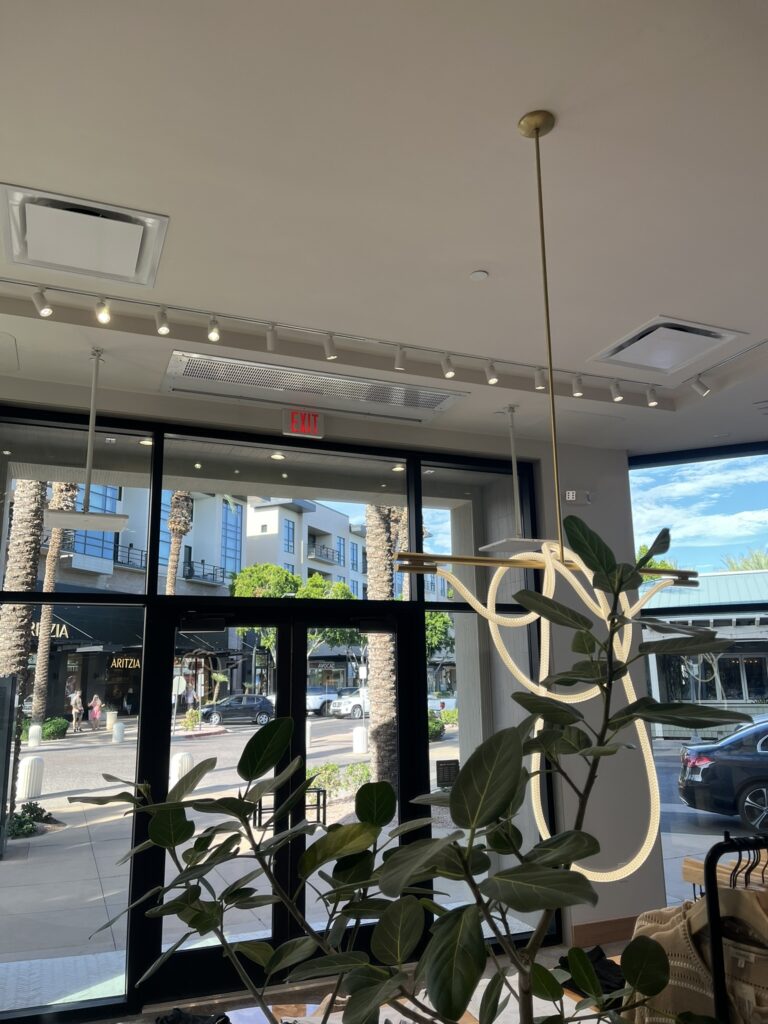
Photos from our own commercial projects across the Phoenix metro — equipment we installed, in buildings we service.
How the job typically runs.
Warehouse service starts with use and access. At booking, we ask whether the problem is in the office pod, open warehouse, dispatch counter, break room, server closet, or evaporative system. We confirm roof access, lift requirements if known, gate or yard instructions, tenant contact, and operating hours. The diagnostic/service-call fee is disclosed at booking and credited.
On site, we identify each system’s actual service area before testing. That matters in warehouses because a rooftop unit over the office may have no connection to the high-bay floor, and an evaporative cooler may serve only one zone. We inspect equipment condition, electrical components, airflow, filters, belts, drains, controls, economizers where present, and practical obstacles such as blocked returns or open dock doors.
After the in-person look, Yeti Pros provides flat-rate written quotes with scopes documented in writing. If a repair is approved, repair parts carry a 1-YEAR manufacturer parts warranty and our labor is backed by a 2-YEAR written workmanship warranty. Financing is available. Emergency service is available 24/7 when a warehouse cooling failure threatens operations outside Mon–Fri 8–5 office hours.
- 01 Booking, with the diagnostic fee disclosed
- 02 In-person diagnosis with real readings
- 03 Written flat-rate quote before work begins
- 04 The work: repair, install, or maintenance
- 05 Startup, documentation, and warranty handoff
Warehouse HVAC work in Surprise can range from a service repair to equipment replacement, duct alteration, electrical work, curb changes, ventilation modifications, or new conditioned zones. Permit handling depends on the scope and the authority having jurisdiction for the site. Surprise is in Maricopa County, served by APS, and includes ZIPs 85374, 85378, 85379, and 85388, but the job still has to be evaluated by the actual work being performed. Yeti Pros documents HVAC findings, equipment data, and written scopes. We do not certify warehouse processes, stored goods, clean areas, health-code matters, or legal compliance. We are veteran-owned and operated, AZ ROC #363372 · ROC #363423. Arizona workmanship reference material is available through the ROC minimum workmanship standards.
Pricing, financing & the 10% military & first responder discount.
Warehouse HVAC cost drivers in Surprise are scope, access, equipment size, roof condition, parts availability, refrigerant type, electrical condition, duct or ventilation changes, and whether the goal is office comfort, spot conditioning, evaporative cooling repair, or a larger replacement plan. Full conditioning for a high-bay warehouse is a different conversation than repairing a packaged unit over an office pod. Yeti Pros gives flat-rate written quotes after an in-person look, with the scope documented in writing. The diagnostic/service-call fee is disclosed at booking and credited. Financing is available, and we offer a 10% military, veteran and first responder discount through our discount program. Call (520) 556-8929 to schedule.
- 01 Flat-rate written quote after an in-person look
- 02 Diagnostic fee disclosed at booking, credited to the repair
- 03 Financing available on replacements
- 04 2-year workmanship warranty; 1-year manufacturer parts warranty
- 05 10% military, veteran & first responder discount
Why a licensed HVAC contractor matters.
FAQs: HVAC for Warehouses in Surprise, AZ.
Do you service warehouse HVAC in Surprise, AZ?
Yes. Yeti Pros services warehouse HVAC in Surprise for office pods, dispatch counters, break rooms, small conditioned rooms, rooftop units, split systems, evaporative coolers, and ventilation-related complaints. We work around the Prasada corridor, Original Town Site commercial pockets, Bell Road service areas, and other Surprise sites in ZIPs 85374, 85378, 85379, and 85388. We are a service-area business with no customer-facing street address, so we come to you. Call (520) 556-8929. Office hours are Mon–Fri 8–5, with 24/7 emergency service available.
Can you cool an entire warehouse in Surprise?
Sometimes, but it depends on the building, the use, and the budget drivers. Many Surprise warehouses were not designed for full office-level cooling across the open bay. They may have HVAC for office pods, evaporative cooling for work zones, exhaust ventilation, or no full building duct system. We start by defining what needs protection: employees, inventory, electronics, product handling, or a specific process. Then we inspect the space and equipment before recommending repair, spot conditioning, ventilation improvements, evaporative service, or a larger replacement and design conversation.
Is evaporative cooling enough for a Surprise warehouse?
Evaporative cooling can be useful in parts of a warehouse, but it is not a universal answer. It depends on airflow, water supply, pad condition, maintenance, humidity, door openings, ceiling height, and what comfort level the operation needs. For storage-heavy or short-duration work zones, evap may be reasonable. For offices, electronics, temperature-sensitive inventory, or enclosed workrooms, refrigerated cooling may be needed. We service evaporative systems and document their condition, but we also explain their limits so the operator can make a practical decision.
Why is the warehouse office cold but the shop floor is hot?
That usually means the systems serve different areas. A packaged rooftop unit or split system may be sized only for the office pod, while the warehouse floor depends on ventilation, evaporative units, fans, or open doors. High ceilings, roof heat, west exposure, concrete, and roll-up doors make the open floor behave very differently from an insulated office. We verify what each unit serves before quoting work. If the office system is healthy, the answer may be airflow planning, evap repair, spot conditioning, or a separate scope for the warehouse area.
Do warehouse HVAC repairs disrupt loading or shipping?
Many repairs can be done from the roof, mechanical area, or office zone without stopping every warehouse activity. Some work may require temporary equipment shutdown, electrical access, roof access, or keeping a path clear for ladders and parts. At booking, we ask about dock hours, yard access, gate instructions, and the most sensitive operating windows. For urgent failures, 24/7 emergency service is available. After diagnosis, we provide a flat-rate written quote and documented scope so the facility contact can coordinate repair timing with operations.
What information helps before a warehouse HVAC service call?
Tell us which area is affected, whether it is office, open warehouse, evap, rooftop, split system, or ventilation. Share equipment photos if available, roof access details, gate instructions, operating hours, and whether the failure affects people, product, computers, or shipping. If prior repairs were done, have those notes handy. Surprise can involve longer dispatch distances between commercial pads and service areas, so clear information helps with truck-stock planning. The diagnostic/service-call fee is disclosed at booking and credited, and quotes are written after the in-person look.
Every major brand, serviced and installed.

Phoenix metro: Most days a tech is already working somewhere in the Valley, so same-day appointments happen when the schedule allows. After-hours emergencies are dispatched when a licensed tech is available — a real person answers and tells you the ETA on the call.
Call (520) 556-8929Request an estimate.
No pressure, no door knockers. We look at the HVAC system, tell you what it needs (and what it doesn’t), and put the number in writing.
Need warehouses in Surprise? A real person answers.
Other services we run in Surprise.
Warehouses in nearby cities.
Looking for something else nearby? All HVAC services in Surprise