
San Tan Valley
HVAC for Food Processing Facilities in San Tan Valley, AZ.
- (520) 556-8929
- Serving the entire Phoenix metro — we come to you
- Office: Mon–Fri 8:00 AM – 5:00 PM · 24/7 emergency service
- 2-year workmanship warranty · 1-year parts warranty
- Veteran-owned & operated · residential + commercial
- 23 five-star Google reviews
Food processing in San Tan Valley is not a row of legacy industrial plants. The real market is smaller: commissary kitchens, bakery production rooms, meal-prep operators, packaged-food startups, church and school kitchen support spaces, catering production, agricultural-adjacent prep rooms near larger lots, and small cold-storage-adjacent operations serving Johnson Ranch, Circle Cross Ranch, Pecan Creek, Encanterra, Skyline Ranch, and the 85140 and 85143 ZIPs. Some are in tenant suites. Some are tucked into flex buildings. Some are owner-operated facilities testing demand in a fast-growing exurban community.
That local shape changes the HVAC problem. A food processing hvac san tan valley call is usually about heat, moisture, makeup air, washdown exposure, odor movement, office comfort next to production, or a heat pump failing during a production window. Desert cooling loads, monsoon humidity, repeated door openings, and equipment heat can push a comfort-grade system hard even in a newer building. The concern is often practical: keeping staff productive, keeping adjacent rooms usable, and getting clear HVAC documentation without pretending the building is a large industrial plant.
Yeti Pros is veteran-owned & operated, AZ ROC #363372 · ROC #363423, and we come to you. For wider metro context, see our commercial food processing HVAC page. Office hours are Mon–Fri 8–5 with 24/7 emergency service. Call (520) 556-8929.
ZIPs served: 85140, 85143
What Food Processing Facilities covers in San Tan Valley.
Production Area HVAC Diagnostics
We evaluate the room during the conditions that cause the complaint: prep, cooking, packaging, cleaning, or after-hours storage. That includes airflow, heat sources, moisture, filters, coils, drains, controls, and equipment performance.
Washdown-Adjacent HVAC Repair
Wet cleaning can expose weak drains, corroded components, dirty coils, and poor equipment placement. We repair HVAC issues affected by washdown-adjacent environments and document practical corrections without claiming to certify the food operation.
Packaged Unit And Heat Pump Repair
We repair the packaged units, split systems, and heat pumps common in San Tan Valley commissary, catering, bakery, and prep spaces. Service covers motors, capacitors, contactors, compressors, coils, controls, refrigerant issues, and drains.
Filtration And Coil Service
Flour, dust, grease-adjacent residue, and production debris can load filters and coils fast. We check filter fit, coil condition, airflow impact, and maintenance intervals so the equipment can move air under real production conditions.
Replacement Scope Planning
When comfort-grade equipment cannot keep up with production loads, we document replacement options in writing. The scope can address heat load, access, utility context, condensate routing, controls, duct concerns, and scheduling around production.
Emergency Cooling Service
Cooling failure during production can stop work quickly. We provide 24/7 emergency service for HVAC failures affecting prep rooms, packaging areas, dish lines, office support spaces, and temperature-sensitive adjacent rooms.
What we see for food processing facilities in San Tan Valley.
Small food production spaces in San Tan Valley often push standard commercial HVAC harder than intended. Ovens, dish areas, prep tables, packaging equipment, refrigeration heat, and repeated door openings create loads the original office or retail design did not anticipate. A tenant suite near a growing subdivision may have been built for light use, then converted into a commissary or production kitchen. The AC runs continuously, humidity rises near wash areas, staff feel heat at the line, and the front office stays comfortable enough to hide the production-side problem.
Washdown and cleaning routines create another local failure pattern. Condensate drains clog, coils collect debris, filters load with flour or fine particulate, and electrical compartments suffer when equipment is placed too close to wet cleaning activity. We look at the mechanical equipment, but we also look at what the room does every day: when hot production starts, when cleanup happens, where doors open, where exhaust pulls air, and whether the HVAC system is being asked to replace makeup air it was never designed to supply.
San Tan Valley building stock is mostly newer, but newer does not mean industrial-grade. Many heat pumps, split systems, and packaged units from the 2005–2020s buildout were selected for comfort loads. They are now reaching first-failure age while serving higher-load food uses. We see failed capacitors, contactors, blower motors, condenser fans, weak compressors, dirty coils, refrigerant issues, and controls that cannot stabilize a room during production. Long summer run time and monsoon moisture expose weak parts quickly.
Production heat is not always obvious from the equipment list. A bakery room can be manageable in the morning and uncomfortable by midafternoon after ovens, people, packaging, and solar load stack together. A meal-prep operator may see the complaint only when refrigeration rejects heat into the same area where staff are packing. A dish area may feel acceptable until cleanup starts and moisture rises. We track when the complaint happens because the time pattern often explains more than the thermostat reading.
Air movement is another issue in compact suites. Exhaust can pull conditioned air out of the room and drag hot outside air or dusty warehouse air through openings. A return placed in the wrong area can pull odors or moisture toward offices. A production room door left open for workflow can change pressure and temperature enough to make the system look undersized. We evaluate those HVAC-side symptoms while keeping the scope limited to mechanical service, repair, maintenance, replacement planning, and documentation.
Food processing operators also need a clear line between HVAC service and regulatory authority. We can service, repair, replace, and document HVAC work. We do not certify food facilities, issue health-code rulings, approve process temperatures, or provide legal advice. If an inspector, consultant, landlord, or corporate manager needs mechanical information, we provide the HVAC facts: equipment condition, work performed, deficiencies observed, and recommended scope.
- 01 Airflow and static pressure
- 02 Electrical: capacitors, contactors, draws
- 03 Refrigerant-circuit behavior
- 04 Drains, safeties, and float switches
- 05 Thermostat, controls, and cycling
- 06 Ducts, returns, and room-by-room comfort
Commercial jobs we have documented.
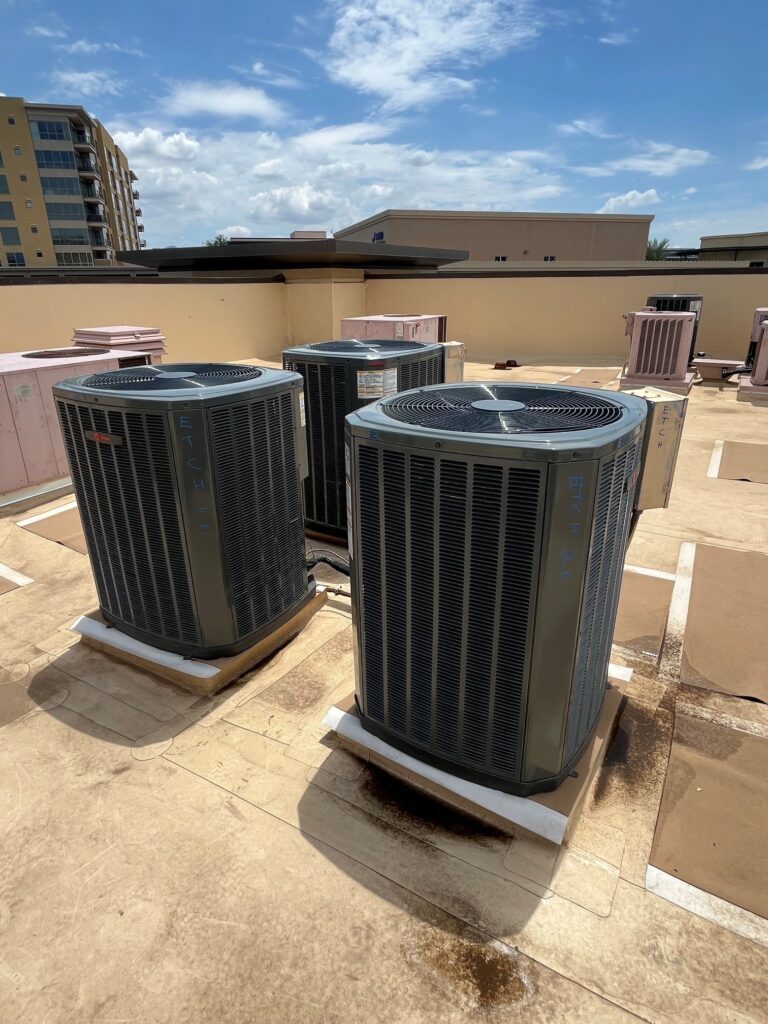
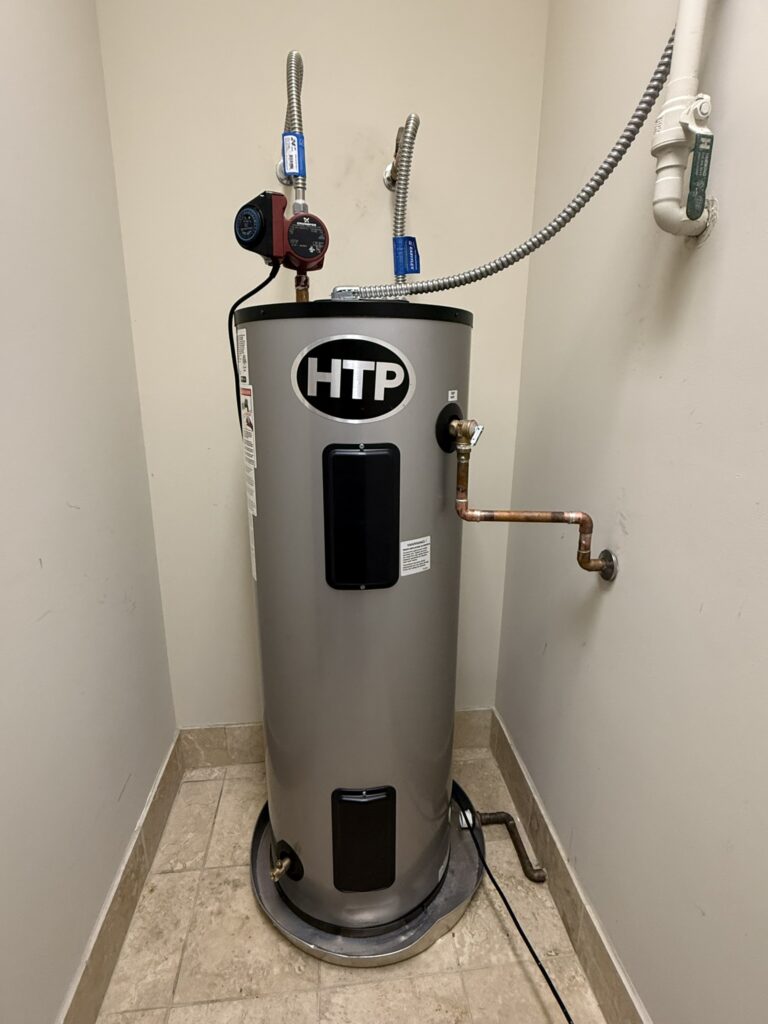
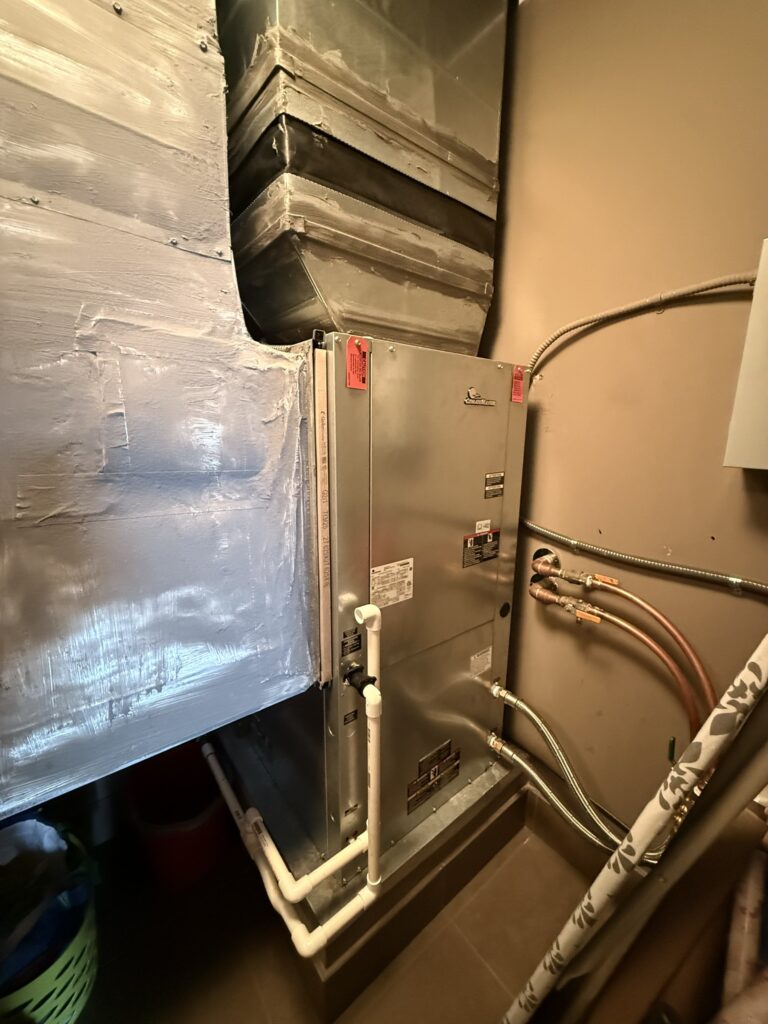
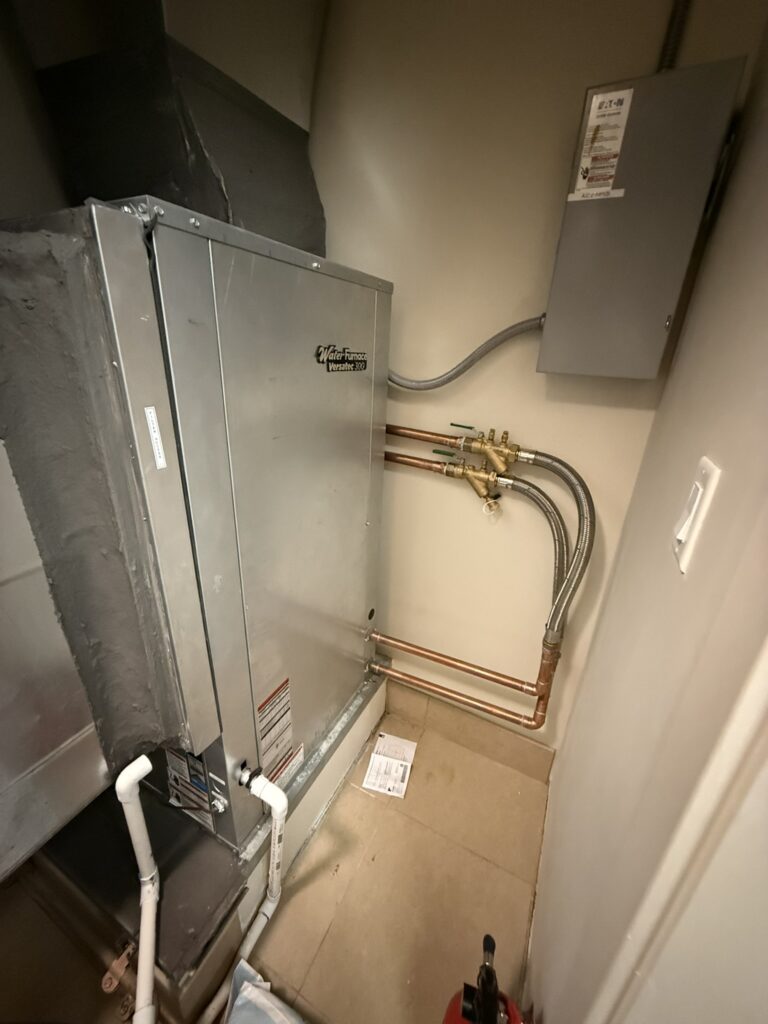
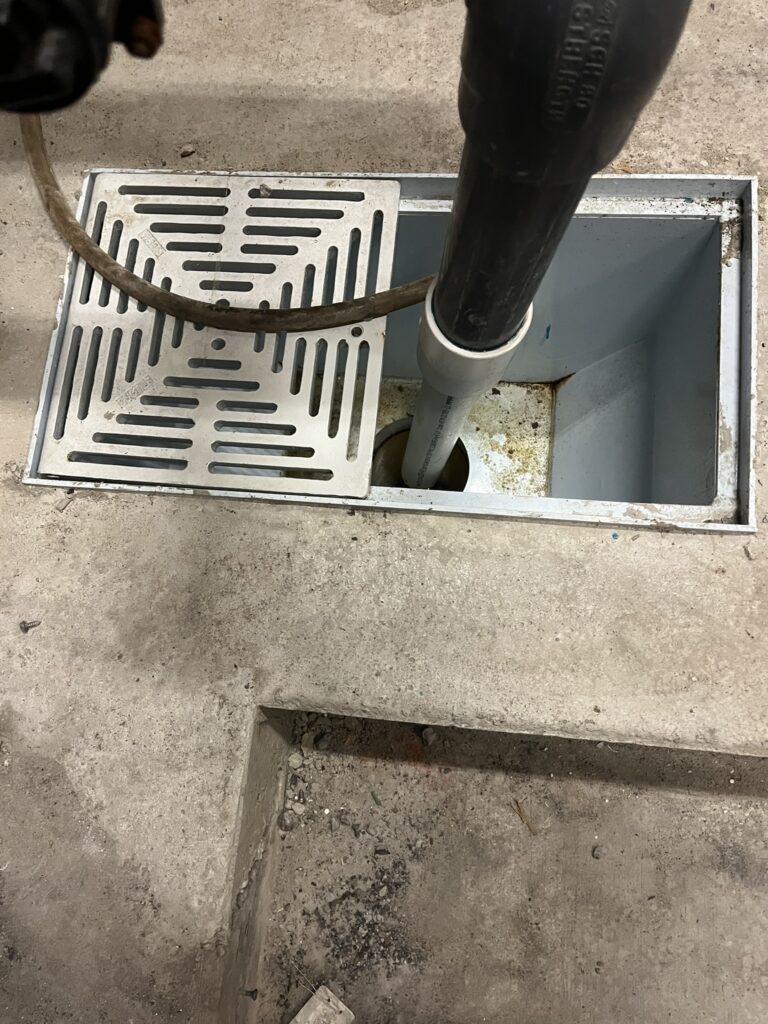
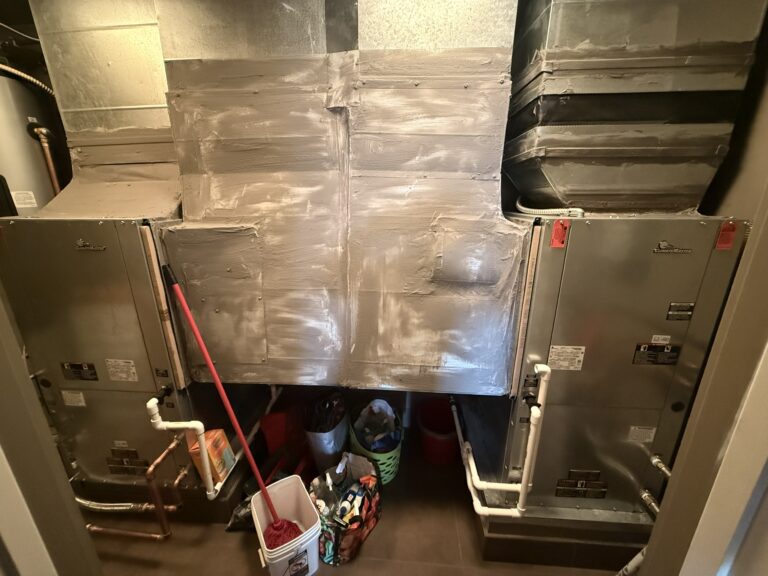
Photos from our own commercial projects across the Phoenix metro — equipment we installed, in buildings we service.
How the job typically runs.
Production windows matter. A failed unit over an office can wait differently than a failed unit affecting a prep room, packaging area, or dish line. At booking, we ask what area is affected, whether production is active, what access rules apply, whether washdown or sanitation is scheduled, and who can approve work. The diagnostic/service-call fee is disclosed at booking and credited. We also ask whether the equipment is roof-mounted, pad-mounted, above a ceiling, or located near areas where tools and panels need to be kept clear of active food handling.
During the in-person look, we evaluate the operating reality around the HVAC system. That includes supply and return air, filters, coils, drains, controls, outdoor equipment, electrical components, exhaust influence, heat sources, moisture sources, and whether the problem appears during cooking, packing, cleaning, or after-hours storage. We do not diagnose from the unit label alone. A unit can be technically running and still failing the room because airflow is restricted, the drain is compromised, the coil is loaded, or the space has changed since the original buildout.
After the site visit, we provide flat-rate written quotes with scopes documented in writing. Repairs, replacements, control changes, filtration corrections, and drainage work are separated so the operator can decide what is urgent for production and what can be scheduled. Office hours are Mon–Fri 8–5, with 24/7 emergency service when cooling failure threatens operations. For owner-operated facilities, that written scope helps separate immediate no-cooling repair from larger planning items that may need landlord approval or a shutdown window.
- 01 Booking, with the diagnostic fee disclosed
- 02 In-person diagnosis with real readings
- 03 Written flat-rate quote before work begins
- 04 The work: repair, install, or maintenance
- 05 Startup, documentation, and warranty handoff
San Tan Valley is in Pinal County, and much of it is unincorporated. For applicable food production HVAC work, permits go through Pinal County rather than a city of San Tan Valley. HVAC replacement, new equipment, electrical changes, duct modifications, penetrations, rooftop work, condensate routing, and tenant improvements may trigger review depending on the scope. Utility service is SRP, not APS.
For smaller food production spaces, the permit question often depends on whether the work is a repair, a like-for-like replacement, or a change to how the space is conditioned or exhausted. A clogged drain, failed capacitor, or blower motor repair is a different conversation than replacing a packaged unit, changing ductwork, modifying condensate routing, or altering equipment that interacts with a tenant improvement. We keep the HVAC description specific so owners, landlords, consultants, and facility contacts know what was actually inspected and proposed.
Yeti Pros documents HVAC work, but we do not certify food-processing facilities or issue health-code rulings. We can provide mechanical findings and completed-work documentation for your operator file, landlord, consultant, or inspector. AZ ROC #363372 · ROC #363423. The Arizona Registrar of Contractors publishes the Minimum Workmanship Standards, a useful reference for licensed contractor workmanship expectations in Arizona.
Pricing, financing & the 10% military & first responder discount.
Food processing HVAC pricing in San Tan Valley depends on equipment condition, production heat, moisture exposure, filter and coil contamination, drain work, refrigerant type, access restrictions, roof or pad location, electrical capacity, controls, and whether the work must happen before production, after sanitation, or during a shutdown window. A drain repair is a different scope than replacing a packaged unit serving production and office areas together.
The room use also changes the quote. A system serving a quiet office next to production may need a different repair priority than a system serving the prep line itself. A rooftop unit with safe, direct access is different from equipment above a finished ceiling or near active washdown. A filter and coil problem caused by flour or production debris is different from a refrigerant-side failure, and a control issue is different from a unit that is simply overloaded by heat, exhaust, and door traffic.
We provide flat-rate written quotes after an in-person look, with scopes documented in writing. Financing is available. Yeti Pros offers a 10% military, veteran & first responder discount through our military discount program. Repair work includes a 2-YEAR written workmanship warranty and a 1-YEAR manufacturer parts warranty on repair parts.
- 01 Flat-rate written quote after an in-person look
- 02 Diagnostic fee disclosed at booking, credited to the repair
- 03 Financing available on replacements
- 04 2-year workmanship warranty; 1-year manufacturer parts warranty
- 05 10% military, veteran & first responder discount
Why a licensed HVAC contractor matters.
FAQs: HVAC for Food Processing Facilities in San Tan Valley, AZ.
Do you service food processing plants in San Tan Valley?
We service the type of food production space San Tan Valley actually has: commissary kitchens, catering production, bakery rooms, meal-prep operators, small packaged-food spaces, agricultural-adjacent prep rooms, and production areas inside flex or tenant buildings. This is not a legacy industrial plant corridor. Our work covers HVAC diagnostics, repair, replacement scope, filtration, coils, drains, controls, and documentation for those smaller commercial operations. We come to the site and evaluate the system under the conditions that are creating the complaint.
Can you help when a production room gets hot during cooking or packaging?
Yes. We evaluate the room during the conditions that create the complaint. Cooking equipment, refrigeration heat, packaging equipment, exhaust, door openings, and staff density can overload a comfort system. We check supply air, return air, filters, coils, drains, controls, outdoor unit performance, and whether the system is being asked to handle makeup air it was not designed for. Then we document repair or replacement options in writing. Timing matters, so we ask when the heat begins and what production activity is happening at that point.
Do you certify HVAC for health department or food safety compliance?
No. We service and document HVAC systems. We do not certify food-processing facilities, issue health-code rulings, approve process temperatures, or provide legal advice. If an inspector, consultant, landlord, or corporate manager needs HVAC information, we can document the equipment condition, work performed, deficiencies observed, and recommended scope. Regulatory interpretations should come from the proper authority or qualified consultant. Our notes stay focused on the mechanical HVAC work we can test, repair, replace, or maintain.
What HVAC failures are common in small San Tan Valley food production spaces?
Common problems include clogged condensate drains, dirty coils, loaded filters, failed capacitors, contactor failures, blower motor problems, condenser fan failures, weak compressors, thermostat issues, refrigerant leaks, and airflow restrictions. Food production adds heat, moisture, particulate, and cleaning exposure to equipment that may have been selected for office or retail comfort. Long San Tan Valley cooling seasons make weak parts show up quickly. We also see controls that satisfy the office while the production side keeps gaining heat.
Can HVAC work be scheduled around production and sanitation?
Yes. We ask about production windows, washdown timing, sanitation procedures, access restrictions, locked areas, and who can approve work. Some diagnostics can happen while production continues. Other repairs need a planned window so panels, ladders, tools, or airflow changes do not interfere with active food handling. The written scope can separate urgent repair from work better scheduled during downtime. We also account for whether the area needs to be accessible after cleaning or before the next production run.
Do you provide emergency service for food production HVAC failures?
Yes. Office hours are Mon–Fri 8–5, and 24/7 emergency service is available. If cooling loss affects a prep room, packaging area, dish line, storage-adjacent room, or office support area in San Tan Valley, call (520) 556-8929. The diagnostic/service-call fee is disclosed at booking and credited. After the in-person look, we provide flat-rate written quotes with the HVAC scope documented in writing. Tell us what area is affected, whether production is active, and what access limits apply.
Every major brand, serviced and installed.



Phoenix metro: Most days a tech is already working somewhere in the Valley, so same-day appointments happen when the schedule allows. After-hours emergencies are dispatched when a licensed tech is available — a real person answers and tells you the ETA on the call.
Call (520) 556-8929Request an estimate.
No pressure, no door knockers. We look at the HVAC system, tell you what it needs (and what it doesn’t), and put the number in writing.
Need food processing facilities in San Tan Valley? A real person answers.
Other services we run in San Tan Valley.
Food Processing Facilities in nearby cities.
Looking for something else nearby? All HVAC services in San Tan Valley