
Phoenix Metro
Indoor Air Quality Testing in Phoenix.
- (520) 556-8929
- Serving the entire Phoenix metro — we come to you
- Office: Mon–Fri 8:00 AM – 5:00 PM · 24/7 emergency service
- 2-year workmanship warranty · 1-year parts warranty
- Veteran-owned & operated · residential + commercial
- 23 five-star Google reviews
Residential HVAC across the Valley.
Air conditioning, heating, and cooler work at homes across the Phoenix metro.
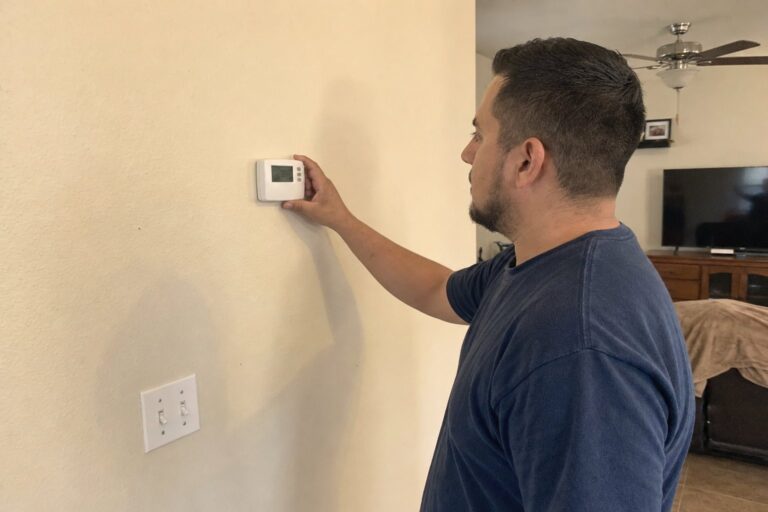
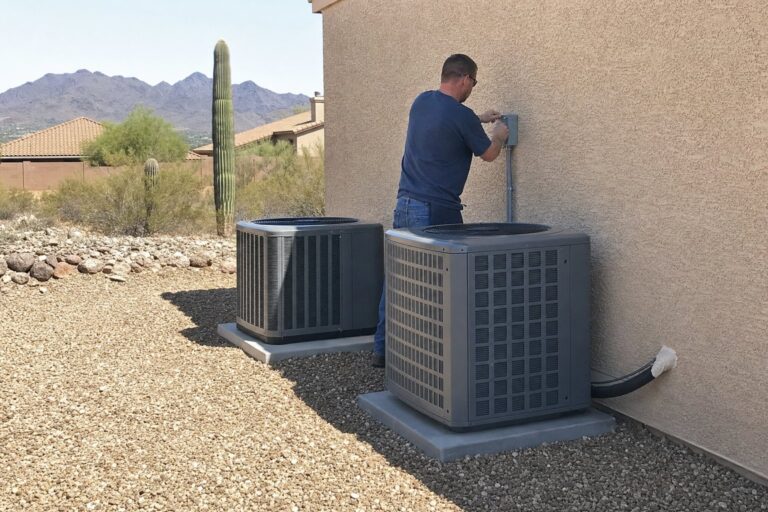
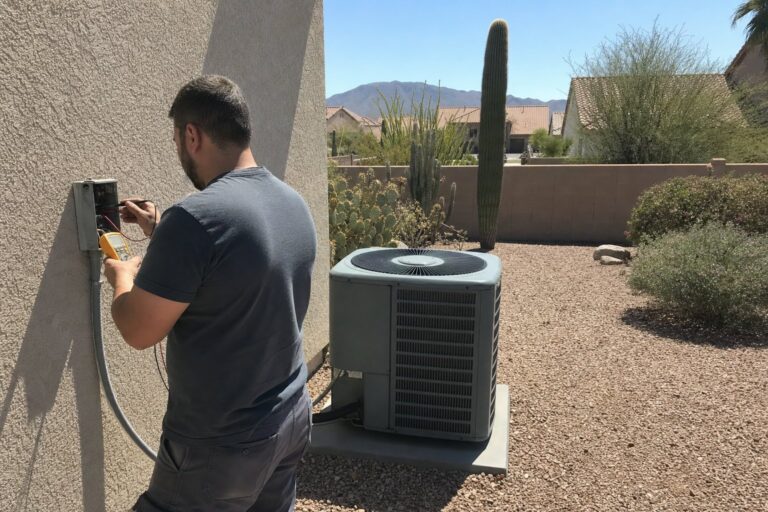
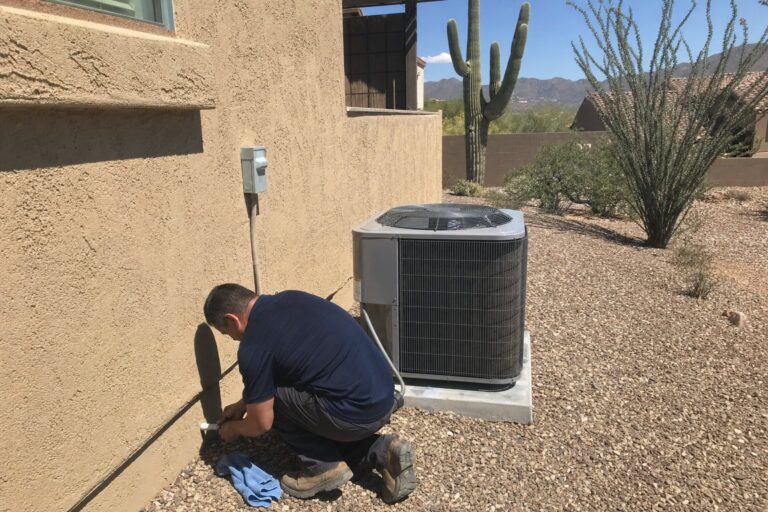
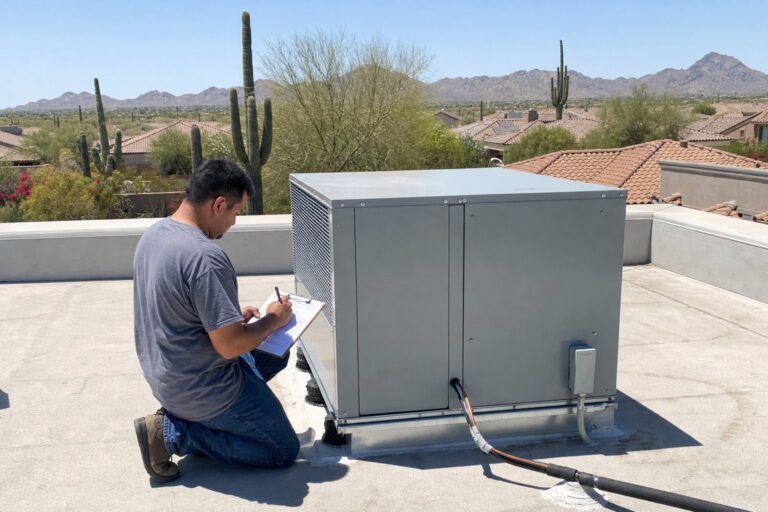
Indoor air quality testing checks the conditions inside your home that can explain dust, stale air, odors, comfort complaints, and ventilation problems. You need it when guessing has stopped helping and you want readings, observations, and HVAC findings tied together. We test what can be tested, explain what the results do not prove, and recommend practical next steps.
What IAQ testing can and cannot prove
Indoor air quality is not one number. Dust, carbon dioxide, volatile organic compounds, humidity, temperature, filtration, airflow, duct leakage, and source odors can all shape how a house feels. Good testing looks for patterns. It does not turn one handheld reading into a dramatic conclusion.
Dust that never seems to stop.
Stale bedrooms.
Odors when the AC starts.
Dry irritation.
Occasional chemical or smoke smells.
Some of those are HVAC-related. Some come from building leakage, cleaning products, attached garages, remodeling materials, pets, hobbies, cooking, or outdoor air. Testing helps separate likely HVAC causes from source problems that need a different fix.
Can show whether occupied rooms are getting enough fresh air exchange, especially bedrooms with closed doors.
Can point toward chemical sources or poor dilution, but they usually do not identify a specific product by themselves.
Can show dust load differences between rooms or before and after filtration changes.
Help explain comfort and odor patterns.
A normal reading during a short visit does not prove the home is always fine. A high reading does not automatically identify the source. Mold panic does not help anyone. If visible growth, water damage, or medical concerns are involved, that may require a specialist outside a basic HVAC IAQ visit. Our role is to connect air complaints to HVAC conditions, ventilation clues, filtration, and practical corrections through residential HVAC service.
How the job actually goes
We start with the complaint in plain language. Which rooms feel dusty, stale, irritating, or smelly? When does it happen? Does it follow AC operation, cooking, cleaning, monsoon weather, dust storms, closed doors, or a recent remodel? The timeline matters because air problems are often intermittent.
Then we take readings and inspect the system. Depending on the complaint, we may check temperature, humidity, CO2, particle trends, VOC clues, filter condition, return fit, blower compartment, coil area, duct access, and pressure relationships around closed rooms. We look for bypass gaps where air avoids the filter, return leaks that can pull attic dust, and airflow restrictions that make rooms feel stale. We do not pretend a small device can name every contaminant in a house. The value is in combining measurements with field inspection. If CO2 rises in closed bedrooms, ventilation and return pathways matter. If particles spike near the return or after the blower starts, filtration and duct leakage matter. If VOC readings change after cleaning products or garage access, source control matters.
After the in-person look, we give a flat-rate written quote before any repair, installation, or follow-up work. The quoted number is what you pay unless we find something hidden and stop to re-quote. The diagnostic or service-call fee is disclosed at booking and credited toward the repair when repair work moves forward.
At handoff, we explain the readings, what we saw, what is likely, what is uncertain, and what order we would fix things in. That may mean sealing a return, correcting filtration, adding a media cabinet, improving ventilation, cleaning an accessible coil area, or telling you the HVAC system is not the source of the complaint. Yeti Pros is veteran-owned and operated, AZ ROC #363372 · ROC #363423. We are a service-area business, so we come to you throughout the Phoenix metro. Office hours are Mon-Fri 8-5, with 24/7 emergency service.
What testing points to
Indoor air complaints usually need sorting, not guessing. The same dusty room can involve a bad filter rack, a leaky return, a closed-door pressure issue, or outdoor dust entering the home. Testing gives us a better starting point.
| What you notice | What it usually means | Testing focus |
|---|---|---|
| Dust returns right after cleaning | Filter bypass, return leakage, attic dust, or heavy outdoor infiltration | Particles, filter fit, return inspection, duct clues |
| Bedrooms feel stale overnight | Closed doors may limit air return or fresh air exchange | CO2 trend, room pressure, airflow path |
| Chemical smell indoors | Cleaning products, garage air, remodel materials, or low dilution may be involved | VOC clues, source history, ventilation review |
| Musty smell when AC starts | Coil, drain pan, duct liner, or wet debris may be contributing | Humidity, coil area, drain inspection |
| One room is worse than the rest | Local source, duct issue, pressure imbalance, or poor return path | Room-by-room readings and airflow checks |
Phoenix-metro realities for indoor air complaints
Dust Reality
Dust is the first reality. The Valley has dry soil, construction dust, pollen, traffic debris, and monsoon outflows that push fine material into homes. A house can be cleaned well and still load a filter quickly after a windy week. IAQ testing helps determine whether the HVAC system is recirculating normal dust or pulling extra debris from an attic, garage, or leaky return.
Arizona Home Structure
Arizona homes are slab-on-grade, so ducts and air handlers usually live in attics, closets, garages, or rooftop units rather than basements. Attics hit 150°F+ and are full of loose insulation and dust. A return leak in that environment can make an indoor dust problem much worse. If the return side is not sealed, the system may be cleaning the house with one hand and dragging attic air in with the other.
Ventilation Tradeoffs
Ventilation is another local tradeoff. During hot months, people keep homes closed tight and run the AC for long stretches. Closed bedroom doors can trap CO2 and make rooms feel stuffy by morning. Fresh-air systems, exhaust fans, and pressure paths have to be understood before adding equipment. More outdoor air is not always better when the outdoor air is hot, dusty, or smoky.
Humidity & VOC Shifts
Humidity is usually low, but monsoon weeks can change odors and comfort. A damp coil area may smell worse when humidity rises. VOC complaints can also shift with temperature because heat drives materials to off-gas more. That is why we ask what changed: new flooring, paint, stored chemicals, garage habits, candles, filters, pets, or recent HVAC work.
If your main issue is dust, our dusty house AC guide gives useful background before the visit. Testing still matters when the symptoms are persistent, room-specific, or tied to system operation.
What drives the quote
The quote depends on the depth of testing, number of rooms, type of complaint, access to HVAC equipment, whether pressure or airflow checks are needed, and whether follow-up repairs are requested. A simple dust and filter investigation is different from a whole-house stale-air complaint with multiple rooms and ventilation questions.
After the in-person look, we provide a flat-rate written quote before repair or installation work. The quoted number is what you pay unless we find something and stop to re-quote. The diagnostic or service-call fee is disclosed at booking and credited toward the repair. For equipment or correction work, financing is available where relevant.
Workmanship Warranty
Our workmanship is covered by a 2-year written workmanship warranty and held to the AZ ROC Minimum Workmanship Standards.
Manufacturer Parts Warranty
Repair parts carry a 1-year manufacturer parts warranty.
We offer a 10% military, veteran, and first responder discount. To schedule IAQ testing, use contact or call (520) 556-8929.
The detective work usually ends in the return path. Most Valley dust complaints trace to return leaks pulling attic air, gaps around can lights and registers, or a filter rack that lets air slip past the media — physical findings a meter points toward and a flashlight confirms. Testing frames the problem; the fix is almost always mechanical, sealable, and verifiable on a follow-up reading.
Straight answers
Can indoor air quality testing find mold?
Basic HVAC IAQ testing can find moisture clues, odors, humidity patterns, and visible conditions around equipment. It does not replace specialized mold assessment when there is water damage, visible growth, or a documentation need. We avoid scare tactics and tell you when another specialist is the right call.
Is CO2 testing useful in a Phoenix house?
Yes, especially in bedrooms and closed rooms. High CO2 can point to poor air exchange or return pathways, not poison gas drama. It helps explain stale air complaints and whether ventilation or pressure corrections should be considered.
Can testing tell me exactly what chemical I smell?
Usually not. VOC readings can show a pattern or change, but they rarely identify a specific product on their own. The source history matters: cleaning products, paint, flooring, garage storage, hobbies, candles, and outdoor air can all affect the reading.
Will a better filter solve my IAQ problem?
Sometimes. If dust and particles are the main issue, filtration can help, but only if the system can handle the filter and air is not bypassing it. If the problem is CO2, VOC sources, drain odor, or pressure imbalance, a filter alone will not solve it.
Permits and inspections
Most repairs are ordinary service work; bigger scopes can involve city permitting. We perform our work to code, pull the permits our scope requires, and put what we did in writing.
What's covered
Workmanship is covered for two full years, in writing, and repair parts carry a 1-year manufacturer parts warranty — we document installs and repairs so those claims stay simple to make
Why a licensed HVAC contractor matters.
Every major brand, serviced and installed.




Phoenix metro: Most days a tech is already working somewhere in the Valley, so same-day appointments happen when the schedule allows. After-hours emergencies are dispatched when a licensed tech is available — a real person answers and tells you the ETA on the call.
Call (520) 556-8929Request an estimate.
No pressure, no door knockers. We look at the HVAC system, tell you what it needs (and what it doesn’t), and put the number in writing.