
Phoenix Metro
HVAC for HOAs & Community Associations in Phoenix.
- (520) 556-8929
- Serving the entire Phoenix metro — we come to you
- Office: Mon–Fri 8:00 AM – 5:00 PM · 24/7 emergency service
- 2-year workmanship warranty · 1-year parts warranty
- Veteran-owned & operated · residential + commercial
- 23 five-star Google reviews
Multi-family equipment work, documented.
Photos from our own commercial projects — equipment we installed, in buildings we serviced.
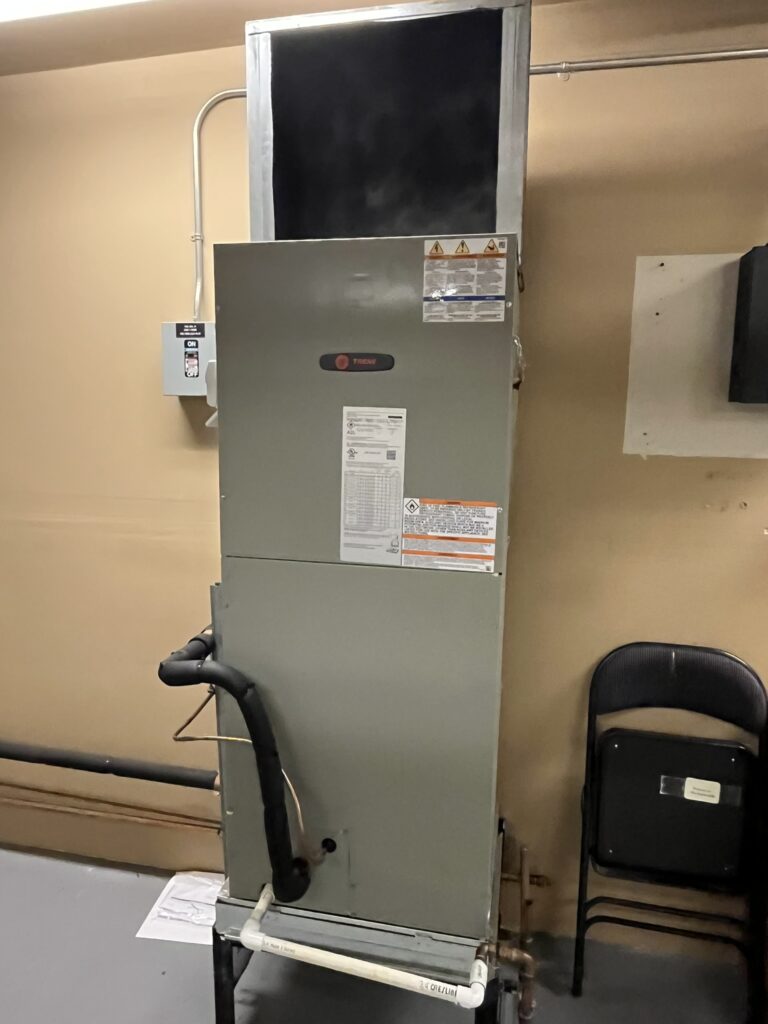
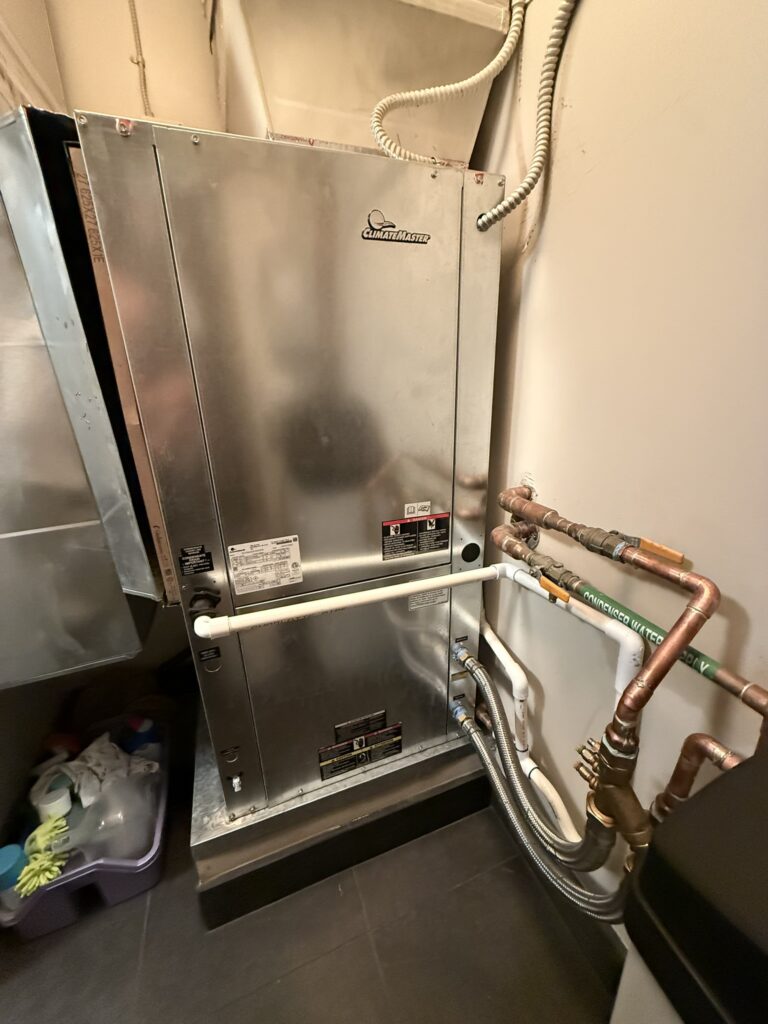
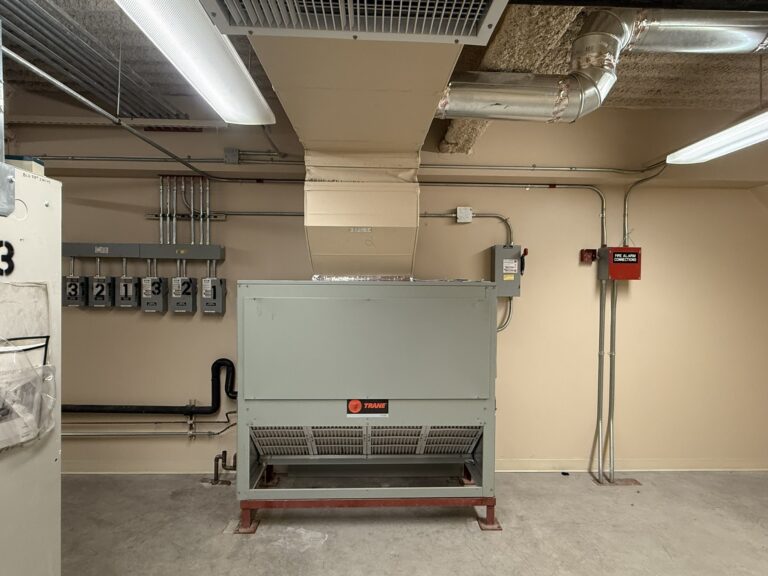
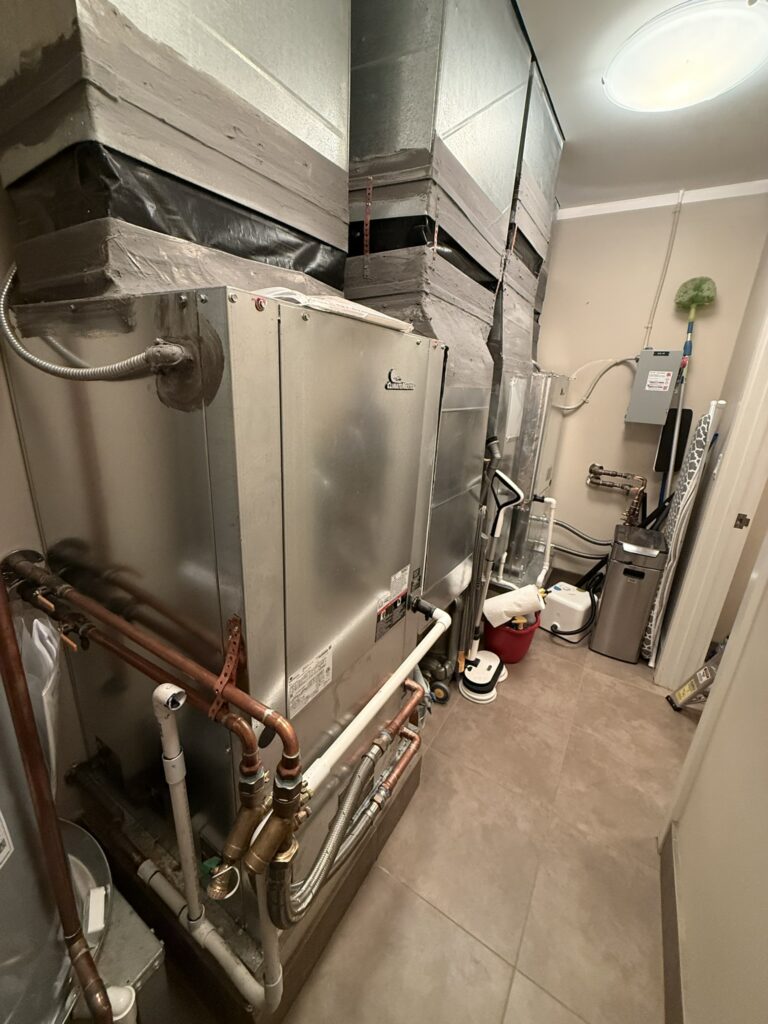
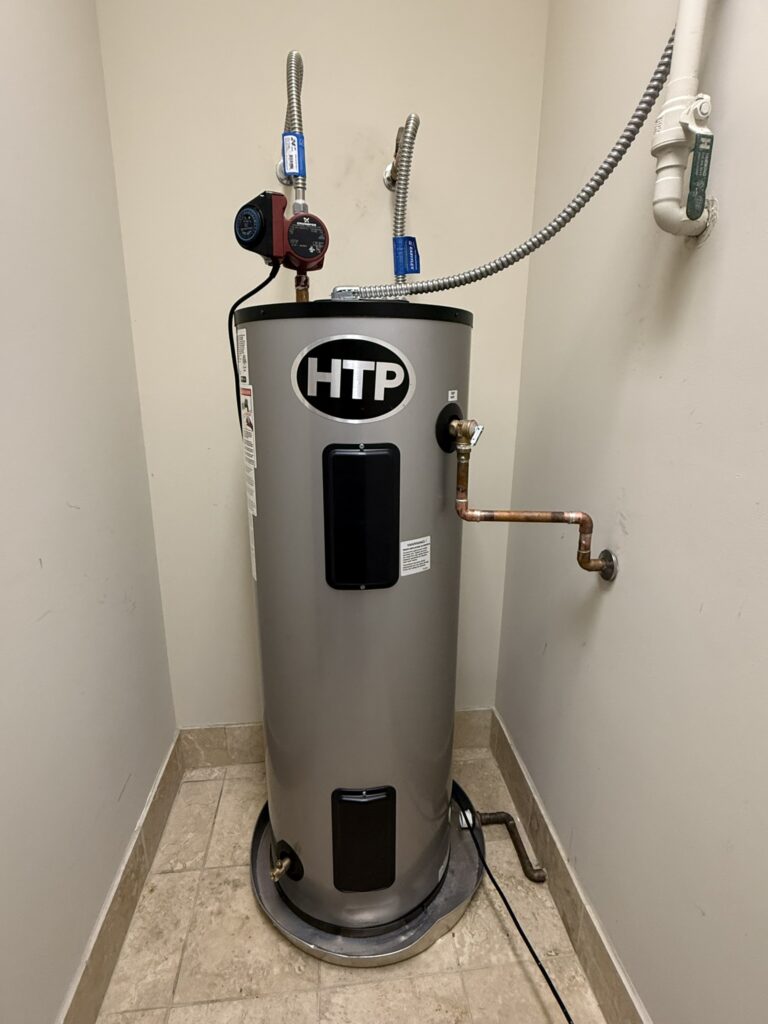
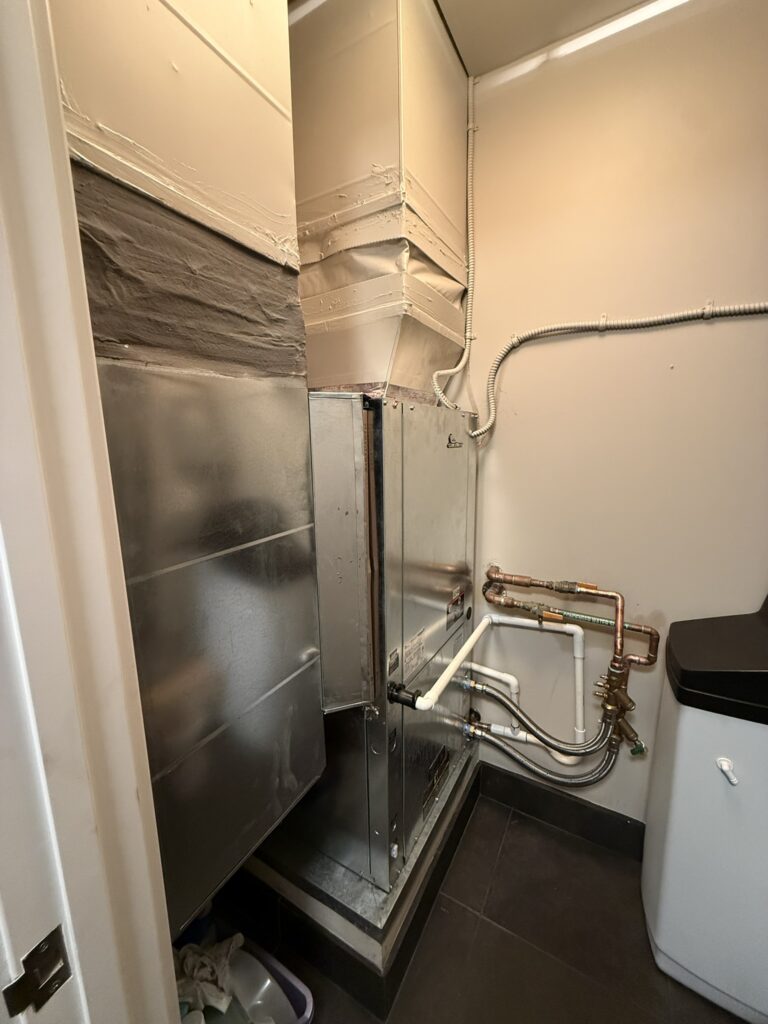
HOA HVAC service is about keeping shared buildings usable without creating board confusion, resident complaints, or surprise scope creep. Service needs to document what was found, what is urgent, and what can be planned.
Community association HVAC reality in the Valley
For an HOA, HVAC problems rarely stay inside the mechanical room. Phoenix heat makes comfort equipment part of the operating infrastructure, not a nice extra. The impact of HVAC issues can be significant:
A warm clubhouse becomes a resident complaint.
A fitness room that will not cool turns into a board agenda item.
A small office with poor airflow can slow down management staff who already handle vendors, violations, meetings, and owner requests.
Across the Valley, HOA common-area systems are often a mix of rooftop package units, split systems, mini-splits, exhaust fans, thermostats, and older controls added over time as buildings were remodeled. This complexity means:
- One clubhouse may have a large RTU serving the main room, a smaller unit serving offices, and separate exhaust in restrooms or pool-adjacent spaces.
- Fitness rooms add another load because people, equipment motors, glass, and extended hours push cooling harder than the room size suggests.
The failure pattern is also different from a single retail suite. HOA buildings may sit lightly used for part of the day, then fill quickly for an evening meeting, party, class, or board session. Equipment that seemed acceptable at mid-afternoon can fall behind when doors open repeatedly and bodies fill the room. A thermostat complaint may be due to:
A dirty coil can impact performance.
A weak capacitor can lead to issues.
Insufficient airflow can cause discomfort.
An economizer issue can affect efficiency.
Problems with the control system.
The unit may be asked to handle a load the room no longer matches.
Monsoon dust and 115 degree roof conditions make that harder. Coils load up, contactors wear, belts slip, drains clog, and small electrical weaknesses become breakdowns when the unit runs long cycles. On a Phoenix-metro HOA property, the cost of failure is not just repair time, but also:
Disruptions to scheduled events.
Residents and board members experiencing discomfort.
Leading to complaints and dissatisfaction.
The board needing a clear answer before approving the next step.
Contracts, written scopes, and cost honesty
HOA boards require HVAC pricing that is clear and understandable for future reference. Our process ensures transparency:
We provide flat-rate written quotes after an in-person look.
The quote explains the scope and findings in writing.
The diagnostic or service-call fee is disclosed at booking and credited toward the repair.
This provides managers with a clear document to route, avoiding the loss of detail common with verbal estimates.
Commercial HVAC pricing is influenced by various factors, including:
Ease of access to units and the specific type of equipment.
Cost and availability of parts, and the age of the system.
Roof conditions, electrical condition, and refrigerant status.
Complexity of controls, after-hours timing, and urgency for service.
For associations, approval timing is also crucial; a planned repair during a low-use window differs significantly from an emergency weekend clubhouse failure.
Workmanship Warranty
Our workmanship is backed by a 2-year written workmanship warranty and is held to the AZ ROC Minimum Workmanship Standards.
Parts Warranty
Repair parts carry a 1-year manufacturer parts warranty.
Yeti Pros is veteran-owned and operated, AZ ROC #363372 and ROC #363423. Financing is available, and we offer a 10% military, veteran and first responder discount.
For associations that want fewer emergency decisions, review maintenance contract options before peak season. To schedule service or request a written scope, use contact Yeti Pros or call (520) 556-8929.
How we run service for HOA communities
Our Approach
We run HOA work so the board, manager, and maintenance contact can see the same facts. Yeti Pros is veteran-owned and operated, servicing Phoenix and the Valley as a service-area business.
Availability
There is no shop address for residents to visit; we come to you. Office hours are Mon-Fri 8-5, with 24/7 emergency service when a common-area system cannot wait.
Our service call process ensures transparency and clear communication:
The diagnostic or service-call fee is disclosed at booking and credited toward the repair.
We inspect the equipment in person.
We then provide a flat-rate written quote for the approved work.
Findings and scopes are documented in writing, which helps community managers with board packets, reserve items, or distinguishing urgent repairs from planned replacements.
For multi-building associations, we view the property as a small equipment fleet, recognizing that not every unit is identical. A clubhouse unit with weekend events, a fitness-center unit running long hours, and a guardhouse system with continuous occupancy require different cadences and priorities. A board-friendly preventive plan should identify:
Which assets are essential for operations.
Which systems are nearing end-of-life.
Which repairs can be handled during periods of reduced activity.
We can schedule around board meetings, clubhouse reservations, management office hours, and resident access constraints with sufficient notice. While after-hours work is useful to avoid disrupting scheduled events, some repairs depend on:
The necessary components being in stock.
Safe and clear access to rooftop units.
The state of the electrical system.
Prompt authorization for work to proceed.
We communicate these factors clearly, rather than promising on-demand solutions for every repair.
For ongoing service, see our commercial maintenance contracts. HOA properties benefit from a written maintenance cadence:
To prepare systems for high demand.
To ensure continuous optimal performance.
When coil condition and drain performance are critical.
When approval is needed, we ensure language is plain enough for a board packet and specific enough for the person managing the vendor file.
Common HOA HVAC symptoms and what they usually mean
Shared buildings create public problems from private equipment failures. The table below is not a diagnosis by itself, but it shows how we triage common HOA calls before recommending repair, maintenance, or a longer capital conversation.
| Symptom or situation | What it usually means | Priority |
|---|---|---|
| Clubhouse cools slowly before meetings | Dirty coil, weak airflow, poor scheduling, oversized heat gain, or aging RTU capacity under real occupancy | High before scheduled events |
| Fitness room feels humid or stale | Long run time, ventilation imbalance, clogged filters, condensate issue, or equipment not keeping up with internal load | High for resident complaints |
| One common room is comfortable and another is not | Zoning, duct, thermostat, damper, or equipment split that no longer matches use patterns | Medium unless events are affected |
| Breaker trips or unit shuts down in afternoon heat | Electrical stress, failing motor, compressor issue, dirty condenser coil, or high head pressure | Urgent in summer |
| Board needs repair versus replacement clarity | Age, repair history, parts availability, condition, and expected duty cycle all need to be documented | Planning priority |
That written triage matters because HOA decisions often involve more than one person. A vague service note creates follow-up calls. A clear finding helps the manager explain why one repair is urgent while another belongs in the next budget cycle.
Phoenix-metro specifics for HOA HVAC
HOA common-area HVAC in Phoenix is roof-heavy, with rooftop package units dominating clubhouses and office buildings due to their practicality and serviceability. However, these units sit in the harshest conditions on the property, where parts are punished by:
Extreme heat impacting component longevity.
Leading to clogged coils and reduced efficiency.
UV radiation degrading materials.
Extended operation causing wear and tear.
Monsoon season is a critical maintenance marker due to its impact on HVAC systems:
Condenser coils accumulate dust, reducing efficiency.
Filters clog faster, restricting airflow.
Marginal drains can turn into ceiling stains or cause shutdowns.
Wind-driven debris around rooftop units can reduce airflow.
Equipment near trees, pool equipment, landscaping, or construction may require more attention than a calendar-only plan suggests.
Utility demand is a practical issue for boards. While HVAC service cannot eliminate electric bills, neglected equipment often runs longer and harder than necessary. Proper maintenance helps systems operate efficiently through:
Ensuring optimal heat transfer.
Preventing electrical stress and failures.
Maintaining proper fan operation.
Ensuring consistent and adequate air distribution.
For precise temperature control.
Documented service history makes these approvals easier for boards than scattered emergency invoices.
The Phoenix-metro operating reality affects scheduling, as summer repairs compete with regional demand, manufacturer supply, and rooftop working conditions, with cooling being business-critical most of the year. For HOAs, addressing known issues before resident complaints is ideal. A planned visit offers several advantages:
Allows the manager to arrange property access efficiently.
Provides time for the board to review findings and make informed decisions.
Prevents every warm room from becoming an urgent community decision.
As a service-area contractor, Yeti Pros comes to the property, inspects equipment on site, and writes the scope around the actual building. This approach is especially useful for associations with:
Ensuring comprehensive coverage for all shared spaces.
Adapting to properties built in stages.
Where mechanical drawings may not match current rooftop installations.
Straight answers
Do you handle HOA clubhouse HVAC in Phoenix?
Yes. We service clubhouse, fitness, office, restroom, guardhouse, and other common-area HVAC systems across Phoenix and the Valley. We inspect the equipment in person, document findings, and provide written scopes that can be shared with a board or management company. The work is focused on service, repair, maintenance, and replacement discussions for the HVAC equipment serving those spaces.
Can you give the board a repair versus replacement recommendation?
We can document the condition of the equipment, recent failure pattern, repair scope, parts concerns, and operational risk. That gives the board a practical basis for deciding whether to repair now, plan replacement, or budget for future work. We do not turn every old unit into an automatic replacement recommendation. The building use, failure history, and summer reliability risk matter.
Can HOA HVAC work be scheduled around events or meetings?
Usually, yes. Planned work can often be scheduled around clubhouse reservations, board meetings, office hours, and resident access windows. Emergency work depends on the failure, access, parts, and approval timing. If after-hours service makes sense, we will say so. If a repair is better handled during regular hours with the right parts and access, we will say that too.
What should an HOA maintenance plan include?
A useful HOA plan should identify every common-area unit, prioritize the systems that affect residents most, check coils and drains around dust season, review electrical components before peak heat, and document findings in a way the board can understand. Multi-building communities should not rely on memory. Written equipment history helps the next repair decision happen faster.
Permits and inspections
Most repairs are ordinary service work; bigger scopes can involve city permitting. We perform our work to code, pull the permits our scope requires, and put what we did in writing.
What's covered
Workmanship is covered for two full years, in writing, and repair parts carry a 1-year manufacturer parts warranty — we document installs and repairs so those claims stay simple to make
HVAC for HOAs & Community Associations in Phoenix, city by city.
Every city below has its own local page for this industry — local FAQs, utility territory, and dispatch reality included.
Why a licensed HVAC contractor matters.
Commercial HVAC, industry by industry.
Every major brand, serviced and installed.

Phoenix metro: Most days a tech is already working somewhere in the Valley, so same-day appointments happen when the schedule allows. After-hours emergencies are dispatched when a licensed tech is available — a real person answers and tells you the ETA on the call.
Call (520) 556-8929Request an estimate.
No pressure, no door knockers. We look at the HVAC system, tell you what it needs (and what it doesn’t), and put the number in writing.