
Phoenix Metro
HVAC for Veterinary Clinics in Phoenix.
- (520) 556-8929
- Serving the entire Phoenix metro — we come to you
- Office: Mon–Fri 8:00 AM – 5:00 PM · 24/7 emergency service
- 2-year workmanship warranty · 1-year parts warranty
- Veteran-owned & operated · residential + commercial
- 23 five-star Google reviews
Commercial jobs we have documented.
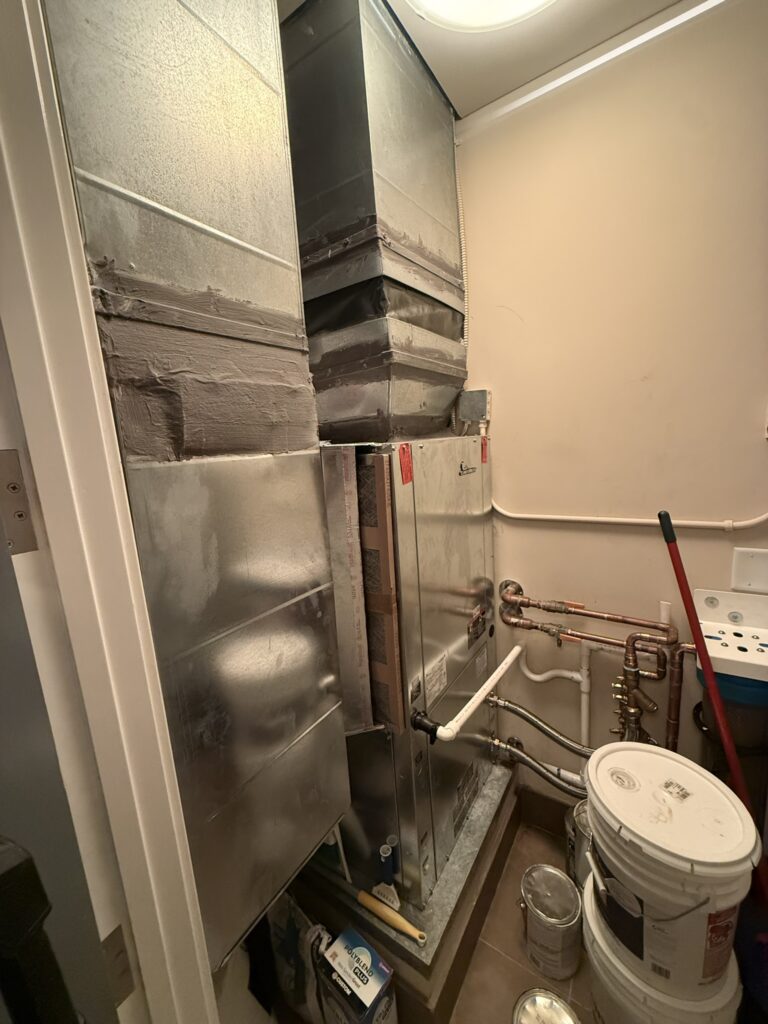
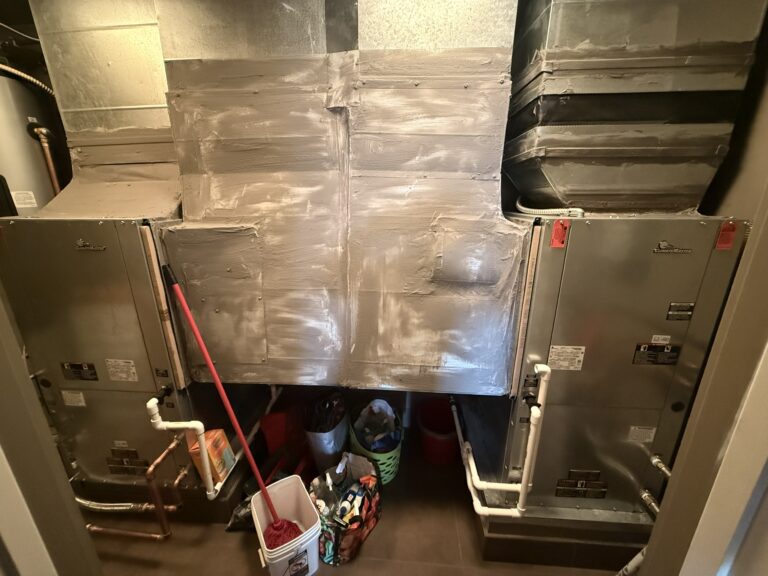
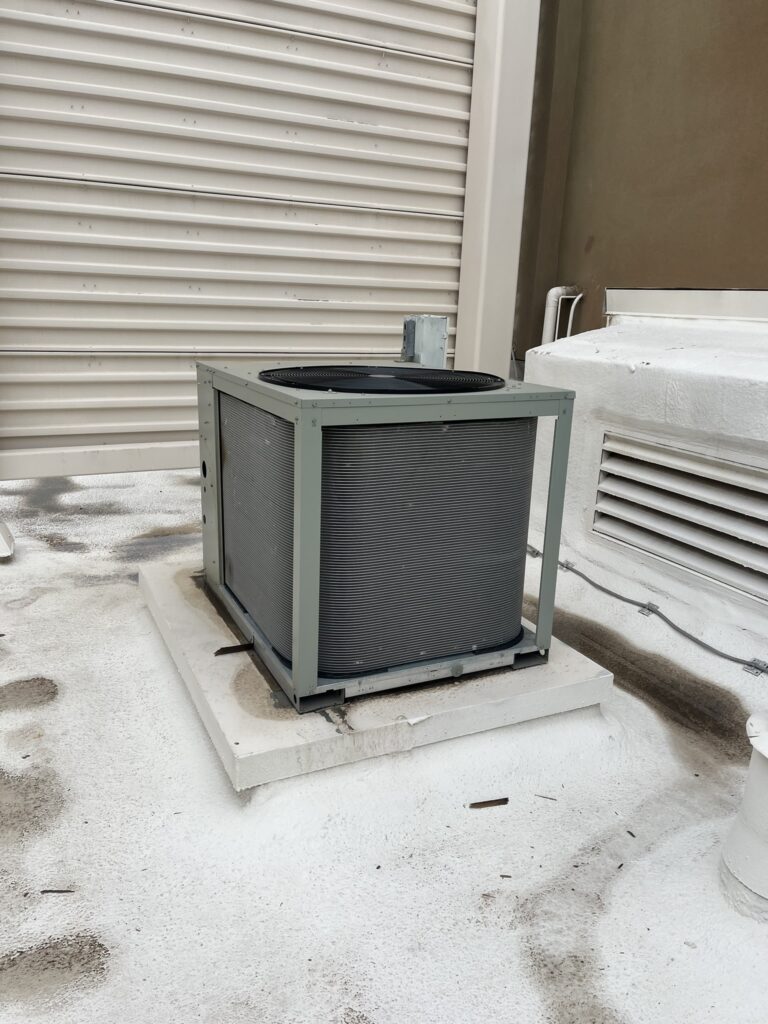
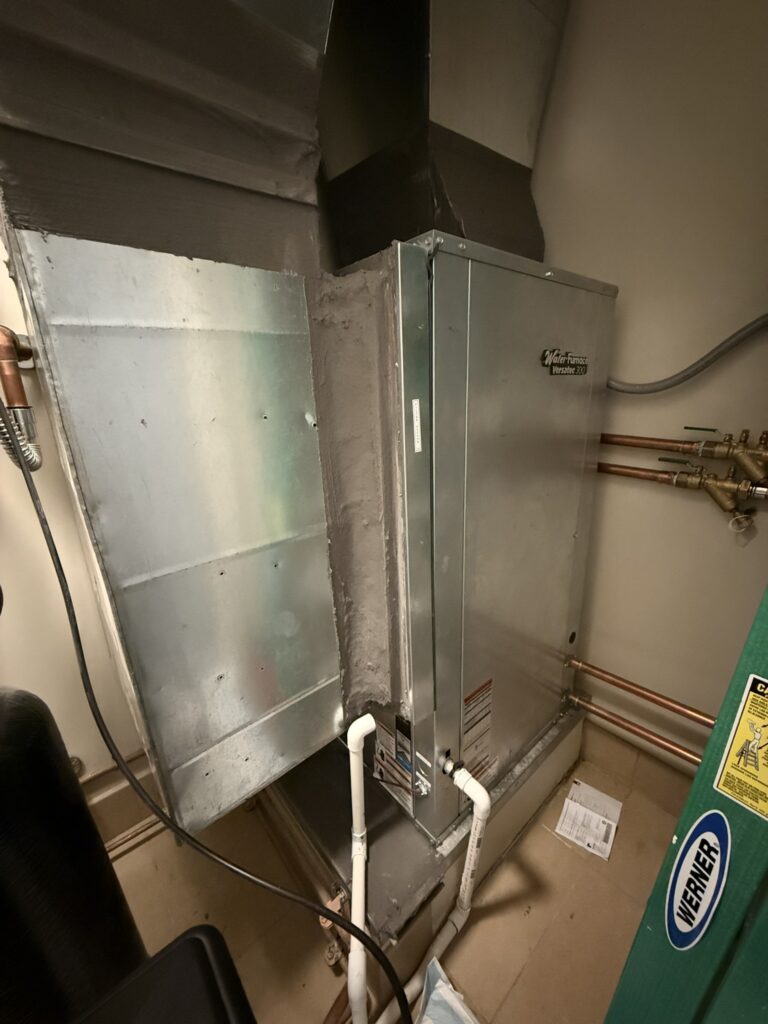
Photos from our own commercial projects — equipment we installed, in buildings we serviced.
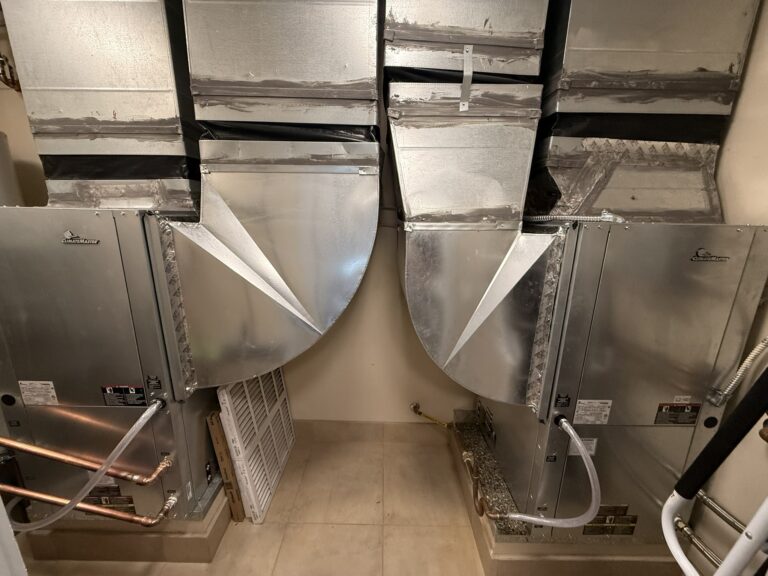
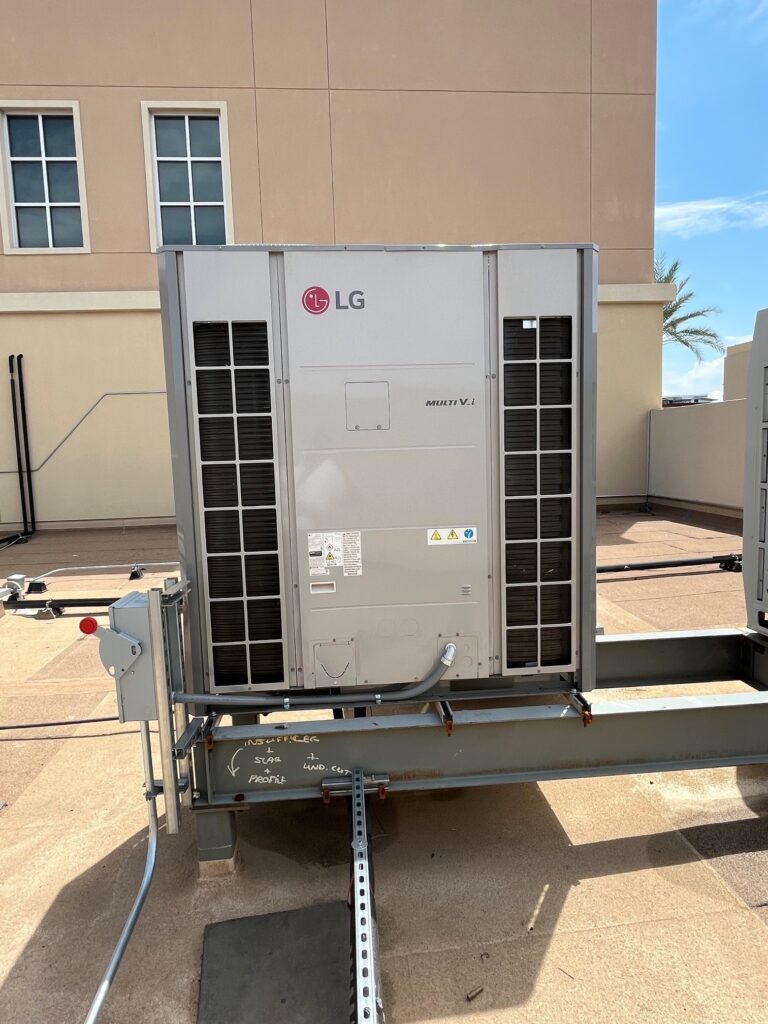
Veterinary clinic HVAC in Phoenix carries a weight that ordinary commercial cooling never does: your patients wear fur coats, cannot tell anyone they are overheating, and cool themselves mainly by panting — which stops working when the air itself is hot. Yeti Pros is a veteran-owned commercial HVAC company supporting veterinary practices, animal hospitals, boarding facilities, and grooming operations across the whole Phoenix metro, licensed through the Arizona Registrar of Contractors under ROC #363372 · ROC #363423. Any hour, any day: (520) 556-8929.
Animals can’t sweat it out
When a building gets warm, humans get uncomfortable; dogs and cats get into physiological trouble. Panting is a far less efficient cooling mechanism than sweating, and it degrades quickly as air temperature climbs. In a Phoenix July, a kennel room that loses cooling does not drift toward unpleasant — it climbs toward dangerous, fast, in a space full of patients who cannot open a door, drink more water on their own, or tell a technician something is wrong.
Double-coated breeds and flat-faced breeds have even less margin.
Seniors, overweight animals, and patients already stressed or recovering from anesthesia have even less margin.
That single fact reorganizes how a veterinary facility should think about HVAC: less like a comfort system, more like life-safety equipment that happens to also cool the lobby.
Kennels and boarding: where a failure is an emergency
Boarding areas concentrate the risk. Dozens of animals adding body heat to one room, often overnight with reduced or no staffing, at peak occupancy during exactly the weeks the equipment is working hardest — summer holidays, when Valley families travel and the kennels fill. A compressor that quits at 9 p.m. on the Friday of a July Fourth weekend is not a Monday-morning ticket.
We treat kennel-down calls as the animal-welfare emergencies they are: our emergency line reaches a human being at 2 a.m., not a voicemail, and a facility with live animals in a warming room gets urgency to match.
Proactive Planning:
Walking your facility for likely single points of failure.
Discussing temperature alarms and remote monitoring for unstaffed hours.
Planning spare capacity so one dead unit does not become one hot building.
Odor control is really air control
Clients judge a veterinary clinic with their nose within the first five seconds, and no amount of cleaning product outruns bad airflow.
Odor is Ventilation Math:
How many air changes the kennel and ward areas actually get.
Where exhaust is pulled from.
Whether animal areas run slightly negative to the lobby so air flows toward the smell instead of from it.
Whether filters and coils have surrendered to a year of hair and dander.
We correct odor problems at that mechanical level — exhaust fan repair and additions, make-up air balance, filtration upgrades, and duct corrections — so the lobby smells like a well-run practice, which is precisely what pet owners are paying attention to while they wait.
Zone separation: surgery, kennels, and lobby have different jobs
One system averaging one temperature across a veterinary building serves nobody well. Different areas have different HVAC needs:
Wants stable temperature and clean, well-filtered supply air for patients under anesthesia.
Want aggressive air changes and equipment rugged enough to run hard.
Wants human comfort and calm, with cat and dog areas ideally separated in the airflow as well as the floor plan.
Need dedicated exhaust and airflow direction into the room, so what is in there stays in there. We set up sound directional airflow and dedicated exhaust informed by healthcare ventilation guidelines; we do not claim to build hospital-grade containment. For most clinics, honest fundamentals executed well are the difference that matters.
Zoning retrofits, ductless heads for problem rooms, and control upgrades are everyday work for our commercial HVAC team.
Grooming areas: humidity, heat, and hair
A grooming operation is a small industrial process with unique HVAC challenges:
Bathing tubs raising humidity taxes cooling equipment sized for dry desert air.
High-velocity dryers throwing heat.
A continuous cloud of hair heading straight for every filter and coil in the room, choking filtration on a schedule national maintenance templates never anticipate.
These issues manifest as musty smells, sweating supply grilles, and systems that mysteriously lose capacity by afternoon.
Our Solutions for Grooming Spaces:
- Accelerated filter cadences
- Keep coils and condensate systems clean and moving
- Verify the ventilation can actually remove the moisture the tubs and dryers create
Veterinary clinic HVAC on a Phoenix duty cycle
Most Valley veterinary practices operate out of converted retail suites, standalone clinics, and strip-plaza spaces cooled by package rooftop units — equipment that Phoenix runs from March into November and punishes with rooftop temperatures well beyond ambient. Monsoon dust packs condensers in an afternoon, and a marginal unit that limped through 105° in May will not survive 115° in July with a full kennel underneath it.
Pre-Summer Readiness is Key:
Rooftop unit inspection and repair.
Coil cleaning.
Electrical measurements that expose weakening components while the fix is still a scheduled appointment.
Our commercial maintenance visits are built around exactly that measured, documented approach.
The cold side of the clinic
Veterinary medicine has its own cold chain:
- Vaccines
- Insulin
- Certain medications
- Lab samples
These items live in refrigerators that quietly depend on the room around them staying cool. We service commercial refrigeration and keep the back rooms and storage closets that house it from becoming ovens in August; a fridge fighting a 95° room runs constantly and dies young. Your storage protocols and temperature logs stay in your hands — our job is making sure the equipment never gives them anything alarming to say.
A maintenance program with animal facilities baked in
Fur changes the math on everything for veterinary PM programs:
Requires shorter filter intervals than an office would ever tolerate.
Requires coil attention on a real schedule.
Requires electrical testing that catches July failures back in April.
Our written maintenance agreement includes:
- Priority emergency dispatch attached — which, for a facility that boards animals overnight, is the single most valuable clause in the document.
- Written flat-rate pricing is agreed before repairs begin.
- We tell you the trip fee in advance and it comes off the repair invoice.
- Refrigerant work carries EPA 608 certification.
- Every job is performed to at least the Arizona ROC’s Minimum Workmanship Standards.
Yeti Pros is veteran-owned, and the mission-first habit shows most on the calls where an animal’s safety is on the clock. A lot of veterinary staff served or grew up in military families — the 10% military, veteran & first responder discount is ours to offer them on the residential side, for the homes they go back to after close.
Questions Phoenix veterinary practices bring us
Our kennel cooling failed overnight. How do you handle that call?
As an emergency with animals at stake, not a queue ticket. A person answers, we triage by phone — including what you can do immediately — and dispatch with urgency. We will not promise response minutes we cannot control in July, but a warming kennel is treated like the welfare situation it is.
Can you add cooling capacity to our boarding area?
Yes. We calculate the actual heat load — animal count, body heat, sun exposure, equipment — rather than guessing from square footage, then quote options in writing: added dedicated equipment, zoning changes, or replacing an undersized unit outright.
How do we stop the lobby from smelling like the kennel?
Mechanically, not cosmetically: adequate exhaust from animal areas, air-change rates that match the load, pressure relationships that pull air away from the lobby instead of toward it, and clean filters and coils. We evaluate the airflow, then fix what the measurements show.
What should an isolation room have, honestly?
Dedicated exhaust, airflow direction into the room, and no shared return path with the rest of the clinic — fundamentals executed properly. We are straightforward that this is sound directional airflow, not certified laboratory containment, and for a general practice that is normally what is needed.
Should our boarding facility have temperature alarms?
For unstaffed overnight hours, monitoring is worth serious consideration — a failure at midnight discovered at 6 a.m. is the scenario alarms exist for. We are glad to talk through monitoring and alarm options alongside the mechanical work, so detection and response are planned together.
How often does a vet clinic need HVAC service in Phoenix?
The dust and the runtime here argue for quarterly on the equipment itself, but hair load usually demands filter attention more often than that — grooming and boarding areas especially. We set cadence by what your building sheds, not by a national brochure.
Can you work without disrupting appointments or scaring the patients?
Yes — we schedule around surgery blocks and busy hours, keep noisy rooftop work to windows you approve, and coordinate with your practice manager so a maintenance visit never turns into a lobby full of anxious dogs and a technician on a ladder.
We run both a clinic and a boarding building. One agreement or two?
One agreement, scoped per building. The clinic gets clinical-space attention; the boarding side gets kennel-grade filter cadence, exhaust checks, and pre-summer verification. You get a single point of contact, one consolidated report, and priority status covering both roofs.
The animals in your building are counting on the equipment on your roof. Call (520) 556-8929 — emergencies now, prevention scheduled, anywhere in the Phoenix metro.
Permits and inspections
Most repairs are ordinary service work; bigger scopes can involve city permitting. We perform our work to code, pull the permits our scope requires, and put what we did in writing.
What's covered
Workmanship is covered for two full years, in writing, and repair parts carry a 1-year manufacturer parts warranty — we document installs and repairs so those claims stay simple to make
HVAC for Veterinary Clinics in Phoenix, city by city.
Every city below has its own local page for this industry — local FAQs, utility territory, and dispatch reality included.
Why a licensed HVAC contractor matters.
Commercial HVAC, industry by industry.
Every major brand, serviced and installed.





Phoenix metro: Most days a tech is already working somewhere in the Valley, so same-day appointments happen when the schedule allows. After-hours emergencies are dispatched when a licensed tech is available — a real person answers and tells you the ETA on the call.
Call (520) 556-8929Request an estimate.
No pressure, no door knockers. We look at the HVAC system, tell you what it needs (and what it doesn’t), and put the number in writing.