
Phoenix Metro
HVAC for Schools — Phoenix Metro.
- (520) 556-8929
- Serving the entire Phoenix metro — we come to you
- Office: Mon–Fri 8:00 AM – 5:00 PM · 24/7 emergency service
- 2-year workmanship warranty · 1-year parts warranty
- Veteran-owned & operated · residential + commercial
- 23 five-star Google reviews
Commercial jobs we have documented.
Photos from our own commercial projects — equipment we installed, in buildings we serviced.
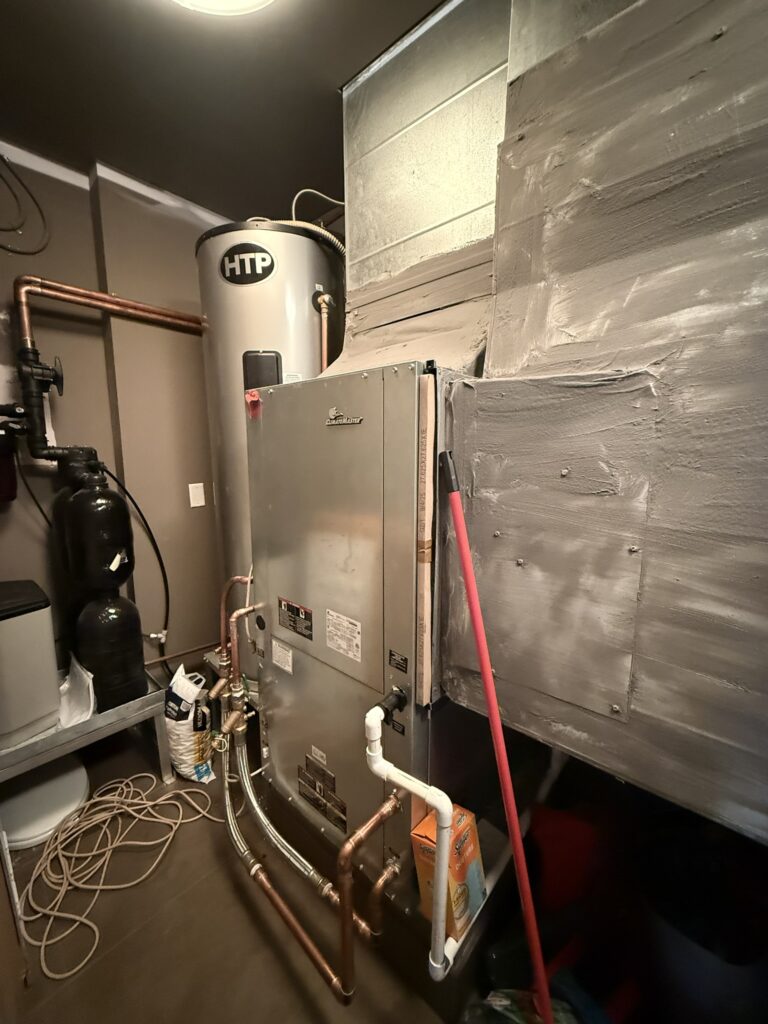
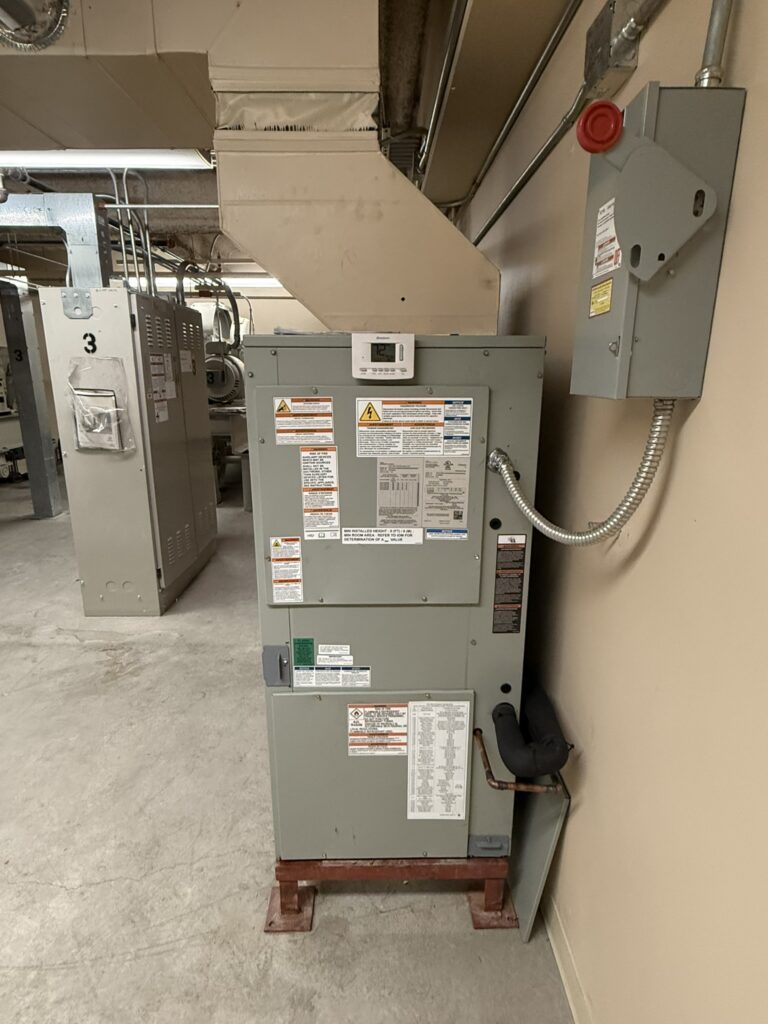
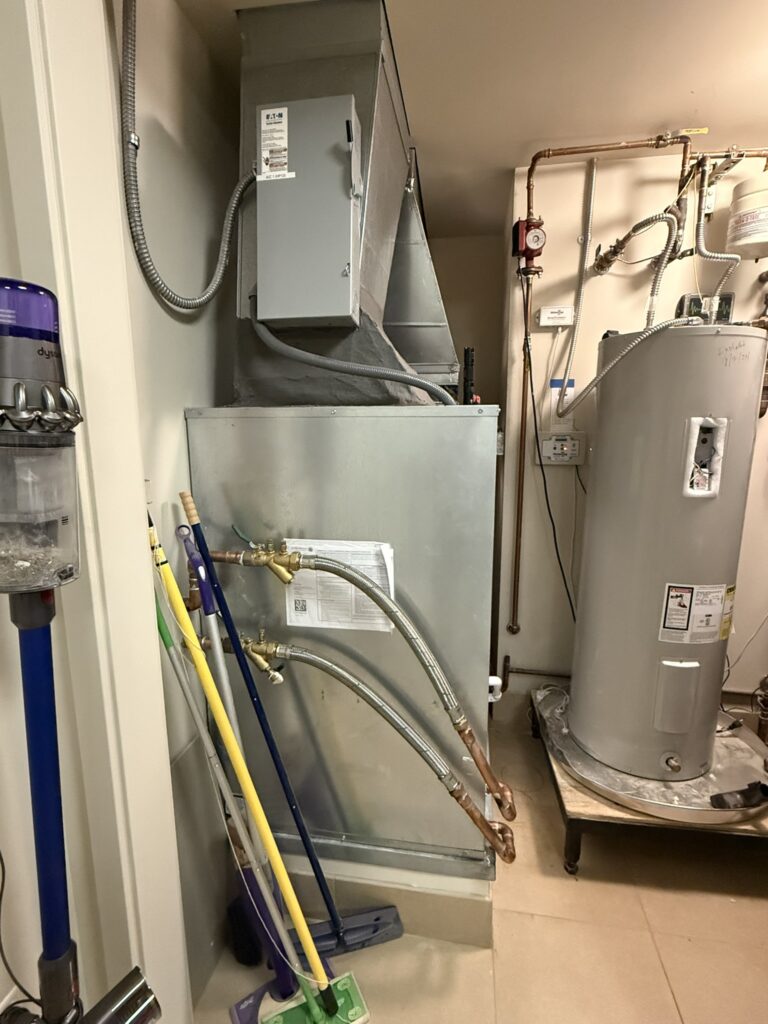
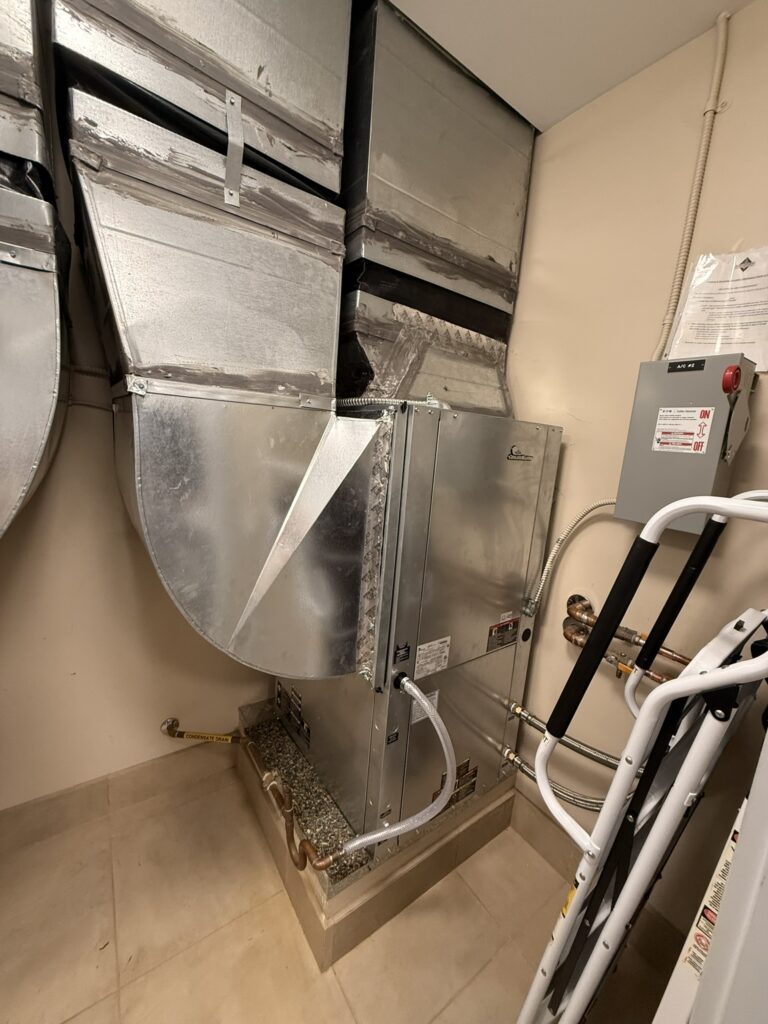
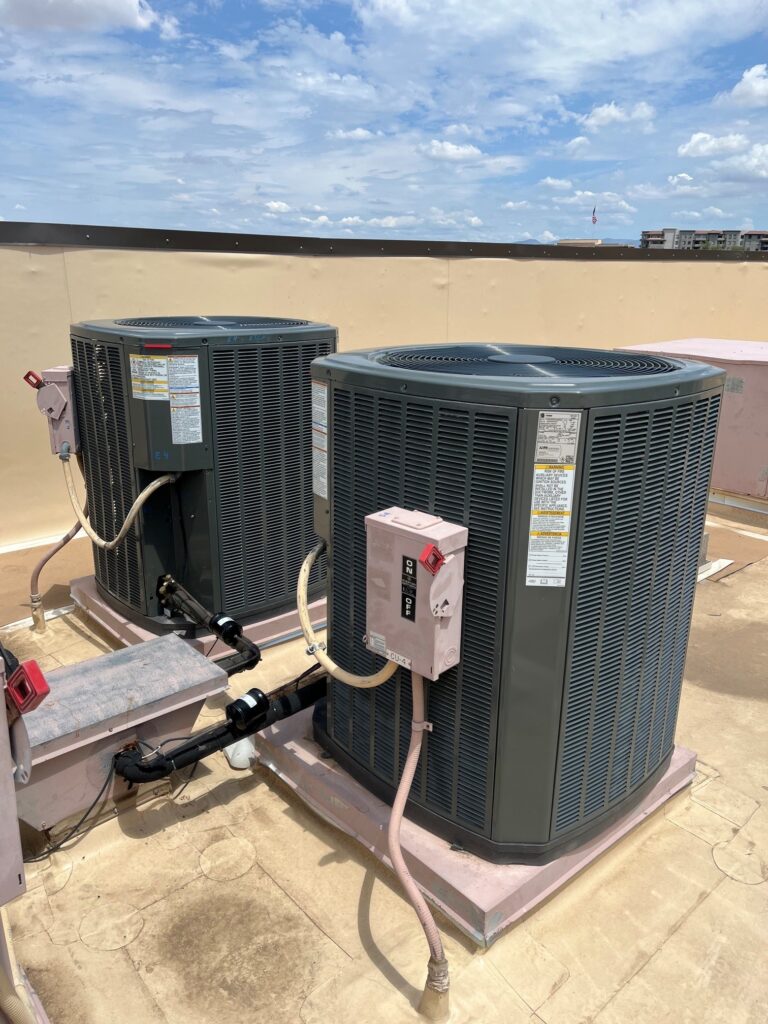
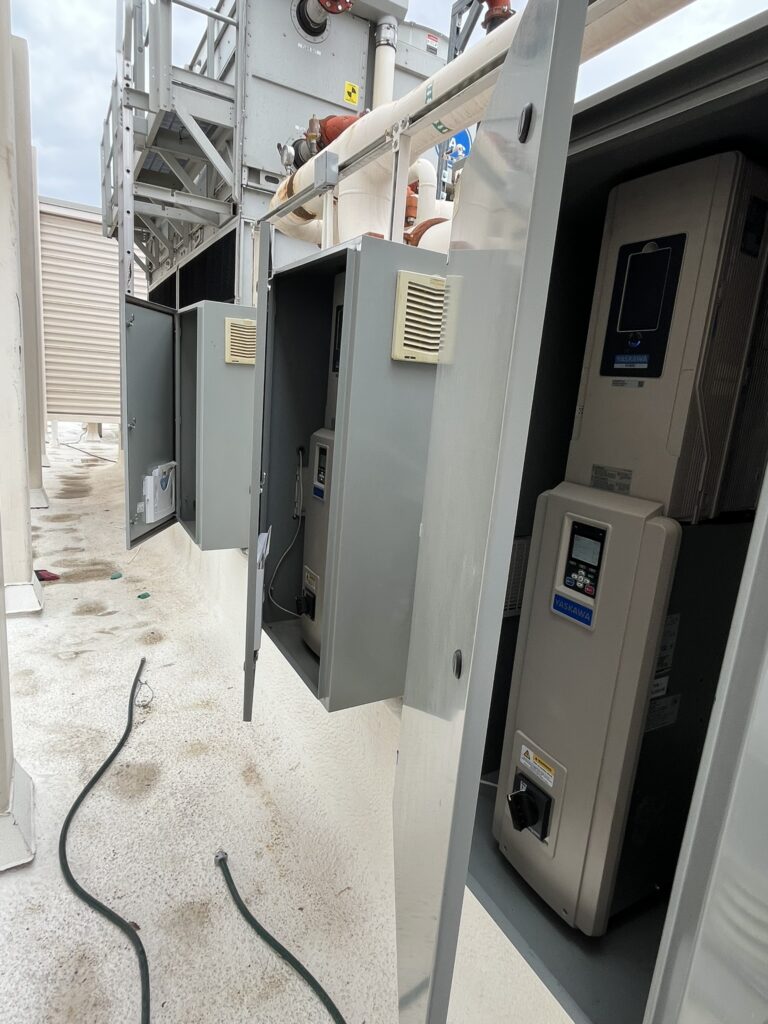
School HVAC service has to respect bell schedules, occupied classrooms, portable buildings, district approvals, and summer work windows. The job is not just getting cold air from a rooftop unit. In Phoenix and the Valley, campuses need documented HVAC work that keeps learning spaces usable, gives administrators clear records, and plans around the calendar instead of fighting it.
The HVAC Reality For Schools In The Valley
Schools carry a different HVAC burden than a normal commercial building. A campus can have classrooms, offices, kitchens, gyms, libraries, IT rooms, nurse areas, multipurpose rooms, and portables, each with different loads and schedules.
One failed unit may affect a single office. Another may take out a full classroom wing or a portable where there is no comfortable fallback.
Across Phoenix and the Valley, rooftop package units dominate school HVAC. Many campuses operate fleets of RTUs with different ages, brands, capacities, control setups, and maintenance histories.
That creates a management problem as much as a mechanical one. The facility manager or administrator needs to know which unit failed, what it serves, whether the issue is urgent, and what can be planned for a break.
Portable classrooms add another layer. They often depend on dedicated packaged units or split systems with exposed conditions, heavy runtime, and limited tolerance for weak airflow.
Doors open frequently. Occupancy changes fast. A unit that is only slightly underperforming can become a full classroom complaint before lunch.
For younger students, teachers, and support staff, cooling is not a luxury item during most of the academic year.
Summer break is the major replacement and correction window, but it is not infinite.
Procurement, approvals, equipment lead times, crane scheduling, roofing coordination, and campus access all compete for the same calendar.
That is why documentation matters. Good HVAC service gives the district or school leadership a clear record of current failures, likely follow-up needs, and which units deserve priority before students return.
The operating pattern is also unusual. A classroom can sit empty for a prep period, then fill with students and electronics at once.
A library may need steady comfort for longer blocks. A gym may have high sensible load during assemblies or activities, then drop back. Kitchens and multipurpose rooms can add heat, odors, and scheduling pressure. IT and nurse areas may have less tolerance for downtime than a storage room.
The HVAC system has to serve those different realities while facility staff are also managing safety, access, instruction, and approvals.
Contracts, Cost Honesty, And Warranty Facts
Commercial school HVAC pricing depends on roof access, unit count, equipment age, parts availability, electrical condition, controls, refrigeration work, occupied scheduling, and whether the call is a single repair or a coordinated campus scope.
We handle that with an in-person look and a written flat-rate quote. The diagnostic/service-call fee is disclosed at booking and credited toward the repair.
Maintenance agreements can be useful for campuses because they turn a scattered list of complaints into documented equipment history.
Our commercial maintenance contracts can be framed around RTU fleets, portables, seasonal inspections, coil cleaning needs, drain checks, belts, filters, and written findings for approval files.
For schools, that history is often as important as the visit itself. When the same room is hot every afternoon, the record can show whether filters were changed, coils were checked, drains were cleared, motors were inspected, and controls were verified. When several RTUs are aging at the same time, the record helps leadership prioritize by served area, occupied impact, repeated failures, and timing. That is more useful than a pile of unrelated emergency notes after the campus is already under heat pressure.
Company Standards
Yeti Pros is veteran-owned & operated. AZ ROC #363372 · ROC #363423. Our work is held to the AZ ROC Minimum Workmanship Standards.
Warranty & Discounts
We provide a 2-YEAR written workmanship warranty, and repair parts carry a 1-YEAR manufacturer parts warranty. Financing is available. We also offer a 10% military, veteran & first responder discount.
How We Run Service For Schools
Yeti Pros is a veteran-owned & operated commercial HVAC contractor serving school and campus facilities across Phoenix and the Valley. We are a service-area business with no street address, so we come to you. Office hours are Mon-Fri 8-5, with 24/7 emergency service when a cooling failure cannot wait.
Campus work starts with coordination. We need to know which building, which unit, which room or zone is affected, and when access is possible without disrupting instruction.
Some work can happen on the roof while class continues. Other checks require interior access for thermostats, ceiling returns, filters, electrical panels, or zone verification.
We keep the scope practical and documented so the responsible manager has usable information afterward.
Before a technician starts, the useful details are specific: room numbers, portable numbers, teacher complaints, time of day, whether adjacent spaces are normal, and whether the unit has tripped, leaked, or stopped repeatedly.
On a campus, the served-area map is not always obvious from the ground. We may need to confirm which RTU, thermostat, return, or disconnect belongs to the complaint area before repair decisions make sense.
That step prevents a school from approving work on the wrong unit or treating a zone issue as a full equipment failure.
Emergency service focuses first on getting the affected space stable or clearly defining why that cannot happen immediately.
Common findings include failed capacitors, contactors, fan motors, belts, controls, compressors, clogged coils, condensate issues, economizer faults, and airflow restrictions.
For rooftop equipment, our commercial RTU repair work is built around diagnosis, written findings, and a repair scope that administrators can review without translating technician shorthand.
For planned maintenance, schools benefit from grouping work by campus zones and calendar windows.
A spring inspection before heavy heat can identify weak units before summer school or return-to-campus deadlines. A post-monsoon check can catch coil loading, electrical stress, and drain problems.
Portables may need closer attention because they often carry direct classroom impact and less mechanical redundancy.
We do not pretend every repair fits neatly into one visit. Schools often need approval paths. Parts may need ordering. Roof access may need scheduling.
We document what we find, provide flat-rate written quotes after an in-person look, and help the facility lead separate immediate repair needs from work that can be timed with breaks, board cycles, or district procurement steps.
We also respect how campuses operate during the day. Roof access may require check-in, escort rules, locked gates, ladder placement, or avoiding student traffic. Interior checks may have to wait for passing periods, lunch, planning periods, or after dismissal.
If work creates noise, ceiling access, electrical interruption, or a temporary loss of cooling, we identify that clearly so the school can decide whether to proceed, delay, or shift the room schedule.
The goal is not only to repair equipment. It is to make the work manageable inside a school day.
Decision Points For School HVAC
On a campus, the question is rarely just whether a unit is broken. The question is what the failure affects, how soon that space is occupied, and whether the repair can be handled without creating a bigger disruption. This decision table reflects how school HVAC calls usually get triaged.
| Symptom Or Situation | What It Usually Means | Priority |
|---|---|---|
| One classroom is hot while adjacent rooms are normal | Zone airflow, thermostat, damper, or a dedicated unit may be at fault | Confirm served area and diagnose before assuming full RTU failure |
| Portable classroom will not cool | Dedicated unit may have component, airflow, coil, or electrical failure | High priority during occupancy because there is often no backup zone |
| Multiple rooms served by one RTU are warm | RTU cooling, blower, controls, or refrigerant circuit issue may be present | Urgent when classes are scheduled in the affected area |
| Unit trips breaker or stops repeatedly | Electrical fault, motor failure, compressor issue, or control problem may exist | Do not keep resetting without diagnosis and written findings |
| Summer project list keeps growing | Aging fleet, deferred coil cleaning, failing components, or capacity issues may be stacking up | Prioritize by occupied impact, equipment condition, and lead time |
Phoenix-Metro Conditions That Matter For Schools
School RTUs in Phoenix and the Valley work in harsh roof conditions. Direct summer sun, 115 degree roof surfaces, monsoon dust, and long cooling seasons punish condenser coils, motors, belts, contactors, and capacitors. A campus can look quiet from the ground while the mechanical equipment is operating at the edge of failure.
Monsoon dust is especially hard on school campuses because roofs may hold many units, and each unit may serve a high-occupancy room. Dust-loaded condenser coils reduce heat rejection.
Dirty filters and return restrictions reduce airflow. Condensate drains can clog during the season when humidity and dust both increase.
The result is not just less comfort. It is more nuisance calls, more classroom disruption, and more pressure on facilities staff.
The heat pattern matters too. A unit may cool acceptably during morning arrival, then fail to recover after lunch when the roof is hotter, the room is occupied, and doors have opened repeatedly.
A marginal capacitor, weak condenser fan, dirty coil, or slipping belt can hide during lighter conditions and show up when the classroom is full.
That is why a complaint log with time of day and room number is useful. It points service toward duty cycle, equipment behavior, and actual occupied load instead of a single static temperature reading.
District and private school budgets also work on cycles. An emergency repair in the first month of school lands differently than a planned correction during summer break. We cannot remove approval requirements, but we can make the HVAC facts easier to act on. Written scopes, equipment notes, and repair recommendations help administrators distinguish a failed part from an aging unit that needs a bigger plan.
Portable classrooms deserve special attention in the Phoenix metro. They are often farther from central plant oversight, more exposed to door traffic, and more dependent on one piece of equipment. If that unit fails, the room can become unusable quickly.
Routine checks before peak heat and after dust-heavy weather reduce surprises and give the school a cleaner record of what has been maintained.
Summer and break work should be planned with the same discipline as instruction. Roofers, electricians, custodial crews, technology teams, and other vendors may all need access during the same short window.
HVAC work that involves heavier repairs, replacement planning, crane coordination, or longer shutdowns should be identified early enough that access, parts, and approvals do not collide with teacher return dates.
The more complete the equipment record is before peak heat, the less guesswork the campus carries into the school year.
Straight Answers
Can you service a full campus RTU fleet?
Yes. We can inspect, diagnose, repair, and document multiple rooftop units across a campus. For larger scopes, we organize findings by unit and served area so the facility manager or administrator can decide what needs immediate attention and what can be scheduled into a planned work window.
Do you work on portable classroom HVAC?
Yes. Portable classrooms are common school HVAC calls in Phoenix and the Valley. We check the dedicated equipment, thermostat, airflow, filters, coils, drains, and electrical components that are accessible during service. Because a portable often has no practical backup, no-cooling calls during occupancy usually move up the priority list.
Can you plan work during summer break?
Yes. Summer is often the cleanest window for replacement planning, heavier repairs, crane coordination, roof access, and correction work that would disrupt students. The earlier the equipment is inspected and documented, the easier it is to align approvals, parts, scheduling, and campus access before the next school year.
How does a school book service?
Call (520) 556-8929 or use contact. We come to you, disclose the diagnostic/service-call fee at booking, inspect the affected equipment, document the findings, and provide a flat-rate written quote after the in-person look. For urgent failures, 24/7 emergency service is available.
Permits and inspections
Most repairs are ordinary service work; bigger scopes can involve city permitting. We perform our work to code, pull the permits our scope requires, and put what we did in writing.
What's covered
Workmanship is covered for two full years, in writing, and repair parts carry a 1-year manufacturer parts warranty — we document installs and repairs so those claims stay simple to make
HVAC for Schools — Phoenix Metro, city by city.
Every city below has its own local page for this industry — local FAQs, utility territory, and dispatch reality included.
Why a licensed HVAC contractor matters.
Commercial HVAC, industry by industry.
Every major brand, serviced and installed.




Phoenix metro: Most days a tech is already working somewhere in the Valley, so same-day appointments happen when the schedule allows. After-hours emergencies are dispatched when a licensed tech is available — a real person answers and tells you the ETA on the call.
Call (520) 556-8929Request an estimate.
No pressure, no door knockers. We look at the HVAC system, tell you what it needs (and what it doesn’t), and put the number in writing.