
Phoenix Metro
HVAC for Cleanrooms — Phoenix Metro.
- (520) 556-8929
- Serving the entire Phoenix metro — we come to you
- Office: Mon–Fri 8:00 AM – 5:00 PM · 24/7 emergency service
- 2-year workmanship warranty · 1-year parts warranty
- Veteran-owned & operated · residential + commercial
- 23 five-star Google reviews
Commercial jobs we have documented.
Photos from our own commercial projects — equipment we installed, in buildings we serviced.
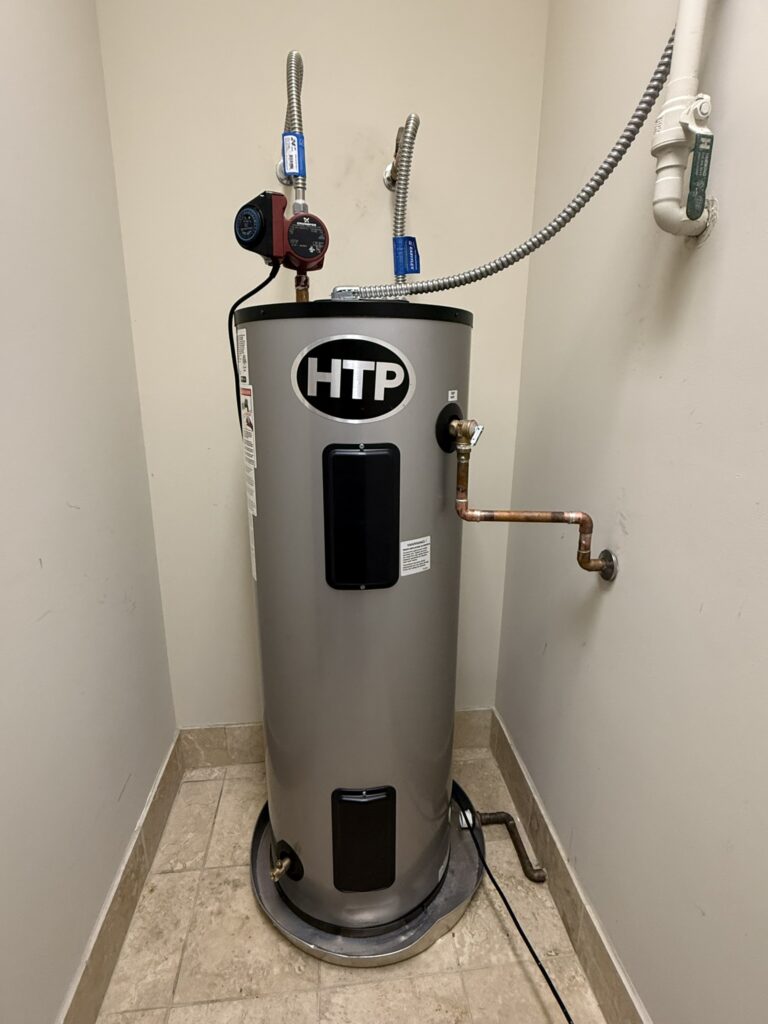
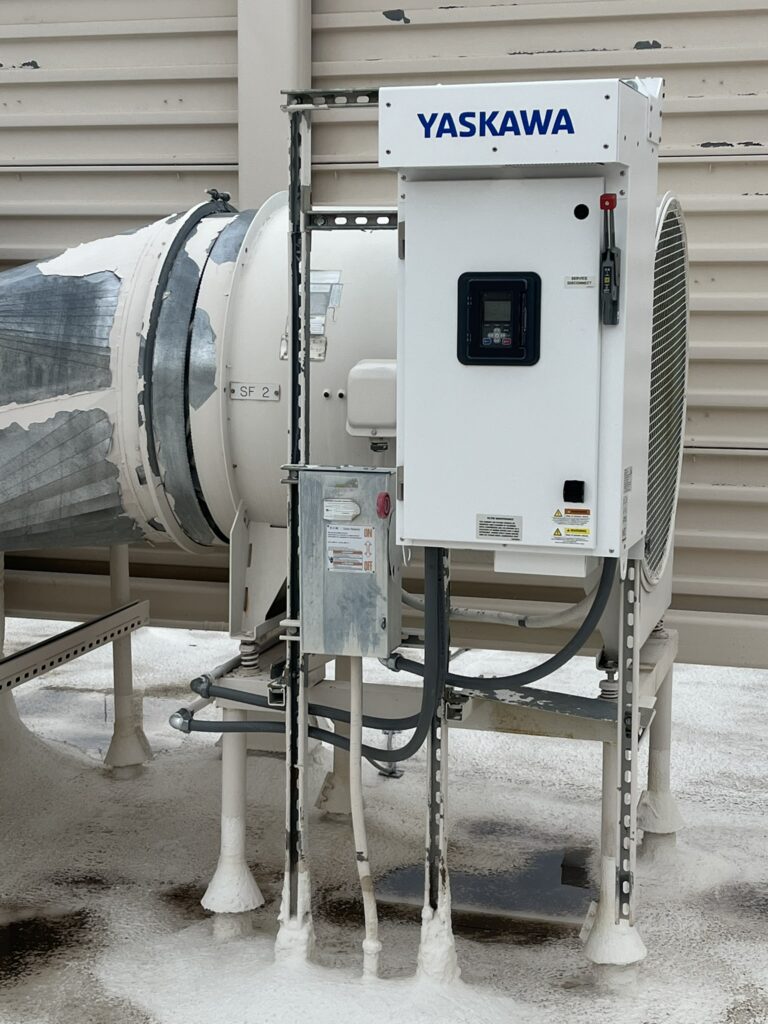
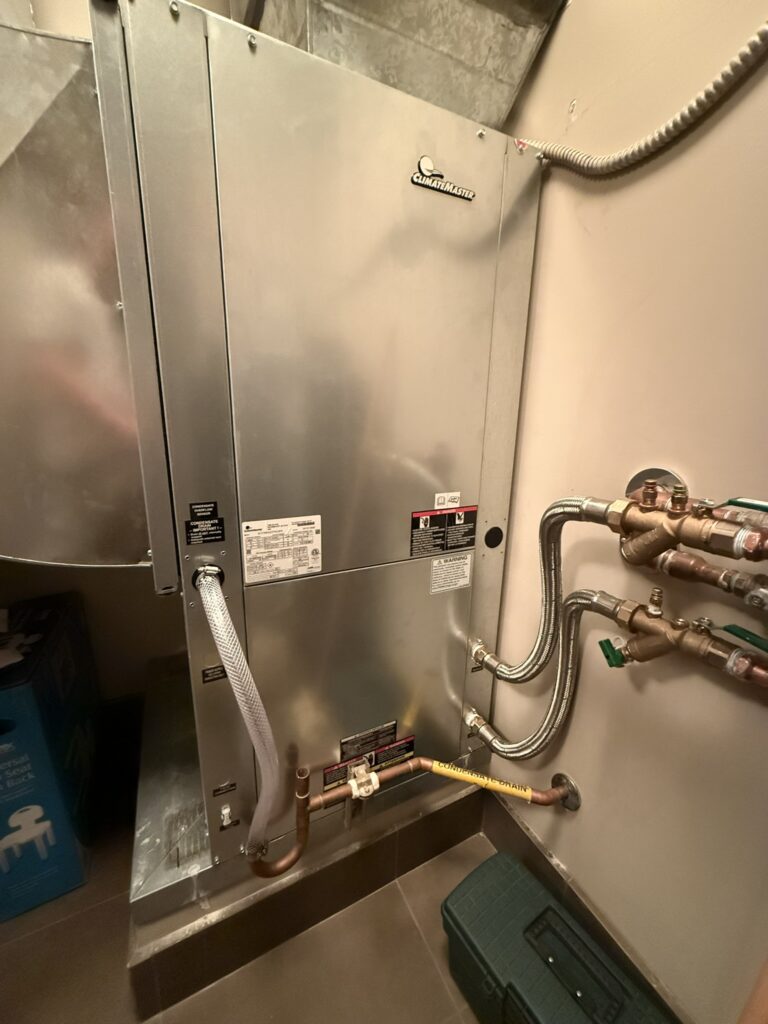
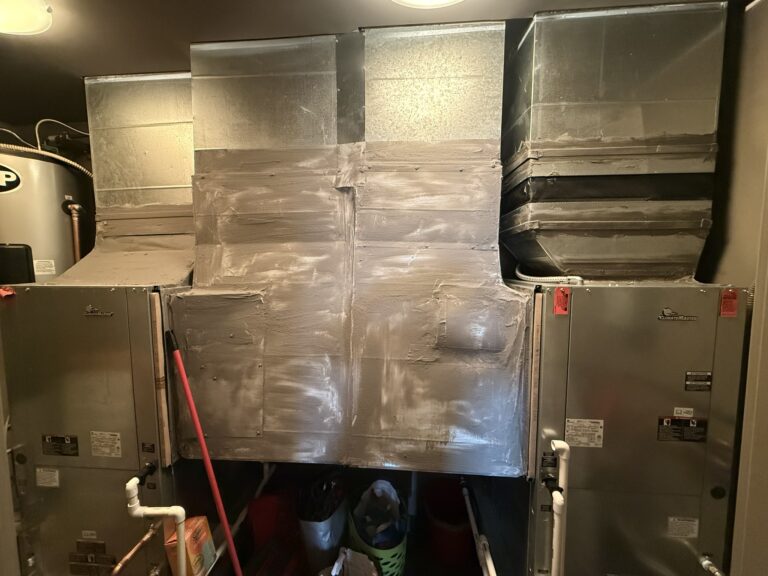
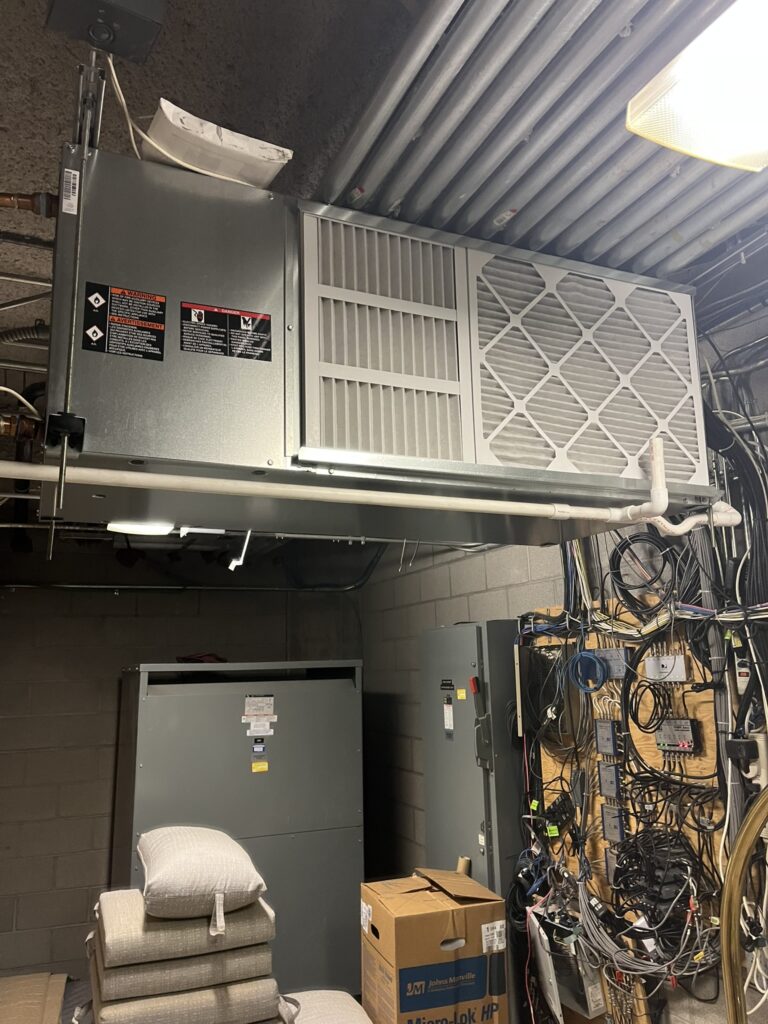
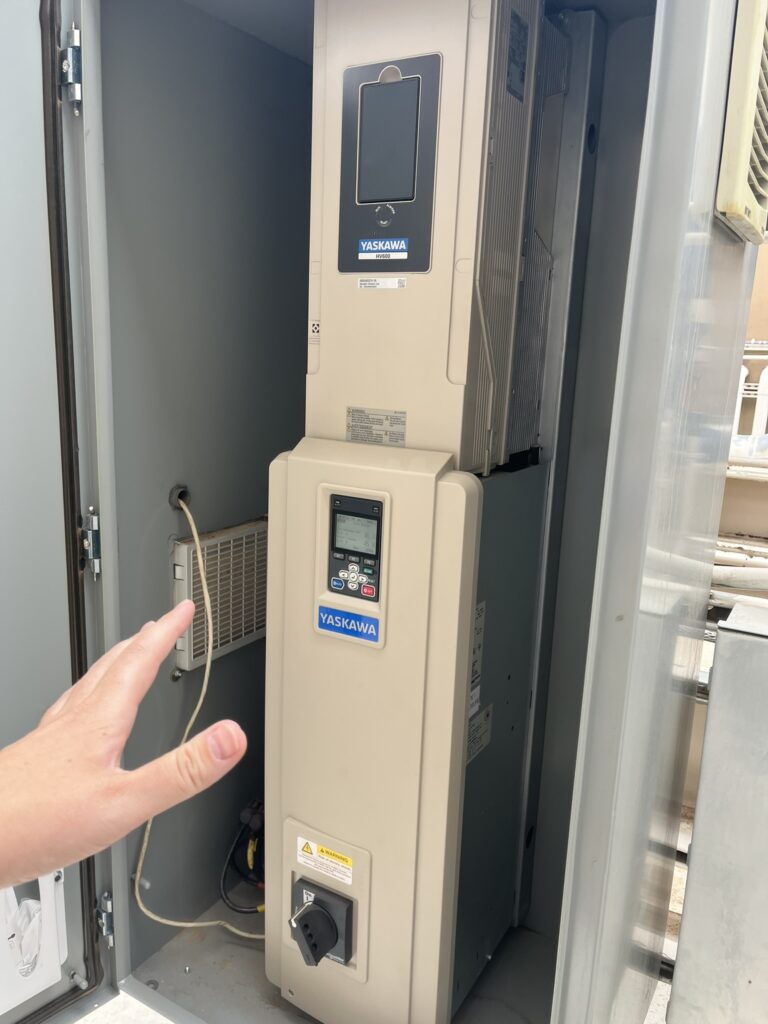
Cleanroom HVAC service needs a different approach because comfort is only one part of the system. Filtration, pressure relationships, temperature stability, equipment heat, documentation, and coordination with the site’s controls or validation team all matter. In Phoenix, the outside load makes weak HVAC support show up fast.
The HVAC Reality For Cleanroom-Adjacent Facilities In The Valley
Cleanrooms and controlled environments put HVAC into a support role with tighter consequences than ordinary commercial comfort. HVAC work has to be careful because a small change in airflow or a failed component can affect more than occupant comfort.
The facility may be managing:
- Filtration.
- Pressure cascades.
- Temperature limits.
- Humidity expectations.
- Gowning areas.
- Support labs.
- Process spaces.
- Storage rooms.
- Adjacent offices.
What We Do
We service, diagnose, repair, maintain, and document HVAC findings. When filtration, pressure, or certification requirements are governed by the facility’s quality program, we coordinate our work with the responsible site contact and keep our documentation focused on HVAC scope.
What We Don’t Do
Yeti Pros supports HVAC equipment serving and adjacent to cleanroom environments, but we do not certify cleanrooms, issue process compliance rulings, or replace the role of a qualified validation provider. That boundary matters.
In Phoenix and the Valley, controlled spaces often sit near manufacturing, electronics, medical device, aerospace, semiconductor-adjacent, laboratory, or precision assembly operations. The chip-corridor influence has raised expectations for clean, documented work around HVAC systems.
Even when the room itself is not a high-spec fabrication space, the people responsible for it still need clear records:
- What unit was inspected.
- What component failed.
- What was replaced.
- What readings were observed.
- What follow-up is recommended.
The equipment mix can include:
- RTUs
- Split systems
- Fan coils
- Make-up air
- Exhaust
- Filtration housings
- Controls
- Reheat
- Humidification or dehumidification components
- Supporting systems outside the cleanroom envelope
Rooftop units still face the same local punishment: 115 degree roofs, monsoon dust, long cooling seasons, and coils that lose performance when they are dirty. The difference is that a comfort complaint may also involve pressure drift, alarms, process interruption, or quality documentation.
That is why cleanroom HVAC service cannot be handled like a quick thermostat call. The technician needs to understand:
What the unit serves.
What areas are sensitive.
Who can authorize access.
Whether shutdowns are allowed.
What documentation the facility needs from the service visit.
Contracts And Cost Honesty
We inspect first, disclose the diagnostic or service-call fee at booking, credit it toward the repair, and provide a flat-rate written quote after an in-person look.
Cleanroom HVAC pricing depends on:
Equipment access.
Required coordination.
Roof conditions.
Filtration components.
Controls.
Parts availability.
Refrigerant type.
Documentation needs.
After-hours timing.
Whether production scheduling affects the work window.
For controlled environments, maintenance is often about reducing surprises and strengthening records. For broader service support, see commercial HVAC maintenance.
Our commercial maintenance contracts can include scheduled inspection of:
- HVAC equipment.
- Filter and coil conditions.
- Drains.
- Electrical components.
- Belts.
- Motors.
- Documented findings.
Yeti Pros is veteran-owned and operated, AZ ROC #363372 · ROC #363423.
Workmanship is backed by a 2-YEAR written workmanship warranty.
Repair parts carry a 1-YEAR manufacturer parts warranty.
Work is held to the AZ ROC Minimum Workmanship Standards.
Financing is available, and we offer a 10% military, veteran & first responder discount.
We come to you across Phoenix and the Valley. Use contact or call (520) 556-8929.
How We Run Service For Cleanrooms
We start by identifying the HVAC boundary. Those questions keep the service call pointed at the actual problem.
Which unit or component serves the cleanroom, gowning area, support space, lab, office, or storage area?
What symptoms are being reported: temperature, humidity, pressure, alarm, airflow, noise, water, or loss of cooling?
Who on site owns the operating criteria?
Access and scheduling matter. We schedule with that reality in mind and are direct when a repair cannot be properly diagnosed without runtime, access, or a controlled operating condition.
- Some spaces require escorting.
- Some spaces require gowning.
- Some spaces require production coordination.
- Some spaces require shutdown windows.
- Some work can be performed at the RTU or mechanical area without entering the controlled room.
- Other work requires site coordination because airflow, pressure, or filtration could be affected.
Our office hours are Mon-Fri 8-5, and 24/7 emergency service is available. If the issue involves certification, process validation, or formal cleanroom classification, we document the HVAC findings and coordinate with the site’s responsible party rather than claiming authority we do not have.
Emergency response may be appropriate when:
Cooling is lost.
An RTU is down.
A critical support space is overheating.
Condensate is threatening the area.
A mechanical fault is affecting production.
The diagnostic or service-call fee is disclosed at booking and credited toward the repair. After an in-person look, we provide a flat-rate written quote. Scopes and findings are documented in writing. For cleanroom-adjacent work, that written record is central:
Equipment ID.
Observed condition.
Recommended repair.
Replaced components.
Follow-up items all help the facility manager, quality lead, or maintenance manager keep the service history straight.
Preventive maintenance is also more disciplined in this environment. A maintenance visit does not certify the room. It supports the HVAC equipment so the facility’s own quality and validation processes are not constantly reacting to mechanical surprises.
Components that should be inspected before they become operating events:
- Filters
- Belts
- Motors
- Coils
- Drains
- Electrical components
- Controls
- Airflow-related defects
Cleanroom HVAC Decision Points
Cleanroom HVAC calls require triage that respects both the mechanical system and the site’s operating controls. Diagnostics should be coordinated with the person who understands the room requirements.
The same symptom can come from:
- A simple component failure.
- A dirty coil.
- A loaded filter.
- A controls issue.
- A process-side change.
| Symptom Or Situation | What It Usually Means | Priority |
|---|---|---|
| Temperature drift in a controlled space | Cooling capacity, airflow, controls, reheat, filtration pressure drop, or heat load may have changed | High when production or quality records are affected |
| Pressure relationship concern | Airflow balance, filter loading, exhaust, make-up air, door use, or controls may need review with the site team | High when alarms or room status are involved |
| RTU serving support area is short cycling | Controls, refrigerant circuit, airflow, dirty coils, electrical components, or oversized response may be involved | Medium to high depending on what the area supports |
| Condensate or water near sensitive areas | Drain blockage, pan issue, insulation defect, coil condition, or humidity load may be involved | Urgent because water can disrupt operations |
| Filter changes are happening more often than expected | Dust load, upstream filtration, door use, construction activity, or airflow issues may be increasing pressure drop | Planned maintenance issue unless alarms occur |
Phoenix-Metro Conditions That Matter For Cleanroom HVAC
Phoenix cleanroom and controlled-environment facilities often rely on rooftop equipment even when the served space is highly sensitive. That creates a practical conflict: the room may need steady conditions, but the equipment is sitting on a roof under severe heat.
Factors central to stability:
- Condenser performance.
- Cabinet condition.
- Electrical reliability.
- Coil cleanliness.
Monsoon dust matters more around filtration-dependent spaces. Dust on condenser coils reduces heat rejection. Dust in outside-air paths or mechanical areas can affect filters and service intervals.
Rooftop components deserving attention:
- Rooftop panels.
- Gaskets.
- Penetrations.
- Drains.
A small roof-side issue can become a big operational concern when the served space is controlled.
The Valley’s long cooling season also changes how maintenance should be timed. A controlled space cannot wait for the first extreme week to reveal weak cooling.
Components that should be checked before the high-load period:
- Compressors
- Contactors
- Capacitors
- Motors
- Belts
- Coils
- Drains
- Controls
If a unit serves a critical support area, written maintenance findings help the site decide:
- Whether to repair now.
- Whether to monitor.
- Whether to plan a replacement discussion with the right stakeholders.
Utility demand realities are also part of the conversation. Controlled environments often run equipment longer and harder than ordinary offices because they are maintaining more than comfort. The right service conversation is not a vague efficiency pitch. It is a documented explanation of what is making the equipment work harder and what repair or maintenance step addresses it.
Factors that can increase runtime and reduce stability:
- Dirty coils.
- Poor airflow.
- Incorrect controls.
- Failing components.
Because many Phoenix-metro facilities operate near advanced manufacturing or lab standards, communication has to be precise. That is the difference between useful HVAC documentation and paperwork that creates confusion later.
We note what we observed.
We identify the HVAC component or system affected.
We avoid overstating what a service call proves.
Straight Answers
Do you certify cleanrooms?
No. We support the HVAC equipment serving cleanrooms and controlled spaces, but we do not certify cleanrooms or issue formal classification results. We document HVAC findings, repairs, and maintenance. If certification or validation is required, we coordinate with the site’s qualified provider or internal responsible party.
Can HVAC service affect room pressure?
Yes, depending on the system. That is why we identify the served areas and coordinate with the facility contact before work that could influence airflow or pressure in a controlled space.
Factors that can affect pressure relationships:
- Filter loading.
- Fan operation.
- Controls.
- Exhaust.
- Make-up air.
- Airflow changes.
What should we document after a cleanroom HVAC repair?
We provide scopes and findings in writing so the facility manager, maintenance lead, or quality team can keep the HVAC record aligned with site procedures.
At minimum, document:
The equipment served.
The complaint.
Findings.
Parts replaced.
Repair scope.
Observed operating condition.
Recommended follow-up.
Do you provide emergency service for controlled facilities?
Yes. Office hours are Mon-Fri 8-5, and 24/7 emergency service is available. We service the HVAC issue and document the findings without making process or compliance claims.
Emergency work may address:
Lost cooling.
RTU failure.
Condensate issues.
Electrical faults.
Support-space temperature problems.
Permits and inspections
Most repairs are ordinary service work; bigger scopes can involve city permitting. We perform our work to code, pull the permits our scope requires, and put what we did in writing.
What's covered
Workmanship is covered for two full years, in writing, and repair parts carry a 1-year manufacturer parts warranty — we document installs and repairs so those claims stay simple to make
HVAC for Cleanrooms — Phoenix Metro, city by city.
Every city below has its own local page for this industry — local FAQs, utility territory, and dispatch reality included.
Why a licensed HVAC contractor matters.
Commercial HVAC, industry by industry.
Every major brand, serviced and installed.
Phoenix metro: Most days a tech is already working somewhere in the Valley, so same-day appointments happen when the schedule allows. After-hours emergencies are dispatched when a licensed tech is available — a real person answers and tells you the ETA on the call.
Call (520) 556-8929Request an estimate.
No pressure, no door knockers. We look at the HVAC system, tell you what it needs (and what it doesn’t), and put the number in writing.