
Phoenix Metro
HVAC for Cannabis Facilities in Phoenix.
- (520) 556-8929
- Serving the entire Phoenix metro — we come to you
- Office: Mon–Fri 8:00 AM – 5:00 PM · 24/7 emergency service
- 2-year workmanship warranty · 1-year parts warranty
- Veteran-owned & operated · residential + commercial
- 23 five-star Google reviews
Commercial jobs we have documented.
Photos from our own commercial projects — equipment we installed, in buildings we serviced.
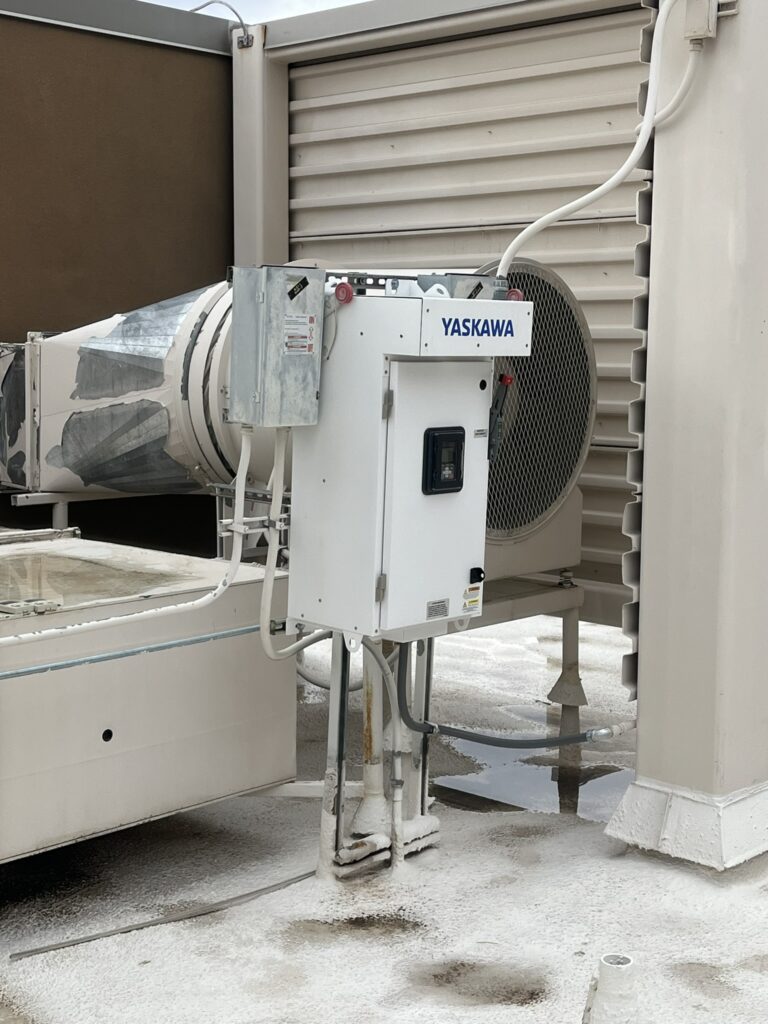
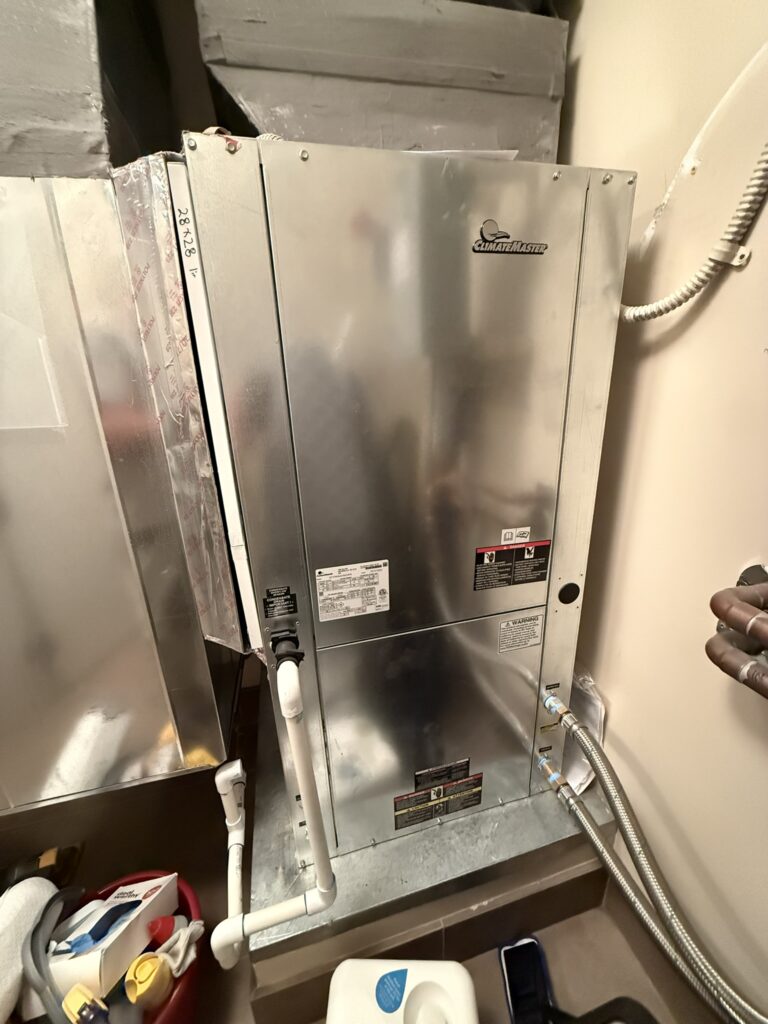
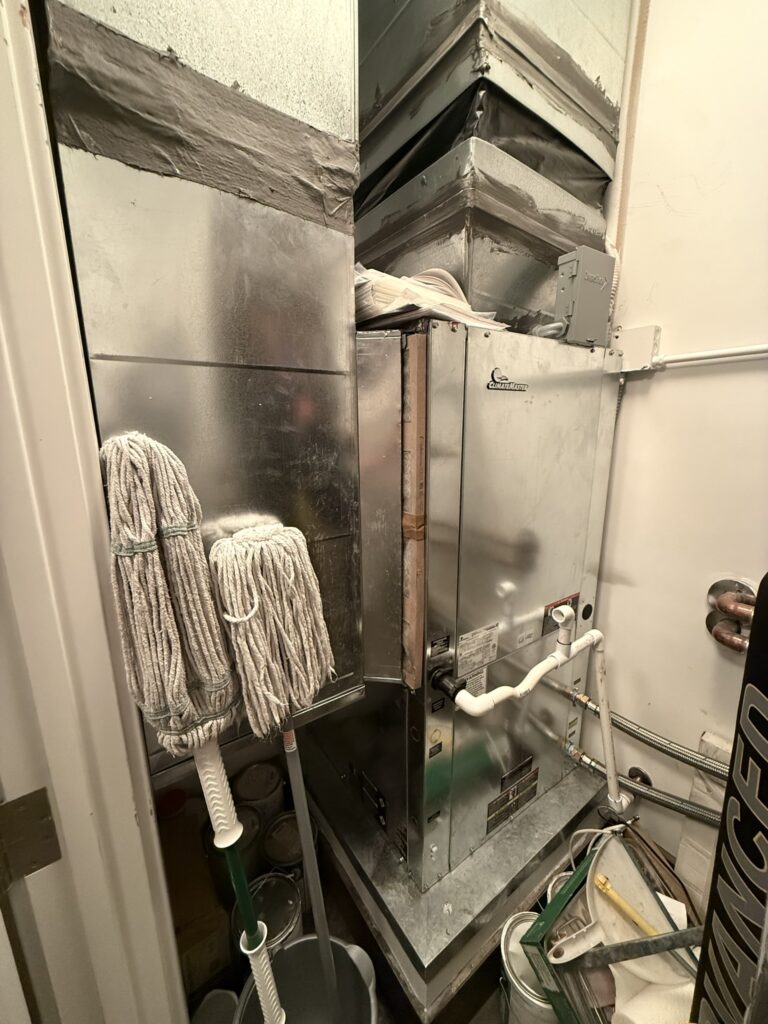
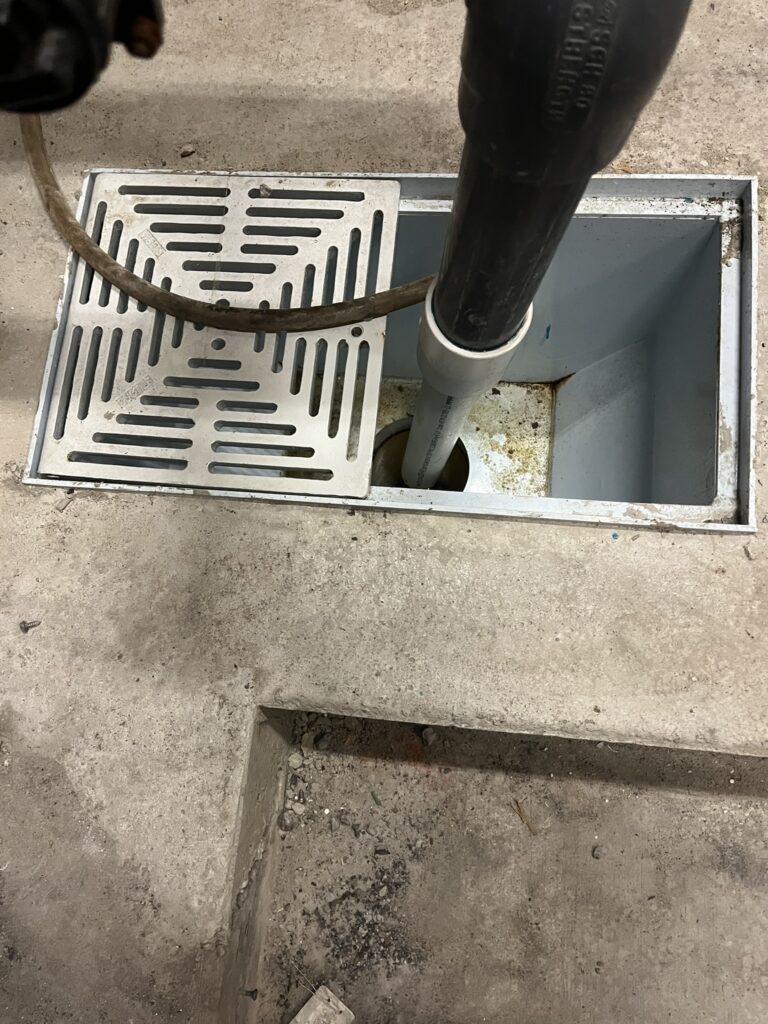
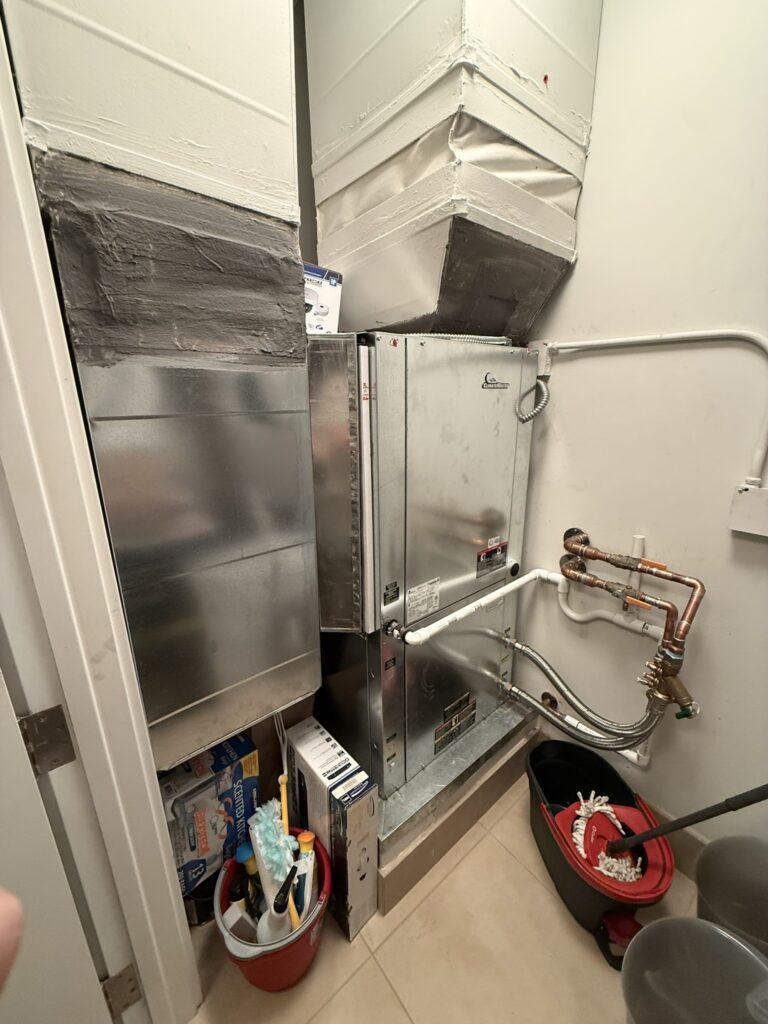
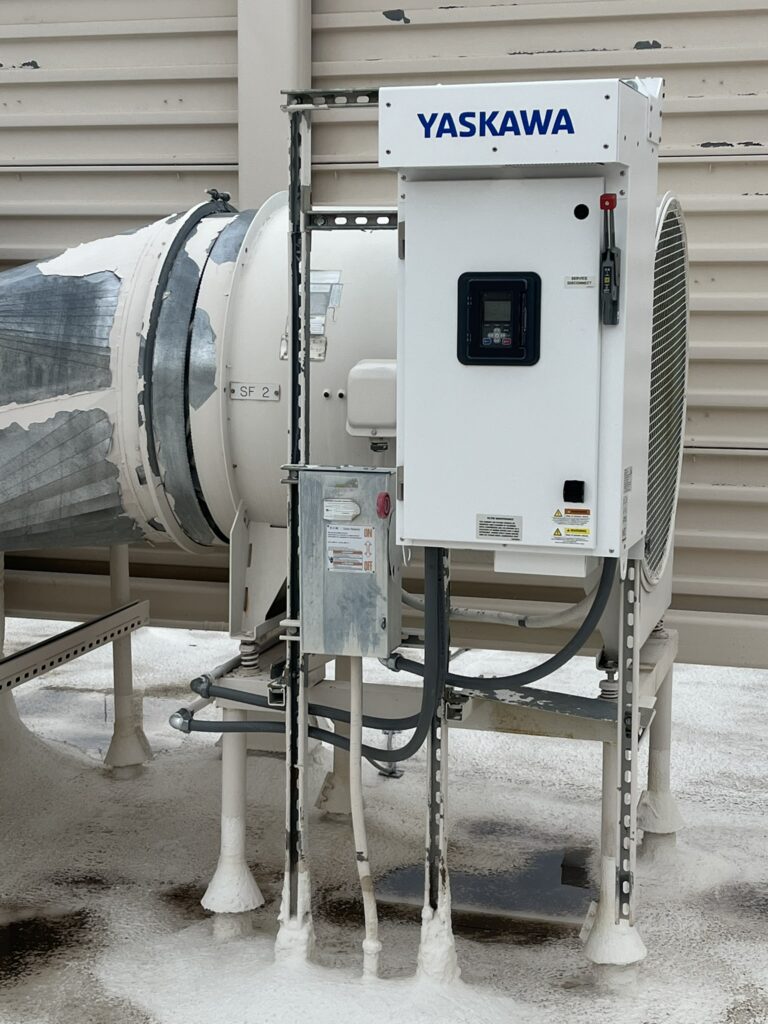
Cannabis facility HVAC service is mechanical uptime under heavy sensible and latent loads, not ordinary comfort cooling. It needs its own approach because cultivation, processing, dry rooms, offices, and support spaces can place very different demands on equipment while odor control, documentation, and compliance-sensitive operations require disciplined service notes.
Cannabis Facility HVAC Reality In The Valley
A cannabis facility can put HVAC equipment under a workload that looks nothing like a standard commercial office. Grow lighting, plant transpiration, irrigation, people, process equipment, sealed rooms, odor-control equipment, and operating schedules all affect temperature and humidity. Even support spaces matter because offices, break rooms, packaging areas, and storage rooms may be tied into the same building systems or nearby roof equipment.
In Phoenix, the outside environment adds another layer. Cooling is business-critical most of the year, and rooftop package units operate under severe roof heat. RTUs may be part of the building mix even when specialty equipment is also present. Monsoon dust loads coils, filters, and outdoor sections. A small loss of capacity can become a larger operational issue when the room already carries lighting and moisture load.
Dehumidification is often the center of the conversation. Standard comfort cooling removes some moisture, but cannabis cultivation can create latent load that comfort-oriented equipment was not selected to handle. When humidity complaints appear, the cause may be equipment failure, maintenance neglect, controls, airflow, room operation, or a mismatch between the process and the HVAC design. We service HVAC equipment and document findings. We do not certify cultivation conditions, issue legal guidance, or provide regulatory rulings.
Odor control is another practical reality. HVAC service may involve equipment that interacts with filtration, exhaust, makeup air, or pressure relationships. Our role is to inspect and repair the HVAC equipment within scope, document what we observed, and avoid pretending a mechanical service visit replaces engineering, compliance, or operational controls. Clear boundaries make the service more useful, not less.
The cost of failure can be severe because the facility’s process depends on stable conditions. A failed unit in an office is uncomfortable. A failed unit serving cultivation or drying can create urgent operating pressure. A neglected coil, weak motor, failed contactor, clogged drain, or control problem may affect more than staff comfort. That is why cannabis grow hvac phoenix service has to be direct, documented, and scheduled with the facility’s production reality in mind.
Contracts And Cost Honesty
Factors Affecting Commercial HVAC Pricing
Our Quoting Process
We inspect before quoting. After the in-person look, we provide a flat-rate written quote for the approved scope and document findings in writing.
The Value of Planned Maintenance
Planned maintenance is often more useful than emergency-only service because facility conditions can punish equipment quickly. A documented cadence for key components helps operations see whether a problem is a one-time failure, repeated maintenance neglect, or a system limitation.
- Filters
- Coils
- Condensate Drains
- Motors
- Contactors
- Capacitors
- Belts (where installed)
- Controls
- Outdoor Sections
About Yeti Pros
Yeti Pros is veteran-owned & operated. AZ ROC #363372 · ROC #363423. Our work is held to the AZ ROC Minimum Workmanship Standards.
Warranties & Discounts
We provide a 2-YEAR written workmanship warranty, and repair parts carry a 1-YEAR manufacturer parts warranty. Financing is available, and we offer a 10% military, veteran & first responder discount.
Clear Scope for Cannabis Facilities
For cannabis facilities, the written scope is especially important because HVAC touches operations, but it is not the same as cultivation management or legal compliance. We keep the scope clear, identify the mechanical findings, and state what the repair or maintenance includes. That gives leadership a usable record without pretending the HVAC contractor is certifying the facility’s process.
How We Run Service For Cannabis Facilities
We start by identifying the affected area and the equipment serving it. Cultivation rooms, processing areas, dry or cure spaces, offices, corridors, and support rooms should not be treated as one generic space.
Key Indicators of HVAC Issues
Unexpected shifts in room temperature.
Changes in humidity levels.
Reduced or altered airflow.
Equipment running longer or shorter than usual.
Unusual or frequent alarms.
Presence of unusual odors.
Signs of water leaks.
Equipment turning on and off too frequently.
Total breakdown of HVAC equipment.
Our Service Approach
Yeti Pros is a service-area business with no street address for customer visits; we come to you across Phoenix and the Valley. Office hours are Mon-Fri 8-5, with 24/7 emergency service. Emergency response is often appropriate when HVAC failure threatens a critical operating area.
Booking & Documentation Process
At booking, the diagnostic or service-call fee is disclosed and credited toward the repair.
After an in-person look, we provide flat-rate written quotes.
Scopes and findings are documented in writing. For cannabis facilities, these notes are crucial for ownership, operations, facility management, cultivation leadership, or a maintenance lead.
Factors Affecting Service
We still have to work from:
- Access
- Authorization
- Parts availability
- Roof conditions
- Actual equipment failure
Clear Service Boundaries
What We Do
We service HVAC equipment, inspect related mechanical conditions within the approved scope, and write down what we find.
What We Don’t Do
We do not certify cleanrooms, certify cannabis production spaces, issue health-code rulings, give legal advice, or claim that an HVAC repair satisfies a regulatory requirement. If the facility needs engineering design, cultivation consulting, or compliance interpretation, that is separate from our HVAC service work.
Preventive Maintenance for Cannabis Facilities
Preventive maintenance should reflect run time and contamination load. The maintenance cadence should match the equipment load, not a generic office schedule.
Key Components for Routine Review:
- Filters
- Coils
- Drains
- Electrical components
- Motors
- Belts (where installed)
- Controls
- Condensate handling
- Outdoor sections
In cultivation environments, humidity and airborne material can make neglect show up faster. Outdoor coils still have to survive the Valley’s monsoon dust and roof heat.
For maintenance work, see commercial HVAC maintenance. For recurring service documentation, see commercial maintenance contracts. To schedule a visit, use contact or call (520) 556-8929.
Decision Table For Cannabis HVAC Problems
Cannabis facility HVAC calls need careful triage because a symptom can involve comfort cooling, dehumidification, airflow, controls, odor-control interaction, or process load. The first step is tying the complaint to the affected room and equipment.
| Symptom Or Situation | What It Usually Means | Priority |
|---|---|---|
| Room temperature rising during light cycle | Cooling capacity loss, dirty coils, airflow restriction, failed stage, controls issue, or load exceeding equipment condition | High for cultivation areas |
| Humidity climbing even when cooling runs | Latent load issue, equipment mismatch, dehumidification failure, airflow problem, or room operating condition | High when product conditions are affected |
| Odor complaints after HVAC changes | Pressure relationship change, exhaust or makeup-air issue, filtration interaction, or airflow imbalance | Prompt review within HVAC scope |
| Water at unit, drain, or ceiling | Condensate blockage, pan issue, coil icing, high moisture load, or maintenance neglect | High where water threatens operations |
| RTU trips on hot afternoons | Dirty condenser coils, electrical stress, failing motor, compressor issue, or heat-related component failure | High during Phoenix summer operation |
| Office comfortable but grow area unstable | Different load profile, dedicated equipment issue, controls problem, or process load outside comfort-system capability | Critical to separate by zone |
Phoenix-Metro Specifics For Cannabis Facilities
Cannabis facilities in the Phoenix metro have to manage indoor process load while the roof equipment is exposed to extreme outdoor conditions. That combination is unforgiving.
Extreme Conditions & System Strain
A rooftop unit may be expected to reject heat while sitting on a roof that is far hotter than the air temperature people talk about. If coils are dirty or electrical components are weak, the system can lose ground quickly.
Monsoon Dust & Indoor Demands
Monsoon dust is not a minor issue. Outdoor coils, filters, intake areas, and rooftop equipment can load fast. In a cultivation or processing facility, indoor conditions may also create heavier filter and coil attention than a standard office.
Dehumidification Load Realities
Dehumidification loads need honest language. If the building is relying on equipment that was designed mainly for comfort cooling, it may struggle with moisture depending on room use, lights, irrigation, plant stage, airflow, and controls. A repair can restore failed equipment to operation, but it cannot make an undersized or mismatched system become a purpose-built process system.
Odor Control System Interaction
Odor-control systems and HVAC can interact through airflow and pressure. Service work that changes fan operation, dampers, filters, or makeup-air behavior may reveal existing pressure problems. Our notes stay tied to HVAC observations. We do not issue compliance conclusions.
Utility Demand & Component Strain
Utility demand realities are also part of the Valley operating picture. Long equipment runtime, lighting schedules, heat rejection, and dehumidification needs can make weak components fail at bad times. We do not promise energy outcomes from a service call. We do identify maintenance defects and repair needs that place unnecessary strain on equipment.
The Value of Documentation
Across Phoenix and the Valley, cannabis HVAC support works best when facility staff treat mechanical documentation as part of operations. Guessing from memory is a poor way to run a facility with heavy cooling and moisture loads.
Key Considerations for Your Facility
When maintenance gets deferred, the first visible sign may be a room drifting out of range, water where it should not be, or a unit tripping under peak load.
We document that distinction so facility leadership can decide whether the next step is repair, maintenance, controls review, or design support from the appropriate professional.
We can identify a failed motor, dirty coil, airflow restriction, or equipment condition.
Which unit serves which room, what was found, what was repaired, what is still a concern, and what needs planning should all be clear.
Straight Answers
Certification & Compliance
No. We service HVAC equipment and document findings. We do not certify cleanrooms, certify cultivation spaces, issue health-code rulings, provide legal advice, or state that an HVAC repair satisfies a regulatory requirement. Our scope stays mechanical and written.
Humidity Problem Assistance
We can inspect HVAC and related mechanical conditions, identify confirmed failures, and document whether equipment appears dirty, failed, restricted, or not matching the observed load. Dehumidification can involve design and process factors, so we keep recommendations tied to what we can verify.
Emergency Service for Cannabis Facilities
Yes. Office hours are Mon-Fri 8-5, and 24/7 emergency service is available. Call (520) 556-8929. The diagnostic or service-call fee is disclosed at booking and credited toward the repair when the approved work is performed.
Maintenance Contracts for Cannabis Facilities
Usually, yes. Heavy runtime, moisture load, monsoon dust, and roof heat make documentation valuable. A maintenance contract helps facility leaders plan repairs before failures control the schedule by tracking key components:
Regular monitoring and replacement.
Inspection and cleaning to maintain efficiency.
Ensuring proper function to prevent water damage.
Checking for wear and proper operation.
Verification of accurate system management.
Overall assessment of HVAC equipment health.
Most of these relationships start small: a commercial HVAC maintenance call that gets handled cleanly, then a maintenance cadence that fits the operation. Request a walkthrough and we will scope it in person, in writing.
Permits and inspections
Most repairs are ordinary service work; bigger scopes can involve city permitting. We perform our work to code, pull the permits our scope requires, and put what we did in writing.
What's covered
Workmanship is covered for two full years, in writing, and repair parts carry a 1-year manufacturer parts warranty — we document installs and repairs so those claims stay simple to make
HVAC for Cannabis Facilities in Phoenix, city by city.
Every city below has its own local page for this industry — local FAQs, utility territory, and dispatch reality included.
Why a licensed HVAC contractor matters.
Commercial HVAC, industry by industry.
Every major brand, serviced and installed.

Phoenix metro: Most days a tech is already working somewhere in the Valley, so same-day appointments happen when the schedule allows. After-hours emergencies are dispatched when a licensed tech is available — a real person answers and tells you the ETA on the call.
Call (520) 556-8929Request an estimate.
No pressure, no door knockers. We look at the HVAC system, tell you what it needs (and what it doesn’t), and put the number in writing.