
Phoenix Metro
HVAC for Government & Municipal Buildings in Phoenix.
- (520) 556-8929
- Serving the entire Phoenix metro — we come to you
- Office: Mon–Fri 8:00 AM – 5:00 PM · 24/7 emergency service
- 2-year workmanship warranty · 1-year parts warranty
- Veteran-owned & operated · residential + commercial
- 23 five-star Google reviews
Commercial jobs we have documented.
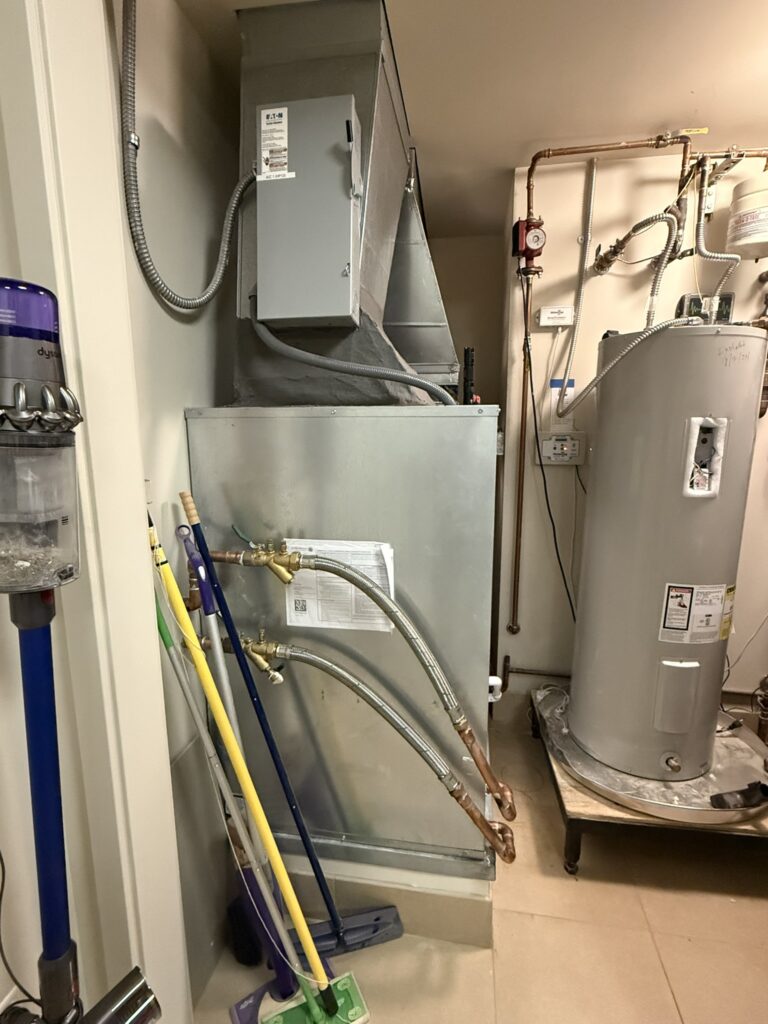
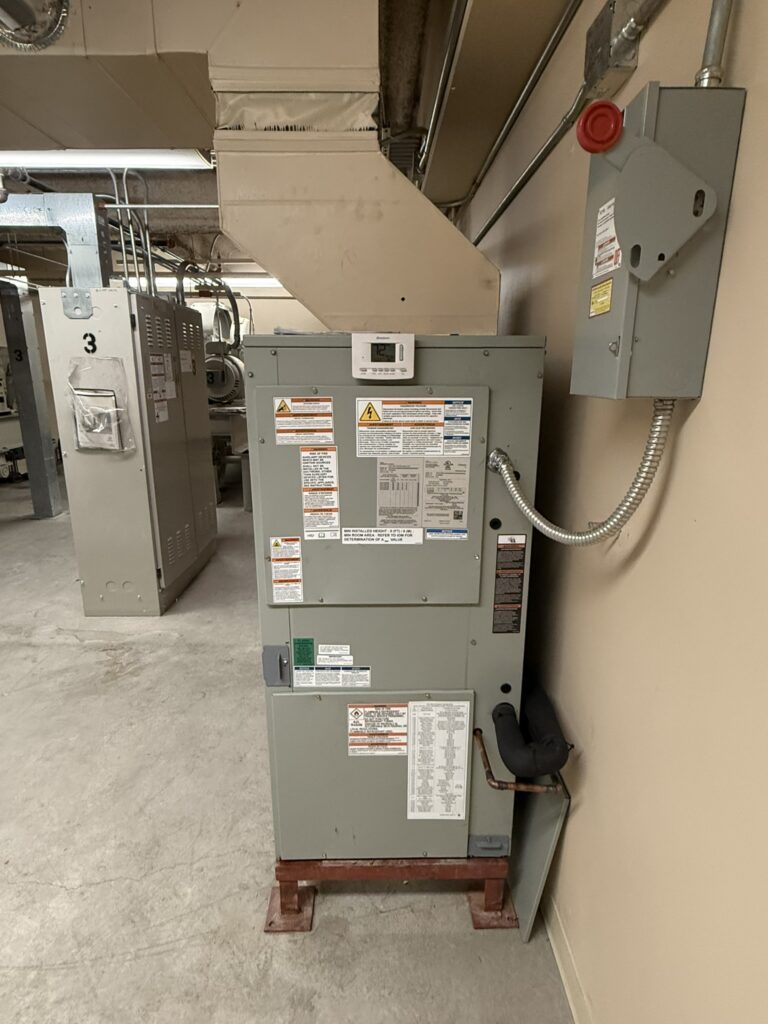
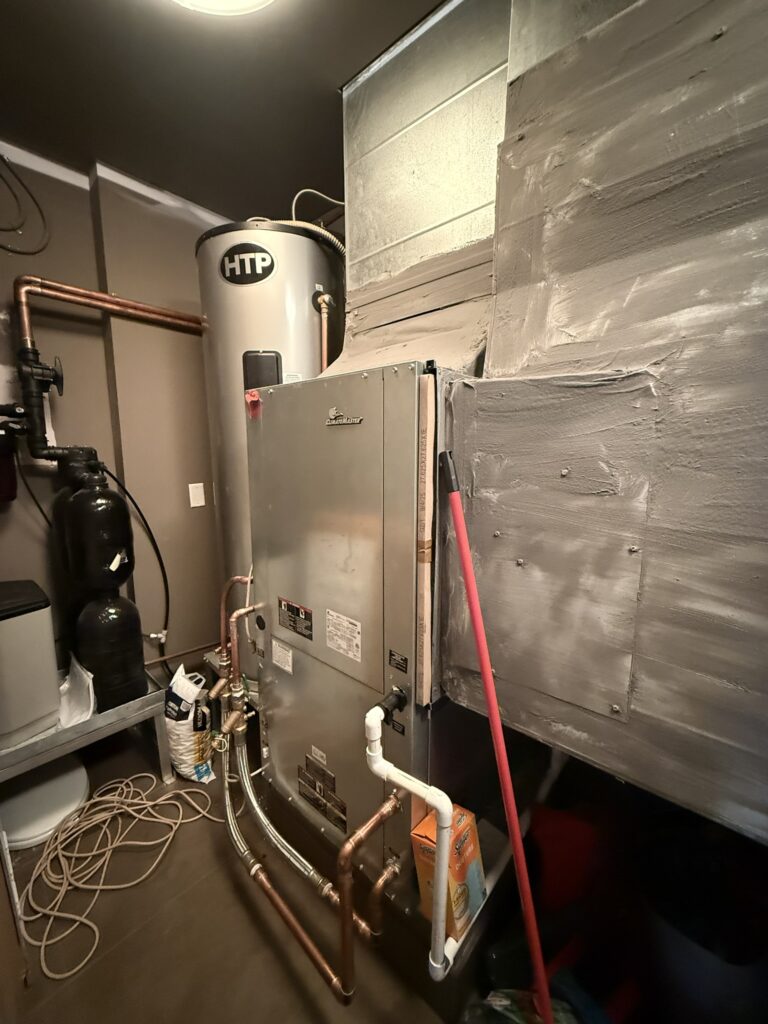
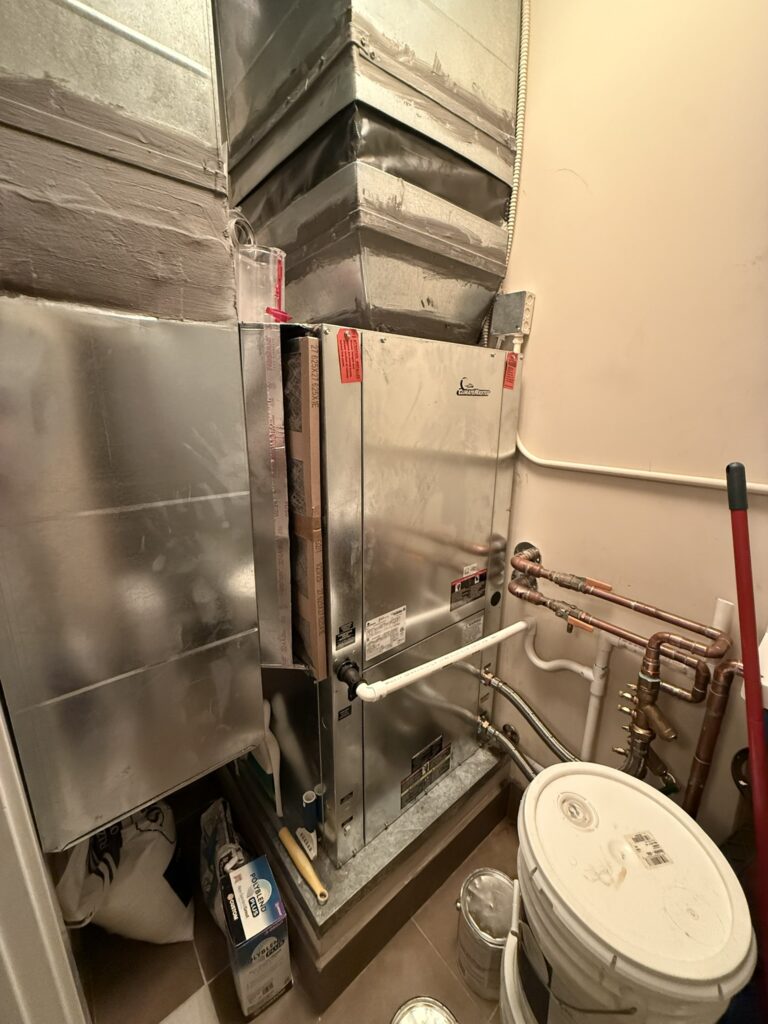
Photos from our own commercial projects — equipment we installed, in buildings we serviced.
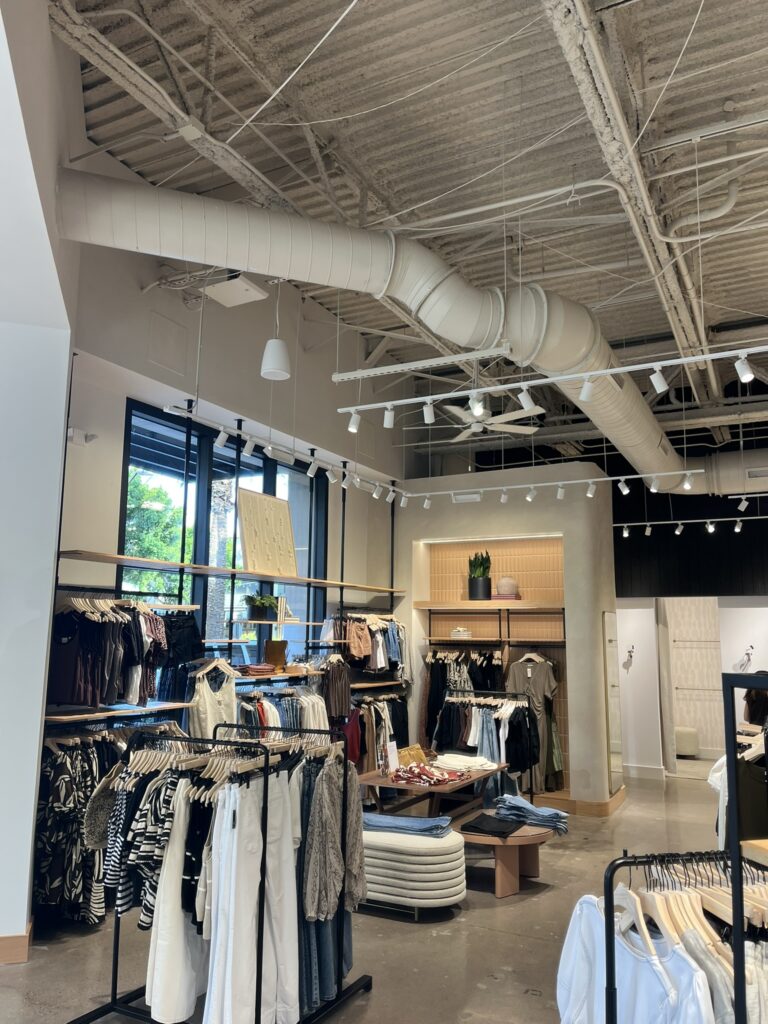
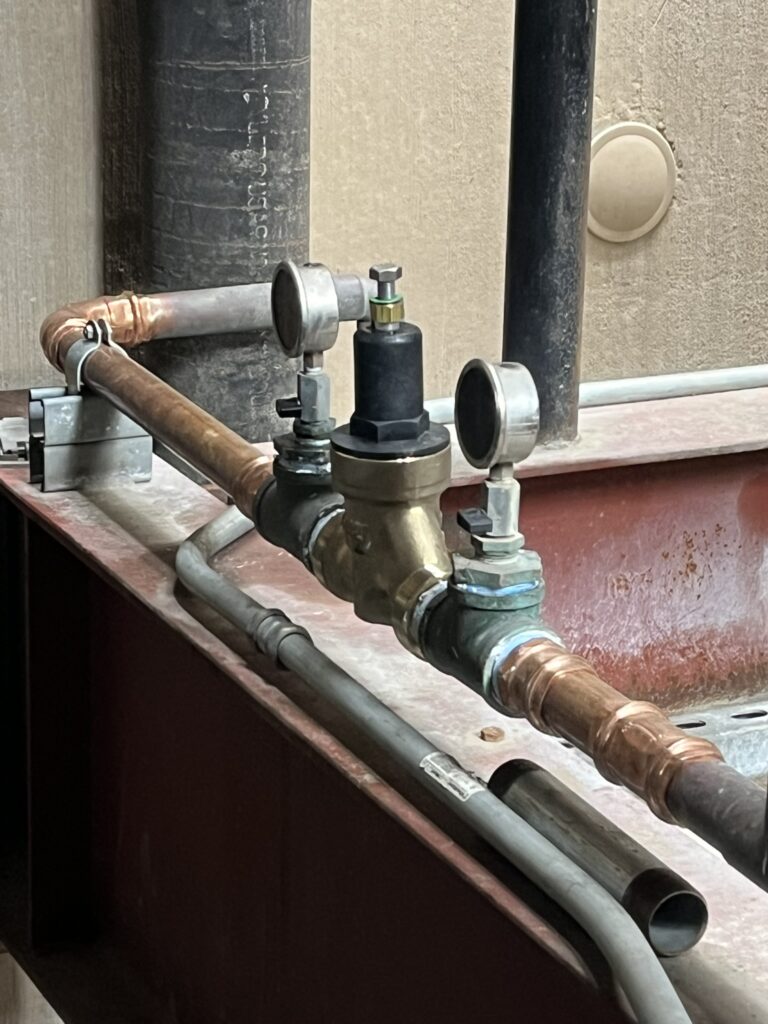
Government building HVAC service has to fit public access, staff comfort, records, procurement steps, department schedules, and rooms that cannot simply close every time a rooftop unit acts up. In Phoenix, libraries, courts, service counters, and administrative buildings need documented HVAC work that keeps decisions clear without overstating what a contractor can certify.
Government building HVAC reality in the Valley
Municipal and government buildings have a different HVAC rhythm than private offices. The building may be open to the public, staffed by departments with different schedules, and governed by purchasing rules that require written detail before work moves forward.
Creates public complaints.
Creates staff concern.
Can force rescheduling.
Can become unusable during the hottest parts of the day.
Across the Phoenix metro, many of these buildings rely on rooftop package units, split systems, and older control setups that have been modified over time. The equipment mix can be uneven because budgets move in cycles. One wing may have newer units while another wing is running equipment near the end of practical service life. That makes documentation important.
Facility Manager Needs to Know:
- What failed
- What was repaired
- What is wearing out
- What should be considered during the next budget cycle
Duty cycles vary inside the same building. A public counter may see constant door traffic, a council room may sit empty until it fills with people, a library may carry steady afternoon occupancy, and staff offices may have computers and printers adding heat all day. Equipment that handles a light morning load can fall behind once the roof heats up and occupancy changes.
An HVAC Call Must Connect:
- The complaint to the room schedule
- The unit serving it
- The realistic recovery time under Phoenix conditions
The Valley’s heat is direct and unforgiving. RTUs sit on 115 degree roofs, coils collect dust, and long cooling seasons expose weak components.
Common Weak Components Exposed by Heat:
- Motors
- Belts
- Capacitors
- Contactors
- Drains
- Controls
Monsoon dust can turn a marginal unit into a complaint generator. Public buildings also tend to have varied occupancy patterns: a meeting room packed for one hour, a lobby that cycles all day, a back office with steady computer load, and a records area that staff expects to remain stable.
Yeti Pros is veteran-owned & operated and works as a service-area business. For government building HVAC Phoenix service, the paperwork has to be as practical as the repair.
Our Service Approach:
We come to you.
Inspect the equipment.
Document the findings.
Give the responsible person a clear written scope.
Contracts and cost honesty
Commercial HVAC pricing for government buildings is shaped by:
- Equipment access
- Roof conditions
- Unit type
- Controls
- Parts availability
- Documentation needs
- Shutdown windows
- The number of spaces affected
We inspect in person before quoted repair work.
Our Quote & Documentation Process:
We provide flat-rate written quotes.
Written scopes.
Documented findings so the approval path is based on the actual HVAC issue.
Maintenance contracts are often the cleaner route for public buildings because they create routine documentation before a failure becomes an emergency. Planned visits can track:
- RTU condition
- Filter loading
- Coil cleaning needs
- Belts
- Drains
- Electrical wear
- Control issues
- Repeated complaint zones
That record supports budget planning without pretending every decision can be made from one service ticket.
For government facilities, the value of that record is practical. It can show:
- That a unit serving a public room is repeatedly underperforming during peak heat
- That a drain problem has been corrected
- That a dirty coil was contributing to long run times
- That a control issue should be reviewed before the next scheduled event
The documentation stays focused on HVAC conditions, repair scope, and maintenance recommendations.
Yeti Pros is veteran-owned & operated. AZ ROC #363372 · ROC #363423. Work is held to the AZ ROC Minimum Workmanship Standards. Financing is available where appropriate. A 10% military, veteran & first responder discount is available. Contact us through the contact page or call (520) 556-8929.
Workmanship Warranty
We provide a 2-YEAR written workmanship warranty.
Parts Warranty
Repair parts carry a 1-YEAR manufacturer parts warranty.
If this reads like your building, the findings land in writing.
Request a Walkthrough
The practical first step is a walkthrough — request one here.
Start with Planned Maintenance
Or start with the specific problem in front of you via planned maintenance contracts.
How we run service for government buildings
We begin with access, occupancy, and approval. Government and municipal facilities often have sign-in requirements, public hours, restricted rooms, roof access rules, and purchasing contacts who are not standing next to the unit.
Our Identification Process:
We identify the affected area.
The people being impacted.
The decision path for repair authorization.
That keeps the work moving without creating confusion between the technician, building contact, and procurement process.
Office hours are Mon-Fri 8-5, and 24/7 emergency service is available when a failure cannot wait. After-hours work can be useful for public counters, libraries, courts, and meeting spaces, but the scope still has to be realistic.
Simple After-Hours Work
Some work can be completed during closed hours.
Complex After-Hours Work
Some work requires parts, a lift, roof access, controls coordination, or a scheduled shutdown.
We say what is practical and document it.
On site, diagnostics may include:
- Thermostat and control behavior
- Supply and return airflow
- Filter condition
- Coil condition
- Electrical components
- Belts
- Motors
- Blower operation
- Condensate drainage
- RTU performance
- Signs of repeated stress
We coordinate before entering staff-only rooms, records areas, court-related spaces, public meeting rooms, or roof access points. If a noisy repair, ladder setup, or temporary shutdown would interfere with public operations, we identify that before the work creates a scheduling problem.
Our repair process is built around written findings.
We provide flat-rate written quotes after an in-person look.
Scopes and findings are documented in writing.
The diagnostic/service-call fee is disclosed at booking and credited toward the repair.
That record gives facility staff something concrete to attach to internal approvals, maintenance logs, or budget planning. We do not turn a service ticket into policy language; we describe what we found and what the HVAC work requires.
Preventive maintenance is especially useful where equipment replacement is driven by budget cycles. A commercial maintenance contract can document:
- Coil condition
- Filter status
- Belts
- Drains
- Electrical readings
- Motor condition
- Controls issues
- Recurring failures across multiple units
That helps separate urgent repairs from predictable wear. It also gives staff a better way to explain:
- Why a unit should be repaired now
- Why a unit should be watched closely
- Why a unit should be planned for replacement later
Decision guide for government HVAC issues
Public buildings need clear priorities because the loudest complaint is not always the most serious mechanical problem. We use the following to guide the first response:
- Affected space
- Building schedule
- Equipment condition
| Symptom or situation | What it usually means | Priority |
|---|---|---|
| Public lobby or service counter is hot | RTU failure, airflow issue, thermostat problem, or high door load | High during public hours |
| Courtroom, council room, or meeting room cannot recover | High occupancy load, weak cooling, controls issue, or dirty coils | High when scheduled use is near |
| Records or IT-adjacent room is warmer than surrounding areas | Separate load, poor airflow, equipment fault, or zoning problem | Urgent if equipment or records are affected |
| Repeated complaints from one wing | Aging unit, duct imbalance, control drift, or maintenance backlog | Medium to high depending on occupancy |
| Water staining near ceiling registers | Condensate drain issue, insulation concern, or pan overflow | Urgent before building damage spreads |
Phoenix-metro specifics for government buildings
Phoenix public buildings often combine old spaces, additions, changing occupancy, and equipment installed across different budget years. That means the roof may have units from multiple eras serving rooms with very different expectations. A technician has to inspect the actual equipment and the actual complaint area, not assume every zone follows the original building plan.
RTUs dominate many municipal roofs because they are practical for service and replacement. They also live in harsh conditions. Summer roof temperatures, direct sun, vibration, and monsoon dust shorten the patience of weak components.
RTU Maintenance Needs:
- Coils need cleaning
- Filters need the right cadence
- Belts need adjustment
- Drains need to stay clear
- Electrical components need to be checked before they fail during a public meeting or a packed library afternoon
Monsoon conditions create their own pattern of service calls. Dust can load filters and condenser coils, then humidity and longer run times can expose drainage problems. A building may report several separate complaints after a storm cycle:
- One warm wing
- One water stain
- One noisy unit
- One room that feels stale
Those complaints may not share the same repair, but they often reflect equipment working harder in the same Valley conditions.
Demand realities matter for government facilities because operating budgets and capital budgets do not always move together. HVAC service cannot solve that process, but it can make the mechanical facts clear. Written findings help facility teams show:
- Whether a unit needs repair
- Whether multiple units share the same maintenance issue
- Whether a repeated complaint points to controls, airflow, or equipment age
Public access adds pressure. A private business might move people to another room. A government office may have:
- Scheduled hearings
- Service appointments
- Community rooms
- Public computers in use
Across Phoenix and the Valley, we treat those operating realities as part of the service plan. The goal is a repair path that respects the building schedule and leaves a record your team can actually use.
Straight answers
Can you provide written documentation for procurement?
Yes. We document findings, repair scopes, and quoted work in writing after an in-person inspection. The documentation describes the HVAC condition, recommended repair, and practical service requirements. It is written for facility and purchasing review, not padded with policy language or claims outside the HVAC work.
Can service happen outside public hours?
Often, yes. Office hours are Mon-Fri 8-5, and 24/7 emergency service is available. Some repairs are a good fit for after-hours work. Others require parts, access coordination, electrical shutdowns, controls work, or roof conditions that dictate the schedule. We make that clear before the work is planned.
Do you service libraries, courts, and administrative offices?
Yes. We service commercial HVAC systems for public-facing and staff-only spaces, including RTUs, comfort cooling, airflow complaints, drains, controls, and maintenance needs. Each space gets triaged by occupancy, schedule, and equipment condition because a public counter, hearing room, and records area do not carry the same operational risk.
How do you handle recurring complaints from the same room?
We look beyond the latest thermostat complaint. Recurring issues may involve a weak unit, dirty coil, poor airflow, duct imbalance, controls drift, heat gain, or occupancy load. We inspect the serving equipment and document what we find so the facility team can decide between repair, maintenance, or a broader planning discussion.
Permits and inspections
Most repairs are ordinary service work; bigger scopes can involve city permitting. We perform our work to code, pull the permits our scope requires, and put what we did in writing.
What's covered
Workmanship is covered for two full years, in writing, and repair parts carry a 1-year manufacturer parts warranty — we document installs and repairs so those claims stay simple to make
HVAC for Government & Municipal Buildings in Phoenix, city by city.
Every city below has its own local page for this industry — local FAQs, utility territory, and dispatch reality included.
Why a licensed HVAC contractor matters.
Commercial HVAC, industry by industry.
Every major brand, serviced and installed.
Phoenix metro: Most days a tech is already working somewhere in the Valley, so same-day appointments happen when the schedule allows. After-hours emergencies are dispatched when a licensed tech is available — a real person answers and tells you the ETA on the call.
Call (520) 556-8929Request an estimate.
No pressure, no door knockers. We look at the HVAC system, tell you what it needs (and what it doesn’t), and put the number in writing.