
Phoenix Metro
HVAC for Distribution Centers — Phoenix Metro.
- (480) 771-3252
- Serving the entire Phoenix metro — we come to you
- Office: Mon–Fri 8:00 AM – 5:00 PM · 24/7 emergency service
- 2-year workmanship warranty · 1-year parts warranty
- Veteran-owned & operated · residential + commercial
- 58 five-star Google reviews
Commercial jobs we have documented.
Photos from our own commercial projects — equipment we installed, in buildings we serviced.
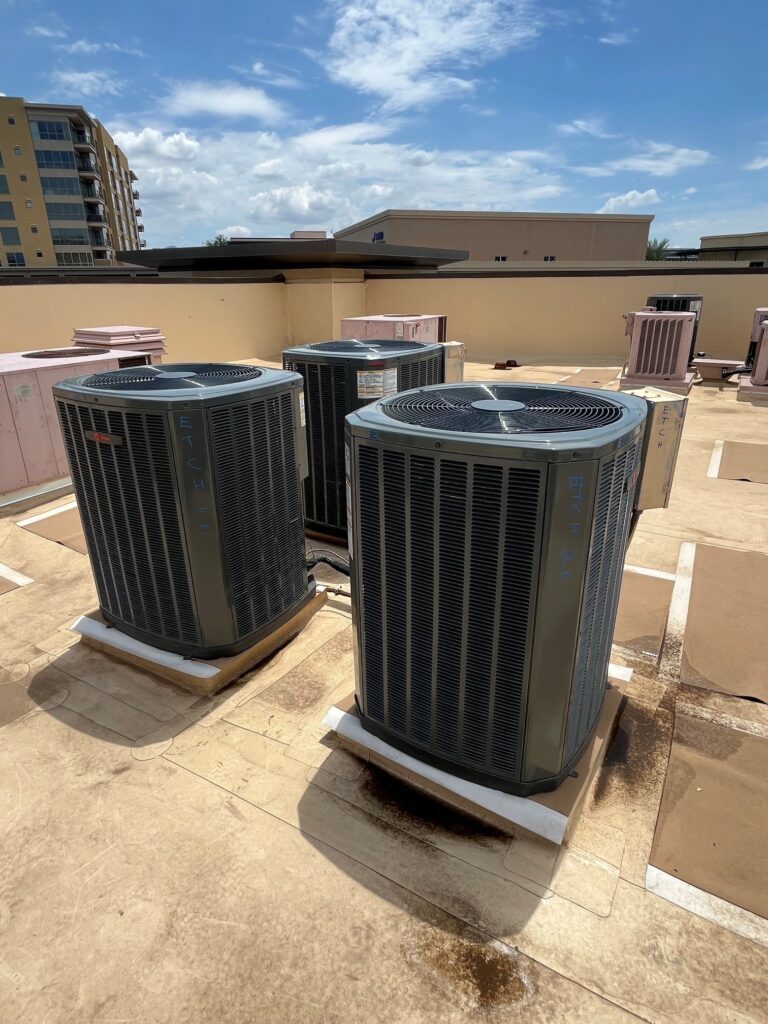
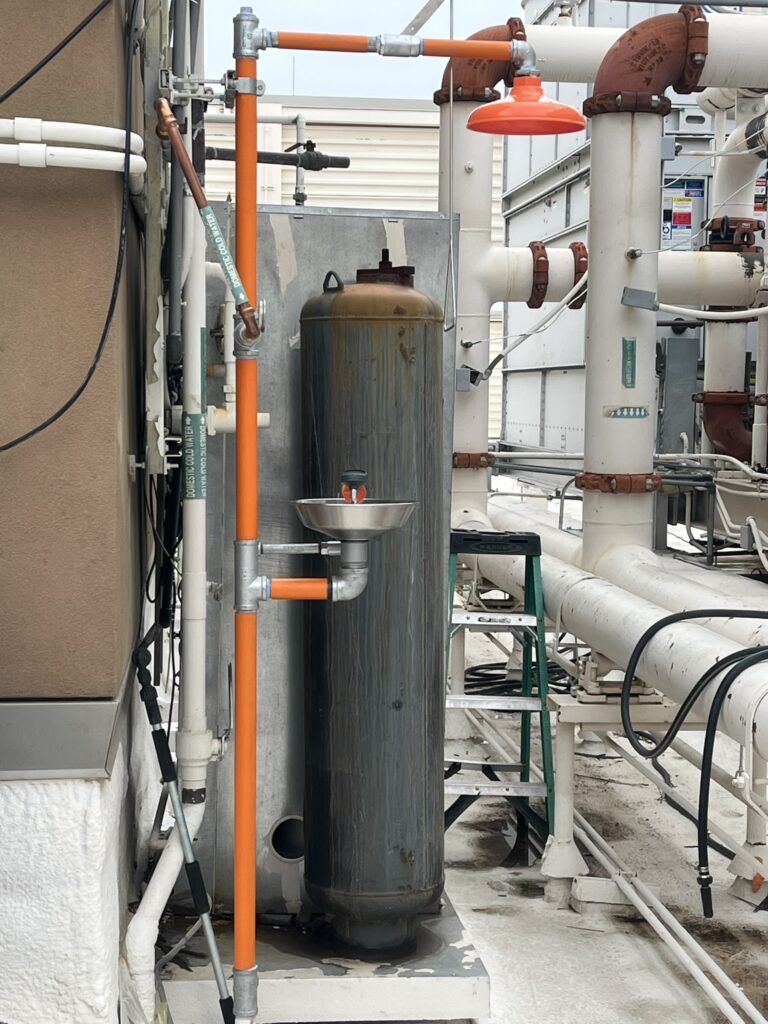
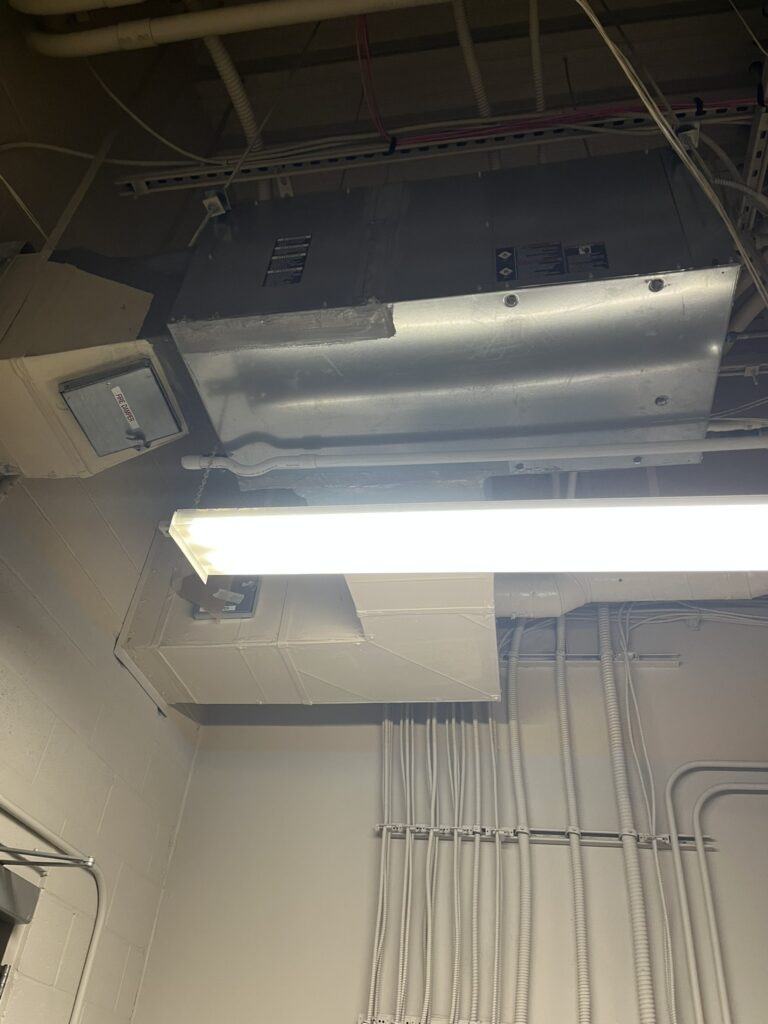
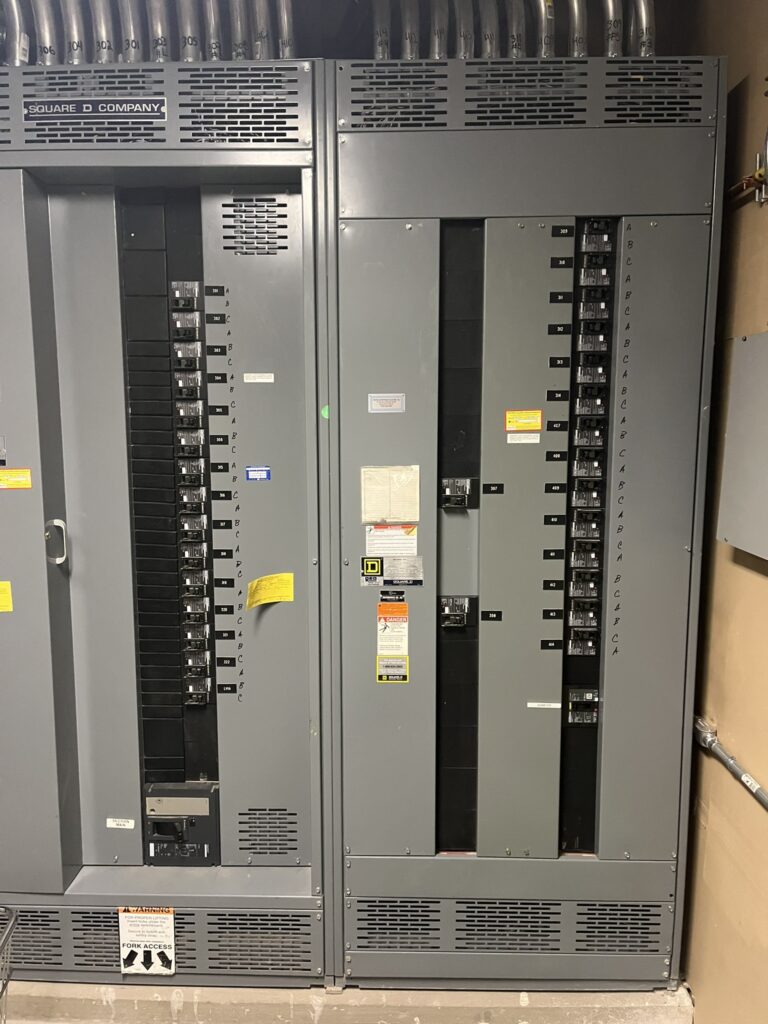
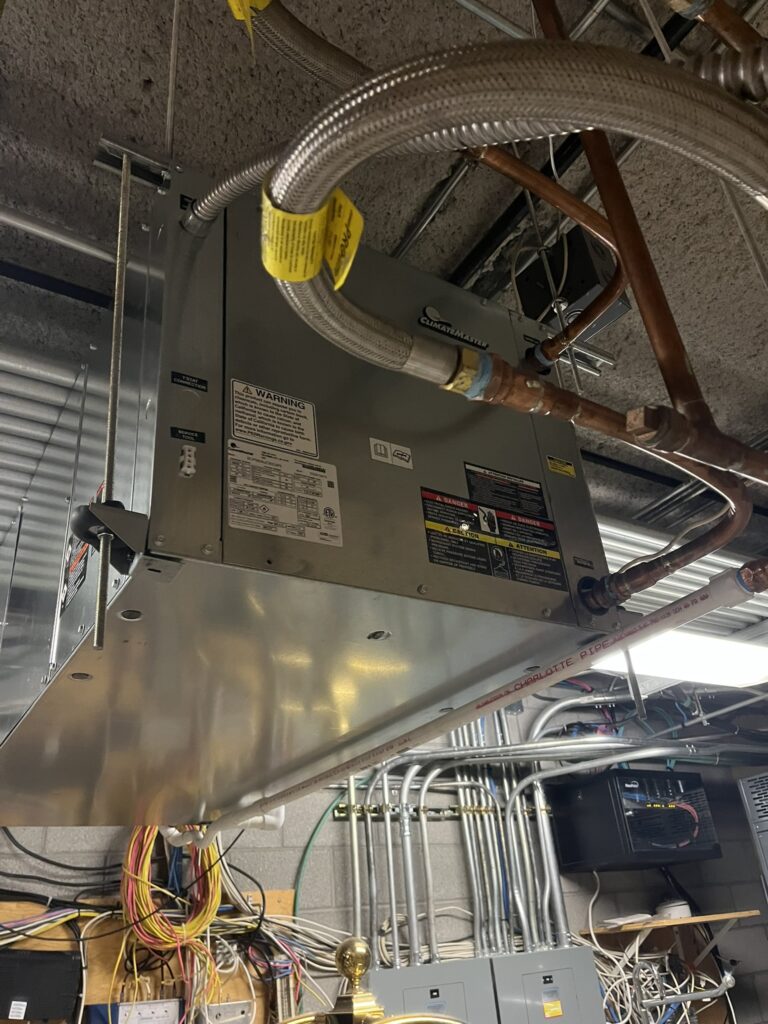
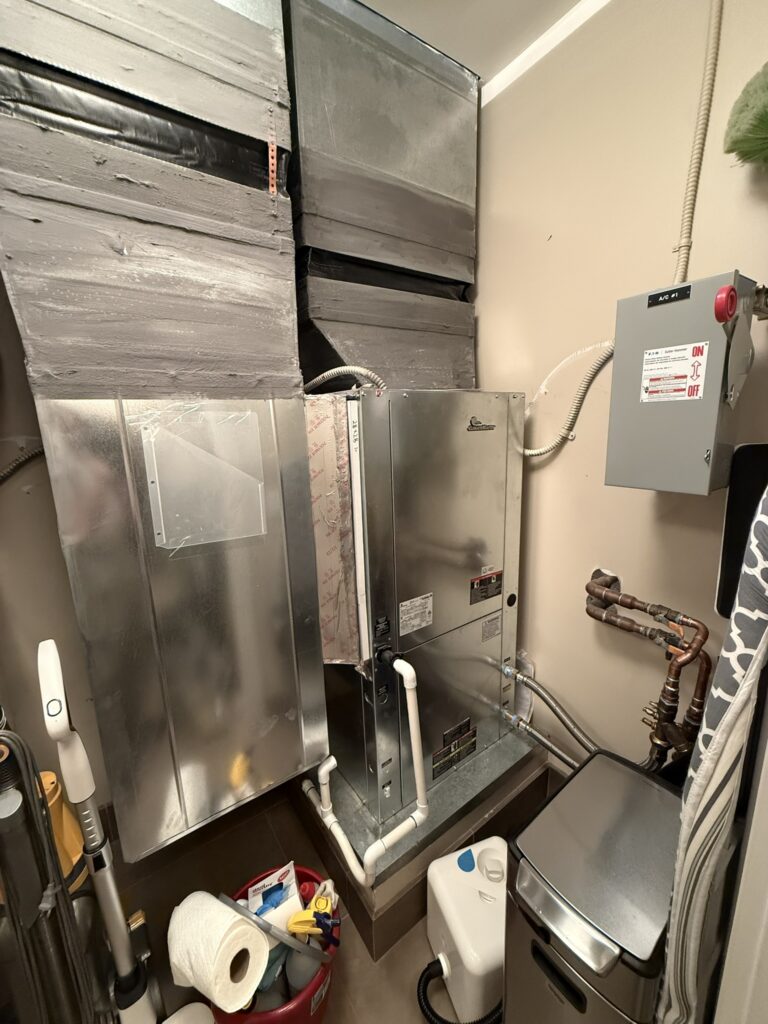
Distribution center HVAC service has to protect people, freight flow, scanners, offices, and dock activity inside one large building that never behaves like a simple warehouse. In Phoenix, most of the work is rooftop package units, dock heat, office pods inside big boxes, and fast decisions when a unit failure starts slowing the floor.
Distribution center HVAC reality in the Valley
A distribution center in the Phoenix metro is a heat-load problem before it is a comfort complaint.
all pull the building in different directions.
The RTU serving dispatch can be fighting a very different load than the unit over receiving, and both can be suffering from the same 115 degree roof exposure.
Most distribution buildings we see are built around rooftop package units because they are serviceable, familiar, and practical for large commercial footprints. That does not make them forgiving.
can turn a normal afternoon into a floor-wide complaint.
When the west-valley logistics corridor is moving freight on tight cutoffs, HVAC downtime is not a background issue. It becomes a staffing, safety, productivity, and customer-service problem.
The building usually has zones with different priorities.
may need spot cooling or better air movement instead of office-level conditioning.
inside the box need steady comfort because dispatch, inventory, HR, and supervisors are doing screen work.
get complaint-heavy fast because people use them during the hottest parts of the day.
A repair plan has to understand those zones before it starts replacing parts.
Yeti Pros is veteran-owned & operated and works as a service-area business. We come to you across Phoenix and the Valley.
in person.
from longer-cycle maintenance issues.
For distribution center HVAC Phoenix operators, that discipline matters because the wrong outage plan can disrupt more of the building than the failed unit did.
Contracts and cost honesty
Commercial HVAC pricing is driven by:
We do not quote blind. Yeti Pros provides flat-rate written quotes after an in-person look, with scopes and findings documented in writing. The diagnostic/service-call fee is disclosed at booking and credited toward the repair.
For distribution centers, a commercial maintenance contract usually makes sense when the building has:
Planned maintenance gives the facility manager a record of what was checked, what changed, what is wearing out, and what should be budgeted before summer turns a weak component into downtime.
Yeti Pros is veteran-owned & operated. AZ ROC #363372 · ROC #363423. Work is held to the AZ ROC Minimum Workmanship Standards. Financing is available. A 10% military, veteran & first responder discount is available. To schedule service, contact us through the contact page or call (480) 771-3252.
Workmanship Warranty
We provide a 2-YEAR written workmanship warranty.
Parts Warranty
Repair parts carry a 1-YEAR manufacturer parts warranty.
Whether it starts as rooftop unit repair or as a standing maintenance plan, the process is the same: an in-person look, a documented scope, and numbers that hold. Reach out and we will walk the facility with you.
How we run service for distribution centers
We start by finding the operational constraint. A unit down over a shipping office, a dock line, a packing station, or a server closet does not carry the same priority.
access, roof safety, equipment condition, and who needs to know what before a repair starts.
how the building runs, which shifts are active, where tenant or employee complaints are concentrated, and whether work can happen during normal hours or needs a tighter window.
Emergency Service
Emergency calls are handled as emergency calls. Office hours are Mon-Fri 8-5, with 24/7 emergency service for commercial HVAC failures that cannot wait.
After-Hours Work Considerations
After-hours work is useful when it prevents disruption, but it is not magic. Some repairs require parts, crane access, controls work, or a shutdown window. We say that plainly, then document the practical next step.
For RTUs, our technicians check the failure, the surrounding causes, and the condition of the equipment around it.
may have a bad capacitor, a dirty coil, a weak motor, or a control issue.
may be a failed unit, a zoning problem, or duct leakage inside the warehouse shell.
When replacement parts or deeper repair are needed, we provide flat-rate written quotes after an in-person look. Scopes and findings are documented in writing. The diagnostic/service-call fee is disclosed at booking and credited toward the repair.
Planned maintenance for distribution centers has to follow the building’s duty cycle.
may need more attention during dust season and after monsoon activity.
should be checked before peak summer loads punish weak components.
If a dock area needs spot cooling, airflow correction, or a realistic repair-versus-replace discussion, we put that in the written scope instead of burying it in a verbal handoff.
Common Related Services
- RTU repair
- Planned commercial HVAC maintenance
- Emergency cooling response
The job is to keep the building moving, not create paperwork for its own sake.
Decision guide for distribution center HVAC issues
Distribution center calls move faster when the symptom is tied to the affected operation. The table below shows how we usually triage common situations before writing the scope.
| Symptom or situation | What it usually means | Priority |
|---|---|---|
| Dispatch or office pod is hot while the warehouse feels normal | Failed zone unit, duct issue, thermostat problem, or load from interior office construction | High because office work and supervision slow quickly |
| Dock doors create heavy heat gain during peak loading | Normal building load made worse by airflow imbalance, missing spot cooling, or tired RTUs | High during active shipping windows |
| Multiple RTUs short cycle in the afternoon | Dirty coils, weak electrical components, control problems, or equipment operating at its limit | Urgent before a wider outage develops |
| Water near ceiling registers or roof curbs | Drain issue, insulation problem, roof penetration concern, or condensate overflow | Urgent where product, wiring, or offices are below |
| Recurring complaints after filter changes | Airflow, economizer, coil, duct, or controls issue beyond normal filter service | Medium to high depending on zone |
Phoenix-metro specifics for distribution centers
Phoenix distribution buildings punish rooftop equipment.
mean an RTU can look serviceable in spring and struggle hard by midsummer.
A technician has to inspect the equipment under real commercial conditions, not assume a reset or a filter change solved the load problem.
Monsoon dust is a major factor.
reducing heat rejection just when the building needs every bit of capacity.
also take a beating from heat and vibration.
all live in a harsh roof environment.
When a building has many similar units, one failure can be a warning that the rest of the fleet needs attention.
Distribution centers also face demand realities. Cooling several large zones at the wrong time can make equipment problems feel like utility problems and utility problems feel like equipment problems.
so the facility team has practical information for budget conversations.
We do not design your procurement strategy or utility program.
Inside the box, air does not behave evenly.
create pockets of heat and complaint zones.
Spot cooling can help in the right location, but only after the main systems are checked. Adding portable units without understanding makeup air, exhaust, and existing RTU performance can create new problems. We keep the conversation tied to what the equipment is doing and what the operation needs.
Straight answers
Can you service distribution center RTUs without shutting down the floor?
Often, yes, but it depends on the unit, roof access, electrical requirements, and the repair. Many inspections, filter changes, coil cleanings, belts, and smaller electrical repairs can be handled with limited disruption. Larger work may need a planned window. We document the scope so supervisors know what area is affected and when.
Do you handle office pods inside warehouse buildings?
Yes. Office pods often have their own comfort issues because they sit inside a larger heat and airflow environment. We look at the serving RTU, thermostat placement, duct routing, return air, filters, and heat gain from the warehouse. The goal is to fix the cause, not just keep lowering the setpoint.
What should we do when dock areas are too hot?
Start with the main equipment condition and airflow. Dock heat can come from open doors, poor air movement, overloaded RTUs, dirty coils, or a mismatch between the space and the original design. Spot cooling may be part of the answer, but it should be scoped after the building load and equipment condition are checked.
How fast can you respond to a cooling failure?
Office hours are Mon-Fri 8-5, and 24/7 emergency service is available. At booking, we disclose the diagnostic/service-call fee and gather enough information to prioritize the call. Once onsite, we inspect, document findings, and provide a written repair scope when the issue requires quoted work.
Permits and inspections
Most repairs are ordinary service work; bigger scopes can involve city permitting. We perform our work to code, pull the permits our scope requires, and put what we did in writing.
What's covered
Workmanship is covered for two full years, in writing, and repair parts carry a 1-year manufacturer parts warranty — we document installs and repairs so those claims stay simple to make
HVAC for Distribution Centers — Phoenix Metro, city by city.
Every city below has its own local page for this industry — local FAQs, utility territory, and dispatch reality included.
Why a licensed HVAC contractor matters.
Commercial HVAC, industry by industry.
Every major brand, serviced and installed.
Phoenix metro: Most days a tech is already working somewhere in the Valley, so same-day appointments happen when the schedule allows. After-hours emergencies are dispatched when a licensed tech is available — a real person answers and tells you the ETA on the call.
Call (480) 771-3252Request an estimate.
No pressure, no door knockers. We look at the HVAC system, tell you what it needs (and what it doesn’t), and put the number in writing.